October 19, 2025
October 19, 2025


Homily Videos Bishop Barron
Homily Videos Bishop Barron
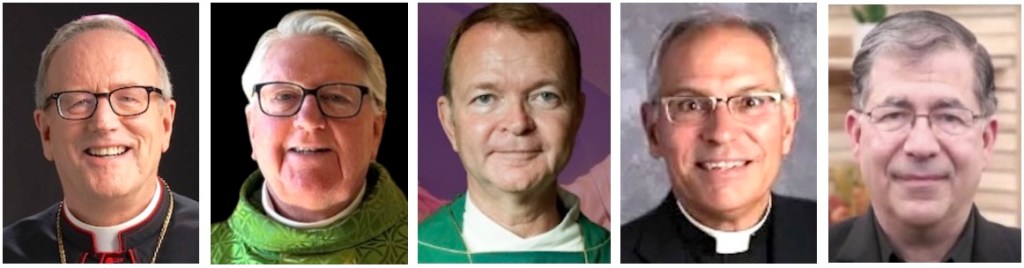
Bishop Robert Barron

29th Sunday of Year C

The Spiritual Life is a Battle
Bishop Barron interprets the battle between Israel and the Amalekites as a symbol of our spiritual struggle against evil. Drawing on Origen, he explains that Israel’s enemies represent the forces of darkness and calls for unity within the Church.
TWTW Visual Summary and Discussion Questions


Click to enlarge
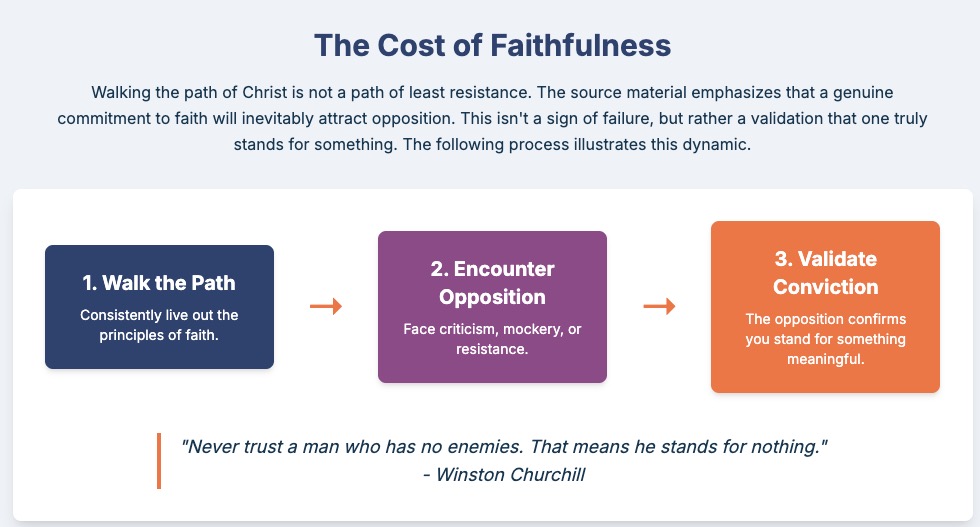
1. THE SPIRITUAL BATTLEFIELD
"The spiritual life’s a battle, everybody. Always has been, is today, always will be until the end of time. The spiritual life is a battle."
- Bishop Barron suggests that the enemies of Israel (the Amalekites) symbolize the powers of darkness in our lives—sin, cruelty, hatred, or moral stupidity. Where do you most acutely feel this opposition or battle in your own personal life right now?
- The text suggests that a faithful person will be opposed by the world. How has your consistent effort to walk the path of Christ drawn criticism, mockery, or opposition in your social circles or workplace?
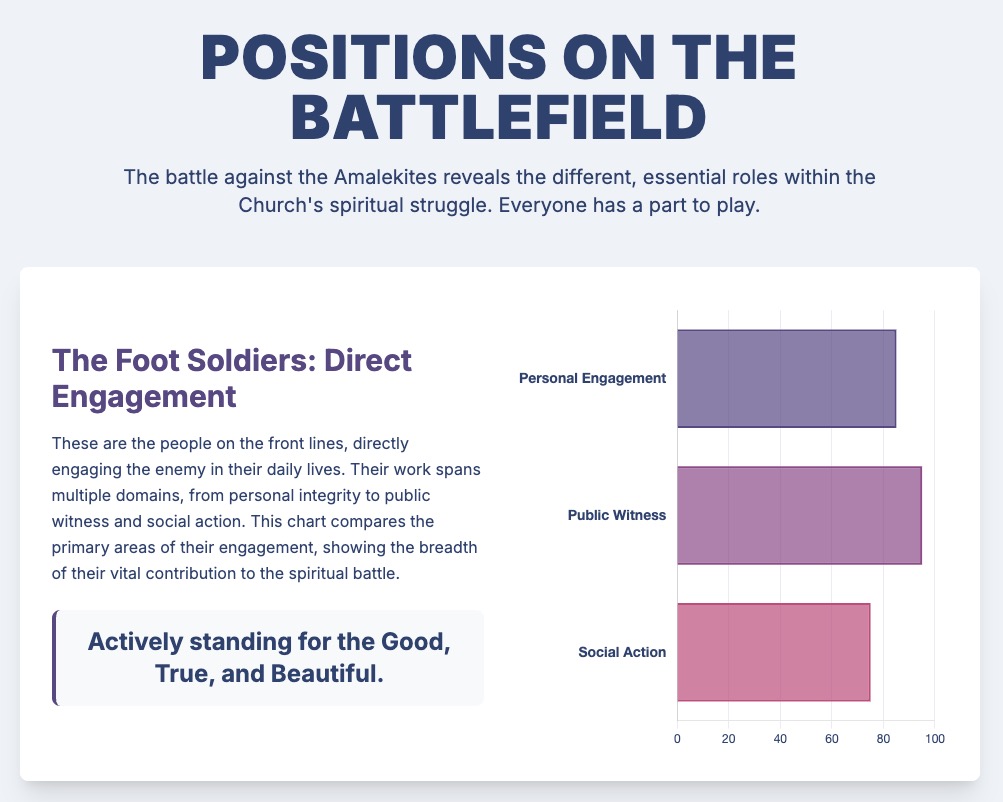
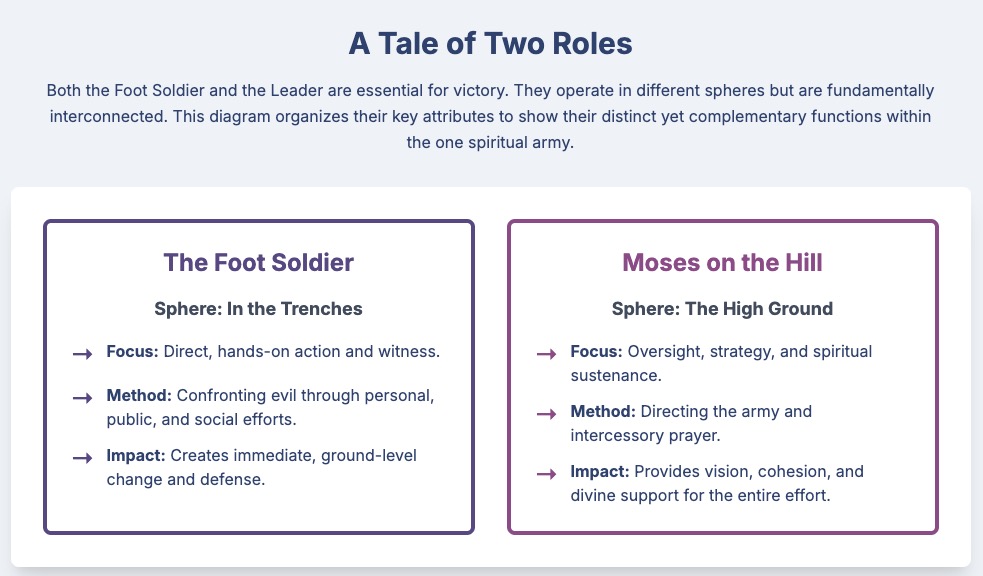
- Origen sees the foot soldiers as those directly engaged in the struggle (e.g., fighting abortion, speaking truth online). What specific, concrete action is your contribution to the struggle against societal evil this week?

Click to enlarge
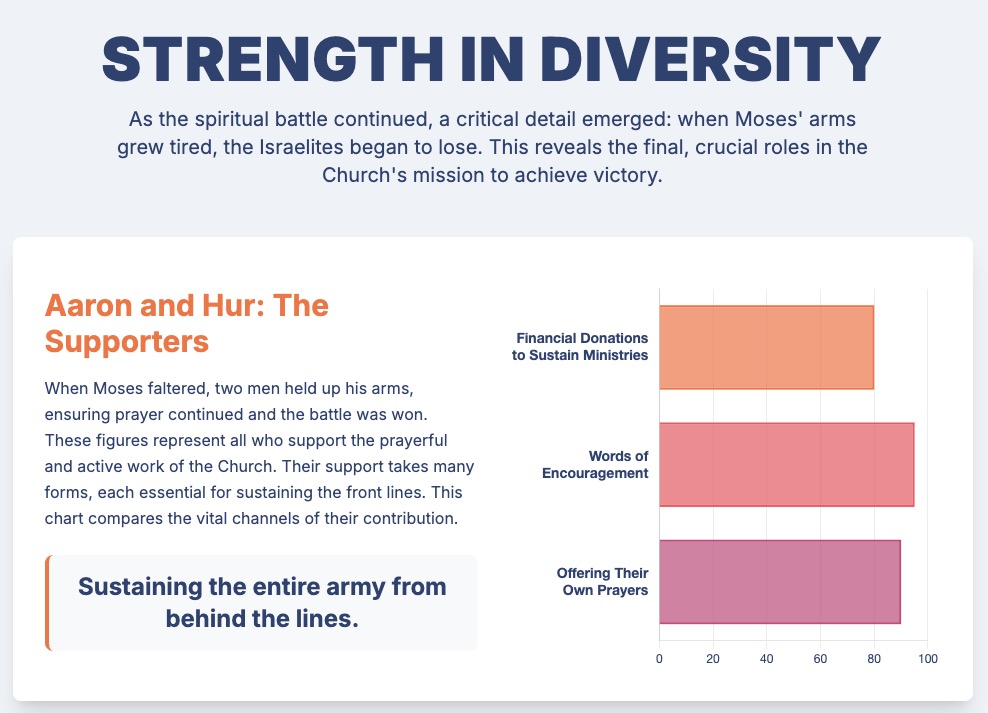
II. PRAYER: THE ENGINE OF THE ARMY
"Moses up on the mountain... is directing the battle, but primarily he’s doing it through prayer. So we speak of the leaders of the Church as having a kingly office... but also a priestly function."
- The homily emphasizes that the Church is sustained by prayer, noting that when Moses’s arms fell, the battle turned. How does this image change your view of the importance of your own personal prayer life in the grand scale of the Church’s mission?
- Moses (representing the official leadership) prays from the height. How can we, as the faithful, be the "Aaron and Hur" who actively support the prayerful work of the Church's leaders (bishops, priests, and contemplatives) when they inevitably grow tired?
- The homily praises those who support the Church financially as those who "hold up the arms." How can parishes better cultivate an environment where both the donor's check and the contemplative’s hour are recognized as equally vital to sustaining the spiritual power?

Click to enlarge
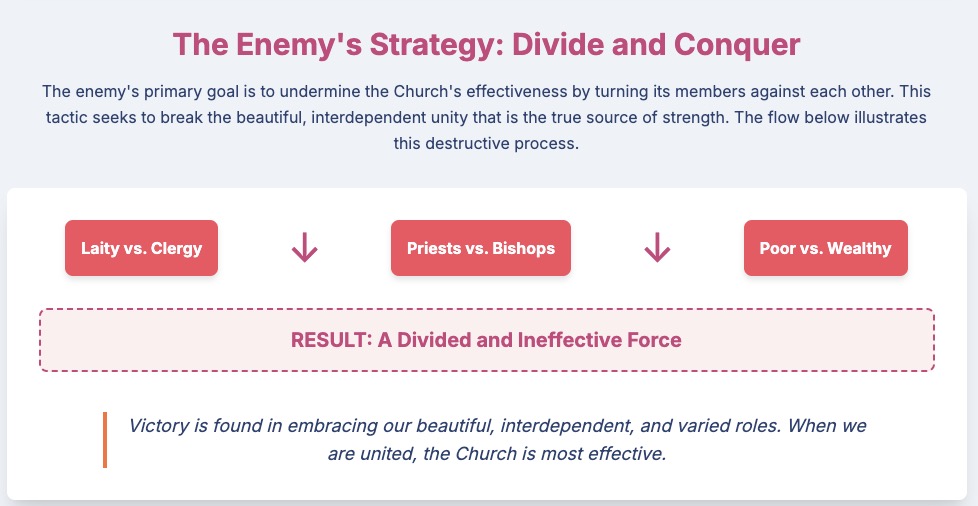
III. UNITY IN VARIETY
"We are most effective when we are on beautiful, interdependent, variegated display. That’s when the Church is most effective in this battle against the Amalekites."
- Bishop Barron warns that the devil’s chief strategy is to divide us (clergy vs. laity, rich vs. poor). What current tensions within your parish or community do you see as the devil successfully attempting to turn "us against ourselves"?
- The Church’s power comes from its variety (those who fight, those who direct, those who pray, and those who support). How does embracing this interdependent structure challenge any sense of "crude egalitarianism" or the temptation to despise those who serve in different ways?
- Reflect on the statement that dialogue devolves into violence when we lose respect for individual dignity. How can we apply the principle of respect for varied roles from this reading to engage in more constructive, less violent public and political conversations?


The Power of Prayer
While today’s culture often dismisses prayer for “action,” this is a new trend. Historically, prayer was considered powerful, and the story from Exodus 17 shows how prayer is meant to empower action, not replace it.
TWTW Visual Summary and Discussion Questions
Click to enlarge
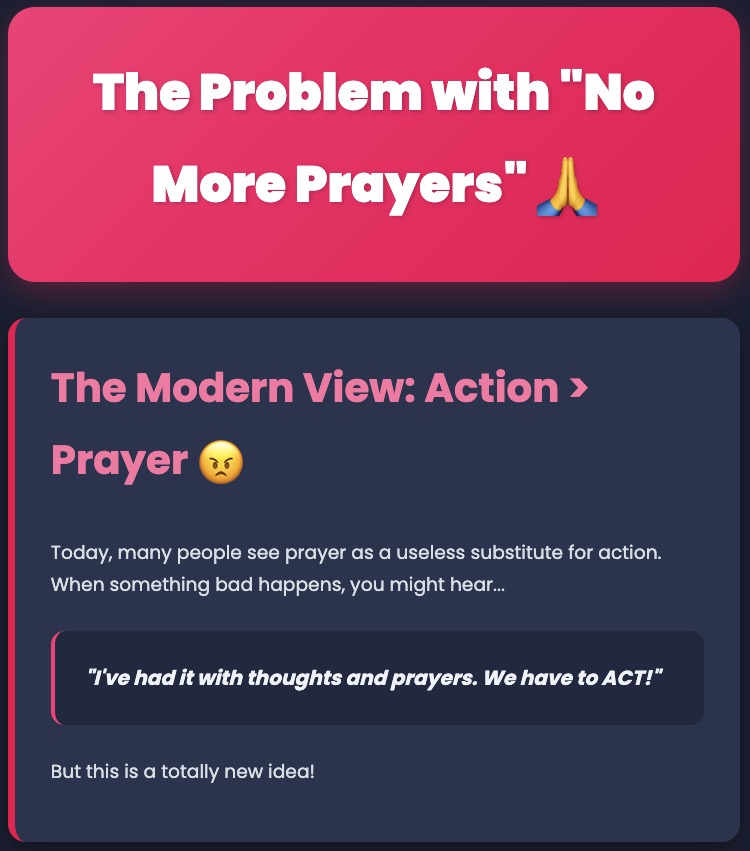
The Problem: "We've Had It with Thoughts and Prayers"
This section explores the cultural shift away from prayer and reaffirms the historical and biblical belief in its power.
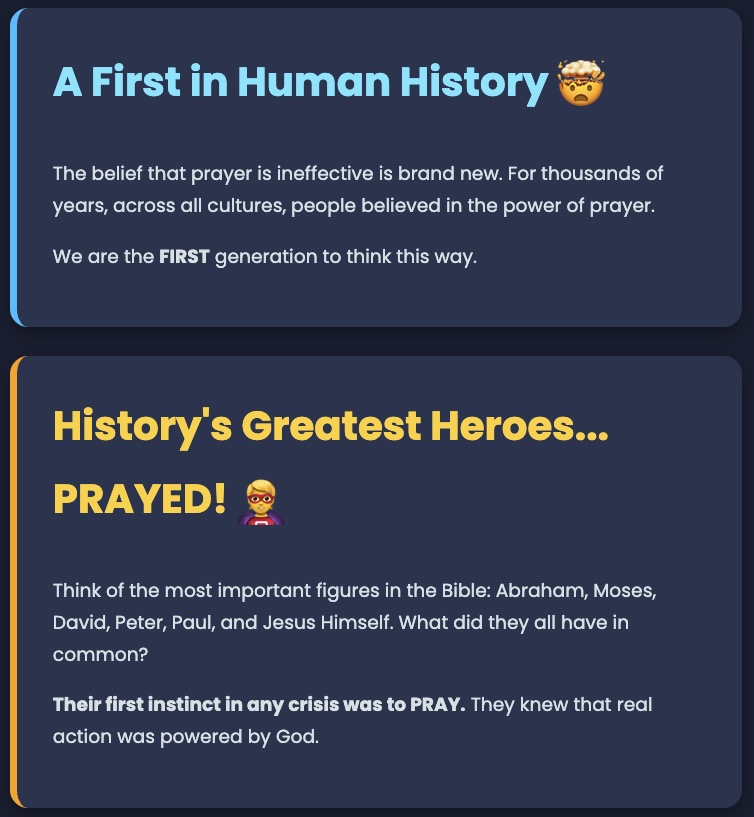
Core Idea: In a secular age, many view prayer as an ineffective substitute for action. This is a historically new idea, as generations before us—and all the great figures of the Bible—saw prayer as the essential foundation for any meaningful action.
Key Quote:
"We're the first generation in recorded human history ever to feel this way... If you had suggested to any of those figures [in the Bible], 'Oh, prayer is a waste of time. We need to act,' they would've looked at you like, 'Are you out of your mind?'"
Discussion Questions:
- Have you ever heard someone criticize the phrase "thoughts and prayers"? What was the situation, and what do you think they meant by it?
- The speaker points out that throughout history, people spontaneously prayed in good times and bad. Why do you think our modern culture is often skeptical or even hostile toward public prayer?
- The text lists many biblical figures (Abraham, Moses, David, Peter, Paul, Jesus) who had one thing in common: they all prayed. Why was prayer their first instinct, especially in moments of crisis?

Click to enlarge
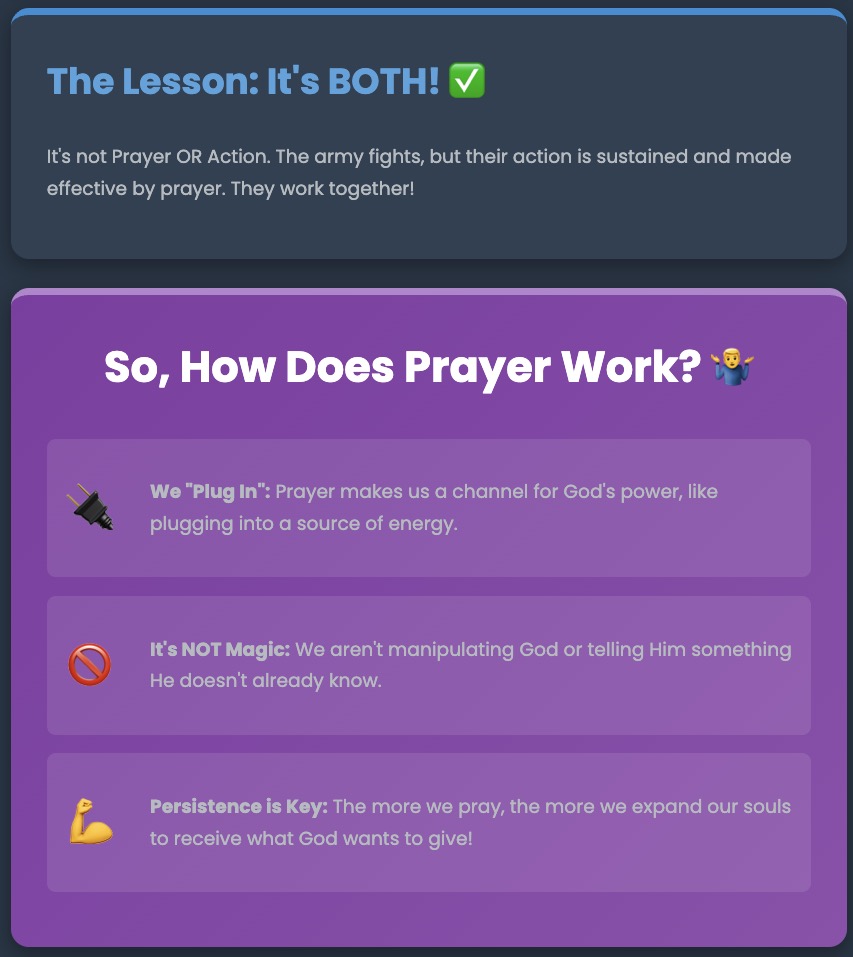
The Biblical Model: Action Supported by Prayer (Exodus 17)
This section focuses on the battle with Amalek as the key example of how prayer and action are not opposed, but are partners.
Scripture Focus: Exodus 17:8-13 In the story, the Israelites are attacked by the Amalekites. In response, Joshua leads an army into the valley to fight (the action). At the same time, Moses goes up on a hill with his arms raised to God (the prayer). The story makes a direct link:
- When Moses' arms are up, the Israelites are winning.
- When his arms get tired and drop, the Amalekites start winning.
- To solve this, two assistants, Aaron and Hur, come and physically hold up Moses' arms until the battle is won.
Key Talking Points:
- It's Not "Either/Or": The story doesn't present a choice between action and prayer. It shows them happening at the same time. The action in the valley is sustained by the prayer on the hill.
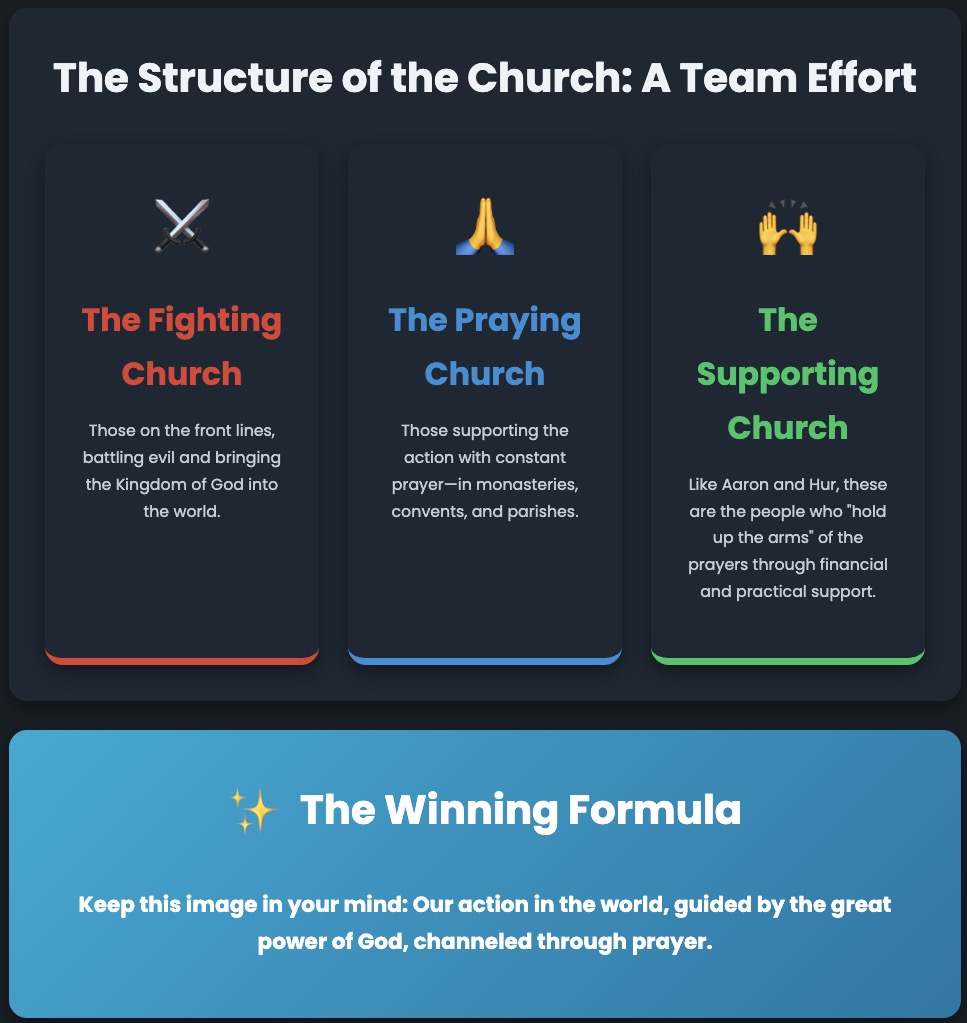
- The Roles in the Battle:
- Joshua's Army: Represents the "fighting church"—those taking direct action against the problems of the world.
- Moses: Represents the "praying church"—those interceding and linking the action to God's power.
- Aaron and Hur: Represents the "supporting church"—those who enable and sustain the prayers of others.
Discussion Questions:
- In this story, what would have happened if there was only action (Joshua's army without Moses)? What would have happened with only prayer (Moses on the hill without an army in the field)?
- The speaker describes prayer as making our actions "efficacious" (effective). How does Moses' prayer change the outcome of Joshua's fighting?
- Aaron and Hur play a small but crucial role. Who are the "Aarons and Hurs" in our world today? In what practical ways do people "hold up the arms" of those who pray?

Click to enlarge
Making It Practical: How Prayer Shapes Our Lives
This section explores how prayer can practically influence our daily actions and why action without prayer can be dangerous.
Core Idea: We don't know exactly how prayer "works," but it's not about manipulating or informing God. Rather, prayer aligns our actions with God's will and makes us a channel for His power. Action without this connection can become "deformed" and miss the mark.
Key Quote:
"Don't give me this 'leave prayer to one side and act.' God protect me from actors who don't pray... Your action will be deformed because it's not informed by the highest good."
Discussion Questions:
- The speaker suggests that when we pray, we are "making ourselves a kind of channel of God's active energy." Does this image of "plugging in" to God's power change how you think about prayer?
- The Bible often calls us to be persistent in prayer, even when we don't see immediate results. Why is it important to keep asking? How might this persistence change us, even before it changes our situation?
- Think about the three roles: the fighter, the prayer, and the supporter.
- Which role do you most naturally fill in your family, school, or community?
- Is there a role you feel God might be calling you to step into more fully?
- Can you think of a personal goal or a worldly problem you care about? How could you combine direct action with persistent prayer to address it?

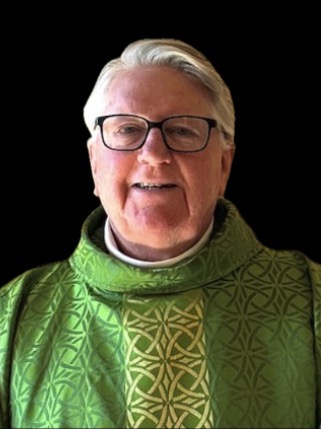
Father Geoffrey Plant
29th Sunday of Year C

Pray Continually and
Never Lose Heart
Today’s parable is about a very formidable woman, a widow, who badgers a reluctant judge to act on her behalf. If an unjust and self-centred judge is intimidated into action, how much more will a loving God readily answer our prayers without delay? To the prayer that is persistent and constant we must also add the qualities of trust and patience. That reflects our belief that God answers persevering prayer, when and how God wills.
TWTW Visual Summary and Discussion Questions
Click to enlarge
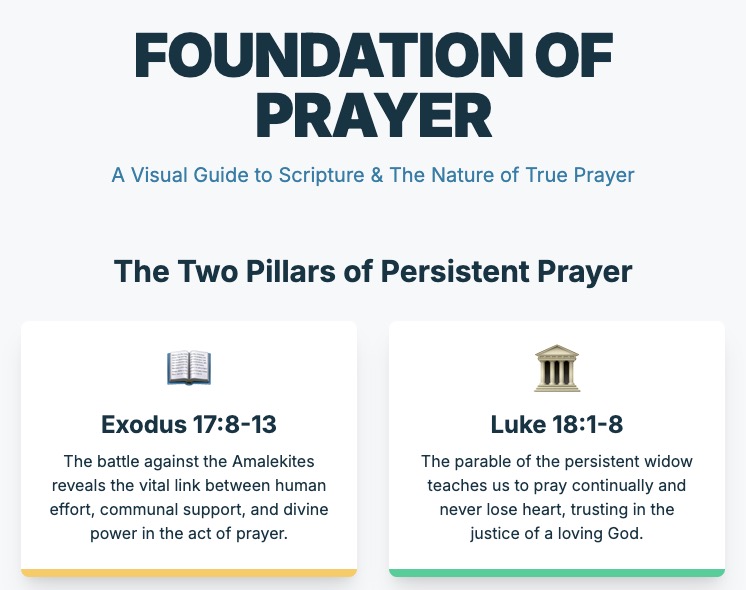
FOUNDATION IN SCRIPTURE & PRAYER
1. Core Scripture Passages
This homily connects two key biblical texts around the central theme of persistent prayer.
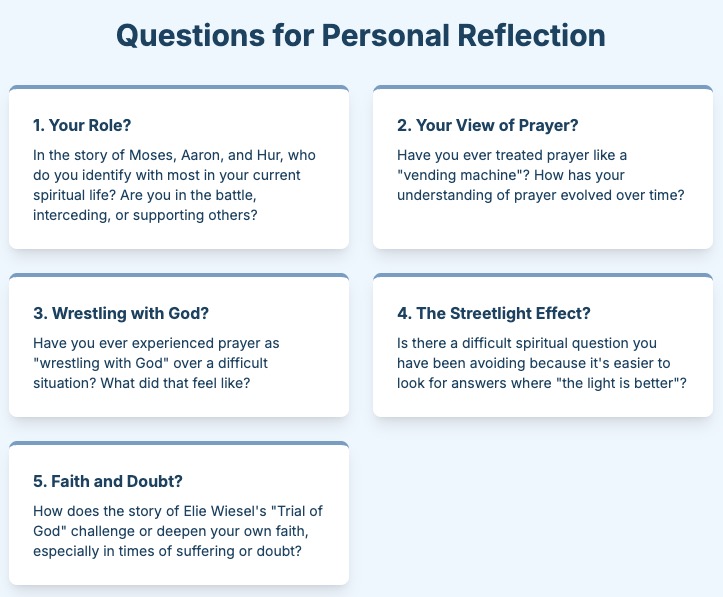
- First Reading: Exodus 17:8-13 (The battle between Israel and the Amalekites)
- Gospel Reading: Luke 18:1-8 (The parable of the persistent widow)
2. Analysis of the First Reading (Exodus 17:8-13)
This section explores the multi-layered meaning of the battle at Rephidim.
A. Narrative Summary
- Conflict: The Israelites, led by Joshua, battle the Amalekites.
- Moses' Role: He stands on a hill with Aaron and Hur, holding the "staff of God."
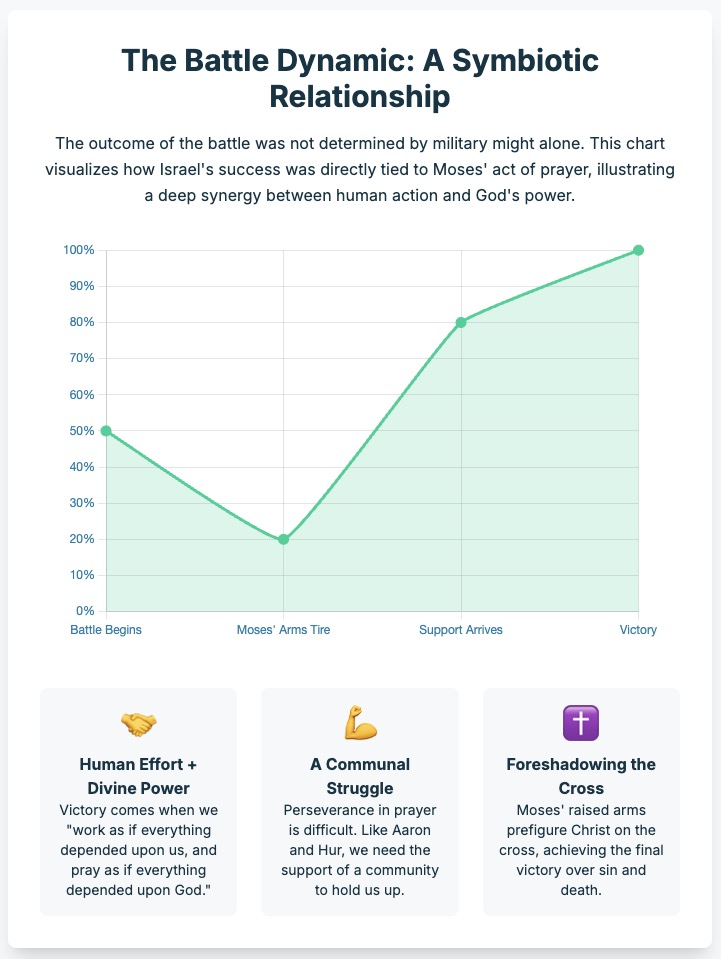
- The Dynamic: When Moses' arms are raised, Israel prevails. When they fall, the Amalekites gain the advantage.
- Resolution: Aaron and Hur physically support Moses' arms, ensuring they stay raised until Israel achieves victory.
B. Key Themes & Interpretations
- The Symbiotic Relationship: The victory is not won by military might alone, nor by prayer alone. It is a result of God's power working in and through human effort. This illustrates the principle: "Pray as if everything depended upon God, but work as if everything depended upon us."
- Prayer as a Struggle: The story shows that perseverance in prayer is difficult and often requires the support of a community (symbolized by Aaron and Hur).
- Foreshadowing the Cross: Pope Benedict noted that Moses' posture—arms raised in intercession on a mountaintop—is a prefigurement of Christ on the cross, whose raised arms achieve the final victory over sin and death.
3. The Central Theme: The Nature of Prayer
The homily uses the scripture readings as a launchpad to explore the fundamental question, "What is prayer?"
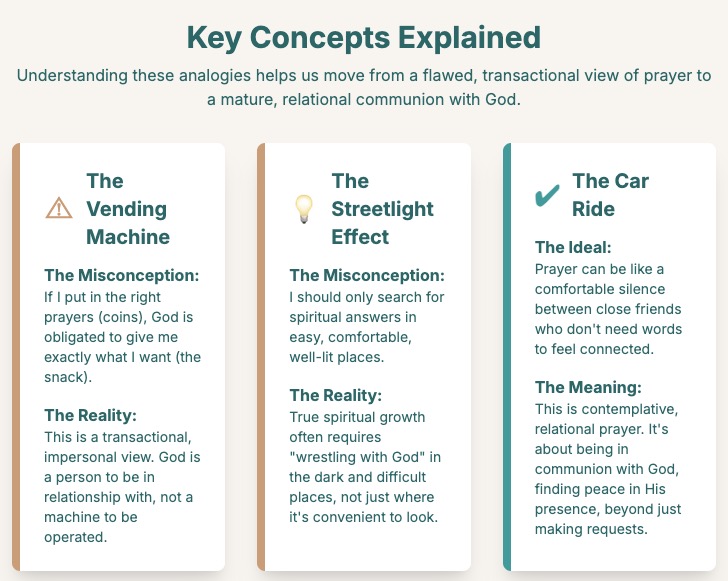
A. What Prayer is NOT
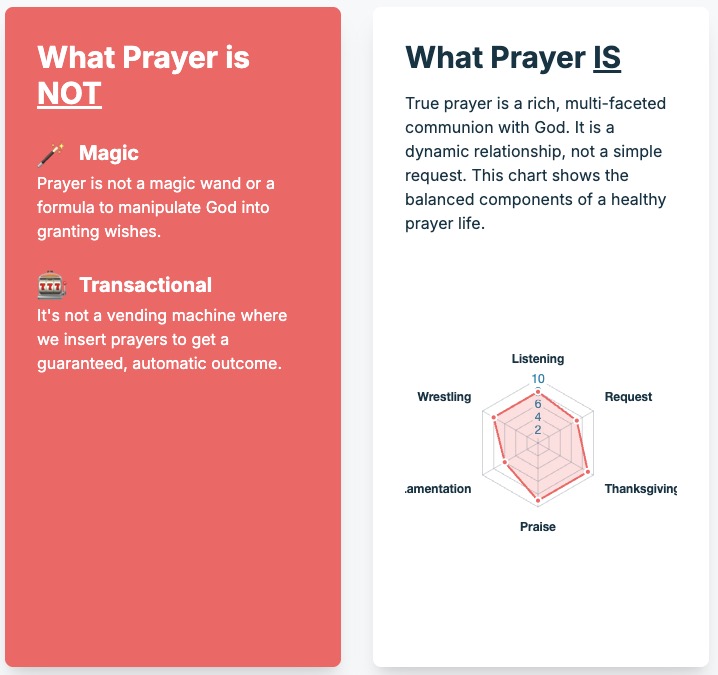
- It is NOT Magic: Prayer isn't a formula or incantation to manipulate God into granting wishes (e.g., the improperly understood novena).
- It is NOT Transactional: Prayer is not a "vending machine" where we insert prayers and automatically receive a desired outcome.
B. What Prayer IS
Prayer is a rich and multi-faceted communion with God.
- Raising the Mind & Heart: A conscious turning of our being toward God.
- Communication & Communion: Being "one with" God, which can be in words or comfortable silence.
- Listening: Allowing God to speak to us ("Speak, Lord, your servant is listening").
- Request (Petition): Asking for our needs (e.g., "Give us each day our daily bread").
- Thanksgiving (Eucharistia): Expressing gratitude for God's gifts.
- Praise (Tehilim): Adoring God for who He is.
- Lamentation: Crying out to God in our suffering (e.g., "My God, my God, why have you abandoned me?").
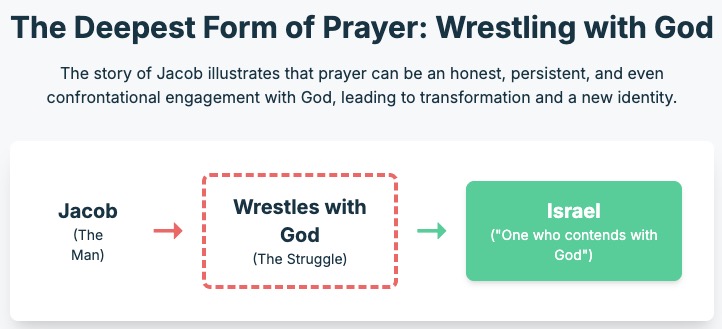
- Wrestling: Engaging with God honestly and persistently, even in our confusion and doubt. This is powerfully imaged in the story of Jacob wrestling with the stranger and being renamed Israel ("one who contends with God").

Click to enlarge
PARABLES, PERSEVERANCE & PRACTICE
4. Analysis of the Gospel Reading (Luke 18:1-8)
This section breaks down the parable of the persistent widow, which serves as the core teaching on why we should never lose heart in prayer.
A. The Parable's Logic
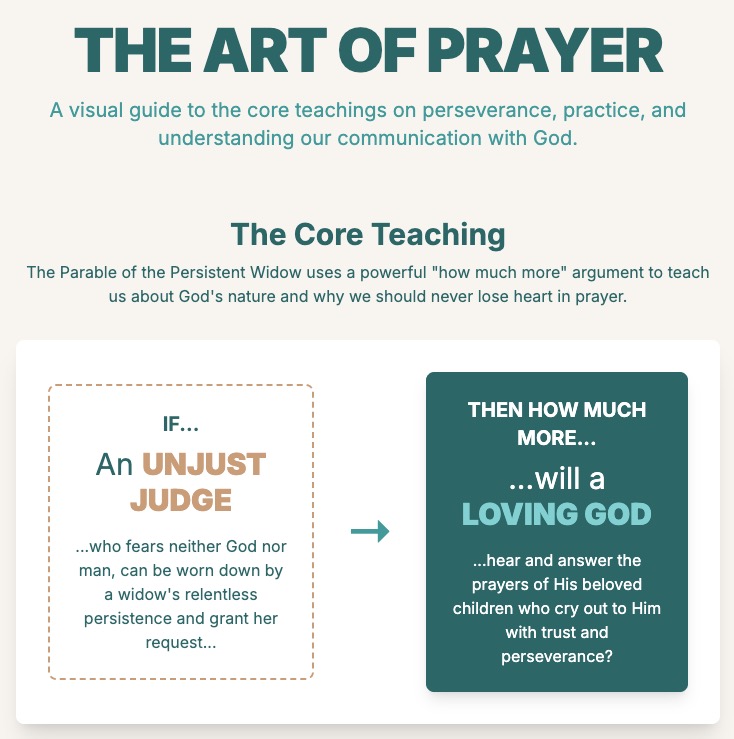
The parable operates on an a fortiori argument ("how much more..."). It invites us to compare a negative example with a positive reality to understand God's nature.
- The Characters:
- An unjust judge who is the antithesis of God's justice. He fears neither God nor man.
- A powerless, oppressed widow who has no one to advocate for her but herself. She persistently demands vindication.
- The Action: The judge, worn down by the widow's relentless persistence (described with a forceful Greek word, hupōpiazō, which literally means "to give a black eye"), finally grants her request simply to be rid of her.
- The Lesson: If an unjust and self-centered judge can be moved by sheer persistence, how much more will a loving, just God hear and answer the prayers of His beloved children who cry out to Him?
5. Key Concepts & Analogies for Understanding Prayer
The homily uses several powerful analogies to clarify the practice and pitfalls of prayer.
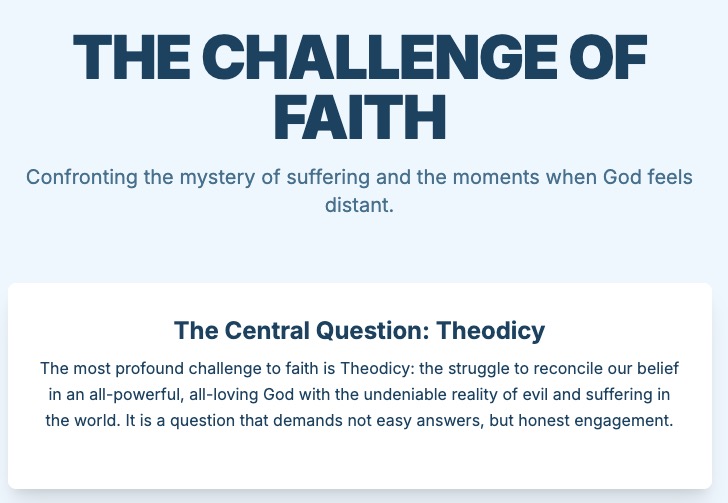
- The Streetlight Effect:
- The Story: A man loses his keys in a dark park but searches for them under a streetlight "because the light is better here."
- The Meaning: This describes our tendency to search for spiritual answers only in the easy, comfortable, well-lit places. It is a metaphor for avoiding the hard, often dark work of "wrestling with God" where the true answers are often found.
- The Vending Machine:
- The Image: Putting in a prayer (the coin) and expecting a specific, guaranteed result (the snack).
- The Meaning: This represents an incorrect, transactional view of prayer that treats God as an impersonal dispenser of favors rather than a person with whom we are in a relationship.
- The Car Ride:
- The Scenario: Two close friends can drive together in comfortable silence without feeling awkward.
- The Meaning: This is an analogy for contemplative prayer. Communion with God does not always require words; it can be a silent, peaceful resting in His presence, which is a sign of a deep and comfortable relationship.
Click to enlarge
FAITH & SUFFERING & RADICAL TRUST
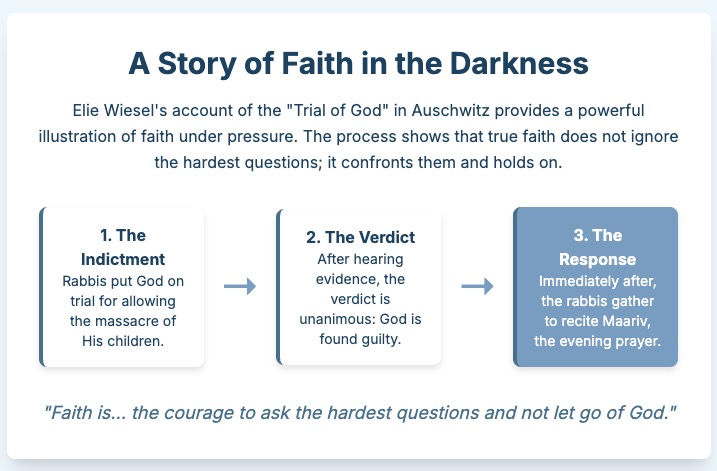
6. The Mystery of Suffering & Divine Silence (Theodicy)
This section confronts the most difficult aspect of prayer: how to maintain faith when God seems indifferent to our suffering.
- Theodicy: The formal term for the struggle to reconcile belief in an all-powerful, all-loving God with the reality of evil and suffering in the world.
- Elie Wiesel's "Trial of God":
- The Context: In the Auschwitz concentration camp, rabbis put God on trial and find Him guilty for allowing the Holocaust.
- The Response: Immediately after the verdict, they gather to recite evening prayers.
- The Insight: This powerful story illustrates that faith is not about having all the answers or demanding that God conform to our expectations. It is about the courage to ask the hardest questions and not let go of God, even when we cannot understand His ways.
- The Pointillism Analogy:
- The Art: A pointillist painting by Georges Seurat is made of thousands of individual, seemingly random dots of color. If you look at one dot, it is meaningless. Only when you step back and see the whole canvas do the dots merge into a beautiful, coherent image.
- The Meaning: This is an analogy for our limited human perspective. A single moment of suffering is one dot in the vast canvas of the Divine Plan. We cannot grasp the full picture from our vantage point, but we are invited to trust that our "dot" is part of a greater whole that God sees and understands.
7. Conclusion: The Ultimate Prayer
The homily concludes by presenting the perfect model for all Christian prayer, especially in times of trial.
- The Model of Christ: Jesus in the Garden of Gethsemane provides the perfect example. He wrestles honestly with God ("Father, if you are willing, take this cup away from me") but ultimately surrenders in an act of radical trust ("Yet not my will but yours be done"). His prayer contains both honest struggle and profound submission.
- The Final Message: We are called to heed Jesus' teaching to pray continually and never lose heart, grounding our persistence not in a demand to get what we want, but in a profound trust in God's will, even when—and especially when—we cannot understand it.
Father Kevin Rettig
29th Sunday of Year C

Touching the Divine
Prayer is not a tool to influence God, but a transformative encounter that changes our nature and reveals our deepest, God-given potential.
TWTW Visual Summary and Discussion Questions
Click to enlarge
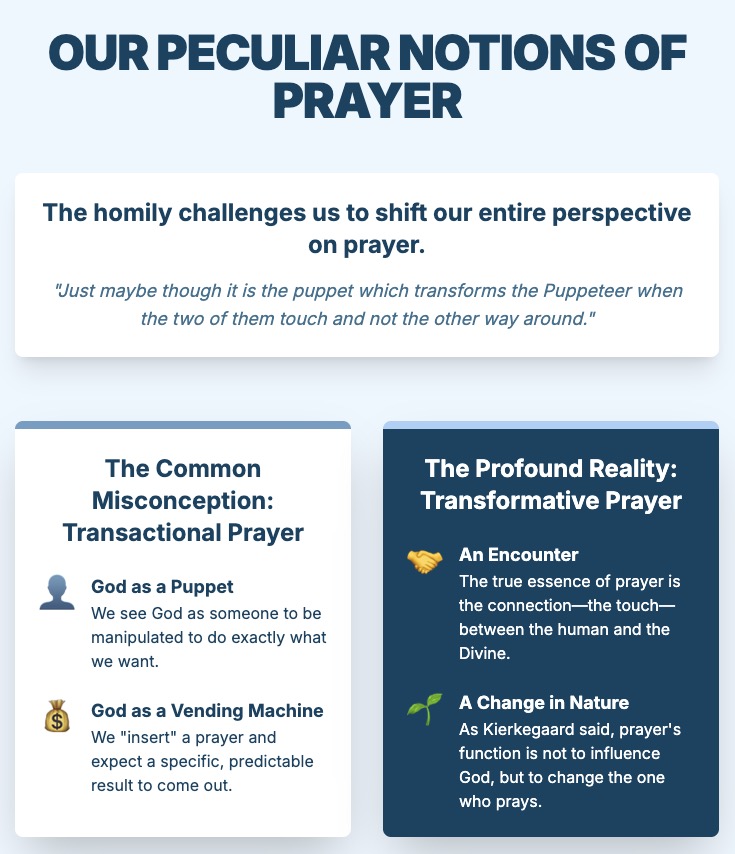
"Just maybe though it is the puppet which transforms the Puppeteer when the two of them touch and not the other way around."
Discussion Questions:
- Fr. Rettig describes seeing God as a "puppet" or a "vending machine." In what ways have you, or people you know, sometimes treated prayer transactionally, expecting a specific outcome for a specific request?
- Søren Kierkegaard is quoted as saying, "The function of prayer is not to influence God but rather to change the nature of the one who prays." How does this idea challenge your own understanding or practice of prayer?
- Reflect on a time your prayer was not answered in the way you hoped. Looking back, can you see how the experience of praying—the "touch between the human and the Divine"—might have changed or shaped you in some way?

Click to enlarge
"He mourned the loss of his right hand as well as his Olympic dream for both had seemingly been shattered but then he went deep into himself and allowed the human to touch the divine."
Discussion Questions:
- The story of Károly Takács is one of immense loss leading to unexpected victory. Describe a "shattered dream" or significant setback in your own life. How did that experience force you to re-evaluate your path or your own abilities?
- Takács’s moment of prayer allowed his focus to shift from his lost right hand to his overlooked left hand. What does this "left hand" symbolize in our own lives when we face disappointment or loss?
- When have you been forced to develop a new skill or strength because of a limitation or loss? How did that process of discovery change your perception of yourself and what you thought was possible?

Click to enlarge
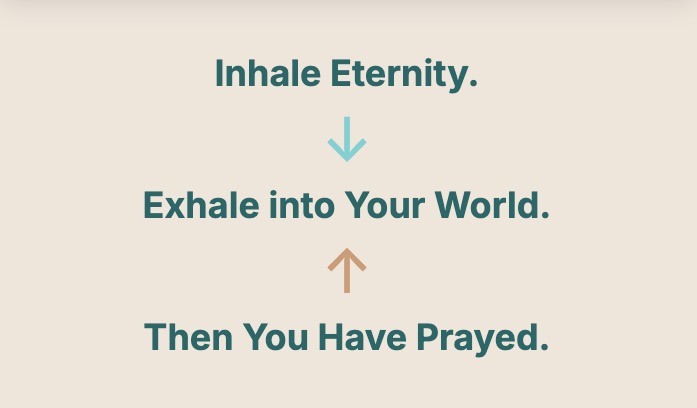
"Prayer is not changing the heart of God prayer is finding the heart of God inside your own. It is then that you come to know your own heart."
Discussion Questions:
- Rabbi Jonathan Sacks suggests that daily prayer "gently restores control over time" and helps us "recover perspective." How can pausing for prayer or reflection help you see your daily problems from the "perspective of the Eternal"?
- The homily concludes that prayer helps you discover "hidden potential that you did not see before." What hidden potential might God be inviting you to discover in your life right now through your current circumstances?
- What does it mean to you to "inhale a deep breath of Eternity and breathe that eternity out into your world"? What is one practical way you could live out that idea this week?

The Sin of Not Noticing
Fr. Ruttig’s homily explores sacrificial love through the Cross. It confronts our tendency to feel that God is distant in our pain and reveals the Cross as God’s definitive, empathetic answer: a powerful, flesh-and-blood “Me too.”
TWTW Visual Summary and Discussion Questions
Click to enlarge
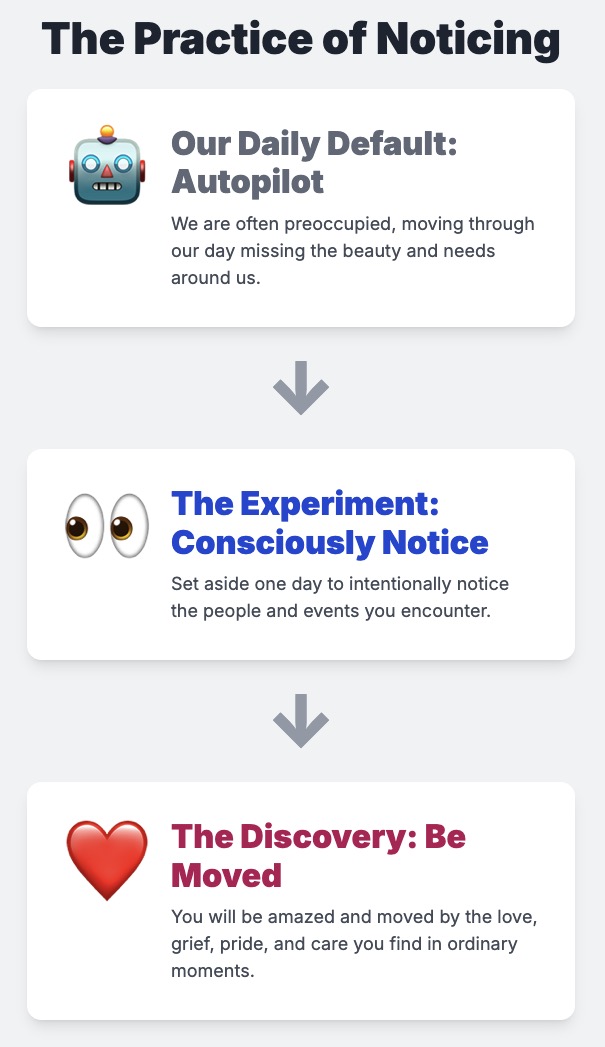
The Practice of Noticing
Fr. Rettig's personal experiment reveals that noticing is a spiritual practice. These questions explore what it means to cultivate this virtue in our own lives.
Discussion Questions:
Fr. Rettig begins with a story about a tombstone that read, "I told you I was sick," highlighting the deep human need to be noticed. Think of a time you felt truly "seen" and understood by someone. What did that feel like? Conversely, have you ever felt overlooked or invisible? How did that impact you?
Fr. Rettig undertook a personal project to "consciously notice things all day." He was amazed at how moved he was by the ordinary people and events he encountered (parents at school, nurses in a hospital, a young woman's pride in her first home).
- What do we often miss when we are preoccupied or moving through our day on autopilot?
- If you were to set aside one day to "consciously notice," what are someof the things or people you would focus on? What do you think you might discover?
Click to enlarge
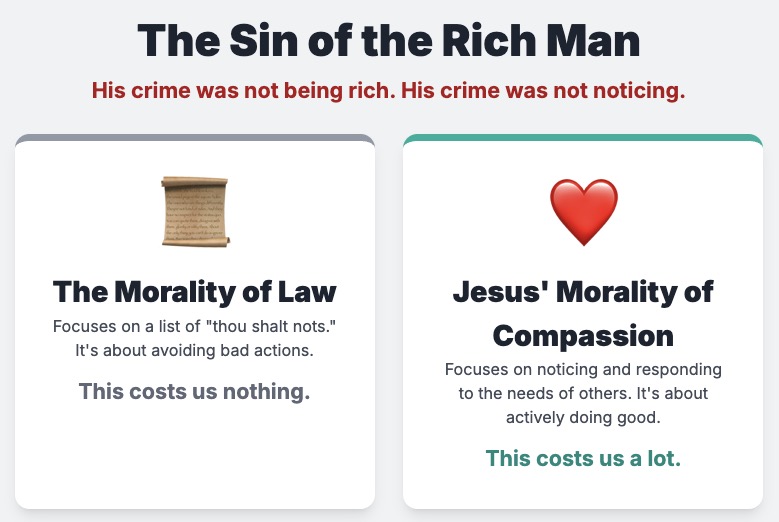
The Sin of the Rich Man
Fr. Rettig offers a challenging reinterpretation of the parable of Lazarus and the Rich Man. The following questions delve into this new perspective on sin and morality.
Discussion Questions:
The homily defines the Rich Man's sin not as being wealthy or mean, but as the "crime of not noticing."
- Do you agree with this interpretation? Why is simply "not noticing" a serious sin?
- Fr. Rettig contrasts Jesus' morality of compassion with a morality of law (obeying a list of "thou shalt nots"). He says the morality of law "costs us nothing," while the morality of compassion "costs us a lot." What does he mean by this? What is the "cost" of compassion?

Click to enlarge
The Blinders of Our Age
Fr. Rettig identifies modern technology as a significant obstacle to being present. These questions ask us to consider the specific challenges of our time.
Discussion Questions:
Fr. Rettig identifies the "two screens" (television and computer) as the primary tools that put blinders on us, monopolizing our attention and fostering a culture of not noticing.
- In what specific ways do our screens (phones, computers, TVs) prevent us from noticing the people and world around us?
- The homily suggests the person we fail to notice might even be "in your own house." How can we be more present and attentive to our own family members and loved ones?
Click to enlarge
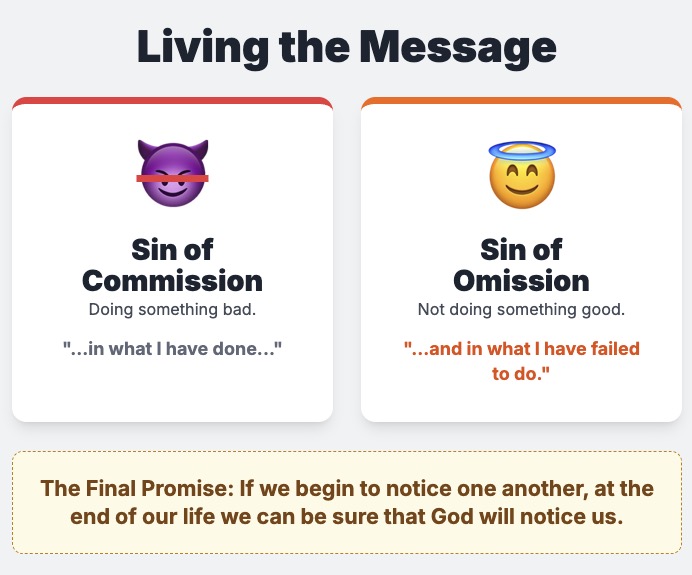
Living the Message
Ultimately, reflection must lead to action. This final set of questions is designed to help translate the homily's message into concrete steps and a deeper understanding of our relationship with God.
Discussion Questions:
The homily states, "Sin is not necessarily doing something bad. Sin is far more often not doing something good." This refers to sins of omission, which are included in the Mass when we pray, "...in what I have done, and in what I have failed to do."
- Why do you think it's often easier to avoid doing wrong than it is to actively do good?
- What is one practical, concrete step you can take this week to "look up from your screen" and notice someone who might need "an understanding word, a smile, or an ear to listen"?
The homily concludes with a powerful promise: "If we begin to notice one another, at the end of our life we can be sure that God will notice us."
- What does this final thought mean to you? How does our compassion for others relate to how we are received by God?
Monsignor Peter Hahn
29th Sunday of Year C

Persistent Prayer
Falling in love with God transforms our lives and deepens our relationship with Him through persistent prayer, which is essential for experiencing His love, peace, and joy in our daily lives.
TWTW Visual Summary and Discussion Questions
Click to enlarge
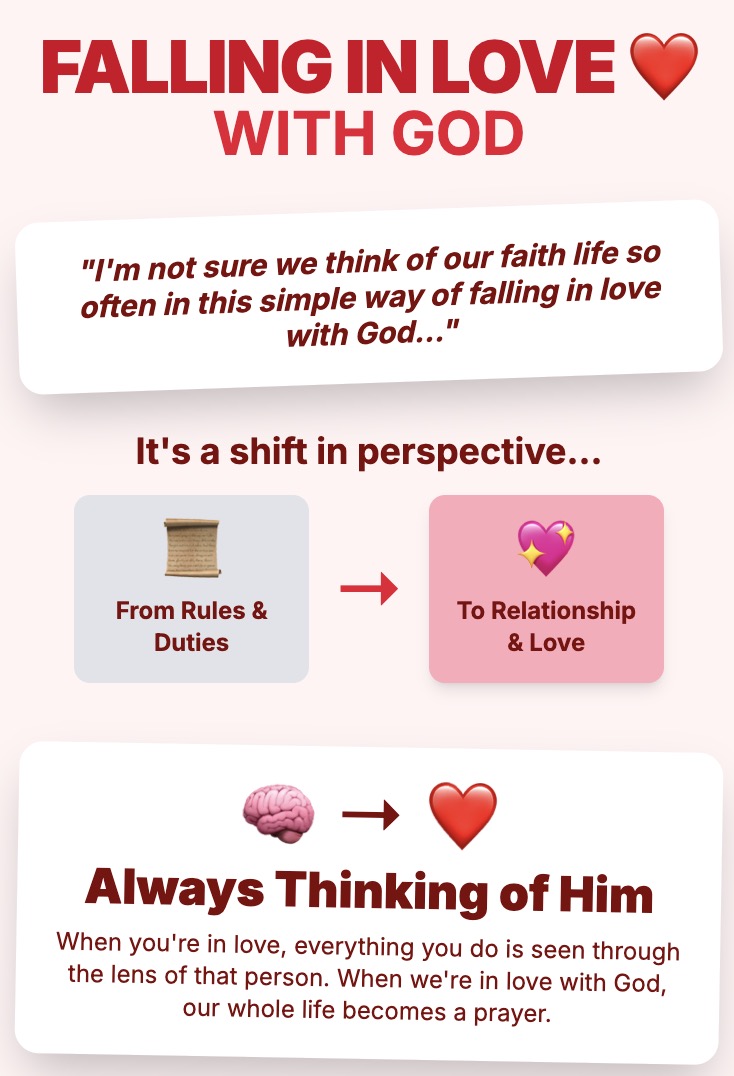
FALLING IN LOVE WITH GOD
"I'm not sure we think of our faith life so often in this simple way of falling in love with God, of being in a relationship of love with him."
Discussion Questions:
- Msgr. Hahn compares growing in faith to the experience of falling in love. How does this analogy change or challenge your personal understanding of what it means to be a person of faith?
- What aspects of modern life or religious upbringing can, as the homilist suggests, "obscure and disfigure this most basic truth that God loves each of us infinitely"?
- Reflect on a time you have felt deeply in love with another person. How did that relationship change your perspective and priorities? In what ways could those same changes apply to a relationship with God?
Click to enlarge
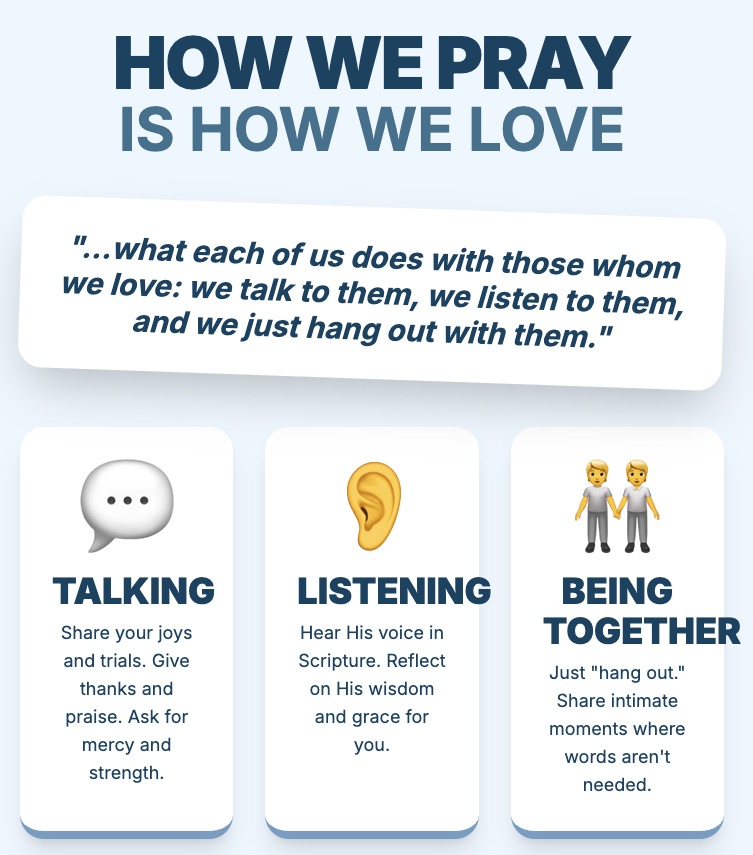
THE THREE EXPRESSIONS OF PRAYER
"But their terms are simply… what each of us does with those whom we love: we talk to them, we listen to them, and we just hang out with them."n of God."
Discussion Questions:
- The homily breaks down prayer into three expressions: vocal (talking), meditative (listening), and contemplative (just being with). Which of these three expressions do you feel most comfortable with in your own prayer life, and why?
- Meditative prayer is described as listening to God, especially through Scripture. When have you felt that God was speaking to you through a passage of Scripture or another spiritual work? What was that experience like?
- The idea of contemplative prayer—simply "hanging out" with God without words—can be challenging. What are some practical ways you could incorporate moments of quiet, wordless presence with God into your daily routine?

Click to enlarge
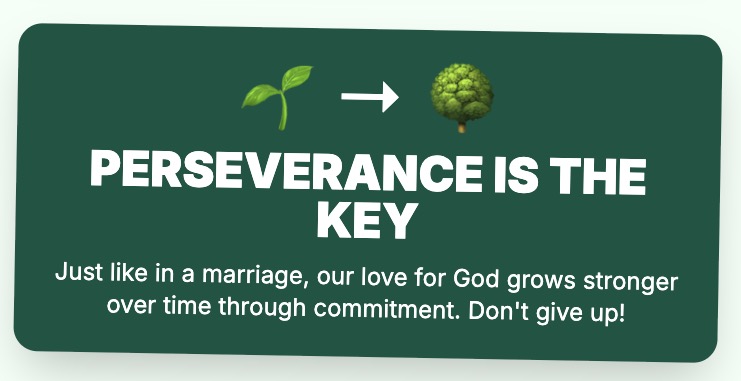
PRAYING WITHOUT BECOMING WEARY
"When we persevere in prayer we will become stronger, able to overcome those difficulties that life will present to us.""
Discussion Questions:
- The homily uses the example of Moses: when his arms were raised in prayer, the Israelites prevailed. In your own life, have you noticed a difference in your ability to handle challenges when you are praying consistently versus when you are not?
- Perseverance is often difficult, and it's easy to "give it up" when we feel our prayers aren't being answered. What does the analogy of a married couple's love growing stronger over time teach us about the need for perseverance in our relationship with God?
- St. Paul says Scripture is useful for "training in righteousness." How can turning to Scripture (meditative prayer) specifically help you persevere in your faith when you feel weary or discouraged?

Our Faith is Meant to Afflict the Comfortable
Faith challenges complacency and calls for personal reform and stewardship of God’s gifts, emphasizing the importance of caring for others and adhering to the Church’s teachings to avoid societal and spiritual downfall.
TWTW Visual Summary and Discussion Questions
Click to enlarge
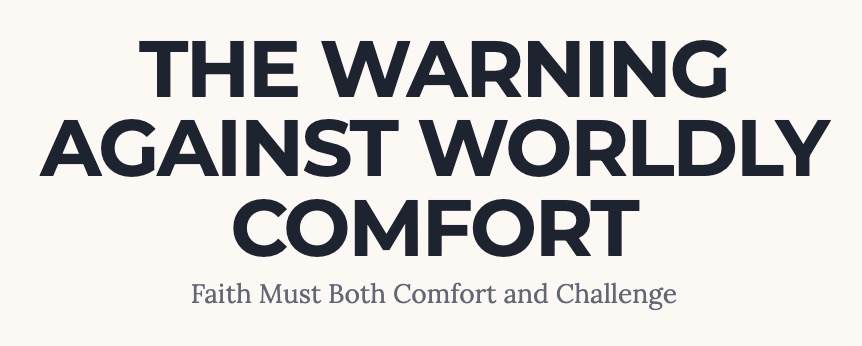
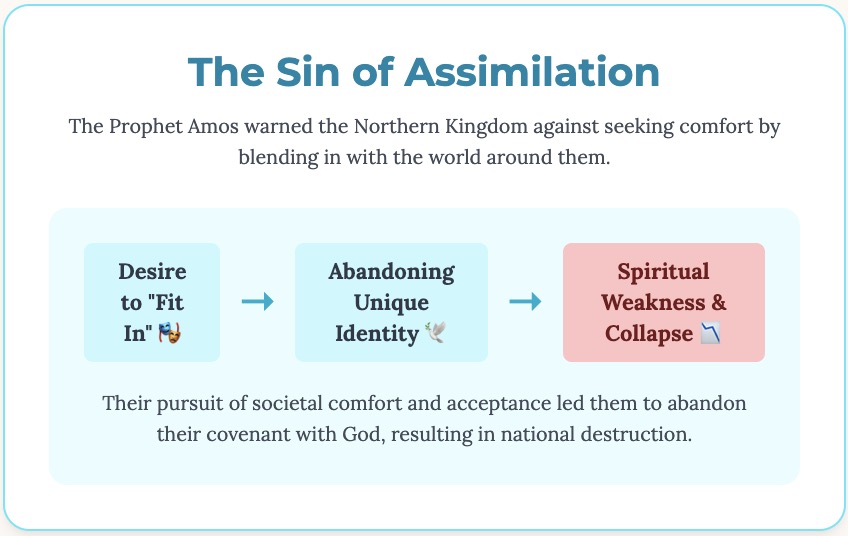
Part 1: The Warning Against Worldly Comfort
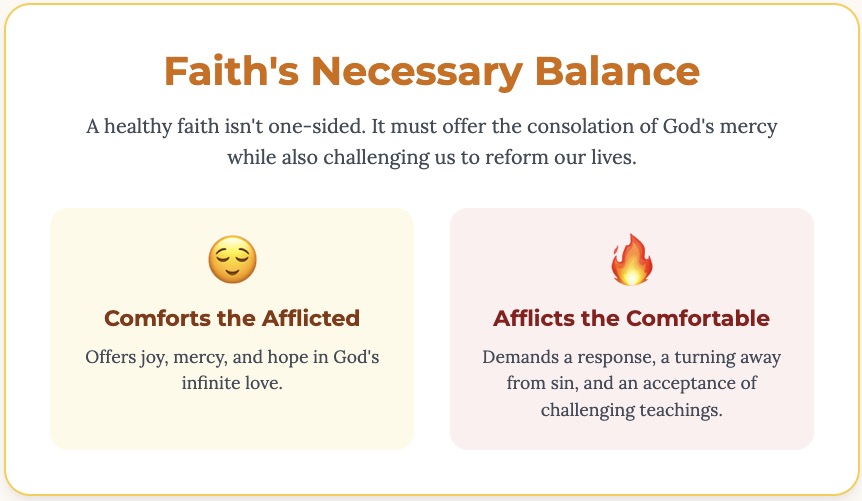
Focus: This section explores the homily's opening theme: that faith must both comfort and challenge us. It examines the historical example of the Prophet Amos warning Israel against the spiritual danger of seeking comfort through cultural assimilation.
Discussion Questions:
- Msgr. Hahn begins with the saying that faith is meant to "comfort the afflicted, but sometimes to afflict the comfortable." Can you recall a time when your faith was a great comfort? Can you recall a time when a teaching or scripture reading made you feel "afflicted" or challenged in your comfort? Why is this balance important?
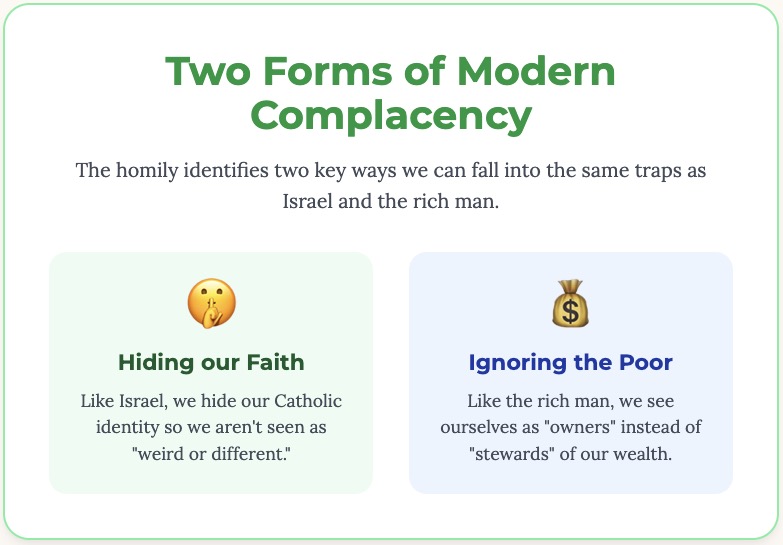
- The people of the Northern Kingdom wanted to be "assimilated" and not seem different from the cultures around them. In what specific ways do we, as modern Catholics, feel pressure to "blend in" with secular society?
- Amos warned that this desire for comfort would lead to weakness and collapse. Where do you see this principle at work today? How does abandoning our unique Catholic identity in favor of societal acceptance make our faith weaker?

Click to enlarge
Part 2: The Individual Face of Complacency
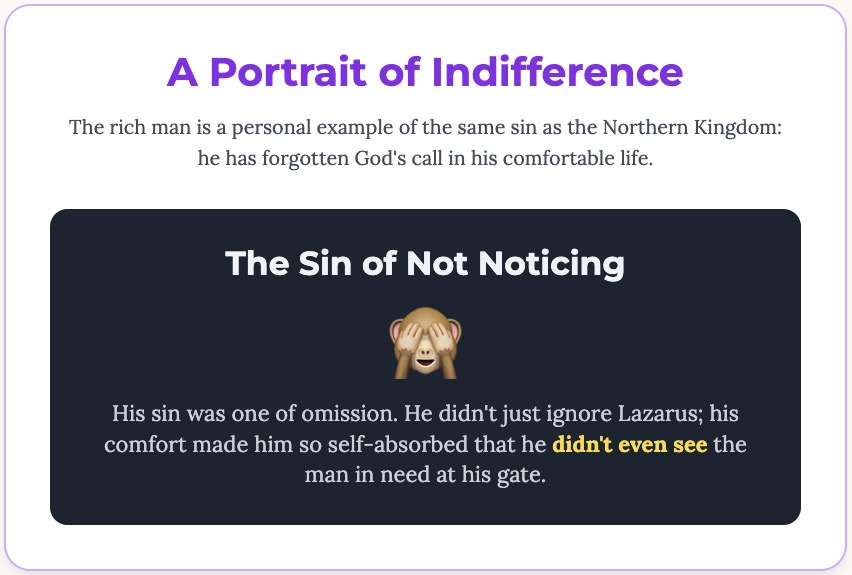
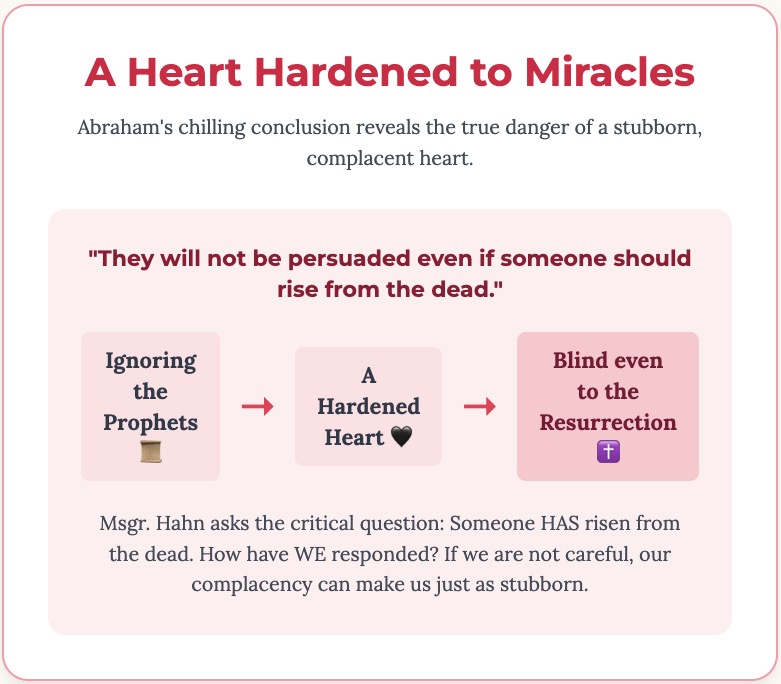
Focus: This section analyzes the Gospel parable of the rich man and Lazarus as a powerful, individual example of the destructive nature of self-centered indifference and the hardness of a complacent heart.
Discussion Questions:
- The homily emphasizes that the rich man's sin was a failure to notice. Why is this type of indifference, born from being overly comfortable, so spiritually dangerous? Who is the "Lazarus" at the gate of our society (or our own lives) that we might fail to notice?
- Abraham says the brothers have "the benefits of all the law and the prophets." What are the "prophetic voices" God gives us today to warn us against complacency (e.g., Scripture, Church teaching, the words of the Pope, our conscience)?
- Msgr. Hahn connects Abraham’s final words directly to us: "Someone has risen from the dead... and yet how do we respond?" If the Resurrection is the ultimate sign, why do we still fall into the trap of complacency? What does this say about the stubbornness of the human heart?

Click to enlarge
Part 3: The Urgent Call to Stewardship and Holiness
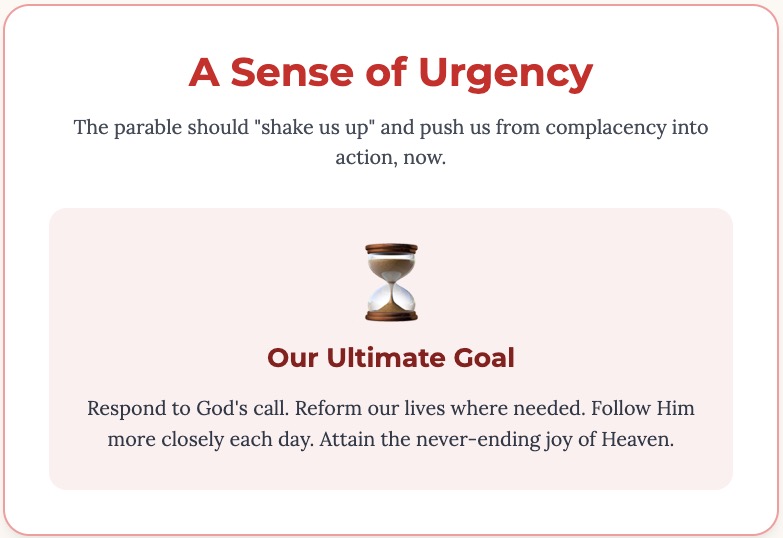
Focus: This final section applies the warnings to our modern lives, identifying contemporary forms of complacency and issuing an urgent call to reform our lives by embracing our role as stewards and actively pursuing holiness.
Discussion Questions:
- The homily presents two modern forms of complacency: hiding our faith to fit in, and failing to share our resources. Which of these two temptations do you find more challenging in your own life? Why?
- Discuss the concept of being "stewards" rather than "owners" of God's gifts. How does this shift in perspective change your view of your time, talents, and money?
- The readings are meant to give us a "sense of urgency." What is one practical area of your life (e.g., prayer, a specific sin, a relationship, an act of charity) where you feel God is calling you to move from complacency to urgent action?
- The homily concludes by calling us to "follow him more closely each day." What is one concrete step you can take this week to respond to that call and break out of a comfortable spiritual routine?
Frank Pavone
29th Sunday of Year C

Efficacy of Prayer in Conflict
Today’s readings are not only focused on the efficacy of prayer, but more specifically on the efficacy of prayer amidst battle and conflict. In the first reading, it is a battle for the very survival of God’s people against fierce enemies; in the Gospel, it is a legal battle for justice.
TWTW Visual Summary and Discussion Questions


Click to enlarge
PRAYER AMIDST BATTLE
"It is possible to speak in a certain sense of a war of the powerful against the weak: a life which would require greater acceptance, love and care is considered useless, or held to be an intolerable burden, and is therefore rejected in one way or another."
Discussion Questions:
- John Paul II speaks of a "war of the powerful against the weak." Where do you see this dynamic playing out in society today, beyond the issue of abortion?
- The text describes a "conspiracy against life" that can damage relations between peoples and states. How do you see this happening on a global or national level?
- When a person is viewed as "an enemy to be resisted or eliminated" because they compromise another's lifestyle, what fundamental truths about human dignity are being ignored?
Click to enlarge
PRAYER AND ACTION
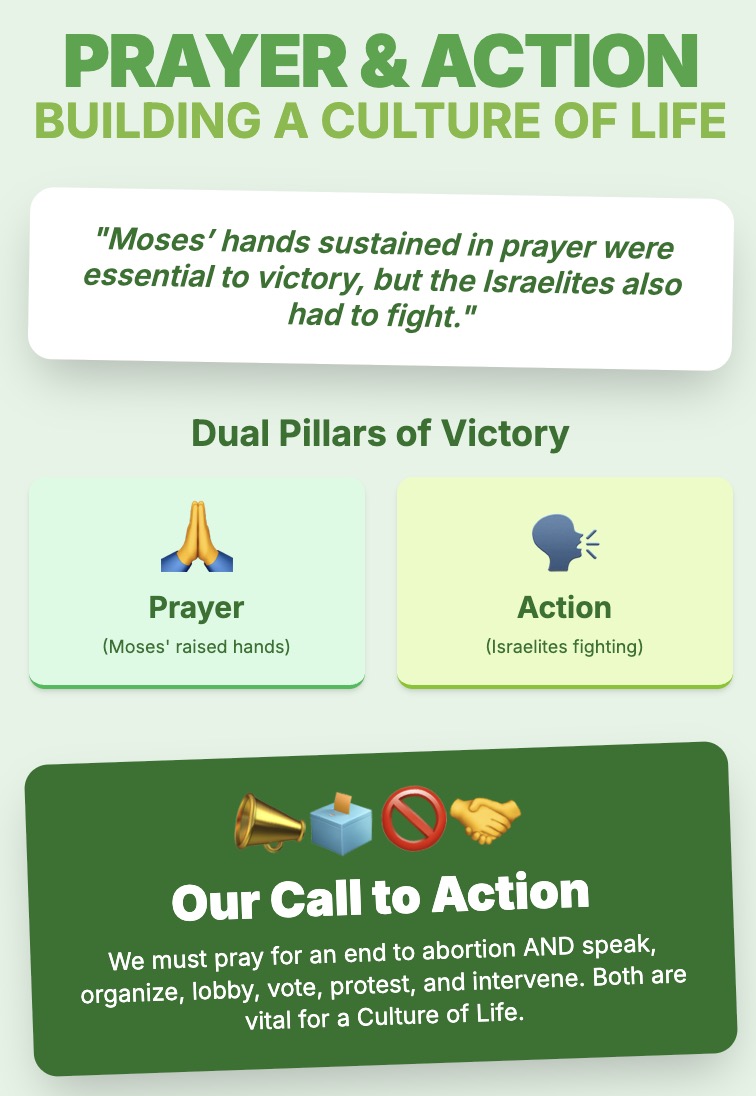
"The efforts of those who build a Culture of Life must be sustained by prayer but not limited to prayer. Moses’ hands sustained in prayer were essential to victory, but the Israelites also had to fight."
Discussion Questions:
- The guide balances prayer and action, stating we must pray but also "speak, organize, lobby, vote, protest, and intervene." Which of these actions do you feel most called to? Which do you find most challenging?
- Moses on the hill represents the essential role of prayer, while Joshua on the battlefield represents direct action. How can a person or a community ensure they are strong in both aspects and not neglecting one for the other?
- Reflect on your own life. Are there areas where you tend to pray about a problem without taking practical action, or where you act without grounding your efforts in prayer? How can you create a better balance??
Click to enlarge
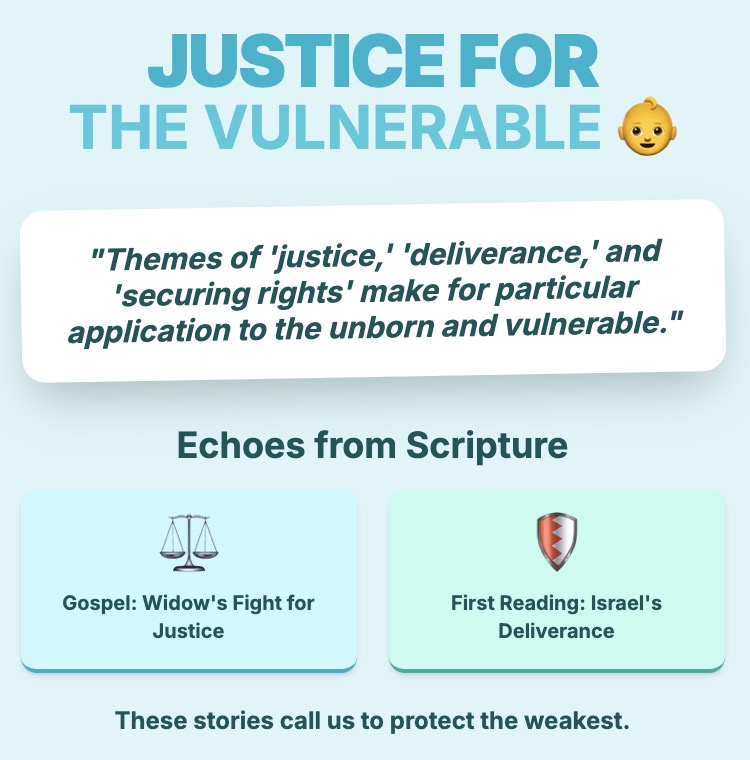
JUSTICE FOR THE VULNERABLE
"In both the first reading and the Gospel, the themes of 'justice,' 'deliverance,' and 'securing rights' make for particular application to the unborn and vulnerable."
Discussion Questions:
- The Gospel story features a widow demanding justice from a reluctant judge. How is the situation of the unborn and other vulnerable populations similar to that of the widow in the parable?
- What does "deliverance" for the unborn look like in a practical sense? What specific actions or societal changes would contribute to securing their rights?
- The text encourages joining a daily prayer campaign. How does the consistent, daily act of praying for a specific intention, like ending abortion, shape one's own heart and commitment to the cause?
Non-profit ministries have permission to copy/paste any infographics on this website into bulletins, presentations, or class/home school worksheets. A link and/or shoutout to THE WORD THIS WEEK and respective contributors would be greatly appreciated.