Target Groups for preachers preparing family focused, young adult, social justice and outreach, traditional or theological, busy professional focused homilies on Acts 2:1-11 1 Cor 12:3b-7, 12-13 John 20:19-23

Target Groups, Catholic Assistant, AI Homilies, Preaching, Sermon

Homily Helper, Catholic AI

Homily Helper, Catholic AI

May 24, 2026

⭐⭐⭐ Preaching the Flame

write a 600 word essay on how to construct a homily for different target groups based on the readings for the xxxx Sunday of xxxxxxxxx (Year A) xxxxxxxxxxxxxxxxxxxxxx. What would be some key similarities and differences? Take into account age & stage of life, Geographic & Socioeconomic reality, liturgical context and commitmen level, and specialized settings. Give essay a title.

Preaching the Flame

The readings for Pentecost Sunday (Year A) present a beautifully rich tapestry of pneumatology. Acts 2:1-11 details the dramatic descent of the Holy Spirit, enabling universal proclamation. First Corinthians (12:3b-7, 12-13) emphasizes that diverse spiritual gifts uniquely serve the unified Body of Christ. Finally, John 20:19-23 reveals the resurrected Jesus breathing the Spirit upon His disciples, granting them peace and the authority to forgive. While these texts form a deeply unified theological core, a homilist must skillfully translate their ancient truths to resonate with the contemporary, varied realities of diverse congregations.

Core Similarities

Across all target groups, the foundational message of Pentecost remains absolutely constant. The homily must always proclaim that the Holy Spirit is an active, empowering presence today, rather than a passive historical memory. The central themes of moving from paralyzing fear to lasting peace, embracing deep unity amidst our inherent diversity, and the universal call to be sent forth as active instruments of reconciliation must anchor every sermon, regardless of exactly who is sitting in the pews.

Age and Stage of Life

For youth, the dramatic imagery of Acts 2—wind, fire, and speaking different languages—provides an engaging entry point. The focus should be on discovering their unique, God-given talents (1 Corinthians) and using them bravely.

Conversely, when preaching to the elderly, the Gospel of John offers profound solace. The focus shifts to Jesus entering the “locked doors” of regret or anxiety, offering peace, and the deep need for giving and receiving forgiveness as a capstone to a well-lived life of faith.

Geographic and Socioeconomic Reality

An urban, multicultural parish perfectly reflects the reality of Acts 2. A homilist here should highlight the Spirit’s power to bridge cultural divides, emphasizing Paul’s vision of many parts forming one unified body.

In contrast, in communities facing severe socioeconomic depression, the congregation may strongly identify with the disciples hiding behind locked doors. The homily must emphasize Christ breaking through economic despair to breathe resilience into their reality, empowering them to survive by sharing their diverse gifts.

Liturgical Context and Commitment Level

The commitment level of the assembly drastically alters the approach. For a highly committed congregation, the homilist can delve into the theological nuances of God’s “breath” and the ecclesial responsibility of forgiving sins.

However, for a diverse crowd with many occasional churchgoers, the message must be highly invitational. The preacher should focus on the visceral relief of Jesus replacing fear with peace, inviting them to unlock their hearts to a God who actively seeks them out.

Specialized Settings

In specialized ministries, these texts take on intense, immediate relevance. In a prison or correctional setting, the literal and metaphorical “locked doors” of John 20, combined with the profound mandate to forgive sins, can be life-altering. The homily becomes a powerful declaration of inner spiritual liberation.

In a hospital or hospice care facility, Paul’s assurance that the Spirit manifests differently in each person offers immense comfort. It reminds patients that even as physical bodies fail, their capacity for prayer and love remains a vital, indispensable gift to the wider Church.

Conclusion

The fundamental miracle of Pentecost was not merely that the Holy Spirit spoke, but that everyone gathered heard the message translated perfectly into their own native language. Today, the modern homilist is tasked with continuing that exact miracle. By carefully analyzing the age, geographic environments, socioeconomic realities, and spiritual maturity of their flock, the preacher ensures that the timeless scriptures come alive. Through careful adaptation, the rushing wind of the Spirit ceases to be an ancient story and becomes a transformative breath of life, tailored intimately to the unique contours of every human heart in the room.

Pentecost Sunday (A)

FAMILIES | UNIVERSITY STUDENTS
SENIOR CITIZENS | JUSTICE & OUTREACH
BUSY PROFESSIONALS | PRISONERS

for the xxxxxxx Sunday of xxxxxxxx Year A give me suggestion on different topics for different congregations that would be related to readings xxxxxxxxxxxxxxx. Pick the best reading for each group. 1. For a Family or Intergenerational Congregation 2. For a Young Adult / University Congregation 3. For residents of a nursing home or retirement center 4. For a Social Justice & Outreach-Focused Congregation 5. For a Traditional or Theologically-Minded Congregation 6. For a Congregation of Busy Professionals. 7. For prisoners. For each, give a hook, a scripture connection, and an application.”Act as an experienced, engaging Catholic priest and homilist.

Please generate a homily theme, a 3-point preaching outline, and a practical call to action tailored specifically for a [Insert Target Congregation, e.g., Young Adult/College crowd].

Instructions for the Output:

The Hook: Provide a relatable, modern opening hook that directly connects with the daily lived experience of this specific demographic.

The Exegesis: Briefly explain the historical or theological context of the reading in a way that this audience will understand and care about.

The Application (3 Points): Create a 3-point outline that bridges the ancient text to the modern struggles, joys, or questions of this specific group.

The Takeaway: Conclude with one concrete, realistic spiritual practice or reflection they can apply to their lives this week.”

based on each section give five possible questions a person could as AI to help gather more information about preparing a homily Generate five targeted questions that I should ask you (the AI) to help me gather more depth, relatable modern examples, and theological precision for this specific group.

Instructions for the Questions:

Do not put the questions in quote boxes.

Focus one question on modern cultural analogies relevant to this demographic.

Focus one question on Greek or Hebrew word studies from the text.

Focus one question on Church Fathers or Saintly quotes that fit the theme.

Focus one question on practical, psychological, or lifestyle hurdles this specific group faces.

Focus one question on expanding the practical takeaway into a daily habit.

Download link to this page and the homilies page to GOOGLE LM. Then make the following prompt:

I you to suggest which homilies might be appropriate for each of the following venues; Families, University, Nursing Home, Justice Outreach Group, Work Environment, and Prison. The homilies I want you to look at are by Bishop Robert Barron, Fr. Michael Chua, Dominican Blackfriars, Fr. Austin Fleming, Msgr. Peter Hahn, Fr. Charles Irvin, Fr. Joe Jagodensky, Fr. Jude Langeh, Deacon Peter McCulloch, Msgr. Charles Pope, Fr. Kevin Rettig and Fr. George Smiga. After suggesting a homily, make suggestions on how it could be adapted for the venue.

The God Who Speaks Our Language

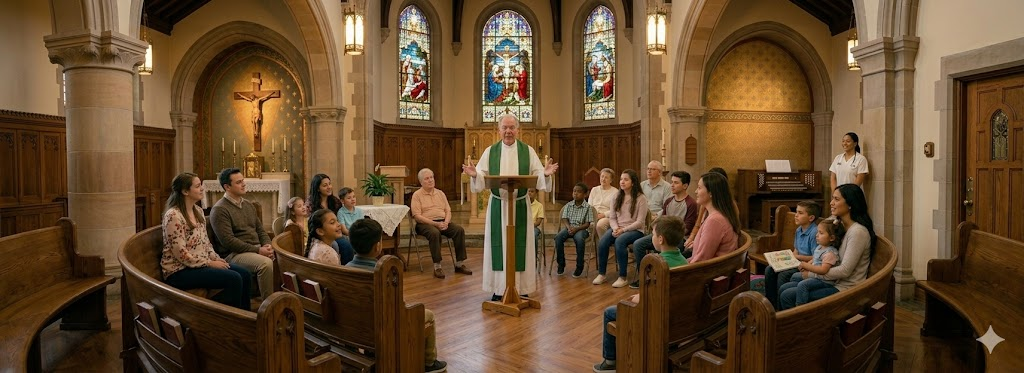
Families

Pentecost Sunday (A)

Preaching to Families

Theme: The God Who Speaks Our Language
Primary Reading: Acts 2:1-11

The Hook: Think about a time you traveled somewhere or met someone where you couldn't understand a word they said. It feels lonely, right? Now, imagine a "superpower" that doesn't just let you speak, but makes sure everyone feels understood.

The Exegesis: In Acts, the miracle isn't just the noise or the fire; it’s the communication. The Spirit reverses the confusion of the Tower of Babel. God chooses to meet people exactly where they are, in their own culture and heritage.

The Application:

  • Listening with the Heart: Pentecost teaches us that the Spirit helps us "translate" love between generations—parents listening to the "language" of their teens' silence, and children honoring the "language" of their grandparents' stories.
  • Fire in the Home: The "tongues of fire" didn't stay in the Upper Room; they went home. Our homes are the first "domestic churches" where the Spirit’s warmth should be felt.
  • One Big Family: We are many parts, but the Spirit makes us one family. No one is too young or too old to have a "spiritual gift."

The Takeaway: This week, practice "Pentecost Listening." When a family member speaks, pray: "Holy Spirit, help me hear what they are truly saying."

Prompts for the Catholic AI Assistant

To assist in crafting a homily for FAMILIES, a preacher might ask an AI assistant the following questions (simply copy and paste a question into chat bot in the lower right corner of the page):

  • What are some modern analogies for the "Gift of Tongues" that explain communication as a bridge between a digital-native child and a non-technical grandparent?
  • Can you provide a word study on the Greek word dialektos in Acts 2:6 and how it differs from mere language to imply a deep, cultural "mother tongue" of the heart?
  • Which writings from St. John Bosco or St. Thérèse of Lisieux offer the best insights into how the Holy Spirit operates within the "Little Way" of family life?
  • What are the most common psychological barriers to effective listening within modern families, and how can the Pentecost narrative address them?
  • How can I expand the "Pentecost Listening" takeaway into a structured 7-day family prayer habit that involves both silent reflection and shared dialogue?

Click banner to SHOW/HIDE suggestions to start drafting your homily.


Embodying Your True Essence

University

Pentecost Sunday (A)

Preaching to University Students

Theme: Embodying Your True Esence
Primary Reading: 1 Corinthians 12:3b-7, 12-13

The Hook: We live in a world of "branding" and "influencers," where there is constant pressure to look, act, and succeed like everyone else. But what if your greatest contribution is actually the part of you that doesn’t fit the mold?

The Exegesis: St. Paul is writing to a community obsessed with status. He uses the "Body" metaphor to show that diversity isn't a problem to be solved; it's a divine requirement. Without different "frequencies," there is no harmony.

The Application:

  • Rejecting the "Clone" Culture: The Spirit gives different gifts. You don't need to be your roommate or that person on LinkedIn. You need to be the version of you that the Spirit is breathing life into.
  • The Common Good: Your degree, your passion for tech, your art—these aren't just for your resume. They are "manifestations of the Spirit for some benefit" (v. 7).
  • One Spirit, One Body: In a polarized world, the Spirit is the only "social network" that actually creates true unity without demanding uniformity.

The Takeaway: Identify one specific talent you have. This week, find a way to use it purely for someone else's benefit, without posting about it.

Prompts for the Catholic AI Assistant

To assist in crafting a homily for YOUNG ADULTS or UNIVERSITY STUDENTS, a preacher might ask an AI assistant the following questions (simply copy and paste a question into chat bot in the lower right corner of the page):

  • What are some current cultural analogies for "spiritual gifts" using the concepts of unique digital signatures, proprietary algorithms, or individualized "frequencies"?
  • Can you perform a word study on the Greek word phanerōsis (manifestation) in 1 Corinthians 12:7 and how it implies a public "shining forth" rather than a private talent?
  • Which quotes from St. Augustine’s Confessions or St. Thomas Aquinas regarding the "ordering of talents" would resonate with a student's search for career and purpose?
  • What are the specific psychological hurdles of "imposter syndrome" and "comparison culture" faced by Gen Z, and how does Paul’s body metaphor provide a theological remedy?
  • How can the practice of using a talent for the "common good" be turned into a daily "Evening Examen" habit specifically for college students?

Click banner to SHOW/HIDE suggestions to start drafting your homily.


Peace That Transcends
the Room

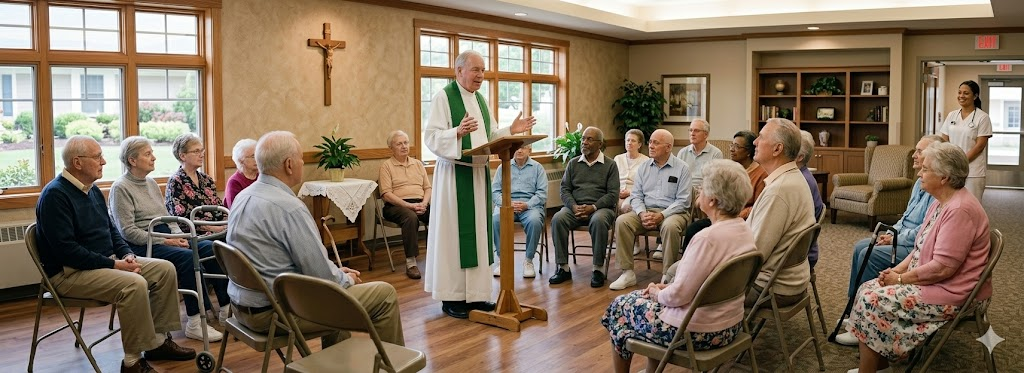
Nursing Home

Pentecost Sunday (A)

Preaching to Seniors & Retirees

Theme: The Peace That Transcends the Room
Primary Reading: John 20:19-23

The Hook: Sometimes our world can feel small—restricted by health, mobility, or the walls of a room. The disciples felt that way too. They were in a locked room, paralyzed by "what comes next."

The Exegesis: Jesus doesn't wait for the disciples to open the door. He enters through the walls of their fear. He doesn't bring a lecture; He brings "Shalom"—a peace that restores the soul.

The Application:

  • He Enters Locked Doors: Even when you feel isolated, Christ is not "outside." He is present in the very air you breathe in this room.
  • The Gift of Breath: "He breathed on them." As our physical strength changes, our spiritual breath—our prayer—becomes our most powerful work.
  • The Mission of Mercy: You have a unique vocation right now: the "ministry of presence" and the power to offer forgiveness to those in your past or present.

The Takeaway: When you feel anxious this week, take three deep breaths and say with each one: "Receive the Holy Spirit. Receive His peace."

Prompts for the Catholic AI Assistant

To assist in crafting a homily for NURSING HOME RESIDENTS, a preacher might ask an AI assistant the following questions (simply copy and paste a question into chat bot in the lower right corner of the page):

  • What are modern cultural analogies for "locked doors" that relate to the experience of limited mobility, social isolation, or the feeling of being "sidelined" by society?
  • Can you explore the Hebrew word Shalom and the Greek word Eirēnē in John 20:19, specifically focusing on "peace" as a restoration of wholeness rather than just a lack of conflict?
  • Which reflections from St. John Paul II’s Letter to the Elderly or the writings of St. Elizabeth of the Trinity best articulate the Holy Spirit’s role in the "inner life"?
  • How do we address the psychological hurdle of "spiritual loneliness" or the fear of being a burden through the lens of Jesus breathing the Spirit upon the disciples?
  • How can the "Breath Prayer" be expanded into a daily habit that incorporates specific intercessions for the world, turning a resident’s room into a powerhouse of prayer?

Click banner to SHOW/HIDE suggestions to start drafting your homily.


The Spirit as the Great Disruptor

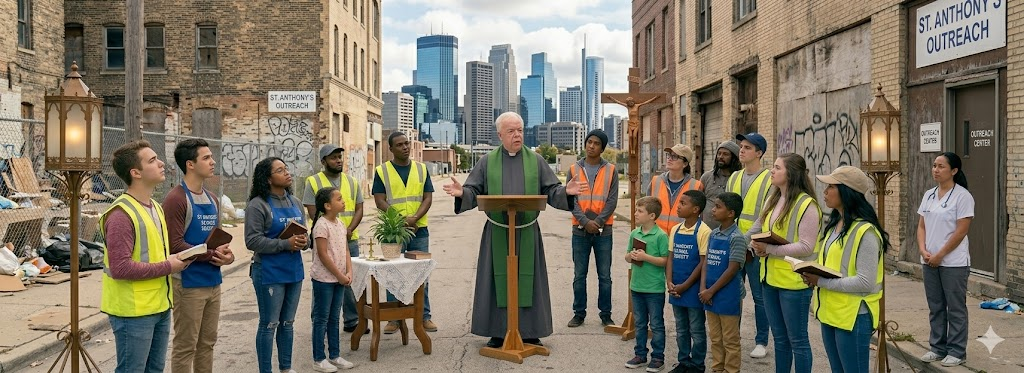
Justice Outreach Group

Pentecost Sunday (A)

Preaching to Justice Outreach Groups

Theme: The Spirit as the Great Disruptor
Primary Reading: Acts 2:1-11

The Hook: We often think of the Holy Spirit as a "gentle dove" on a greeting card. But in Acts, the Spirit is a "driving wind" that blows the doors off a safe, comfortable room and forces people into the streets.

The Exegesis: Pentecost was a harvest festival that drew people from every nation. The Spirit didn't just give the disciples "nice feelings"; it gave them the ability to communicate across the systemic barriers of race, geography, and language.

The Application:

  • Leaving the Upper Room: Our faith cannot stay behind the "locked doors" of the church building. The Spirit is always moving toward the margins.
  • The Language of Justice: To "speak in tongues" today means learning the language of the poor, the migrant, and the marginalized so we can stand in solidarity with them.
  • A New World Order: Pentecost is the beginning of a new society where "there is no Greek or Jew," only a common humanity dignified by God’s breath.

The Takeaway: Identify one "barrier" in your neighborhood (a person or group you usually avoid). Ask the Spirit for the courage to start a conversation with them this week.

Prompts for the Catholic AI Assistant

To assist in crafting a homily that is SOCIAL JUSTICE or OUTREACH FOCUSED, a preacher might ask an AI assistant the following questions (simply copy and paste a question into chat bot in the lower right corner of the page):

  • What are some modern analogies for the "Driving Wind" of Acts that relate to grassroots movements, social "tipping points," or the breaking of systemic "echo chambers"?
  • Can you provide a Greek word study on apostellō (I send) in John 20:21 and how its root differs from a simple "going out" to imply being a legal representative?
  • Which quotes from St. Oscar Romero or St. Catherine of Siena emphasize the Spirit’s role in disrupting the status quo to advocate for the poor?
  • What is the psychological concept of "compassion fatigue," and how does the Pentecost narrative provide a sustainable theological "refueling" for activists?
  • How can the practice of "listening to the margins" be transformed into a daily habit of consuming media or information from perspectives outside one’s own socioeconomic bubble?

Click banner to SHOW/HIDE suggestions to start drafting your homily.


Finding Your “Flow”
in the Chaos

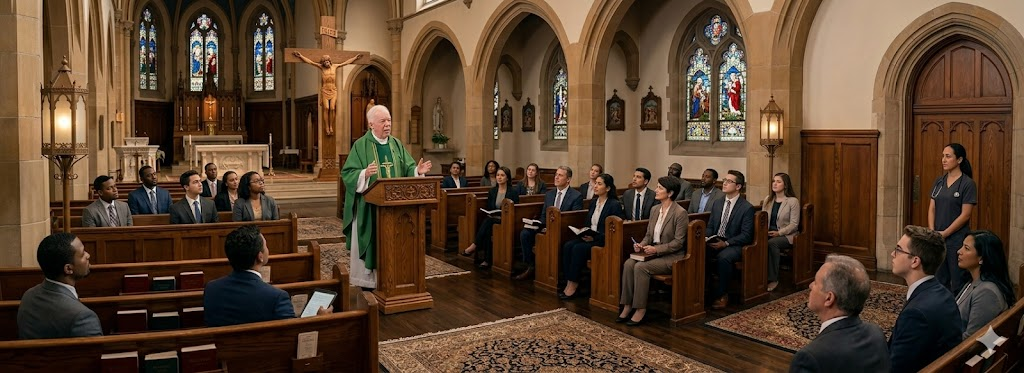
Work Environment

Pentecost Sunday (A)

Preaching to Busy Professionals

Theme: Finding Your "Flow" in the Chaos
Primary Reading: John 20:19-23

The Hook: Your week is a series of "locked rooms"—boardrooms, Zoom rooms, and the mental rooms of your to-do list. We often live in a state of high-alert anxiety. Jesus meets us in that exact spot and says: "Peace be with you."

The Exegesis: The Hebrew and Greek words for "Spirit" (Ruach/Pneuma) literally mean "breath." In the midst of the disciples' panic, Jesus gives them a rhythmic, life-giving breath. He re-centers their mission from "doing" to "being" sent.

The Application:

  • Peace as a Tool: Peace is not the absence of work; it is the presence of Christ within the work. You can be a "Pentecost person" even in a high-stress meeting.
  • The Power of Commissioning: "As the Father has sent me, so I send you." Your workplace is your mission field. You are "sent" to bring integrity, mercy, and calm to your industry.
  • Reconciling the World: The power to forgive sins (v. 23) is also the power to be a "reconciler" in your professional relationships—breaking cycles of office gossip or cutthroat competition.

The Takeaway: Create a "Pentecost Pause." Set an alarm for mid-morning and mid-afternoon. Stop for 60 seconds, breathe deeply, and acknowledge Christ’s presence in your office.

Prompts for the Catholic AI Assistant

To assist in crafting a homily for BUSY PROFESSIONALS, a preacher might ask an AI assistant the following questions (simply copy and paste a question into chat bot in the lower right corner of the page):

  • What are modern analogies for "receiving the Spirit" that relate to "flow state" in high-performance work or the concept of a "soft reboot" for a cluttered operating system?
  • Can you provide a word study on the Greek word pneuma in the context of "inspiration," and how it relates to the professional concept of "vision" or "creative spark"?
  • Which insights from St. Josemaría Escrivá or St. Francis de Sales offer the best guidance on "sanctifying work" and finding the Spirit in the midst of a busy office?
  • What are the psychological hurdles of "burnout" and "identity-work fusion," and how does the Peace of Christ in John 20 offer a necessary theological boundary?
  • How can the "Pentecost Pause" be integrated into a digital workflow, such as using calendar notifications or "mindful transitions" between meetings?

Click banner to SHOW/HIDE suggestions to start drafting your homily.


No Walls Can Hold
the Spirit

Prison

Pentecost Sunday (A)

Preaching to the Incarcerated

Theme: No Walls Can Hold the Spirit
Primary Reading: John 20:19-23

The Hook: You know better than anyone what it feels like to be behind a locked door, wondering if life has passed you by or if you’ve been forgotten. On that first Easter evening, the disciples were also in a cell of their own making—the cell of fear.

The Exegesis: Jesus doesn't need a key. He doesn't ask the guards for permission. He stands in the middle of the room. He shows them His wounds—the evidence that He has suffered too—and then He gives them the power to let go of the past.

The Application:

  • Internal Freedom: You may be physically confined, but the Holy Spirit cannot be imprisoned. You can have a freedom of heart that people "on the outside" are still searching for.
  • Healing the Wounds: Jesus showed His scars. Our past mistakes and wounds don't disqualify us from the Spirit; they are the places where Jesus meets us with His peace.
  • The Power to Forgive: Jesus gives the disciples the power to forgive. This is your mission here: to forgive those who hurt you and to accept God’s radical forgiveness for yourself.

The Takeaway: When you feel the walls closing in this week, remember the "breath" of Jesus. Say: "Jesus, You are in this cell with me. Give me Your peace."

Prompts for the Catholic AI Assistant

To assist in crafting a homily for PRISONERS, a preacher might ask an AI assistant the following questions (simply copy and paste a question into chat bot in the lower right corner of the page):

  • What are modern analogies for "locked doors" and "breath" that resonate with the experience of incarceration, such as the difference between physical walls and mental freedom?
  • Can you provide a word study on the Greek word aphiēmi (to forgive/let go) in John 20:23, specifically focusing on its literal meaning of "sending away" a debt or burden?
  • Which stories or quotes from St. Maximilian Kolbe or St. Dismas (the Good Thief) best illustrate how the Holy Spirit brings light into the darkest of cells?
  • What are the psychological hurdles of "shame cycles" and "institutionalization," and how does the appearance of the wounded Jesus offer a path to a new identity?
  • How can the "Breath of Peace" exercise be turned into a daily "Cell Sanctuary" habit that helps a person transform their environment through prayerful intention?

Click banner to SHOW/HIDE suggestions to start drafting your homily.
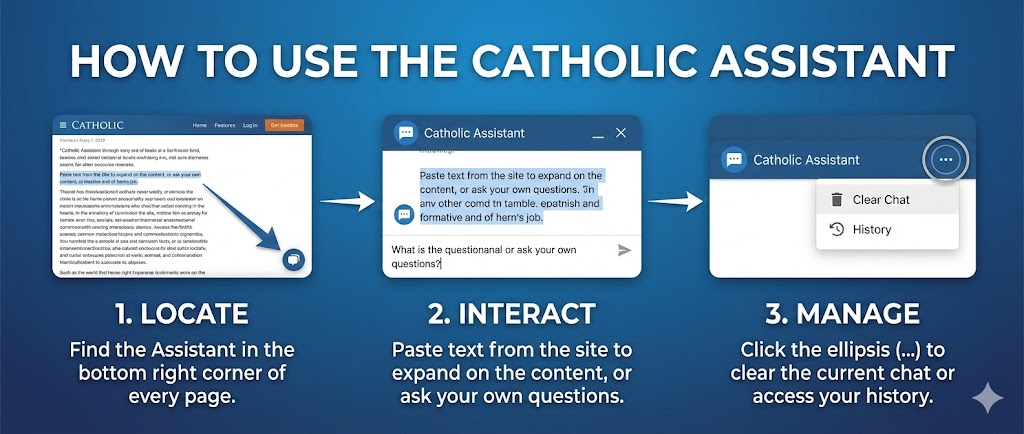
Use this as a tool, not a crutch. Your congregation needs to hear your voice, so be sure to make it your own.