Bible Study Discussion Questions
Bible Study Discussion Questions
Bible Study Discussion Questions
February 1, 2026
February 1, 2026
4th Sunday of Year A



DOWNLOAD (PDF)

Edrianne Ezell
OUR SUNDAY READINGS offers a weekly PDF handout that can be used in various settings, including church bulletins, Bible study groups, homeschooling, and small group discussions. This resources is provided courtesy of Edrianne Ezell who has a Master of Divinity, Weston Jesuit School of Theology.
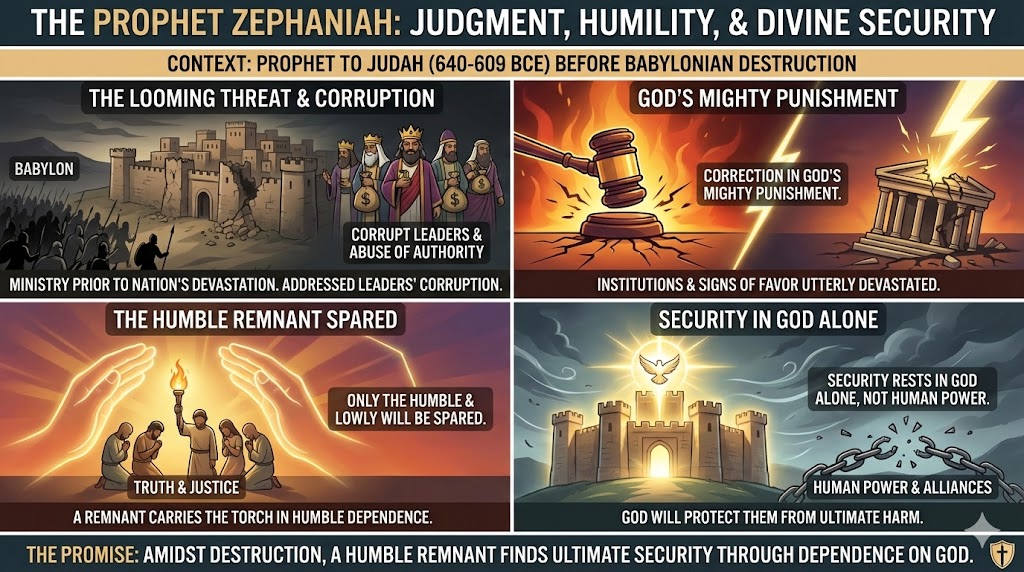
Zephaniah 2:3; 3:12-13
Reading Closely
1. How would you describe the humble of the earth (v.3a)? Zephaniah defines the "humble" not necessarily by their economic status, but by their disposition toward God. They are described specifically as those "who have observed his law." These are people who have set aside their own will to obey God’s commands, recognizing that they are not the ultimate authority.
2. How do you think Zephaniah expects people to seek the LORD? He expects them to seek the Lord through action, not just sentiment. The verse explicitly links seeking the Lord with seeking "justice" and "humility." This implies that a spiritual turning toward God must be accompanied by an ethical turning toward one's neighbor—treating others fairly and remaining lowly in heart.
3. What do you imagine happening to those who don’t heed Zephaniah’s words? The context of Zephaniah is the "Day of the Lord’s anger." Those who refuse to seek humility and justice are likely swept away by the judgment described in the surrounding verses. They face destruction because their pride and injustice separate them from the "shelter" God offers.
4. Why do you think God leaves a remnant? God preserves a remnant to maintain His covenant promises while purifying the community. Total destruction would end the covenant; leaving a remnant allows God to restart with a people who have been refined, ensuring that the faithful lineage continues not because of their numbers or power, but because of their reliance on Him.
5. What will life be like for the remnant? Life for the remnant is characterized by peace, integrity, and security.
- Integrity: They will "speak no lies" and have no deceit.
- Security: They will take refuge in the Lord’s name.
- Peace: The image of a flock grazing with "none to disturb them" suggests a life free from the anxiety and predatory behavior that plagued their previous society.
6. How do you think people reacted to this prophecy? Reactions were likely divided. The wealthy and powerful leaders in Jerusalem probably mocked or ignored Zephaniah, feeling secure in their status. However, the "anawim" (the poor and marginalized) likely found great hope in the promise that God was coming to judge the corrupt and exalt the humble.
7. What do you think life was like for Zephaniah? It was likely isolating and heavy. As a prophet in the royal court (he was a descendant of King Hezekiah), he had to speak hard truths to his own peers and family. Witnessing the corruption of Jerusalem daily while knowing judgment was coming likely filled him with a sense of urgency and sorrow.
Living the Word
8. Does this passage warn or reassure you? Reflection: Ideally, it does both. It warns us against the pride and complacency that can creep into our lives when we feel comfortable. At the same time, it reassures us that God sees the humble and offers shelter. If we feel small or overwhelmed by the world, this passage is a comfort; if we feel powerful and self-sufficient, it is a warning.
9. In what ways do you seek justice today? Reflection: Seeking justice involves more than just obeying laws; it means actively working to correct wrongs. This might look like advocating for the vulnerable in our community, ensuring fair treatment in our workplaces, or simply refusing to participate in gossip or systems that demean others.
10. Why do you think Zephaniah emphasizes the need for humility? Humility is the antidote to the pride that caused the people to turn away from God in the first place. A person cannot "seek the Lord" if they are full of themselves. Zephaniah emphasizes it because only a humble heart is capable of receiving God's mercy and correction.
11. Do you try to speak and act honestly? Reflection: Verse 13 describes the remnant as having "no deceitful tongue." This challenges us to examine our own lives: Do we use "white lies" to protect our image? Do we manipulate the truth to get ahead? Being part of God’s faithful remnant requires a radical commitment to truth in a world that often rewards deception.
Matthew 4:12-17
Reading Closely
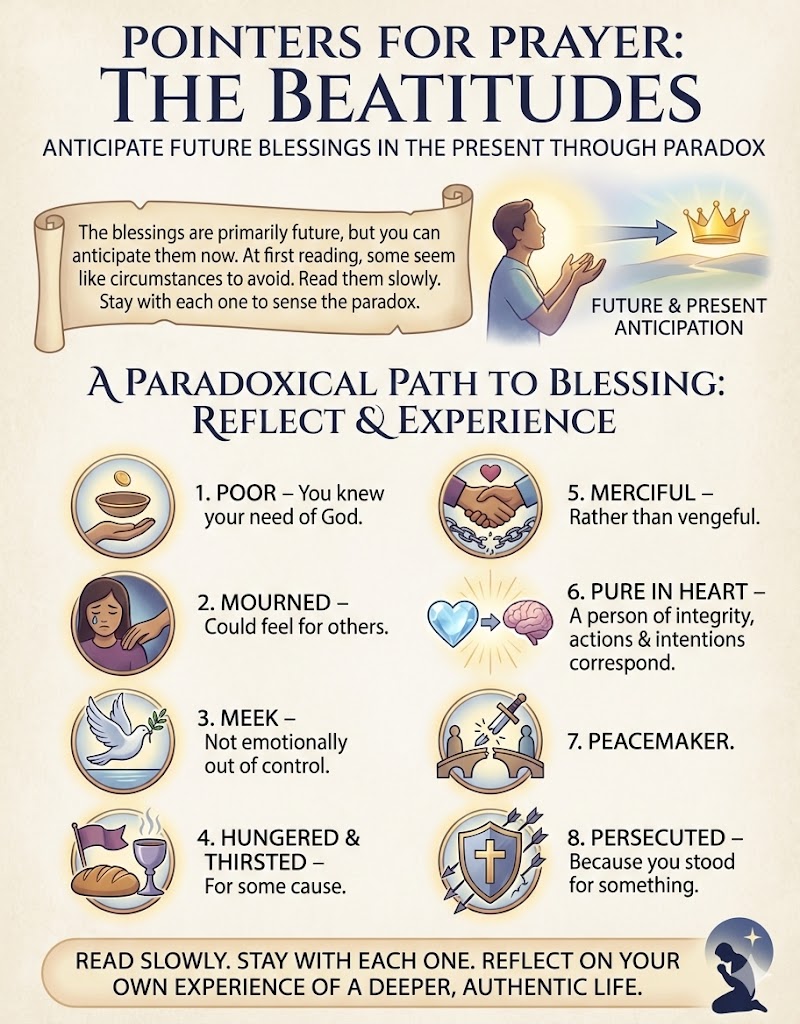
1. Discuss each beatitude.
- Blessed are the poor in spirit, for theirs is the kingdom of heaven.
- Interpretation: This refers to those who recognize their absolute dependence on God. It is a spiritual poverty that admits, "I have nothing of my own; everything is a gift."
- Reassurance: It promises that the Kingdom belongs not to the spiritually "elite" or self-sufficient, but to those who come with empty hands.
- Challenge: It challenges our desire to be self-made, independent, and in control of our own destiny.
- Blessed are they who mourn, for they will be comforted.
- Interpretation: This is not just sadness, but a grief over the brokenness of the world and one's own sin. It is the heart that breaks for what breaks God's heart.
- Reassurance: God does not ignore our pain; He meets us in it. Our tears are not wasted but are a prelude to divine comfort.
- Challenge: We often try to numb our pain or distract ourselves from the suffering of others. This challenges us to sit with sorrow rather than flee from it.
- Blessed are the meek, for they will inherit the land.
- Interpretation: Meekness is not weakness; it is "power under control." It is the refusal to use coercion or violence to get one's way, trusting instead in God's timing.
- Reassurance: The aggressive and violent may seem to win the earth now, but they will not hold it. The future belongs to the gentle.
- Challenge: In a world that rewards aggression and self-promotion, trusting in meekness feels counter-intuitive and risky.
- Blessed are they who hunger and thirst for righteousness, for they will be satisfied.
- Interpretation: A desperate craving for God's will and justice to be done, as vital as the need for food and water.
- Reassurance: God promises that this hunger is not in vain; justice will eventually prevail, and those who seek it will be filled.
- Challenge: It asks us if we truly crave holiness, or if we are merely content with being "good enough."
- Blessed are the merciful, for they will be shown mercy.
- Interpretation: Mercy is love that enters into the chaos of another person's life. It is the suspension of judgment and the offering of aid.
- Reassurance: It creates a cycle of grace; as we give, so we receive.
- Challenge: It requires us to forgive those who have hurt us and to help those who perhaps "don't deserve it" by worldly standards.
- Blessed are the clean of heart, for they will see God.
- Interpretation: This indicates a singleness of purpose—a heart not divided by conflicting loyalties. It is total transparency and sincerity before God.
- Reassurance: The vision of God (the Beatific Vision) is promised to those who clear away the clutter of the heart.
- Challenge: It challenges our hypocrisy and the "masks" we wear to hide our true intentions.
- Blessed are the peacemakers, for they will be called children of God.
- Interpretation: Peacemaking is active work (reconciling enemies), not just "peace-keeping" (avoiding conflict). It reflects the nature of God, who reconciled the world to Himself.
- Reassurance: When we build bridges, we are recognized as true family members of the Father.
- Challenge: It often requires us to step into the middle of conflicts where we might get hurt, rather than staying safely on the sidelines.
- Blessed are they who are persecuted for the sake of righteousness...
- Interpretation: Suffering that comes specifically because of one's loyalty to Jesus and the Gospel.
- Reassurance: It aligns us with the prophets and Christ Himself. The reward is great because the sacrifice is great.
- Challenge: It removes the expectation that following Jesus will make life easier or more popular.
2. How do these beatitudes speak to both the present and the future? The Beatitudes operate on an "Already/Not Yet" tension.
- The Present: We are "blessed" now. The state of grace, the comfort of the Spirit, and the identity of being a child of God are current realities for the disciple.
- The Future: The full promises (inheriting the land, seeing God face-to-face, the fullness of the Kingdom) are eschatological hopes that will be realized at the end of time.
3. Why do you think Jesus gives this teaching? Jesus is establishing the "Constitution of the Kingdom." Like a New Moses going up the mountain to give a New Law, He is flipping the world's value system upside down. He gives this teaching to show that the Kingdom of Heaven operates on completely different principles than the Kingdom of Rome (or the modern world)—power comes from service, and wealth comes from poverty of spirit.
Living the Word
4. Which beatitude stands out to you? Why? (Reflection) Often, the one that stands out is the one we are currently struggling with.
- Example: If you are feeling burnt out by the news, "Blessed are the Peacemakers" might stand out as a call to action.
- Example: If you are grieving a loss, "Blessed are those who mourn" stands out as a promise of God's nearness.
5. To whom do these beatitudes apply today? They apply to every disciple. While they have a special resonance for the literally poor and marginalized (the anawim), they are not optional counsels for the spiritual elite (like monks or clergy). They are the standard character profile of a Christian. Every follower of Jesus is called to be meek, merciful, and pure of heart.
6. Make a list of cultural beatitudes, like “Blessed are they who have a lot of money.”
a. How is this list different from Jesus’ beatitudes?
- Cultural: Blessed are the famous, for they shall be remembered.
- Cultural: Blessed are the aggressive, for they shall win the argument.
- Cultural: Blessed are the self-sufficient, for they need no one.
- Difference: The cultural list focuses on outward success, control, and accumulation. Jesus’ list focuses on inward character, surrender, and emptiness to be filled by God. The culture says "fill yourself"; Jesus says "empty yourself."
b. Which list are you really following? (Reflection) This is the examination of conscience. Do we get more upset when we lose money (cultural beatitude) or when we lose our temper (Jesus' beatitude)? Our reactions to stress usually reveal which list we truly trust to bring us happiness.
Click on banner above for answers to questions.
Create an 8.5×11 infographic with a clean, modern design and large images. Title: [Insert Title Here]. Layout: Three vertical panels with a large header and footer. Style: Colorful, high-contrast, professional, and easy to read.
Footer text: ‘2026 TheWordThisWeek.NET infographic based on commentary from Edrianne Ezell | oursundayreadings.wordpress.com’
Content: [Paste the First Reading/Gospel/Meditation text here]”


Feel free to use TWTW‘s AI generated visual summaries of Edrianne Ezell ‘s commentary. They are not intended to replace it. Please use them in conjunction with her guide. You can cut, copy and paste any portion of them to use as clip art for your bulletin, or use them as is. When using above infographics please give credit to TWTW and Our Sunday Readings.





Vince Contreras
SUNDAY SCRIPTURE STUDY FOR CATHOLICS offers a weekly PDF handout that can be used in various settings, including church bulletins, Bible study groups, homeschooling, and small group discussions.
Zephaniah 2:3; 3:12-13 (and Ps 146)
In the first part of the 1st Reading (Zeph 2:3), who—or what sort of people—is the prophet addressing? What is he calling them to do? The prophet addresses the "humble of the earth." These are described as people who have already "observed [God’s] law." They are likely the remnant who have remained faithful amidst general apostasy. He calls them to three things:
- Seek the LORD.
- Seek justice.
- Seek humility. The repetition of "seek" implies that these virtues are not static possessions but require ongoing pursuit.
Who is the Lord addressing in the second part (Zeph 3:12-13), and how does he describe them? The Lord is addressing a future "remnant" that He will leave in the midst of Israel. He describes them as "a people humble and lowly." Their characteristics include:
- Taking refuge in the name of the Lord (total dependence on God).
- Doing no wrong.
- Speaking no lies; a deceitful tongue is not found in their mouths.
- Living in peace and security ("pasture and couch their flocks with none to disturb them").
Do I meet this description right now? How can I more aspire to conform to this calling? (Personal reflection required) Honest self-examination usually reveals that we do not perfectly meet this description. We often rely on ourselves rather than taking refuge in the Lord, and we may struggle with absolute integrity in speech or action. To aspire to this calling, one must actively practice the "seeking" mentioned in the first part: consciously cultivating dependence on God (humility), advocating for what is right according to God's law (justice), and being honest with oneself and God in confession. Psalm 146 helps here: aligning ourselves with the God who "keeps faith forever" and upholds the vulnerable is the path to becoming this humble remnant.
1 Corinthians 1:26-31
How well do you identify with those whose calling is described by St. Paul in the 2nd Reading? How does it make you feel: Insulted? Humble? Overqualified? Underquailified? (Personal reflection required) Most of us can identify with this description if we are honest. By worldly standards—wealth, immense political power, or high academic philosophy—few Christians belong to the global elite. St. Paul’s assertion that God chose the "foolish," "weak," "lowly," and "despised" can feel insulting to the ego, which wants to feel capable and important. However, spiritually, it should make us feel deeply humble and relieved. It is relieving because it means our standing with God does not depend on our worldly resumes. The concepts of "overqualified" or "underqualified" become irrelevant because the qualification is not ours; it is Christ becoming "wisdom from God, as well as righteousness, sanctification, and redemption" for us.
How does this calling work itself out in practical Christian piety toward God and charity toward our brothers and sisters in the Lord?
- Piety toward God: It results in a piety of total reliance. If we are "foolish" and "weak," our prayer life stops being about informing God of our plans and becomes about begging for His wisdom and strength. As Paul concludes, "Whoever boasts, should boast in the Lord."
- Charity toward others: It destroys spiritual elitism. If I acknowledge that I am chosen despite being "lowly," I cannot look down on another sister or brother. It fosters a charity that sees Christ in the vulnerable, knowing that is exactly where God prefers to work.
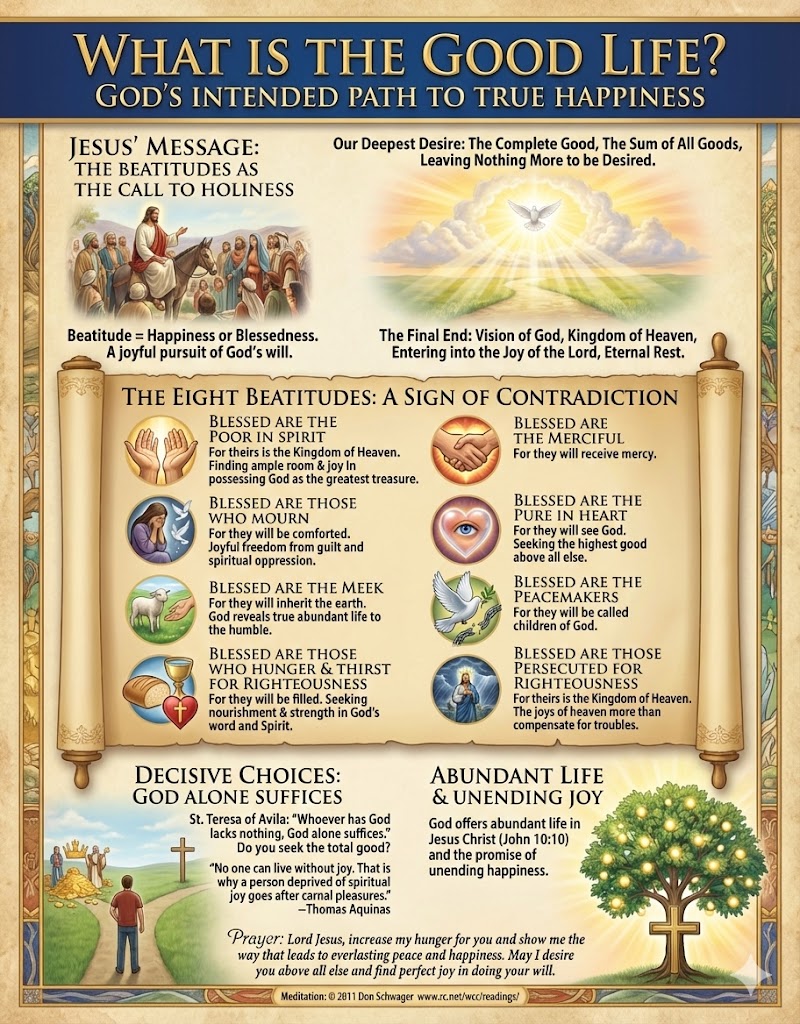
Matthew 5:1-12 and CCC §§ 1716--1729
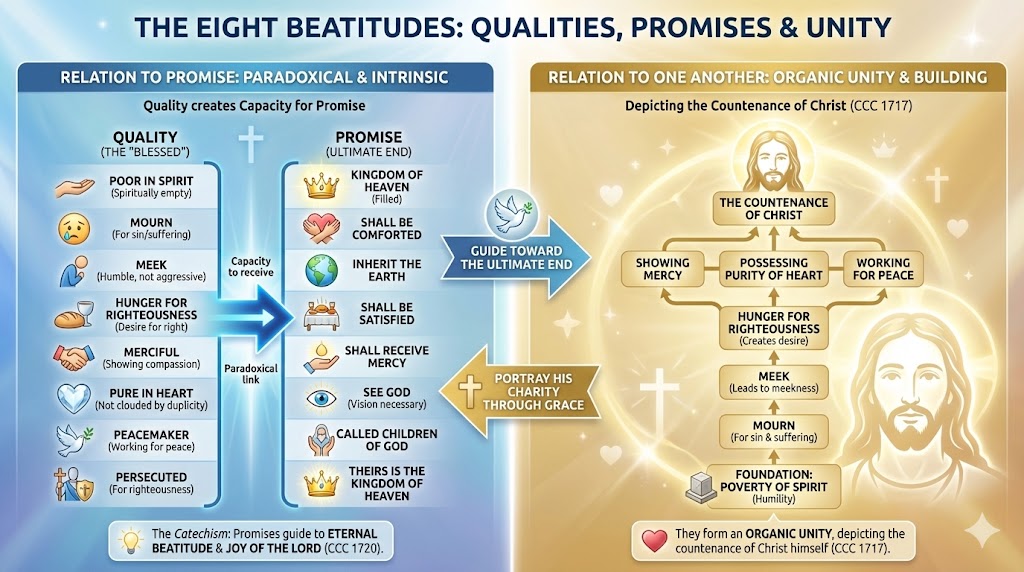
In the Gospel Reading, how do the eight qualities that describe the “blessed” relate to the promise that follow them? How do they relate to one another?
- Relation to promise: The relationship is often paradoxical but intrinsic. The quality described creates the capacity to receive the promise. For example, only those who know they are spiritually empty ("poor in spirit") have room to be filled with the "kingdom of heaven." Only those whose hearts are not clouded by duplicity ("pure in heart") have the vision necessary to "see God." The Catechism notes that these promises guide us toward the ultimate end of human existence: eternal beatitude and entry into the joy of the Lord (CCC 1720).
- Relation to one another: They form an organic unity, depicting the countenance of Christ himself (CCC 1717). They often build upon one another. Poverty of spirit is the foundation of all humility. From that humility stems the ability to mourn for sin and suffering, leading to meekness rather than aggression. This creates a hunger for true righteousness, which naturally leads to showing mercy, possessing purity of heart, and working for peace.
How would you describe the opposite of each quality? Who would you call “blessed” in today’s world?
- Poor in spirit vs. Proud, self-sufficient, materialistic.
- Those who mourn vs. The hedonistic, indifferent to suffering, seekers of constant entertainment.
- The meek vs. The arrogant, aggressive, power-hungry.
- Hungering for righteousness vs. Complacent, self-satisfied, indifferent to injustice.
- The merciful vs. The vengeful, judgmental, holding grudges.
- Pure in heart vs. The duplicitous, hypocritical, corrupted by hidden motives.
- The peacemakers vs. The divisive, quarrelsome, warmongers.
- Persecuted for righteousness vs. The compromisers, those who seek social approval above truth.
In today’s world, secular culture usually calls "blessed" (happy) those who have wealth, fame, power, perfect health, and autonomy—the exact opposite of Jesus' list.
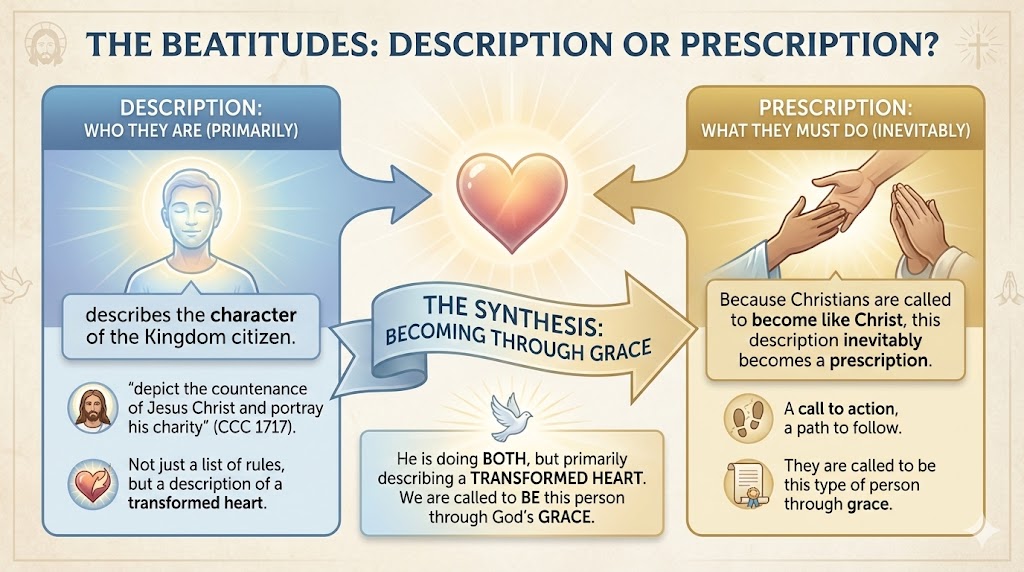
Is Jesus describing who his followers are? Or prescribing what they must do? Why do you think so? He is doing both, but primarily he is describing the character of the Kingdom citizen. The Catechism states that the Beatitudes "depict the countenance of Jesus Christ and portray his charity" (CCC 1717). Because Christians are called to become like Christ, this description inevitably becomes a prescription. They are not just a list of rules to follow, but a description of a transformed heart. We are called to be this type of person through grace.
How is Jesus’ kingdom already, but not yet? The Beatitudes show this tension. We experience the reality of the Kingdom now through grace: we find comfort in mourning, we receive mercy, and we feel the joy of being God’s children even amidst persecution. However, the promises are also definitive and future: inheriting the earth and finally "seeing God" face-to-face is the "not yet" of heaven (CCC 1720).
What does it mean to be “poor in spirit? Name a person (famous or not) who exemplifies “poverty of spirit” and humility. To be "poor in spirit" is the fundamental attitude of acknowledging one's absolute emptiness before God. It is the realization that we have nothing that we have not received, and that we are utterly dependent on God for everything from our next breath to our eternal salvation. It is the opposite of spiritual arrogance. Exemplar: St. Mother Teresa of Calcutta. Despite enormous fame and influence, she genuinely viewed herself as merely a "pencil in the hand of God." She identified completely with the literal poor she served, maintaining a profound interior humility and dependence on Jesus.
Of these eight qualities, which two do you desire most in your life? Why? Which of these are you tempted to avoid? (Personal reflection required. Here is a common example response)
Tempted to avoid: I am most tempted to avoid being Persecuted for righteousness' sake. It is natural to fear rejection, mockery, or suffering. It is much easier to compromise my faith slightly to fit in or avoid an awkward situation than to stand firm and accept the consequences.
Desire most: I desire to be Pure in Heart, because I long for a singular focus on God without the distraction of mixed motives or hidden sins. I also desire to be a Peacemaker, because the world and my own circles are often fractured by conflict, and I want to be an agent of healing.
Click on banner above for answers to questions.
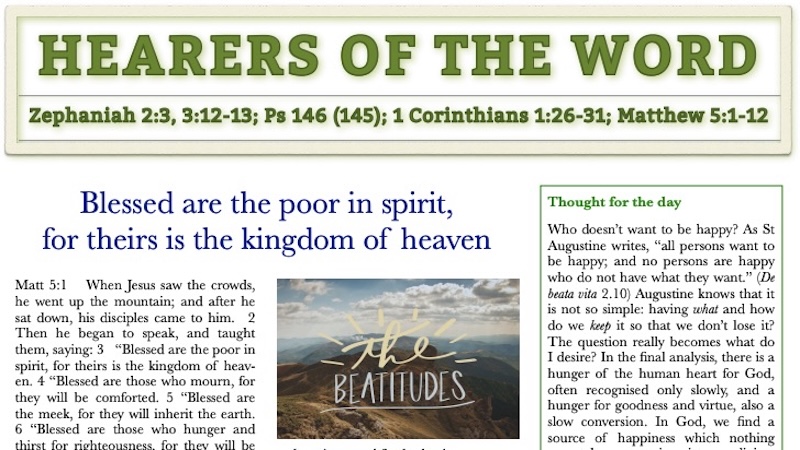
FR. KIERAN O’MAHONY
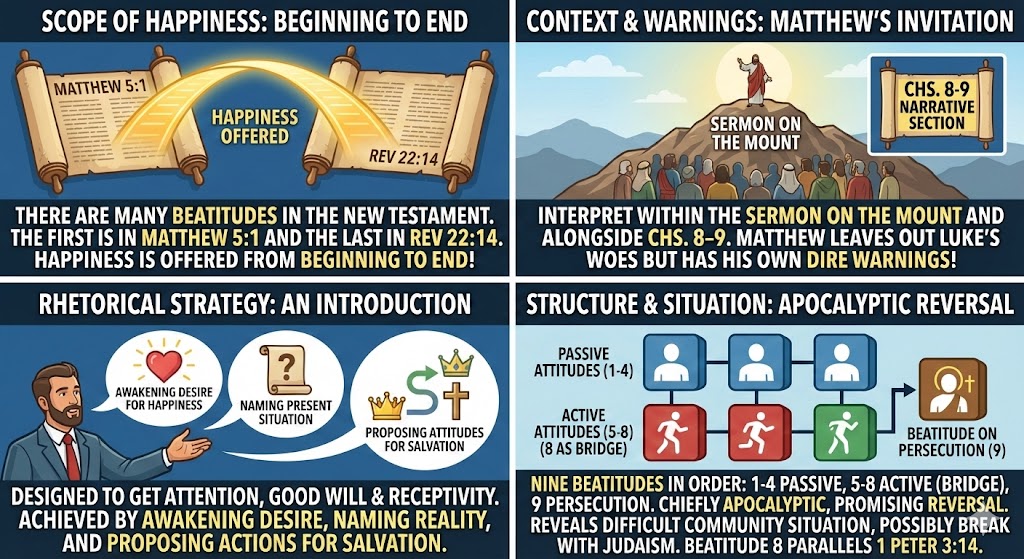
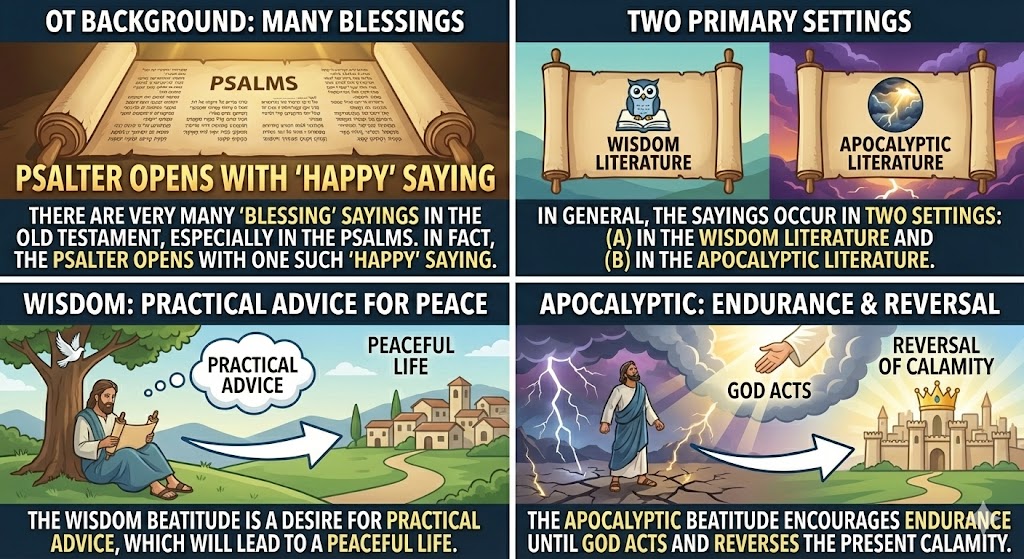
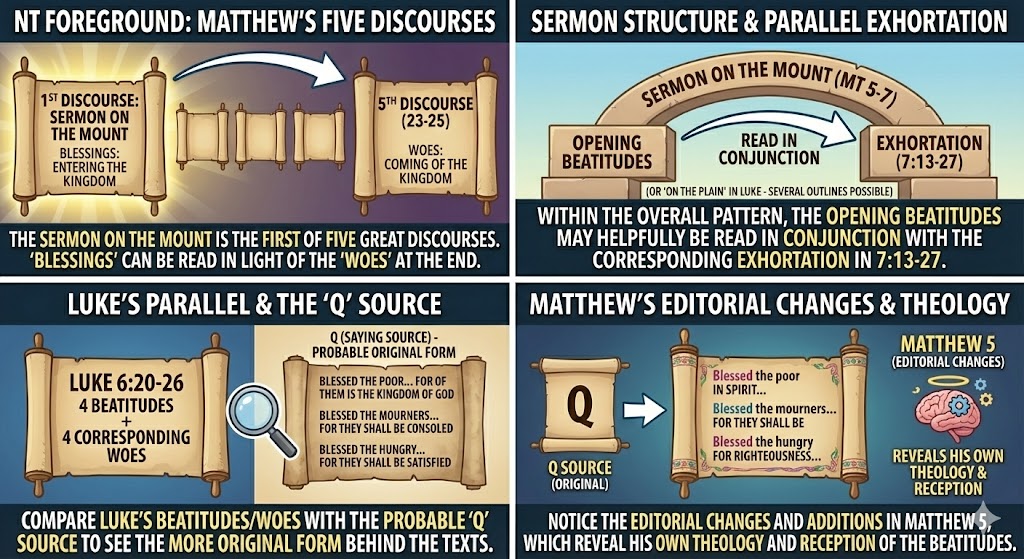
TWTW infographics below were created using core concepts from the PDF above.
Gospel
Initial Observations & Kind of Writing
Gospel
Old Testament Background
Gospel
New Testament Foreground
Gospel
Pointers for Prayer
Second Reading
Pointers for Prayer

TWTW infographics on this page present Fr. Kieran’s “GOSPEL COMMENTARY” and “POINTER FOR PRAYER” which are presented after each reading’s commentary. Please cross-reference the slides with the PDF if you notice any errors. Non-profits are welcome to utilize the provided graphics in their materials and presentations. Please acknowledge Fr. Kieran O’Mahony, OSA, and his website, taurus.ie. The graphics were designed by TheWordThisWeek.net using Gemini Pro 3 and Nano Banana. Proper attribution is appreciated.
Fr. Clement D. Thibodeau
Echoing God’s Word – Portland Diocese
Based on the reflections provided about Jesus' move to Capernaum and the start of His ministry, here are answers designed to guide personal reflection or group discussion.
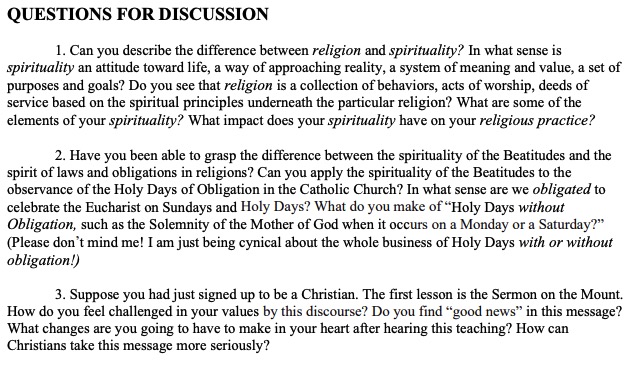
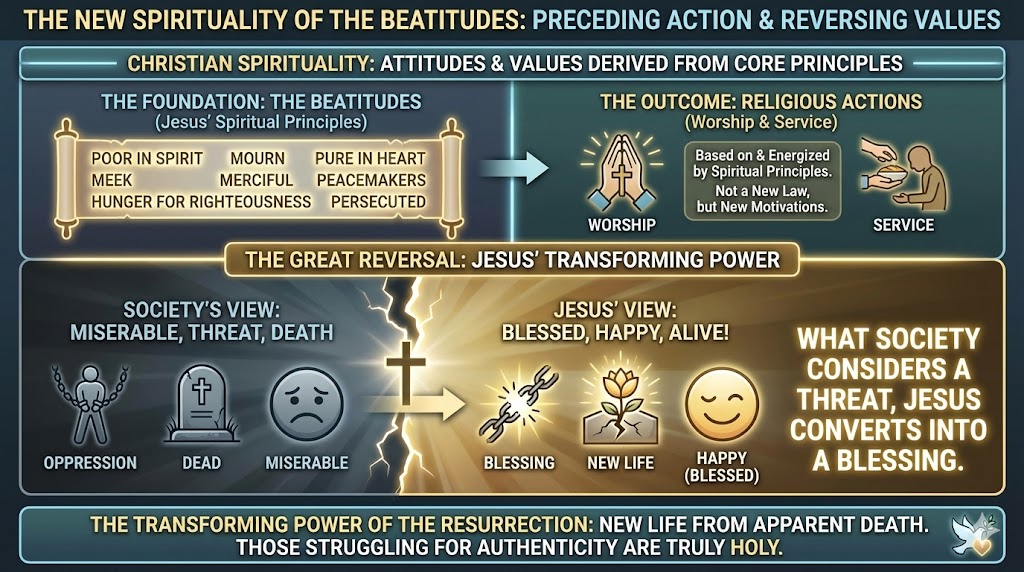
1. Can you describe the difference between religion and spirituality? According to the text, spirituality "precedes all religious activity." Religion is described as actions such as "worship and service," whereas spirituality refers to the "attitudes and values that are derived from the core principles of a religious tradition" that underlie those actions.
In what sense is spirituality an attitude toward life, a way of approaching reality, a system of meaning and value, a set of purposes and goals? The text defines spirituality in the Beatitudes as "a set of spiritual values that must underlie all Christian religious actions." It states that spirituality consists of "new attitudes and new values that motivate and energize our moral behaviors."
Do you see that religion is a collection of behaviors, acts of worship, deeds of service based on the spiritual principles underneath the particular religion? Yes. The text explicitly states: "Worship and service are religious actions. Spirituality refers to attitudes and values that are derived from the core principles of a religious tradition," and further notes that "Christian worship and Christian service are based on the spiritual principles of the Beatitudes."
What are some of the elements of your spirituality? What impact does your spirituality have on your religious practice? The provided text does not contain information about my personal spirituality or religious practice, therefore I cannot answer this question based on the text.
2. Have you been able to grasp the difference between the spirituality of the Beatitudes and the spirit of laws and obligations in religions? Yes, based on the text, there is a distinction. While Matthew presents Jesus as the "new Moses, the lawgiver," the text clarifies that the Beatitudes are "not a new law, in the sense of legislative enactment." Instead, this spirituality consists of "new attitudes and new values that motivate and energize our moral behaviors."
Can you apply the spirituality of the Beatitudes to the observance of the Holy Days of Obligation in the Catholic Church? In what sense are we obligated to celebrate the Eucharist on Sundays and Holy Days? What do you make of “Holy Days without Obligation, such as the Solemnity of the Mother of God when it occurs on a Monday or a Saturday?” The provided text does not mention Holy Days of Obligation, the Eucharist, Sunday observance, or specific Catholic liturgical rules. Therefore, I cannot answer these questions based on the text provided.
3. Suppose you had just signed up to be a Christian. The first lesson is the Sermon on the Mount. How do you feel challenged in your values by this discourse? Based on the text, a new Christian would feel challenged because Jesus intends to "reverse the values and the consequences of the human situation." The challenge lies in accepting that "what society considers to be a threat, Jesus will convert into a blessing," and recognizing that true safety and righteousness come not from human power or alliances, but only from "humble dependence on God."
Do you find “good news” in this message? Yes. The text states the good news is that "That which seems to oppress the masses will become a blessing in the transforming power of the resurrection of Jesus Christ." It promises that "New life will come from what appears to be death," and that those counted as dead "are truly alive."
What changes are you going to have to make in your heart after hearing this teaching? The text suggests that hearing this teaching requires adopting "new attitudes and new values that motivate and energize our moral behaviors." It necessitates a shift away from the older model of seeking earthly fulfillment (prosperity, long life) toward a spirituality of depending only on God (being "poor in spirit").
How can Christians take this message more seriously? According to the text, Christians can take this message more seriously by recognizing that the Church "needs to hear this sermon addressed to itself in every age and in every circumstance," and that "no culture is exempt from the provisions of this discourse." Furthermore, the text states that the provisions of this sermon "must not be neglected as we seek the renewal of the Christian community."
Click on banner above for answers to questions.

create an 8.5×11 inch infographic with images based on an essay of Fr. Clement D. Thibodeau.
create an 8.5×11 inch infographic with images on a white background based on an essay of Fr. Clement D. Thibodeau.
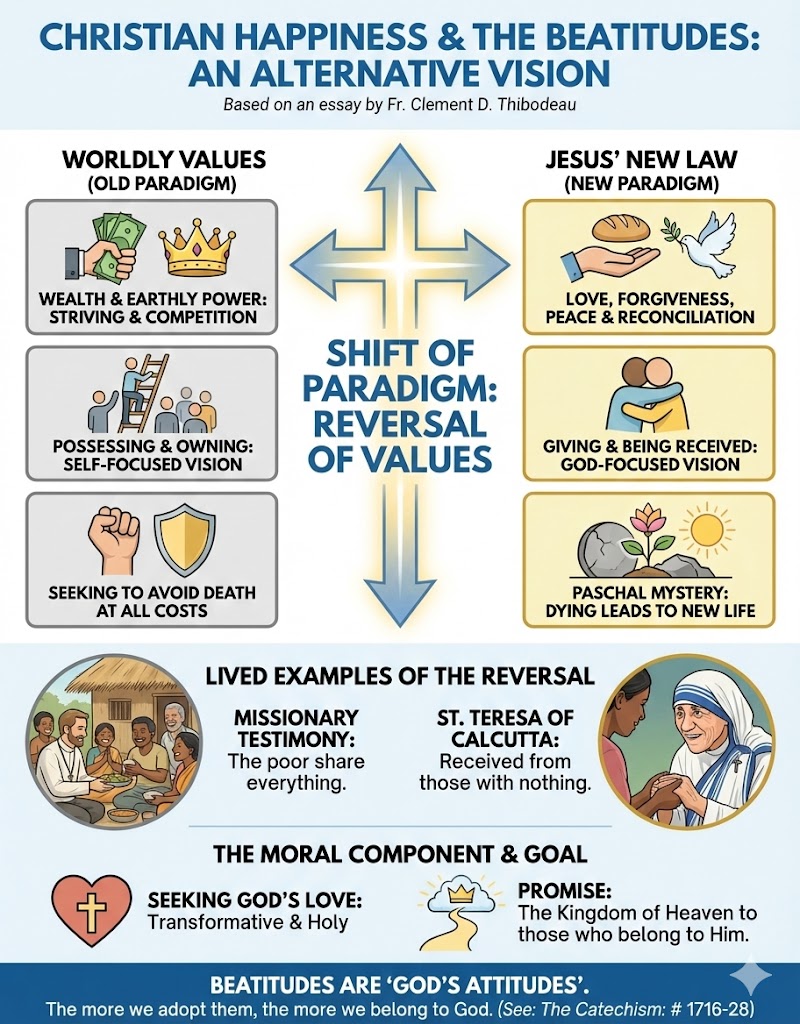
The above bulletin insert was created using Nano Banana Pro with Gemini 3.0. The infographics draw inspiration from the content found in Fr. Clement Thibodeau’s Echoing The Word weekly column which was published nearly a decade ago. It may be used by any non-profit ministry.