October 12, 2025
October 12, 2025


Catechesis for Catholic Teens
Catechesis for Catholic Teens
- RELIGION TEACHER
- Bishop O’CONNELL
- LIFETEEN
- CATHOLIC ANSWERS
THE RELIGION
TEACHER

JARED DEES provides practical resources and teaching strategies to religious educators.
28th Sunday of Year C

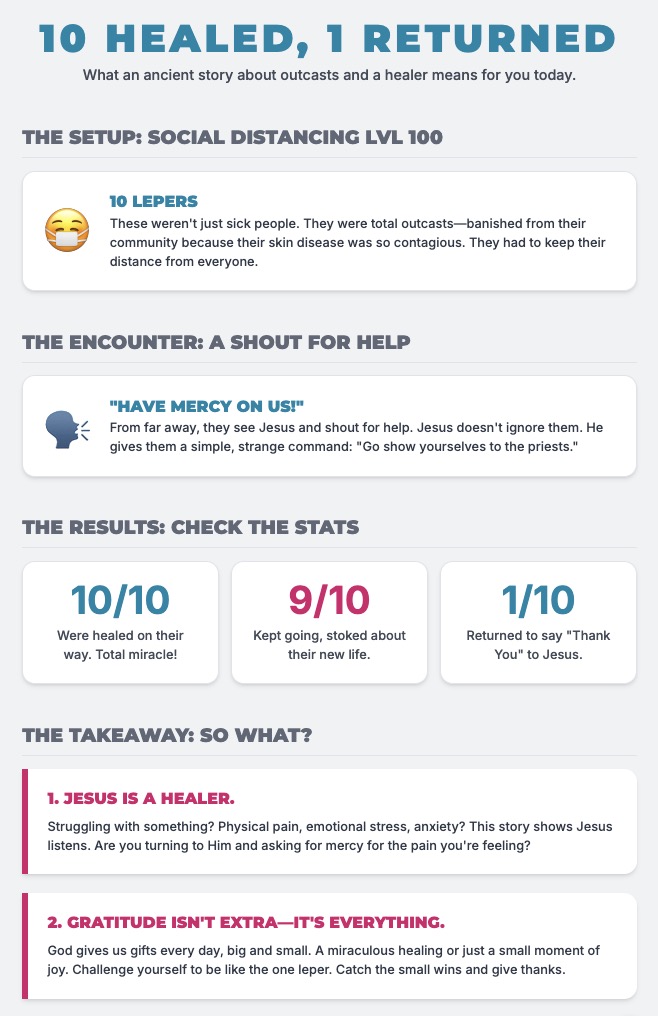
Generated using Google’s AI Gemini 2.5 Pro (w/ Chart.js and Tailwind CSS). Permission for use in any non-profit ministry w/ link to THE WORD THIS WEEK.
BISHOP MARK
O’CONNELL

28th Sunday of Year C


Generated using Google’s AI Gemini 2.5 Pro (w/ Chart.js and Tailwind CSS). Permission for use in any non-profit ministry w/ link to THE WORD THIS WEEK.
LIFE TEEN

Life Teen’s “Summit” is a lectionary-based discipleship program for high school teenagers designed to help them develop a deeper understanding of the Holy Mass and Sacred Scripture.
Videos (2022)
28th Sunday of Year C


Generated using Google’s AI Gemini 2.5 Pro (w/ Chart.js and Tailwind CSS). Permission for use in any non-profit ministry w/ link to THE WORD THIS WEEK.
CATHOLIC
ANSWERS

Sunday Catholic Word is the only podcast that looks at the Sunday Mass readings and focuses on the details that are relevant to explaining and defending the Catholic faith.
28th Sunday of Year C
Group / Classroom Discussion

28th Sunday of Year C
Perspectives on the Sunday Readings
Bishop Barron | Fr. Kevin Rettig | Msgr. Peter Hahn
Fr. Geoffrey Plant | Priests for Life
Faith & Film

Home/Classroom
Anecdotes
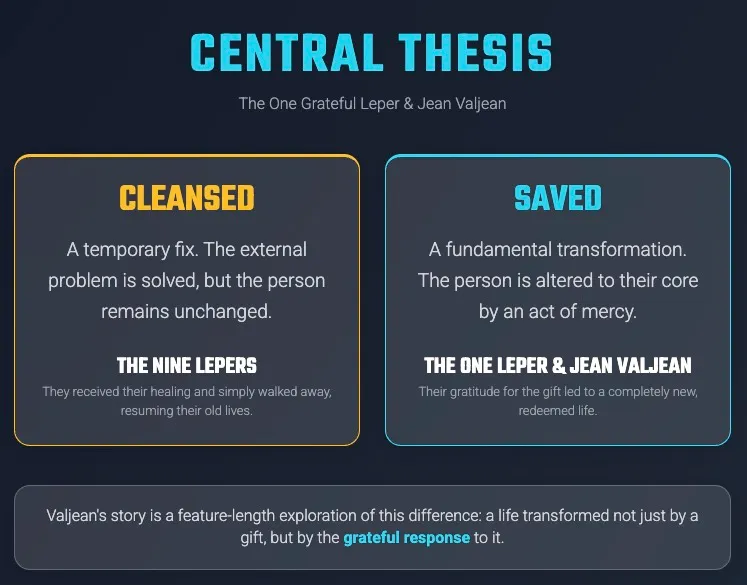
Les Miserables & the
Cleansing of the 10 Lepers
PDF Handouts
Reflection Questions
and Commentary
These study guides are the fruit of over a decade of working with students. They are a great resource for classroom group discussion.


Tips for Catechists
Be Real and Relatable
- Authenticity is Key: Don’t try to be someone you’re not or use slang you don’t know. Youth can spot inauthenticity immediately, so be yourself.
- Be You: Let your personality shine through to make your sermon more relatable and impactful.
- Meet them in their world: Understand the cultural context of the young people you’re speaking to.
Structure for Engagement
- Have One Big Idea: Focus your sermon around a single, clear point to help students remember it.
- Use a Clear Outline: Provide a simple, three-point outline with an introduction, body, and conclusion to help them follow along.
- Keep it Concise: Shorter messages are generally more effective for maintaining engagement and focus.
Make the Message Stick
- Tell Stories: Like Jesus, share stories that illustrate biblical truths and help make personal connections between the message and their lives.
- Use Visuals and Interaction: Engage multiple senses by using movie clips, objects, or games to make the message more memorable.
- Encourage Participation: Involve the audience through actions like raising hands, shouting answers, or taking polls to foster interaction.
28th Sunday of Year C

Objective:
For teens to understand that gratitude is an action that leads to a deeper relationship with Christ, and to identify opportunities for faith and thankfulness in their own lives.
1. The Hook: Grab Their Attention (Start with Their World)

Before even opening the Bible, get them thinking about the core themes in a relatable way.
- Theme of Exclusion: Start with a question like, “Think about a time you felt left out or saw someone else being excluded. What did that feel like?” or “What are the modern-day versions of ‘leprosy’ in your school or on social media? What makes someone an ‘outcast’ today?” This connects the physical isolation of the lepers to the social and emotional isolation teens understand well.
- Theme of Gratitude: Ask, “What’s the difference between being happy you got something and being truly grateful for it?” or “When was the last time you went out of your way to say a real, meaningful ‘thank you’ to someone?”
2. Unpacking the Scripture: Go Beyond the Surface

Read Luke 17:11-19 aloud. As you discuss it, focus on these key points that resonate with adolescent experiences.
- The Unlikely Group: Point out that Jews and Samaritans were enemies. Yet, their shared suffering brought them together. Ask: “What kind of struggles can bring unlikely people together today?” This highlights how shared hardship can break down barriers.
- Faith in Action: Emphasize that the lepers were healed as they were going. They had to act on Jesus’ word before they saw the result. This was a true “leap of faith.” Ask: “When is it hardest to trust and take the first step without knowing the outcome?” (e.g., trying out for a team, apologizing first, standing up for a belief).
- The Nine vs. The One: The nine weren’t necessarily “bad.” They were likely overjoyed and rushing to get their old lives back. The one who returned, however, recognized that his life couldn’t just go “back to normal.” His encounter with Jesus had fundamentally changed him. Ask: “Why do you think the other nine didn’t come back? What gets in the way of us showing gratitude?” (Distraction, excitement, taking things for granted, entitlement).
- A Deeper Healing: Jesus says to the one, “Your faith has saved you.” The other nine were cleansed, but this man received a deeper, spiritual healing—salvation. This is the difference between getting what you want and getting what you truly need: a relationship with the Giver.
3. Activities & Discussion Starters for Teens

- Modern-Day Parable: In small groups, have them rewrite the story in a modern high school setting. Who are the 10 “lepers”? (e.g., the nerds, the new kid, the one who gets bullied). What is their “sickness”? (e.g., loneliness, anxiety, a bad reputation). Who represents Jesus? What does the healing look like, and who is the one who comes back to show gratitude? Have them share their stories.
- “Gratitude Audit” Challenge: Challenge them to take 24 hours and actively notice things they usually take for granted (clean water, parents who cook, a friend who texts back, the technology they use). Have them write down 5-10 specific things and why they are grateful for them.
- Connect to the Eucharist: Explain that the word “Eucharist” literally means “thanksgiving.” The Mass is the ultimate act of “coming back” to thank God. The Samaritan fell at Jesus’ feet; we kneel before the Eucharist. This makes the abstract concept of gratitude a tangible, liturgical reality.
4. The Takeaway: Make It Practical
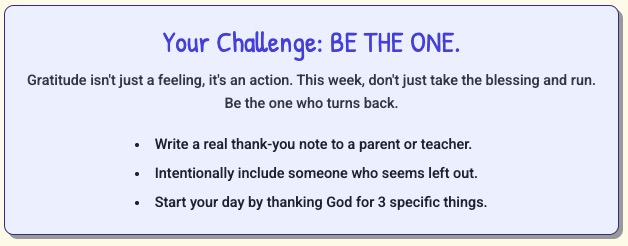
End with a clear, actionable challenge.
- “Be the One”: Challenge them to “be the one” this week. This could mean:
- Writing a thank-you note to a parent, teacher, or friend, explaining why they are grateful.
- Intentionally including someone who seems left out at school.
- Starting and ending their day by naming three specific things they are thankful for in prayer.
By framing the story around themes of social dynamics, trust, and active gratitude, you can help teens see this isn’t just an ancient story but a powerful guide for their own spiritual lives.