DEC 29, 2024


Homeschool Resources Sunday Readings
Homeschool Resources Sunday Readings
- CATECHIST Resources
- KID FRIENDLY INSIGHTS IN SMALL STEPS
- CHILDREN’S LITURGY
- Handouts AND Activities
- READ-ALOUDS
- SERMON LESSONS
Catechist
Magazine
Holy Family - YEAR C
Boy Jesus at the Temple
SOURCE: Good News Productions
Holy Family - YEAR C
Luke 1: 39-45 for Children

SOURCE: Bishop Mark O’Connell
Holy Family - YEAR C
The Religion Teacher

Boy Jesus in Temple

Animated Videos


GOSPEL
Title: Jesus Visits the Temple
- Every year, Jesus’ family went to Jerusalem for a big festival called Passover.
- One year, when Jesus was 12, he stayed in Jerusalem after the festival without telling his parents.
- Mary and Joseph looked for Jesus for three days! They were worried.
- They found Jesus in the temple, talking with teachers.
- Everyone was impressed with how smart Jesus was.
- When his parents found him, they were happy but wondered why he stayed.
- Jesus said he was doing his Heavenly Father’s work, but he still obeyed his earthly parents.
Teachings for Growing in Faith:
- Obey your parents: Like Jesus, we should love and obey our parents.
- God’s family: The Church is like a big family, and we are all God’s children.
- Learn and grow: Keep learning about God and asking questions to grow in faith.
- Trust in God: Trust that God watches over us and has a special plan for each of us.
- Be kind and helpful: Show God’s love by being kind, helpful, and understanding to others.
1ST READING
Title: Being Good to Others and Our Parents
- God gives us special gifts, like wisdom and understanding.
- We should be kind to people who are in need and do what is right.
- Treat your parents with respect and kindness, because they love you and take care of you.
- Remember that your parents have been around longer and know more than you.
- When you feel upset, remember that good times and hard times happen to everyone.
- Help people in need and be happy when they receive good things.
Teachings for Growing in Faith:
- Share God’s love: Be kind and generous, just like God is to us.
- Respect our parents: Listen to our parents, because they love us and want the best for us.
- Learn from experiences: Understand that life has ups and downs, but God is always with us.
- Value wisdom: Keep learning and asking questions to grow in faith and love.
- Celebrate blessings: Be happy for others when they receive good things from God.
2ND READING
Title: Being Kind and Loving Like Jesus
- God loves us so much and wants us to love others just like Jesus did.
- We should be kind, patient, and forgiving to one another.
- Remember to say “thank you” and be grateful for all the good things in your life.
- Try not to complain or argue, and always be ready to help others.
- Make sure to listen to your parents and teachers, and do your best to make them happy.
- Sing and praise God with a thankful heart, and let Jesus be your guide in everything you do.
Teachings for Growing in Faith:
- Love like Jesus: Treat others with kindness and love, just as Jesus did.
- Be grateful: Thank God for the many blessings and good things in our lives.
- Cooperate and be patient: Try not to argue or complain, and instead, help others.
- Respect authority: Listen and obey our parents, teachers, and other grown-ups.
- Praise God: Sing and pray to God with a joyful heart, and follow Jesus’ example.
Holy Family - YEAR C
Jesus as a Kid

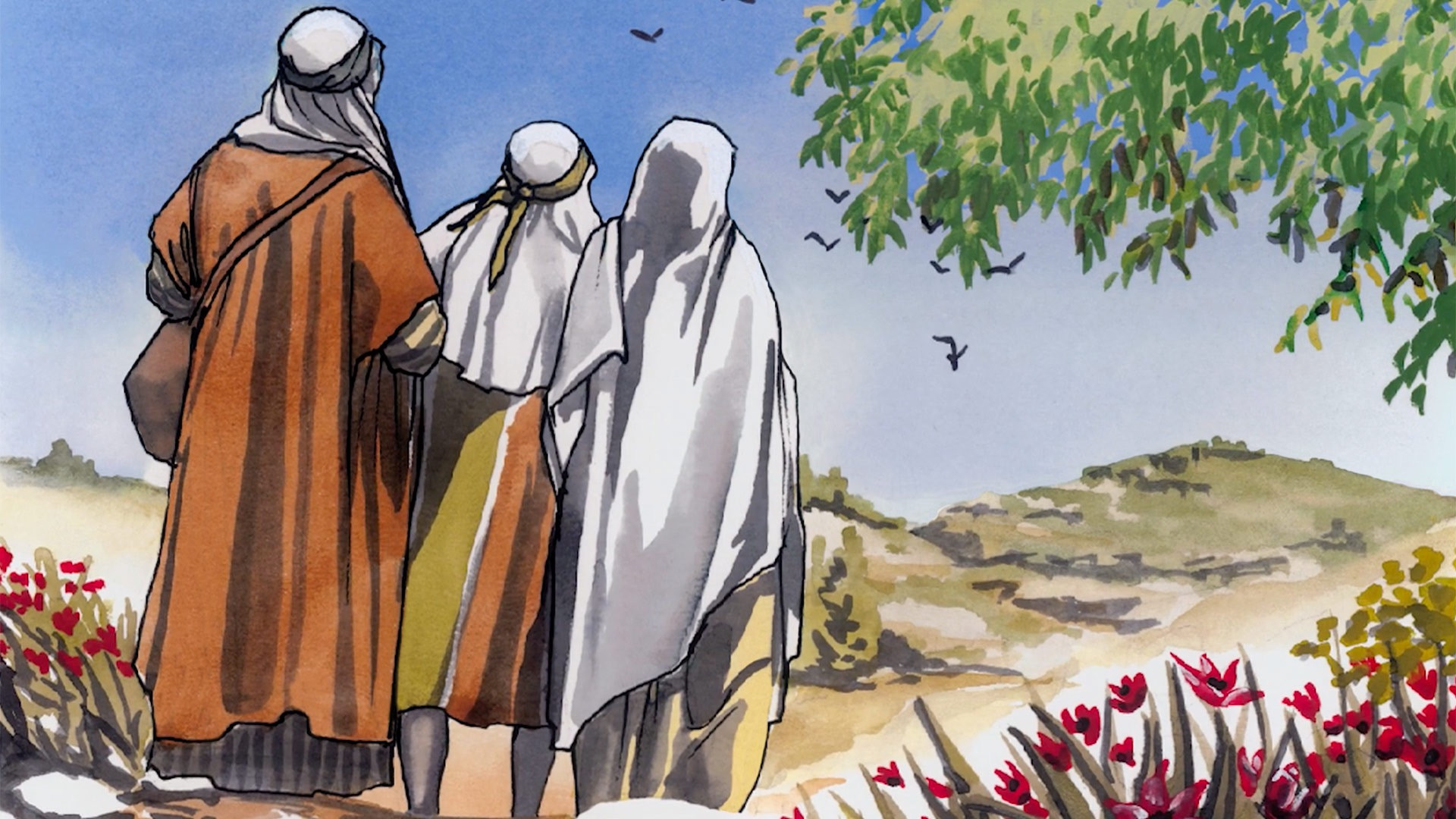
Hey there, my fellow little friends! It’s me again, Ana. Today I want to share with you a really interesting story from the Bible called “The Boy Jesus in the Temple” (Luke 2:41-52). It’s about when Jesus was a kid, just like us!
A Trip to Jerusalem
So, every year, Mary and Joseph (Jesus’ mom and dad) would go to Jerusalem for a big festival called the Passover. They would take Jesus with them, and this story is about one of those trips.
When Jesus was 12 years old, they went to Jerusalem like they always did, but this time, something different happened.

Mary and Joseph’s Search
After the festival was over, Mary and Joseph started heading back home with a big group of their friends and family. They thought Jesus was with them, but guess what? He wasn’t!
Mary and Joseph didn’t realize Jesus wasn’t with them until the end of the first day of traveling. They must have been really worried when they couldn’t find him. I know my mom would be super worried if she lost me in a crowd!
So, Mary and Joseph went back to Jerusalem to look for Jesus. They searched for him everywhere, but they couldn’t find him for three whole days! That’s a really long time to be looking for someone.
Finding Jesus in the Temple
Finally, they found Jesus in the temple, which is like a really big and important church. He was sitting with the teachers, listening to them and asking them questions. And everyone was amazed at how much he knew and how smart he was!
When Mary and Joseph found Jesus, they were so happy and relieved. But they were also a little confused and maybe even a bit upset. Mary said to Jesus, “Son, why have you treated us like this? Your father and I have been looking for you everywhere!”

Jesus’ Response
Jesus answered, “Why were you looking for me? Didn’t you know that I would be in my Father’s house?”
Now, when he said “my Father,” he didn’t mean Joseph, his earthly dad. He was talking about God, his heavenly Father. You see, Jesus knew that he was special, and he had a close relationship with God.
Mary and Joseph didn’t completely understand what Jesus meant, but they knew he was special, too. And Jesus went back home with them to Nazareth, where he continued to grow and learn, just like all of us do.
Lessons from the Gospel
I think this story is so cool because it shows us that Jesus was a kid once, too. He had parents who loved him and worried about him, just like our parents love and worry about us. And even though he was special, he still had to learn and grow, just like we do.
So, the next time you’re reading the Bible, remember that Jesus understands what it’s like to be a kid. And don’t forget that God loves you and is always watching over you, just like he watched over Jesus.
Thanks for listening to my story, friends! I hope you enjoyed it, and I can’t wait to share more stories with you soon! Bye for now!
These images above are the property of Good News Productions International and College Press Publishing who have granted THE WORD THIS WEEK permission to use them for educational and ministry use only. These images are covered using a Creative Commons Attribution-NonCommercial-NoDerivatives 4.0 International License.
SOURCE: Free Bible Images

Prayer
Table
Symbols
GOSPEL
A Book: This symbol relates to Jesus’ growth in wisdom and knowledge as he listened to and questioned the teachers in the temple, inspiring children to continue learning and growing in faith.
A Question Mark: Inspired by Jesus’ inquisitive nature in the temple, this symbol motivates children to ask questions and deepen their understanding of faith.
A Temple or Church: This symbol relates to Jesus’ presence in the temple and encourages children to view their church as a place of learning and growth in faith.
1ST READING
A Candle: Symbolizing the light of wisdom and understanding from God, this encourages children to seek His guidance in their lives.
A Family Figurine: Representing the importance of honoring and respecting parents, this symbol reminds children of the love and care provided by their family.
A Scroll: Inspired by the pursuit of knowledge and understanding, this symbol encourages children to ask questions and learn from their elders and teachers.
A Tree: Symbolizing growth and the fruits of wisdom, this reminds children of the importance of learning from God’s teachings and applying them in their lives.
A Pair of Ears: Representing attentive listening to parents and elders, this symbol encourages children to respect authority and learn from their experiences.
2ND READING
A Heart-shaped token or sticker: This symbol represents the love and compassion children should show to others, reminding them to be kind, patient, and forgiving.
Prayer Hands: Encouraging children to be thankful, cooperative, and helpful, this symbol emphasizes the importance of maintaining a prayerful attitude.
A Dove: This symbol represents peace and unity, inspiring children to be peacemakers and maintain harmony in their interactions with others.
A Smiling Face: Encouraging children to be joyful and content, this symbol reminds them of the importance of gratitude and positivity.
Holy Family - YEAR C
Mary Jo Cole

NOTE: This Children’s Liturgy is using the readings from CYCLE A.
SOURCE: Mary Jo Cole’s YouTube Page
Holy Family - YEAR C
Father Edward

SOURCE: Holy Family FdL Youtube Page
Holy Family - YEAR C
Father Glenn

Holy Family - YEAR C
Uganda CTV

SOURCE: Uganda Catholic Television
Holy Family - YEAR C
Dominican Sisters

SOURCE: Redemptorist Publications
Holy Family - YEAR C
Big Al & Father Joe


SOURCE: Most Sacred Heart Parish, Eureka, MO
Family Dynamics
Q: How does the video portray family relationships?
A: The video emphasizes that no family is perfect, acknowledging that family members often get on each other’s nerves but ultimately love each other deeply, drawing a parallel to the Holy Family of Mary, Joseph, and Jesus.
Holiday Traditions
Q: What Christmas tradition is mentioned regarding misbehaving children?
A: The video references the tradition of St. Nick giving coal to children who behaved badly, but suggests this practice is no longer acceptable and instead encourages working on improving behavior.
Expressing Love
Q: What advice does the video give about family communication?
A: The video recommends expressing love to family members, especially during the holiday season like Christmas, emphasizing the importance of verbalizing affection despite imperfections in family dynamics.


OSV Family
Activities
Choose one of the following OUR SUNDAY VISITOR activities as a way to further reflect on the Sunday readings:
Growing as a Holy Family
God works in every family, calling it to be holy. No family is perfect, but Jesus helps families to grow in holiness. Talk to your family about what it means to be a holy family. This week make an extra effort to do nice things for your family members.
The Importance of Obedience
Have a family discussion about why it is important to obey our parents. Ask the children: How can you be more obedient and listen to your parents?
Celebrating Family Heritage
Plan a time to visit with your extended family. Tell stories about your family members, stories that make your family special to you.
Gratitude in the Family
Put the name of each member of the family in a bowl. Ask each family member to draw a name from the bowl and to write a thank you letter to that person for what he or she does for the family. Share the letters with the family.
SOURCE: Our Sunday Visitor Life Long Catechesis
RELATED PAGES:
OSV Kids provides children’s books and an engaging monthly activity booklet, OSV Kids, to help little ones form a relationship with Jesus Christ that grows as they do.
OSV Podcasts is your place for conversation and connection. Discover a community of Catholic content producers committed to exploring Truth in a way that unites and invites.

Holy Family - YEAR C

Gospel Worksheet
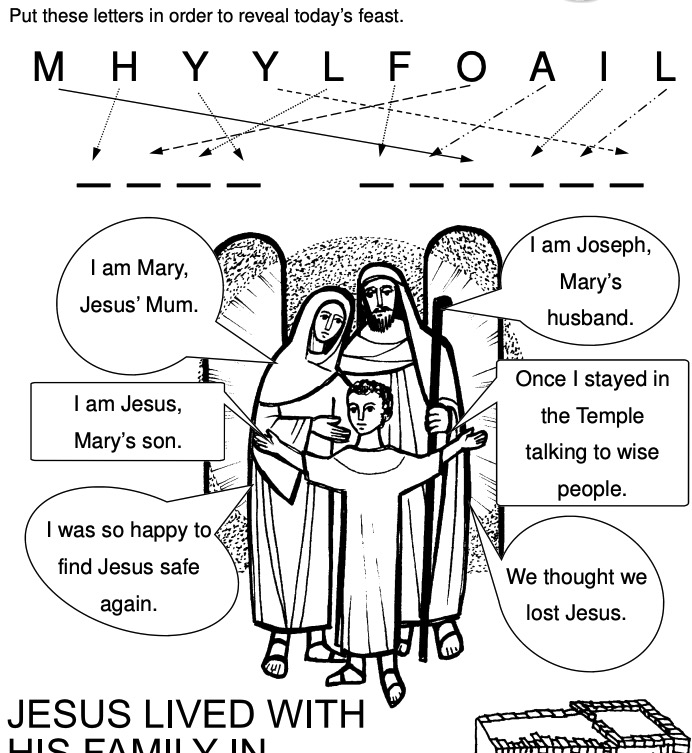

Download 8 1/2 x 10 (PDF)
S.D.C. is a Catholic Society that works in the field of Catechesis and the spreading of the Word of God in different ways. READ MORE
SOURCE: SDC Sunday Liturgy Resources
Holy Family - YEAR C
Catholic Kids Bulletin

Download 4-pages (PDF)
The Kids’ Bulletins are a resource for Catholic kids who would like to have some fun while learning about the readings from the Sunday Mass every week. (Ordinary Form) They are made by a mom in Canada who is happy to share them with anyone who can use them to help learn or teach about the truth and beauty of the Faith.
SOURCE: Catholic Kids Bulletin
Holy Family - YEAR C
Catholic Mom

Download Activity (PDF)
Enjoy Catholic coloring pages, lesson plans, Mass worksheets, puzzles, and more to help you prepare for Sunday Mass. These activities, prepared by the Catholic Mom Sunday Gospel Team, are free for you to print and share with your family, classroom, or parish.
SOURCE: Catholic Mom
GOSPEL
Today’s gospel presents us with Joseph having an experience, yet again, of God coming to him in a dream. You will recall that it was in a dream that God told Joseph to take Mary into his home and now he is instructed to protect Mary and Jesus by fleeing into Egypt. Joseph remains open to all of God’s commands even though they come in a dream-like fashion. Each person in a family has a dream for their life and for their family. Clearly the primary figure in this passage is Joseph and although he does not say a word, his actions speak loudly of his trust in God.
SOURCE: Markkula Center
1ST READING
The Book of Sirach is classified as wisdom literature and as such offers sound advice for living life. The details of the interrelations among family members is spelled out and it speaks clearly of “honoring” those significant individuals in our lives, parents and children alike. This advice would be well to keep in mind as we are called to honor all people as images of of God
SOURCE: Markkula Center
2ND READING
Saint Paul writes this heartfelt letter to the Colossians and speaks of wearing the beautiful virtues of compassion, kindness, humility, gentleness, and patience as garments. Saint Paul’s image of wearing these virtues as clothing illustrates how we are to have them close to our persons to recognize that we are to be clothed in them so that they reveal who we are and how we are to act in the world. Binding all of these virtues together is the ultimate gift of love, for it is out of sincere love that these virtues become true practices in our lives.
SOURCE: Markkula Center
Holy Family - YEAR C
The Action Bible

Book of the Week


NO READ ALOUD IS AVAILABLE

Word of the Week
SACRIFICIAL LOVE
A Father’s Love

In A Father’s Love, fourteen year old David sets off to hunt the Christmas goose, a tradition that has been passed down from his grandfather to his father, and now to him. Unfortunately, his irritating little sister, Rose, has decided to join him. David just wants to find the geese, shoot one, and go home. But before the geese are spotted, David and Rose find themselves up a tree, hiding from an angry mother bear protecting her cubs. As night draws near, a heavy snow begins to fall and David and Rose fear for their lives. How can their father possibly find them in the dark and cold? How will they survive the night? Ultimately this beautiful story encompasses family love and the lengths all creatures will go in order to protect it. The love of Joseph for God and God’s son, Jesus and his mother Mary spurs him on to do all that he can to protect the child and his mother. Joseph is attentive to the instruction God gives him in the dream, to take the child and his mother and flee to Egypt. This is very much an example of the sacrificial love that parents often enter into when caring for their children and spouses. Think about the many small and large sacrifices that have been made for you on the part of your parents. In fact, there are probably a great many that you may not even be aware.
Young Catholic Resources by Date

Have a Birthday Party for Jesus
Celebrate the Feast of the Holy Family Year C with a birthday party for Jesus. Teens can invite preschoolers and kindergarteners to teach them about the true meaning of Christmas. Ask guests to bring presents for a local charity. Play fun games like Pin the Baby in the Manger and The Angel Says.
Family Circle Icebreaker Game
The Family Circle icebreaker is perfect for the Feast of the Holy Family Year C. It focuses on relationships and growing closer as a family. The game encourages unity and understanding among participants. By sharing favorite things and guessing each other’s answers, family members connect on a deeper level.
This fun and interactive game helps break down barriers, fostering a supportive and inclusive environment.
Understanding the Book of Sirach
The Book of Sirach offers practical advice on living a virtuous life, focusing on ethics, wisdom, and morality. This makes it a valuable guide for both individuals and communities. The first reading for the Feast of the Holy Family Year C, Sirach 3:2-6, 12-14, highlights the importance of family bonds and respect.
Its short, memorable proverbs provide clear moral guidance. The teachings on nurturing and maintaining family relationships are timeless and relevant, helping us understand the enduring value of these connections. For more insights, follow the link to the full content.
A Prayer for a Blessed Home – Based on Psalm 128
This prayer for the Feast of the Holy Family Year C is based on Psalm 128. It asks God to bless our home and family as we follow His ways. The prayer seeks blessings for all who live in the home, helping them grow in faith, trust in God’s will, and stay close to Him.
Holy Family - YEAR C
Sermon Lesson

SOURCE: Ministry to Children

Holy Family - YEAR C
Sermon 4 Kids

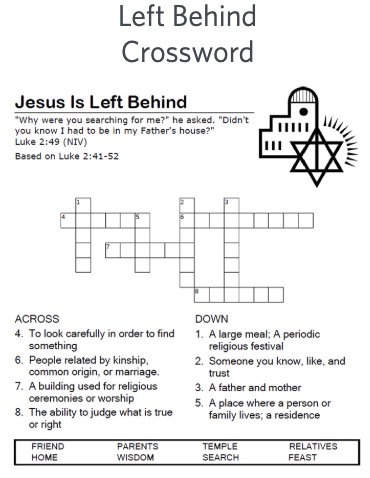
Left Behind
OBJECTS: None needed. For effect, you might have someone make the “announcement” about the lost child over the church’s sound system.
Has this ever happened to you? You are shopping when an announcement comes over the store’s loudspeaker, “May I have your attention please? We are looking for a six-year-old child who is lost. His name is John and he is wearing blue jeans and a red shirt. If you find John, please bring him to the customer service center.” How did this child become lost? Perhaps he just wandered off to look at the toys and his parents left him behind. Maybe the child’s mother and father each thought he was with the other parent and went on about their shopping. You can imagine how concerned the parents were when they realized that the child was missing. How about John? How do you think he felt? If he was having a good time playing in the toy department, he probably never even knew that he was lost! Have you ever been lost? How did you feel? Were you afraid, or were you confident that your parents would find you and everything would be alright?
Do you think Jesus ever got lost? We don’t know a lot about the childhood days of Jesus. The Bible doesn’t tell us very much about Jesus as a child, but today’s Bible lesson does tell us a story about a day when Jesus became lost.
SOURCE: Sermon 4 Kids
Holy Family - YEAR C
Sermon Writer
What’s the Question?
OBJECTS: A poster with a large question mark printed on it.

Look at this poster and tell me what you see. Yes, a question mark. What does that mean? It means there is something unknown. It means more information is needed.
We see questions marks in books when the character in a book asks a question. We see questions marks on tests when the teacher wants to know if you understand the lessons.
We also hear questions. When someone asks a question, it means that person needs help and is wondering if another person might know the answer to their question. The question might be, “Where is the library?” or “What time is it?” or “Can you come out and play?”
Do you have a lot of questions? That is a good thing. Asking questions is how we learn and grow. Even Jesus had questions. When he was twelve he had traveled to Jerusalem with his parents to observe the festival of the Passover. When the festival was over his parents left and had traveled about a day when they discovered that Jesus was not with them.
They were very worried and returned to Jerusalem to look for him. “After three days they found him in the temple, sitting in the middle of the teachers, both listening to them, and asking them questions” (2:46).
SOURCE: Sermon Writer