December 17, 2023 – YEAR B

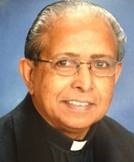
Fr. Tony’s 8-minute Homily

COMMENTARYBIBLE STUDYFR TONY'S HOMILY
Fr. Tony's Homily

Fr. Tony

3rd Sunday of Advent B

Fr. Tony started his homily ministry (Scriptural Homilies) in 2003 while he was the chaplain at Sacred Heart residence, applying his scientific methodology to the homily ministry. By word of mouth, it spread to hundreds of priests and Deacons, finally reaching Vatican Radio website. These homilies reach nearly 3000 priests and Deacons by direct email every week.

The clipart is from the archive of Father Richard Lonsdale © 2000. It may be freely reproduced in any non-profit publication.

THIS WEEK’S ANECDOTES

Today is “Gaudete Sunday” because today’s Mass (in its pre- Vatican II Latin form) began with the opening antiphon: “Gaudete in domino semper” –“Rejoice in the Lord always.” (In the past, when Advent was a penitential season, the celebrant of the liturgy used to wear vestments with the penitential color of purple or violet.  In order to remind the people that they were preparing for the very joyful occasion of the birth of Jesus, the celebrant wore “rose” vestments on the third Sunday.  (We have a similar break–Laetare Sunday– during the Lenten season).  Today we light the rose candle and the priest wears rose vestments to express our joy in the coming of Jesus, our savior.  The common theme running through today’s readings is one of joy, encouragement and the need of preparation required from those of us who are awaiting the rebirth of Jesus in our hearts and lives.  

SOURCE: Fr. Tony’s Homilies / Used with permission

1st Reading Explained

The first reading tells us that we should rejoice because the promised messiah is coming as our savior and liberator, saving us by liberating us from our bondages.  The psalm of the day is taken from Mary’s “Magnificat,” in which she exclaims: “My soul rejoices in my God, my spirit finds joy in God my savior.” 

CONTINUE READING

First reading, Isaiah 61:1-2, 10-11: This section of Isaiah comes from the turbulent period when the Jews were trying to re-establish themselves in their homeland after living a few generations of exile in Babylon.  The prophet says that God has anointed him with the Spirit and sent him to bring good news to those in need of it.  The good news consists of the healing of the broken-hearted and the liberation of prisoners.  Then the prophet expresses Israel's joy at the coming of God's salvation.  He compares it to wearing exceptionally beautiful clothes, as a bride and groom do at the wedding.  He also compares it to the earth's bringing forth new vegetation in the spring.  He says, "I rejoice heartily in the Lord; in my God is the joy of my soul."  This hope for the coming of salvation found its fulfillment in the life, death and resurrection of Jesus.  By inaugurating his public ministry at Nazareth, Jesus claimed to be the fulfillment of this passage from Isaiah (Luke 4:16-21) because he was anointed by the Spirit of God to bring good news to the poor.  We rejoice at the fulfillment of the prophecy about Jesus in this passage.

SOURCE: Fr. Tony's Homilies / Used with permission

2nd Reading Explained

St. Paul in the second reading advises us to “rejoice always” by leading a blameless, holy and thankful life guided by the Holy Spirit because Christ is faithful in his promise that he will come again to reward us. 

CONTINUE READING

Second Reading, 1 Thessalonians 5:16-24: Paul was fond of the Thessalonians because they had received his gospel enthusiastically, and their example had helped others too to embrace the faith.  But he was convinced that they needed continued moral instruction which he gives them in today’s reading.  The reading contains Paul's practical suggestions for anyone trying to be a follower of God: "Do not stifle the spirit.  Do not despise prophecies.  Test everything; retain what is good.  Avoid any semblance of evil." He also asks them to "rejoice always and pray without ceasing.”  They have to give thanks in all circumstances because that is the will of God for them in Christ Jesus.  We, who believe in Jesus and have been united with him in his death and resurrection, should be in a constant state of rejoicing; giving thanks to God for all that he has done for us in Jesus.  The joy we experience, however, is not the fullness of joy waiting for us at Jesus’ second coming.  Hence Paul concludes his instruction with the prayer: "May the God of peace make you perfectly holy and may you entirely, spirit, soul, and body, be preserved blameless for the coming of our Lord Jesus Christ."

SOURCE: Fr. Tony's Homilies / Used with permission

Gospel Explained

Today’s gospel tells us that John the Baptist came as a witness to testify to the light, i.e., Jesus, and the coming of Jesus the light into the world is cause for rejoicing as he removes darkness from the world.  We should be glad and rejoicing also because, like John the Baptist, we too are chosen to witness to Christ Jesus, the light of the world, by reflecting his light in our lives so that we may illuminate the dark lives of others around us.  Our witnessing becomes effective only if we refuse to be in the lime light as John the Baptist did and resist the temptation to glory in the honor due to Jesus our Lord and Savior.  The joyful message of today’s liturgy is clear.  The salvation we await with rejoicing will liberate both the individual and the community, and its special focus will be the poor and lowly, not the rich and powerful.

CONTINUE READING

The context: The last 50 years of biblical studies of the famous Dead Sea Scrolls reveal the fact that John was probably a member of the Judean Qumran wilderness community, the Essenes, a group of people who had left Jerusalem a century before Jesus' birth because of a conflict with the temple authorities.  They waited there, a few miles from Jericho, for the Messiah to come and rectify the horrible injustice they had experienced.  They occupied themselves with Scripture and purification, continually studying, copying and commenting on God's word.  They also went through frequent baptismal rituals to symbolize their total dedication to God's will to live a life of spiritual purity.  John's ministry seems to fit into what we know about Qumran and the Dead Sea Scroll community.  He preached a baptism of repentance, announced the imminent coming of God and gathered followers who, though not "official" Qumran members, followed some of its teachings.

The biblical importance of today’s text: Bible scholars generally agree that the prologue (1:1-18) in John’s gospel is a hymn, the overall purpose of which is to highlight the historical and theological significance of Jesus' origins as "Word," "true light" and the "only Son."  Verses 6-8(9) introduce John the Baptist in a manner that clearly distinguishes him from Jesus – “John himself was not the light, but he came to testify to the light." Some scholars maintain that the author of the gospel may be making such a forceful differentiation in order to counter a sect claiming that John the Baptist is the light and the Messiah, and not simply the one testifying to light.  In John's gospel, however, recurring references to the Baptist suggest that Jesus and John preached and baptized concurrently for some time (see John 3:22-30; 10:40-42).  But in all he does and says, the Baptist always witnesses to Jesus and his messianic identity (John 1:6-8(9).   John 1:19-28 is an Advent text that calls us to remember the origins and purposes of Jesus with the kind of devotion that challenges us to be witnesses to Jesus.  John the Baptist demonstrates what it means to be a witness to the true light coming into the world.

The why of Sanhedrin intervention: Why did the religious authorities in Jerusalem show concern for a marginal figure like John, who was attracting crowds to the wilderness and baptizing repentant sinners in the Jordan?  The main reason was that although John was the son of a devout rural priest, Zechariah, he did not behave like a priest.  By his dress and diet, the Baptizer distanced himself from Jerusalem priests and presented himself more like one of the older prophets who declared the will of God for the Jews.  Hence the Sanhedrin may well have felt it their duty to check up on John in case he was a false prophet.  The Jerusalem priests also wanted to know whether John was an “action prophet,” attempting to lead a liberation movement against the Roman rule.  After questioning John, the delegation from the Jerusalem authorities concluded that John was only a harmless “oracular prophet” who did not claim to be the Messiah.  Another reason why the Sanhedrin kept a close eye on John was to find out why he baptized the Jews.  Baptism at the hands of men was not for Israelites, but rather for proselytes from other faiths.  If he had been the Messiah, or even Elijah or the prophet, John had the right to baptize.  The Jerusalem delegation finally came to the conclusion that John's baptismal rite was only a symbolic action, a "baptism of repentance for the forgiveness of sins," a rite symbolizing purification and cleansing, a return to God before the promised Messiah arrived in their midst.  Thus, they decided that there was no need of any disciplinary action on John. 

John’s humility: The evangelist John presents John the Baptist as the fulfillment of Isaiah 40:3, "a voice in the desert" calling for Israelites to prepare a way for the coming of Jesus.  John in his gospel takes special care to stress the fact that Jesus surpasses John the Baptist.  The Baptizer declares: "I am baptizing only with water; but there is One among you--you don't recognize him--and I am not worthy to untie the straps of his shoes.” There was a Rabbinic saying which stated that a disciple might do for his master anything that a servant did, except only to untie his sandals.  That was too menial a service for even a disciple to render.  So John said: "One is coming whose slave I am not fit to be." John's mission was only to “prepare the way.”  Any greatness he possessed came from the greatness of the one whose coming he foretold.  John is thus the great example of the man prepared to obliterate himself for Jesus.  He only pointed the way to Christ. 

Witnessing to Jesus: John’s as well as  our mission: The idea that the Baptizer came as a witness to testify to the light (Jesus), is found only in the gospel of John.  According John, Jesus is the light of the world (John 8:12).  Just as the dawn of each new day brings joy, the coming of Jesus, the light of the world, causes us to rejoice.  We, the church, are called to witness to Christ by word and deed, in good times and bad—when it suits us and when it doesn't.  Ironically, the witness of the church has often been more faithful under persecution than under prosperity.  We need to be messengers who point out Christ to others, just as John did.  

SOURCE: Fr. Tony's Homilies / Used with permission

Fr. Tony’s Life
Messages

3rd Sunday of Advent B

By baptism we become members of the family of Christ, the true Light of the world.  Jesus said:  “you are the light of the world.”  Hence our mission as brothers and sisters of Christ and members of his Church is to reflect Christ’s light to others just as the moon reflects the light of the sun.  It is especially important during the advent season that we reflect Christ’s unconditional love and forgiveness.  There are so many people who live in darkness and poverty, and who lack real freedom.  There are others who are deafened and blinded by the cheap attractions of the world.  Also, many feel lonely, unwanted, rejected, and marginalized.  All these people are waiting for us to reflect the light of Christ and to turn their lives into experiences of joy, wholeness and integrity.  The joy of Jesus, the joy of Christmas can only be ours to the extent that we work with Jesus to bring joy into the lives of others.  Let us remember that Christmas is not complete unless we show generosity to those who have nothing to give us in return.

SOURCE: Fr. Tony’s Homilies / Used with permission


The Jews asked the same question to John.  His answer was: ‘repent and reform your lives, and prayerfully wait for the Messiah.’  This means that we have to pray from the heart and pray more often.  Our Blessed Mother, in her many apparitions, urgently reminded us of the need of more fervent and more frequent prayer.  Let us remember that Holy Mass is the most powerful of prayers.  We must be a Eucharistic people, receiving the living presence of Jesus in our hearts so that we may be transformed into His image and likeness.  We encounter Jesus in all the sacraments.  Regular monthly Confession makes us strong and enables us to receive more grace in the Eucharist.  Let us also listen daily to God speaking to us through the Bible.  Perhaps, we may want to pray the rosary daily and fast once a week all year round rather than just during Advent and Lent.  After all, we sin all year round, so let us fast also all year round.  Let us also find some spare time to adore Jesus in the Blessed Sacrament.  Let us forgive those who offend us and pray for those whom we have offended.  Finally, let us share our love with others in selfless and humble service, “doing small things but with great love” (Mother Teresa).  As we prepare to celebrate Christmas and the coming of God into our lives we need also to remind ourselves that we have been called to be the means to bring Jesus into other people’s lives. 

SOURCE: Fr. Tony’s Homilies / Used with permission


 sfsfdsdfs

SOURCE: Fr. Tony’s Homilies / Used with permission

HOME | QUESTIONS | TOPICS | CONNECTIONS

Fr. Tony’s Homily

Fr. Tony’s Homily

Fr. Tony’s Homily

Fr. Tony’s Homily

Fr. Tony’s Homily