Fr. Austin Fleming
2nd Sunday of Lent B

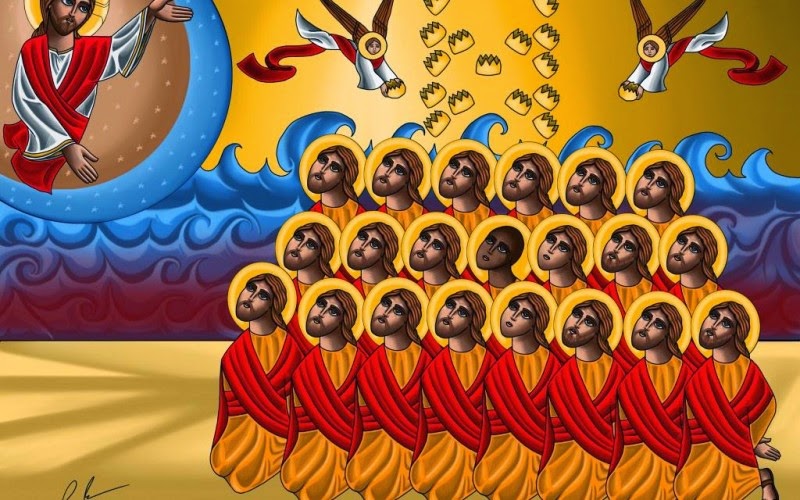
Abraham, Isaac and the Martyrdom of 21 Egyptian Christian Men
In this homily, Fr. Austin discusses the difficulty in understanding the story of Abraham being asked by God to sacrifice his son Isaac, as well as Abraham’s willingness to comply with this request. It emphasizes that we should not judge either God or Abraham, as they both had deep love for one another.
The homily then shifts to discussing the 2015 martyrdom of 21 Egyptian Christian men in Libya, highlighting their strong faith and love for God even in the face of death. It encourages us to reflect on our own faith and love for God during Lent, and to consider what sacrifices God may be asking of us. The homily concludes by reminding us of the ultimate sacrifice made by Jesus on the cross and how it should inspire us to deepen our faith and love for God.
IMAGE: An icon of the 21 Coptic Martyrs by Tony Rezk
RELATED: Vatican Hosts Veneration of Relics of 21 Coptic Martyrs of Libya on First Feast Day (Catholic News Agency, February 15, 2024)
Homiletic Pastoral Review
2nd Sunday of Lent B

“This is my beloved Son. Listen to him!”
In his 2024 homily, Fr. Hoang highlights the importance of listening to God the Father, as emphasized in the scene of the Transfiguration of the Lord. The disciples had been listening to Jesus for two years, but selective listening caused them to ignore or dismiss Jesus’ words about his upcoming suffering and death. God the Father, who saw their hearts, reminded them to listen to Jesus. The same reminder applies to us in Lent – to heed Jesus’ call for repentance and belief, prayer, fasting, and almsgiving. By listening to Jesus and following his words, we can grow in our faith and fully embrace the Lenten journey.
FFr. Randy Hoang is a priest of the Archdiocese of Portland in Oregon. He completed a Licentiate in Sacred Theology in Liturgical Theology at the Pontifical University of the Holy Cross in Rome in 2021.
Listen to God for the Better Choice

In his 2021 homily, Fr. Linton reflects on the story of Abraham and Isaac, emphasizing Abraham’s ability to listen and recognize the better choice. Although God instructed Abraham to sacrifice his son, Abraham followed through without questioning. It is suggested that Abraham was caught up in the act of sacrificing and missed the ram caught in the thicket, which was destined by God to be the sacrifice in place of Isaac. This story highlights the importance of truly listening and perceiving God’s guidance and the better choices in life.
During the season of Lent, Fr. Linton encourages the congregation to make a special effort to listen to God and recognize the better choices presented to them. By biting their tongues instead of engaging in destructive gossip, forgiving rather than holding grudges, and prioritizing relationships over work, individuals can see God’s work in their lives and discern the better choices.
Fr. Linton concludes by emphasizing that Christ is the ultimate better choice and that by truly listening to the Word of God and looking around, individuals can see Christ in their midst.
Fr. Edward Linton, O.S.B., a monk of Saint Meinrad Archabbey, was ordained in 1991. He currently serves as Director of the Institute for Continuing Theological Education (ICTE) at the Pontifical North American College in Rome, Italy.
Do You Have the Courage to Slay the God who Doesn’t Exist?

In his 2018 homily, Fr. Kartje discusses how human beings have a tendency to create gods, both in ancient mythologies and in our own lives. He states that Christians know there is only one true God who is love and bestows unconditional love upon us. However, Fr. Kartje argues that we are adept at creating false gods that resemble the true God at first glance. He shares a childhood experience of praying for a pony and feeling skeptical when it didn’t come true, leading him to question the relevance of God in his life.
Fr. Kartje explains that experiences such as judgmental parenting, a charmed life, or disappointments can shape our perception of a false God. The readings for the day focus on revealing the true nature of God as He is, not as we imagine or want Him to be. Just as Peter, James, and John witnessed a new aspect of Jesus on the mountain and Abraham had to face a challenging request from God, we too must confront any false gods in our hearts.
Fr. Kartje highlights the Lenten practices of prayer and sacrifice as powerful tools to expose what is false and reveal what is true about God. He emphasizes the need for courage to kill the false god and trust that we will be embraced by the one true God. The homily concludes with the invitation to slay the god who doesn’t exist and be embraced by the God who does.
Fr. John Kartje, a priest of the Archdiocese of Chicago, has served in both parishes and campus ministry. He is the rector of Mundelein Seminary.
Basilica of the National Shrine
2nd Sunday of Lent B


Navigating Lent with a Lively Faith, Rather than Just Following the Noise
In his 2018 homily, Fr. Cilinski shares an anecdote about a young monk asking an older monk why so many people come to the monastery but ultimately leave. The older monk explains that those who leave have not truly seen or come to know the Lord, they are just following the noise and not experiencing a true encounter. Fr. Cilinski then relates this to the Transfiguration of Jesus on the mountaintop, where Peter, James, and John witness Jesus radiating with light and conversing with Moses and Elijah. They understand in that moment that Jesus is someone worth listening to. The voice of God confirms this by saying, “This is my beloved Son. Listen to him.” Fr. Cilinski highlights the importance of truly knowing and encountering the Lord in order to follow Him faithfully, especially in times of struggle and challenge. By listening to Jesus and trusting in His victory, we can navigate the Lenten journey with a lively faith, rather than just following the noise.
Dominican Blackfriars
2nd Sunday of Lent B

In his 2021 homily, Fr. Gaine reflects on the story of the Transfiguration of Jesus. He notes the similarities between this event and the experiences of Moses and Elijah on the high mountains of Sinai and Horeb. Fr. Gaine emphasizes the significance of the voice of God, which was present in the thunder, lightning, wind, and fire that accompanied these previous manifestations, but is now manifested in Jesus himself. The Old Testament voice declares Jesus to be the beloved Son of God, and Moses and Elijah disappear, leaving Jesus as the sole voice to be heard and obeyed. Fr. Gaine explains that this event was meant to strengthen the faith of the disciples, particularly in light of Jesus’ prophecy of his suffering and death. He emphasizes the need for disciples to embrace the cross and to listen to Jesus, even in the face of difficulty, reminding them that they have the examples of the saints, the gift of Jesus himself, and the knowledge of the glory that awaits them.
Bishop Robert Barron
2nd Sunday of Lent B

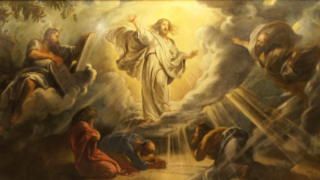
The Mystical Transfiguration of Christ
2018 PODCAST:
The story of the Transfiguration of Christ has beguiled the Christian mind for centuries. It is the clearest New Testament evocation of mystical experience, the experience of spiritual things within the ordinary and the keen conviction that the spiritual reality is greater and more beautiful than ordinary experience. “Mystical” means there has been contact with a Person: the person of God.
RELATED SERMONS:
Listen to Him (2012)
The Terrible Aqedah (2009)
The Law of the Gift (2003)


2nd Sunday of Lent B

Placing Our Lives in God’s Hands
In this homily, Fr. Irvin addresses the loss of confidence in a loving God that is evident in society, particularly in debates surrounding abortion and assisted suicide. He highlights the misconception that the Catholic Church promotes suffering and argues that traditional Judeo-Christian teachings affirm that God alone has the power to give and take human life.
Fr. Irvin then explores the theme of suffering in the biblical accounts of Abraham’s willingness to sacrifice his son Isaac and Jesus’ Transfiguration. He emphasizes that both stories reveal the truth that Jesus is fully divine and fully human, and that suffering has the power to change our consciousness and awaken our faith. He concludes by urging listeners to trust in God and let go of their attachments, having faith that God can bring good out of evil and joy out of suffering.
Fr. Joe Jagodensky, SDS
2nd Sunday of Lent B
Spiritual “Twists & Turns”
In this homily, Fr. Jagodensky focuses on the concept of events and their context in our lives. Fr. Joe mentions various confusing and unconventional events from the Bible, such as God asking Hosea to marry a prostitute or commanding Ezekiel to lie on his side for over a year. He also shares personal anecdotes, like a wedding being affected by unexpected winds, to highlight how life’s twists and turns shape and define us.
Fr. Joe then examines the story of Abraham and Isaac, suggesting that the lamb in the story is a parallel to Jesus, who is often referred to as the “Lamb of God.” He emphasizes the enduring love of the father in the story of the Prodigal Son, contrasting it with the title that misrepresents the focus of the story.
Fr. Joe challenges the notion of a linear journey through life, with a clear progression from A to B. He suggests that life is full of surprises, shocks, and mysteries, and that faith helps us navigate and understand them. He mentions Jonah spending three days in the belly of a whale and connects it to Christ’s three hours on the cross and three days in the tomb, as well as Lent’s pillars of prayer, fasting, and almsgiving.
He cautions against using expressions like “there’s always a reason” or “it’s God’s will” to dismiss the context of our lives, highlighting the importance of our own involvement. Fr. Joe also references his unexpected appointment as parish director, suggesting that it may have been a turn and twist with a deeper meaning within the context of the Christian experience.
Fr. Joe concludes by encouraging individuals to embrace the events of their lives within a spiritual connection to God, and to witness the transformation of these events into a holy and meaningful life. He mentions the honor bestowed upon a teenage girl becoming the mother of our Savior, emphasizing the profound spiritual relationship within human episodes._
2nd Sunday of Lent B


Go up to the Mountain
In his homily, Fr. Jude reflects on the paschal mystery of Jesus’ life, death, and resurrection during Lent. He highlights the story of Abraham being tested by God to sacrifice his son, Isaac, and emphasizes the importance of trusting in God’s plan. Fr. Jude also discusses the transfiguration of Jesus on Mount Tabor, where the apostles are introduced to a new understanding of Jesus’ mission. He emphasizes the need for prayer and listening to Jesus’ words as a response to His invitation. Fr. Jude encourages the congregation to not only experience this encounter with God but also to share the message of the Cross and resurrection with others.
Fr. George Smiga
2nd Sunday of Lent B

The Tragedy of Mass Shootings
ORIGINAL TITLE: The Tragedy in Chardon
MARCH 4, 2012
“If God is for Us, Who Can be Against Us” Romans 8:31b-34
Fr. Smiga acknowledges the tragic deaths of three students at Chardon High School where six students were shot on February 27, 2012. He reflects on a statement made by a mother who described the tragedy as “an evil thing happened in a very good place.” He explores what this tragedy tells us about evil and our faith. The tragedy in Chardon shattered the illusion of safety, reminding us that evil can touch our lives no matter where we are. However, living in a good place, surrounded by a solid community and supported by our faith, is important when facing evil. Fr. Jude encourages deepening relationships, praying, and growing spiritually to make our place as good and strong as possible.
“Whatever we have to face, our faith tells us that God is with us. As Paul says today in the second reading, ‘If God is for us, who can be against us.’ Faith assures us that God will be with us as we face the evil and tragedy of our lives.
Fr. Anthony Ekpunobi, C.M.
2nd Sunday of Lent B

Msgr. Joseph Pellegrino
2nd Sunday of Lent B

Faith

The homily by Msgr. Pellegrino explains that Abraham’s willingness to sacrifice his son Isaac was a demonstration of his deep faith in God. Although he did not have to go through with the sacrifice, God rewarded Abraham’s faith with a covenant promising numerous descendants and victories over enemies.
The homily then shifts to a personal anecdote about attending the Passion Play in Oberammaggou, Germany, where the sacrifice of Isaac is linked with Jesus’ sacrifice on the cross, emphasizing the theme of God providing the lamb for the sacrifice. Just as Abraham’s faith was rewarded with a new covenant, Jesus’ faith also led to the establishment of a new covenant.
The homily highlights that God is aware of our struggles and tests our faith in difficult times. It acknowledges that faith is easier when life is going well but becomes challenging when faced with turmoil, such as broken relationships, sickness, or loss of loved ones. Despite anger, doubt, and weakened faith, God recognizes that believers still desire to have faith and asks for his help to grow in faith.
Msgr. Charles Pope
2nd Sunday of Lent B
What is it that gives hope, peace, and serene joy to the Christian life? Briefly, it is the vision of glory, a glimpse into the Promised Land of Heaven, which the Lord can and does give to His people. Today’s Gospel shows forth a kind of process through which the Lord lays the foundations of hope, peace, and joy.
Bishop John Louis
2nd Sunday of Lent B

Fr. Michael Chua
2nd Sunday of Lent B

Fr. Tom Lynch
2nd Sunday of Lent B

Clergy E-Notes
“…if the family is the sanctuary of life, the place where life is conceived and cared for, it is a horrendous contradiction when it becomes a place where life is rejected and destroyed. So great is the value of a human life, and so inalienable the right to life of an innocent child growing in the mother’s womb, that no alleged right to one’s own body can justify a decision to terminate that life, which is an end in itself and which can never be considered the “property” of another human being.”
— Pope Francis
Fr. Phil Bloom
2nd Sunday of Lent B

The Battle Keeps Raging
Fr. Bloom reflects on life’s pivotal moments, both joyful and devastating. He discusses the Transfiguration of Jesus and the presence of Moses and Elijah, who were able to see the unveiled face of God. Fr. Bloom also addresses the reliability of the Gospels and recommends reading Brant Pitre’s book on the subject. He emphasizes the need to trust in Jesus during pivotal moments and shares a personal experience of loss. The homily concludes with a quote from Psalm 116 about belief in the midst of affliction and walking with the Lord._
2nd Sunday of Lent B

Listen to Jesus
EXCERPT: Every Sunday in the Creed as we profess our faith we say,
I believe in one Lord Jesus Christ,
…God from God, Light from Light,
true God from true God…
Jesus is Light from Light. He is the Light from the Father who is Light. Peter, James, and John saw Jesus as Light from Light, on the mountain when Jesus was transfigured, Light from the Father who is Light. Jesus’ transfiguration was not just for Peter, James, and John. Jesus’ transfiguration is also for us. So, what does Jesus’ transfiguration mean for us?
Fr. John Kavanaugh, S.J.
2nd Sunday of Lent B

Being Put to the Test
EXCERPT: The “test” of Abraham tests us all. It is a story that strains any confidence we might have in a loving God. Why would a good and gracious God order Abraham to sacrifice Isaac, “your only one, whom you love,” the miracle child, the promise, the cherished gift?
Of course, Abraham is spared from carrying out the act by a heavenly angel of the Lord. But that doesn’t make the plot any less troubling. It seems almost perverse that God would play such games with us.
Among the philosophers and theologians who have struggled with the story, Kierkegaard has been something of a beacon for me—even if not entirely illuminating. He reminds us of the utter transcendence and otherness of God, the absolute who enters our life not through rational categories or moral standards, but through a harrowing leap of faith. No wonder the imagery of dread, fear, and trembling haunted Kierkegaard’s mind.
Bishop Frank Schuster
2nd Sunday of Lent B
The Transfiguration Moments of Life
In Bishop Schuster’s 2021 homily, he reflects on the concept of the “undiscovered country” as portrayed in the readings. He highlights how for Abraham, it represented the land promised by God, while for the disciples of Jesus, it symbolizes salvation and eternal life. Bishop Schuster suggests that Lent is an opportunity for us to go on a retreat and reflect on our lives, working on areas that need purification and change. He encourages us to contemplate questions about our identity, the identity of Jesus, and our ultimate destination. Bishop Schuster invites us to remember moments of transfiguration in our own lives and discern God’s purpose in those moments. He emphasizes the importance of recognizing that Jesus is leading us towards our Easter hope, and to recommit ourselves to follow Him as the Lamb of God who takes away our sins.
Fr. Michael Cummins
2nd Sunday of Lent B
Transfiguration and the Cross

ANECDOTE: A priest of our diocese tells the story that one day he and some friends were out driving and they were coming upon Smyrna, TN. As they approached the city they started arguing about its correct pronunciation – was it “Smyr-na” or “Smeer-na”? It was close to midday so they decided to ask someone when they stopped for lunch. They came to a fast food restaurant and once inside the group went to a lady who was standing nearby. The priest said, “Ma’am, could you please help me and my friends with a debate that we are having? Could you, slowly and distinctly, tell us the name of the place in which we are?” The lady gave them a quizzical look and slowly said, “Bur … ger … King.”
It is good to know where we are – both geographically and, for our purposes this Sunday, in the life of faith and discipleship. Today, as we continue our journey toward Jerusalem with the Lord we are at the mount of Transfiguration but it is worthwhile to note both that this mountain points toward Golgotha – the mountain of the cross and sacrifice of the Son – and why it points that direction.
2nd Sunday of Lent B