
Featured
Videos


SOURCE: A Word Proclaimed
Jesus’s Transfiguration reveals his divine glory and serves as a prophetic reality that can exist in our spirit, leading us out of darkness and transforming us in glory forever.
- 00:00 📖 Jesus reveals his suffering and resurrection, Peter rebukes him, and Jesus rebukes Peter, instructing everyone to think as God does.
- 02:24 📖 Jesus teaches that those who lose their life for his sake will save it, and he takes Peter, James, and John to witness the Transfiguration.
- 03:56 🏔 Jesus takes Peter, James, and John to a high mountain, where he is transfigured before them, showing the church where they are going.
- 05:56 🌟 Jesus’s divine glory is revealed, as Peter suggests making tents for Jesus, Moses, and Elijah, and a voice comes from a descending cloud.
- 08:17 📖 Jesus is the fulfillment of the law and the prophets, and we should listen to him in order to be led out of darkness.
- 10:04 🌟 Peter alludes to his impending death and urges others to remember his teachings, while the Transfiguration is a prophetic reality that can exist in our spirit.
- 12:00 🌟 Jesus discussed his death and resurrection from the Old Testament, and the church is grateful for Christ revealing his glory and removing the scandal of the cross.
- 13:58 📖 God will transform our bodies to be like his, just as he brought all things under his control, and if we give our sufferings to God, we will be transformed in glory forever.

SOURCE: A Walk in the Word
Jesus’s transfiguration on the mountain reveals his divinity and prepares his disciples for his impending suffering and death, strengthening their faith in him as the beloved Son and Messiah.
- 00:00 🏔️ Jesus is transfigured before Peter, James, and John on a high mountain, paralleling Moses on Mount Si and prefiguring events in his life, with a voice declaring him as the beloved Son.
- 07:10 🏔️ Jesus brings witnesses to his Transfiguration, emphasizing the importance of eyewitnesses and the significance of encountering God on high mountains.
- 12:45 🌟 Jesus is transfigured, revealing his divinity and glory, fulfilling Messianic prophecies and discussing his impending suffering and death with Moses and Elijah.
- 25:29 🏔️ Jesus is transfigured before the disciples, revealing his divinity and the prophecy of the coming Messiah, but Peter’s impulse to build tents shows a lack of recognition and fear of suffering.
- 36:10 🌟 Jesus’s transfiguration on the mountain reveals him as the beloved Son and Messiah, greater than Moses and Elijah, strengthening the faith of his disciples before his crucifixion.
- 47:56 📖 The first reading highlights pivotal moments in Salvation history, focusing on the account of The Binding of Isaac in Genesis CH 22, which prefigures the crucifixion of Jesus.
- 54:21 🌟 Isaac and Jesus were both sacrificial lambs, with Isaac’s sacrifice foreshadowing Jesus’ crucifixion and resurrection, emphasizing the importance of obedience.
- 01:04:09 🌟 Jesus calls disciples to obedience and faith, exemplified by Abraham and Isaac, as they ascend the mountain and trust in the Lord’s perfect will, preparing them for his passion and death.

SOURCE: Hearers of the Word
The story of the transfiguration and the sacrifice of Isaac in Genesis 22 both reveal the depth of God’s mercy and compassion, and offer a deeper understanding of faith and salvation.
- 00:00 📖 The Lent 2B21 presentation emphasizes the importance of the readings from Genesis 22 and the transfiguration in Mark 9, highlighting the significance of Abraham’s willingness to sacrifice Isaac and the promise of blessings from God.
- 07:37 📖 The reflection on the story of Abraham by Jewish artist Mark Chagall is considered one of the most remarkable narratives in the Bible, with parallels in the instructions given to Abraham and the destinies of his children Ishmael and Isaac.
- 11:31 📖 Abraham and Hagar’s descendants have different destinies, with a common structure in the Bible, including the chaotic and frightening story of Abraham’s sacrifice of his son and the successful transition of blessings and promises from one generation to the next.
- 17:58 📖 Abraham’s faith and righteousness are tested and acknowledged in Jewish tradition, while his willingness to sacrifice Isaac is seen as a way to diminish immorality in the Christian tradition.
- 20:39 📖 God giving his son echoes the Abraham story, with the difference being that God actually did give his son, making it a disturbing reading, and the story of Isaac being sacrificed is interpreted as an allegory of Jesus’ passion and resurrection in traditional Christian readings.
- 24:46 📜 The letter of Romans can be understood as a structured argument and discusses the need for grace and faith in Christ, emphasizing the sacrifice of God’s son for us.
- 29:36 🏔️ Jesus is transfigured before Peter, James, and John on a mountain, where they see Elijah and Moses, and a voice declares Jesus as the beloved son, instructing them to keep quiet until after the resurrection.
- 35:40 🌥️ The symbol of a cloud represents the holy as a mysterium tremendum fascinans, inviting deep listening to the beloved son, with the baptism story and crucifixion linked and the experience of recognizing Jesus as the son of God fleeting and understood in retrospect, teaching about faithful listening and following leading to new life in Christ.

SOURCE: The Mass Readings Explained
The sacrifice of Isaac by Abraham on Mount Moriah foreshadows the sacrifice of Jesus Christ on the cross, highlighting the significance and divine plan of salvation.
- 00:00 📖 God tests Abraham by asking him to sacrifice his beloved son Isaac, foreshadowing the sacrifice of Jesus in the gospel readings during lent.
- 02:09 📖 Abraham is about to sacrifice his son Isaac, but an angel stops him and provides a ram as a substitute sacrifice.
- 03:00 📖 God tests Abraham’s faith by commanding him to sacrifice his son Isaac, ultimately blessing him for his obedience.
- 04:41 📜 God tests Abraham’s faith by asking him to sacrifice his son, which is only understood in the context of the New Testament as preparation for the sacrifice of Jesus Christ.
- 06:00 📜 Abraham’s test of sacrificing Isaac parallels the crucifixion of Jesus, with both sons carrying their own wood up the mountain to be sacrificed.
- 07:02 📖 God provides a substitute for Isaac, just as Christ is the substitute for the world’s blessing through his sacrifice on the cross.
- 08:20 💡 The same mountain where Abraham offered Isaac is where Jesus, the beloved son of the father, laid down his life for the sins of the world.
- 09:26 📖 God’s plan for Jesus’ sacrifice on Calvary was established from the time of Abraham offering Isaac, showing that it was not a surprise but part of God’s plan of salvation.
Commentary
Highlights

Fr. George
Corrigan
OFM

Fr. Corrigan, OFM

This page is an easy place to access the commentaries that I have prepared for the Gospel of Mark. The commentaries are arranged by Liturgical Year B order. It is not a complete coverage of the Gospel… but who knows… maybe one day. You are free to download and use for Bible Study, to evangelize, or anything that gives Glory to God. Enjoy.
Michal E.
Hunt

Catena
Aurea
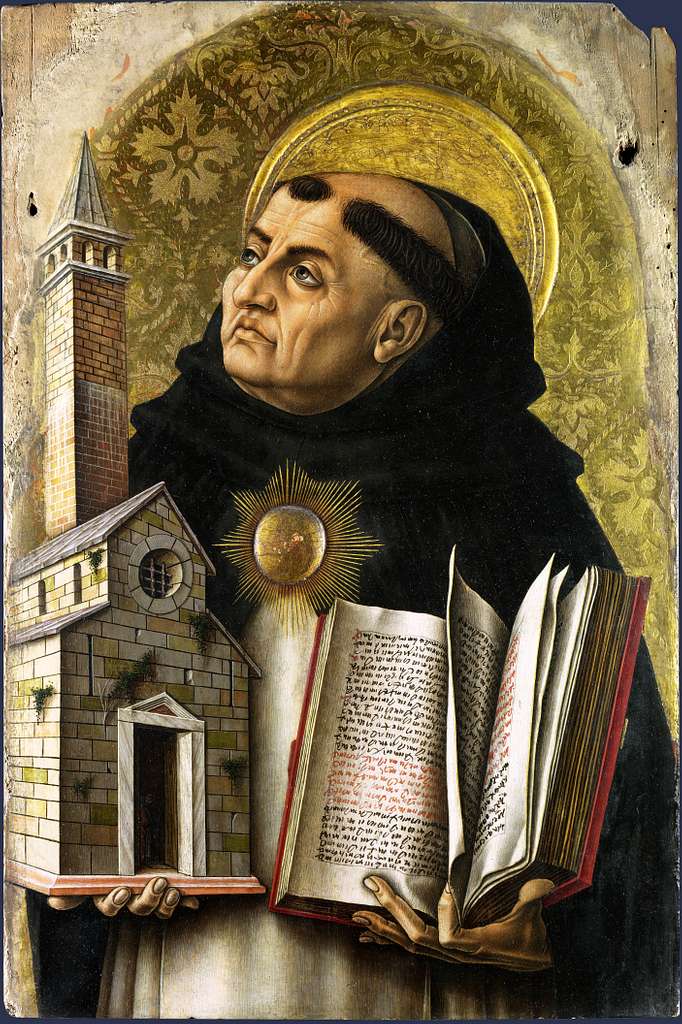
Compiled by
St. Thomas
Aquinas
Thomas Aquinas compiled this opus from sermons and commentaries on the Gospels written by the early Church Fathers, arranging their thoughts in such a way that they form a continuous commentary on each Gospel.
PSEUDO-JEROME. After the consummation of the cross, the glory of the resurrection is shewn, that they, who were to see with their own eyes the glory of the resurrection to come, might not fear the shame of the cross; wherefore it is said, And after six days Jesus taketh with him Peter, and James, and John, and led them up into an high mountain apart by themselves, and he was transfigured before them.
CHRYSOSTOM. (Hom. in Matt. 65) Luke in saying, After eight days, does not contradict this; for he reckoned in both the day on which Christ had spoken what goes before, and the day on which he took them up. And the reason that he took them up after six days, was that they might be filled with a more eager desire during the space of these days, and with a watchful and anxious mind attend to what they saw.
THEOPHYLACT. And He takes with Him the three chiefs of the Apostles, Peter, as confessing and loving him, John, as the beloved one, James, as being sublime in speech and as a divine; for so displeasing was he to the Jews, that Herod wishing to please the Jews slew him.
PSEUDO-CHRYSOSTOM. (Vict. Ant. e Cat. in Marc.) He does not however shew His glory in a house, but He takes them up into a high mountain, for the loftiness of the mountain was adapted to shewing forth the loftiness of His glory.
THEOPHYLACT. And He took them apart, because He was about to reveal mysteries to them. We must also understand by transfiguration not the change of His features, but that, whilst His features remained as before, there was added unto Him a certain ineffable brightness.
PSEUDO-CHRYSOSTOM. (Vict. Ant. e Cat. in Marc.) It is not therefore fitting that in the kingdom of God any change of feature should take place, either in the Saviour Himself, or in those who are to be made like unto him, but only an addition of brightness.
BEDE. (in Marc. 3, 37) Our Saviour then when transfigured did not lose the substance of real flesh, but shewed forth the glory of His own or of our future resurrection; for such as He then appeared to the Apostles, He will after the judgment appear to all His elect. It goes on, And his raiment became shining.
GREGORY. (Mor. 32, 6) Because, in the height of the brightness of heaven above, they who shine in righteousness of life, will cling to Him; for by the name of garments, He means the just whom He joins to Himself. There follows, And there appeared unto them Elias with Moses, and they were talking with Jesus.
CHRYSOSTOM. (Hom. in Matt. 56) He brings Moses and Elias before them; first, indeed, because the multitudes said that Christ was Elias, and one of the Prophets, He shews Himself to the Apostles with them, that they might see the difference between the Lord, and His servants. And again because the Jews accused Christ of transgressing the law, and thought Him a blasphemer, as if He arrogated to Himself the glory of His Father, He brought before them those who shone conspicuous in both ways; for Moses gave the Law, and Elias was zealous for the glory of God; for which reason neither would have stood near Him, if He had been opposed to God and to His law. And that they might know that He holds the power of life and of death, He brings before them both Moses who was dead, and Elias who had not yet suffered death. Furthermore He signified by this that the doctrine of the Prophets was the schoolmaster to the doctrine of Christ. He also signified the junction of the New and Old Testament, and that the Apostles shall be joined in the resurrection with the Prophets, and both together shall go forth to meet their common King. It goes on, And Peter answered and said to Jesus, Master, it is good for us to be here; and let us make three tabernacles, one for thee, and one for Moses, and one for Elias.
BEDE. (ubi sup.) If the transfigured humanity of Christ and the society of but two saints seen for a moment, could confer delight to such a degree that Peter would, even by serving them, stay their departure, how great a happiness will it be to enjoy the vision of Deity amidst choirs of Angels for ever? It goes on, For he wist not what to say; although, however, Peter from the stupor of human frailty knew not what to say, still he gives a proof of the feelings which were within him; for the cause of his not knowing what to say, was his forgetting that the kingdom was promised to the Saints by the Lord not in any earthly region, but in heaven; he did not remember that he and his fellow-Apostles were still hemmed in by mortal flesh and could not bear the state of immortal life, to which his soul had already carried him away, because in our Father’s house in heaven, a house made with hands is not needed. But again even up to this time he is pointed at, as an ignorant man, who wishes to make three tabernacles for the Law, the Prophets, and the Gospel, since they in no way can be separated from each other.
CHRYSOSTOM.f Again, Peter neither comprehended that the Lord worked His transfiguration for the shewing forth of His true glory, nor that He did this in order to teach men, nor that it was impossible for them to leave the multitude and dwell in the mountain. It goes on, For they were sore afraid. But this fear of theirs was one by which they were raised from their usual state of mind to one higher, and they recognised that those who appeared to them were Moses and Elias. The soul also was drawn on to a state of heavenly feeling, as though carried away from human sense by the heavenly vision.
THEOPHYLACT. Or else, Peter, fearing to come down from the mount because he had now a presentiment that Christ must be crucified, said, It is good for us to be here, and not to go down there, that is, in the midst of the Jews; but if they who are furious against Thee come hither, we have Moses who beat down the Egyptians, we have also Elias, who brought fire down from heaven and destroyed the five hundred.
ORIGEN. (in Matt tom. xii. 40) Mark says in his own person, For he wist not what to say. Where it is matter for, consideration, whether perchance Peter spoke this in the confusion of his mind, by the motion of a spirit not his own; whether perchance that spirit himself who wished, as far as in him lay, to be a stumbling-block to Christ, so that He might shrink from that Passion, which was the saving of all men, did not here work as a seducer and wish under the colour of good to prevent Christ from condescending to men, from coming to them, and taking death upon Himself for their sakes.
BEDE. (ubi sup.) Now because Peter sought for a material tabernacle, he was covered with the shadow of the cloud, that he might learn that in the resurrection they are to be protected not by the covering of houses, but by the glory of the Holy Ghost; wherefore it goes on, There was a cloud that overshadowed them. And the reason why they obtained no answer from the Lord was, that they asked unadvisedly; but the Father answered for the Son, wherefore there follows, And a voice came out of the cloud, saying, This is my beloved Son, in whom I am well pleased.
CHRYSOSTOM. (Hom. in Matt. 56) The voice proceeded from a cloud in which God is wont to appear, that they might believe that the voice was sent forth from God. But in that He says, This is my beloved Son, He declares that the will of the Father and the Son is one, and that, save in that He is the Son, He is in all things One with Him who begot Him.
BEDE. (ubi sup.) He then whose preaching, as Moses foretold, every soul that wished to be saved should hear when He came in the flesh, He now come in the flesh is proclaimed by God the Father to the disciples as the one whom they were to hear. There follows, And suddenly, when they had looked round about, they saw no man any more, save Jesus only with themselves; for as soon as the Son was proclaimed, at once the servants disappeared, lest the voice of the Father should seem to have been sent forth to them.
THEOPHYLACT. Again mystically; after the end of this world, which was made in six days, Jesus will take us up (if we be His disciples) into an high mountain, that is, into heaven, where we shall see His exceeding glory.
BEDE. (ubi sup.) And by the garments of the Lord are meant His saints, who will shine with a new whiteness. By the fuller we must understand Him, to whom the Psalmist says, (Ps. 51) Wash me throughly from my wickedness, and cleanse me from my sin; for He cannot give to His faithful ones upon earth that glory which remains laid up for them in heaven.
REMIGIUS. Or else, by the fuller are meant holy preachers and purifiers of the soul, none of whom in this life can so live as not to be stained with some spots of sin; but in the coming resurrection all the saints shall be purged from every stain of sin. Therefore the Lord will make them such as neither they themselves by taking vengeance on their own members, nor any preacher by his example and doctrine, can make.
CHRYSOSTOM. Or else, white garments are the writings of Evangelists and Apostles, the like to which no interpreter can frame.
ORIGEN. (in Matt. tom. xii. 39) Or else, fullers upon earth may by a moral interpretation be considered to be the wise of this world, who are thought to adorn even their foul understandings and doctrines with a false whitening drawn from their own minds. But their skill as fullers cannot produce any thing like a discourse which shews forth the brightness of spiritual conceptions in the unpolished words of Scripture, which by many are despised.
BEDE. (ubi. sup.) Moses and Elias, of whom one, as we read, died, the other was carried away to heaven, signify the coming glory of all the Saints, that is, of all who in the judgment-time are either to be found alive in the flesh, or to be raised up from that death of which they tasted, and who are all equally to reign with Him.
THEOPHYLACT. Or else it means, that we are to see in glory both the Law and the Prophets speaking with Him, that is, we shall then find that all those things which were spoken of Him by Moses and the other prophets agree with the reality; then too we shall hear the voice of the Father, revealing to us the Son of the Father, and saying, This is my beloved Son, and the cloud, that is, the Holy Ghost, the fount of truth, will overshadow us.
BEDE. (ubi sup.) And we must observe, that, as when the Lord was baptized in Jordan, so on the mountain, covered with brightness, the whole mystery of the Holy Trinity is declared, because we shall see in the resurrection that glory of the Trinity which we believers confess in baptism, and shall praise it all together. Nor is it without reason that the Holy Ghost appeared here in a bright cloud, there in the form of a dove; because he who now with a simple heart keeps the faith which he hath embraced, shall then contemplate what he had believed with the brightness of open vision. But when the voice had been heard over the Son, He was found Himself alone, because when He shall have manifested Himself to His elect, God shall be all in all, yea Christ with His own, as the Head with the body, shall shine through all things. (1 Cor. 15:28).
ORIGINAL: e-Catholic 2000
STCB Notes


Sermon
Writer

Mark 9:2-9 Exegesis
The Gospel closely parallels the story of Moses at Sinai
1. Three men accompanied Moses (Exodus 24:9; Mark 9:2).
2. A cloud covered the mountain for six days, and God spoke from the cloud (Exodus 24:16; Mark 9:2, 7).
3. Moses saw, at least in part, God’s glory (Exodus 33:17-23; Mark 9:3).
4. The skin of Moses’ face shone dazzling bright (Exodus 34:30; Mark 9:3)
5. The people of Israel were afraid (Exodus 34:30).
6. On coming down from the mountain, Moses encountered faithless “disciples” (Exodus 32:7-8; Mark 9:14-29).
RICHARD NIELL DONOVAN was a Disciples of Christ clergyman who published SermonWriter, for a paid subscription, from 1997-2020. After he died, his family has generously provided his resources without subscription.