3rd Sunday of Lent – Year A
Romans 5:1-2; 5-8
God’s Love for Us
Homily Topics
Through faith in Jesus Christ, we have been justified and have peace with God. Christ died for us while we were still sinners, demonstrating God’s love for us.
0 – Liturgical Calendar
Romans 5:1-2, 5-8
3rd Sunday of Lent (A)
Today’s reading from Romans 5:1-2, 5-8 gives us a glimpse into the infinite love of God for each one of us, as we journey through the stations of the cross.
The Lenten season calls us to reflect more deeply on the passion of Christ and to walk with Him on the way of the cross.
In the first station, we see Jesus being condemned to death. This represents the unjust condemnation of the innocent. Jesus, who committed no sin, willingly took on our sins and bore the punishment that was rightfully ours. In this way, we were justified through Him and granted peace with God.
The second station, where Jesus is made to carry His cross, reminds us of the heavy burden of our sins, which we must carry throughout our lives. How often do we struggle with our vices and weaknesses, feeling weighed down by guilt and shame? Yet, in these moments, we can remember the sacrifice of Christ, who carried the weight of the entire world’s sins on His shoulders. He did not hesitate to embrace the cross, bearing it with love and humility, and teaching us to do the same.
In the fifth station, we meet Simon of Cyrene, who was compelled to help Jesus carry the cross. Through his actions, Simon becomes an example of how we can aid our brothers and sisters who are also burdened by the weight of sin. We are called to be Simon for them, supporting them in their struggles, and helping them find the peace that comes from walking with Christ.
Finally, in the eighth station, Jesus meets the weeping women of Jerusalem. He consoles them, saying, “Do not weep for me; weep for yourselves and for your children.” These words remind us that our ultimate goal is not to avoid suffering, but to unite our suffering with the suffering of Christ for the salvation of souls. In doing so, we become a witness of Christ’s love, and through our struggles, we bring others to know and love Him.
DISCLAIMER: The text on this page was generated by an AI Chatbot named ChatGPT which works by using algorithms to analyze and generate text based on prompts and questions from a user. The text has been edited and checked for inconsistencies and inaccuracies. However, due to limitations in the current state of AI technology, readers are advised to use their own critical analysis and fact-checking skills for reference or decision-making purposes.
1 – Faith & Hope
Romans 5:1-2, 5-8
3rd Sunday of Lent (A)
When we have faith in Jesus, we are no longer lost and wandering in the world, searching for something to give our lives meaning.
Today’s reading from Romans speak to us of the profound sense of meaning and purpose that we can find in our lives through our relationship with Christ. When we have faith in Jesus, we are no longer lost and wandering in the world, searching for something to give our lives meaning. We have been given a path to follow, a calling to fulfill, and a hope that sustains us through every trial and struggle. In those moments, we can remember that we are not alone. Christ is with us, and through his death and resurrection, he has given us the ultimate hope for our lives.
DISCLAIMER: The text on this page was generated by an AI Chatbot named ChatGPT which works by using algorithms to analyze and generate text based on prompts and questions from a user. The text has been edited and checked for inconsistencies and inaccuracies. However, due to limitations in the current state of AI technology, readers are advised to use their own critical analysis and fact-checking skills for reference or decision-making purposes.
2 – Family Life
Romans 5:1-2, 5-8
3rd Sunday of Lent (A)
Just as we need faith to have a healthy relationship with God, we also need to have faith to have a healthy marriage and family.
Faith allows us to trust in our spouse and family, even in times of difficulty and struggle. It allows us to put our trust in God’s plan for our lives, and to find peace even in turbulent times. Faith reminds us that our love for our spouse and family does not depend on their actions or performance, but on the love that God has poured into our hearts.
But just as faith alone is not enough, we must also have perseverance and endurance in our marriages and families. St. Paul reminds us that endurance produces character, and character produces hope. In other words, enduring through tough times in our relationships can help us grow in character and strengthen our hope in God’s plan for our lives.
St. Paul also reminds us that Christ died for us when we were still sinners, so that we might be reconciled to God. In the same way, we are called to love and forgive our spouses and family members, even when they fail us or hurt us. It is through the power of love and forgiveness that we can find healing and reconciliation in our relationships.
DISCLAIMER: The text on this page was generated by an AI Chatbot named ChatGPT which works by using algorithms to analyze and generate text based on prompts and questions from a user. The text has been edited and checked for inconsistencies and inaccuracies. However, due to limitations in the current state of AI technology, readers are advised to use their own critical analysis and fact-checking skills for reference or decision-making purposes.
3 – Diversity & Inclusion
Romans 5:1-2, 5-8
3rd Sunday of Lent (A)
The love of God should inspire us to work towards creating a more inclusive and welcoming environment for everyone
As Christians, we are called to be peacemakers and to break down walls of division. We are called to embrace and love one another, regardless of our differences. We are called to promote diversity and inclusion, not only in our churches but in all aspects of our lives.
In Romans 5:5, the passage says that “hope does not disappoint, because the love of God has been poured out within our hearts through the Holy Spirit who was given to us.” This love should inspire us to work towards creating a more inclusive and welcoming environment for everyone. Let us strive for this unity and embrace our diversity as we spread the love and mercy of Christ.
As we come together as a community of believers, let us remember that we are all one body in Christ, and no one should be excluded. Let us work towards creating a culture of inclusion, where every person feels welcomed, valued, and loved.
DISCLAIMER: The text on this page was generated by an AI Chatbot named ChatGPT which works by using algorithms to analyze and generate text based on prompts and questions from a user. The text has been edited and checked for inconsistencies and inaccuracies. However, due to limitations in the current state of AI technology, readers are advised to use their own critical analysis and fact-checking skills for reference or decision-making purposes.
4 – Theology of Work
Romans 5:1-2, 5-8
3rd Sunday of Lent (A)
As Christians, we are called to persevere in our work with the knowledge that our faith produces endurance leading to hope.
As we go about our daily routines, we often face challenges and struggles. It can be tempting to give up when things get tough or to become complacent in our efforts.
In Romans 5:5, Paul makes an interesting statement about suffering. He says that this suffering produces endurance, character, and hope. Here, it is important to note that the suffering mentioned is not a punishment from God, but rather a consequence of living in a fallen world. It is the same suffering that Christ endured on the cross for us.
As we endure this suffering, we develop character. This character is what shapes us and helps us to become more like Christ. It is through our work that we are able to develop this character. We are challenged and tested in our tasks, and it is only by persevering through these challenges that we can develop the character that we need to truly make a difference in the world.
Furthermore, our work allows us to demonstrate the love of God to others. As we work with diligence and excellence, we are able to point others to the goodness and faithfulness of God. We can share the hope that we have in Christ through our actions and attitudes.
Finally, we see in Romans 5:5 that God demonstrates His own love for us in that while we were still sinners, Christ died for us. This is the ultimate example of sacrificial love. It is this same love that we are called to reflect in our work. We are to work with a spirit of service and sacrifice, putting the needs of others before our own.
RELATED WEBSITE:
DISCLAIMER: The text on this page was generated by an AI Chatbot named ChatGPT which works by using algorithms to analyze and generate text based on prompts and questions from a user. The text has been edited and checked for inconsistencies and inaccuracies. However, due to limitations in the current state of AI technology, readers are advised to use their own critical analysis and fact-checking skills for reference or decision-making purposes.
5 – Addiction Recovery
Romans 5:1-2, 5-8
3rd Sunday of Lent (A)
By acknowledging a higher power and surrendering control, addicts can find peace and relief from the burden of addiction.
In addiction and recovery, Romans 5:1-2 can relate to the idea of surrendering control and finding peace through faith in a higher power. By acknowledging a higher power and surrendering control, addicts can find peace and relief from the burden of addiction.
Romans 5:5-8 emphasizes the power of love and the importance of forgiveness. Even when someone is struggling with addiction and may feel unworthy of love and forgiveness, this passage reminds us that Christ died for all sinners. This can give addicts hope and the courage to seek forgiveness and healing.
DISCLAIMER: The text on this page was generated by an AI Chatbot named ChatGPT which works by using algorithms to analyze and generate text based on prompts and questions from a user. The text has been edited and checked for inconsistencies and inaccuracies. However, due to limitations in the current state of AI technology, readers are advised to use their own critical analysis and fact-checking skills for reference or decision-making purposes.
6 – Spiritual Warfare
Romans 5:1-2, 5-8
3rd Sunday of Lent (A)
Romans 5:1-2 speaks about the power of faith and the resulting peace that it brings.
In spiritual warfare, faith is essential as it is through faith in God that one can overcome the attacks of the evil one. As Catholic teachings state, those who go for confession and receive absolution experience a spiritual healing that strengthens their faith in God and gives them the grace to resist temptation. By confessing their sins and receiving forgiveness, Catholics can achieve inner peace, which protects them from the attacks of the enemy. The love of God can overpower even the strongest temptations, and it is through faith and hope that we can fight against evil and overcome it.
DISCLAIMER: The text on this page was generated by an AI Chatbot named ChatGPT which works by using algorithms to analyze and generate text based on prompts and questions from a user. The text has been edited and checked for inconsistencies and inaccuracies. However, due to limitations in the current state of AI technology, readers are advised to use their own critical analysis and fact-checking skills for reference or decision-making purposes.
7 – Stewardship
Romans 5:1-2, 5-8
3rd Sunday of Lent (A)
Romans 5:1-2 emphasizes the grace of God, which is central to Catholic stewardship.
As faithful stewards, Catholics are called to use their God-given gifts and resources to serve and glorify Him by supporting the Church and those in need. This involves a deep sense of gratitude for the blessings we have received and a desire to share them for the greater good.
Romans 5:5-8 further highlights the love and sacrifice of Christ in redeeming humanity. This serves as a reminder of the immense love that God has for His creation and inspires Catholics to imitate this love through acts of service and selflessness.
RELATED WEBSITE:
DISCLAIMER: The text on this page was generated by an AI Chatbot named ChatGPT which works by using algorithms to analyze and generate text based on prompts and questions from a user. The text has been edited and checked for inconsistencies and inaccuracies. However, due to limitations in the current state of AI technology, readers are advised to use their own critical analysis and fact-checking skills for reference or decision-making purposes.
8 – Youth & Teens
Romans 5:1-2, 5-8
3rd Sunday of Lent (A)
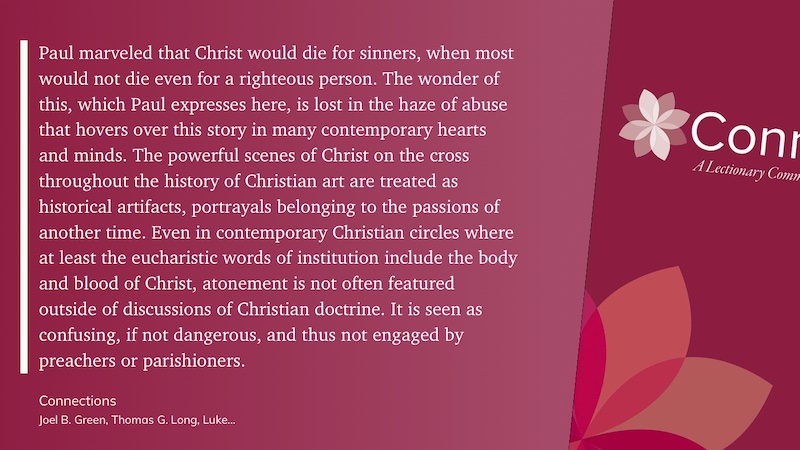
THIS TOPIC IS FEATURED THIS SUNDAY IN CONNECTIONS.
[contentcards url=”https://thewordthisweek.net/one-legged-gymnast-overcomes-the-odds-3rd-sunday-of-lent-a/”%5DDISCLAIMER: The text on this page was generated by an AI Chatbot named ChatGPT which works by using algorithms to analyze and generate text based on prompts and questions from a user. The text has been edited and checked for inconsistencies and inaccuracies. However, due to limitations in the current state of AI technology, readers are advised to use their own critical analysis and fact-checking skills for reference or decision-making purposes.
9 – News Events
Romans 5:1-2, 5-8
3rd Sunday of Lent (A)
The reading’s message of grace and forgiveness is more important now than ever, as we see events in the news that may cause us to feel afraid, angry, or hopeless.
In today’s scripture reading from Romans 5:1-2 and 5-8, we are reminded of the amazing grace of our Lord Jesus Christ. Though we are sinners, we have been justified by faith in Him and have peace with God through Him. And even in our weakness and failures, our Lord still loves us and died for us.
We see daily reports of violence, hatred, and greed in our communities and our world. We hear of injustice, inequality, and oppression affecting so many people, especially those who are marginalized and marginalized. And we may wonder, “How can we possibly make a difference? How can we find hope and peace in the midst of so much pain and suffering?”
But the good news is that we are not alone in our struggles. Through Christ, we have the power to overcome evil and darkness, and to share God’s love and light with those around us. As Paul writes in Romans 5:3-5 (which the Lectionary reading omits), “Not only so, but we also glory in our sufferings, because we know that suffering produces perseverance; perseverance, character; and character, hope. And hope does not put us to shame, because God’s love has been poured out into our hearts through the Holy Spirit, who has been given to us.”
DISCLAIMER: The text on this page was generated by an AI Chatbot named ChatGPT which works by using algorithms to analyze and generate text based on prompts and questions from a user. The text has been edited and checked for inconsistencies and inaccuracies. However, due to limitations in the current state of AI technology, readers are advised to use their own critical analysis and fact-checking skills for reference or decision-making purposes.
10 – Church History
Romans 5:1-2, 5-8
3rd Sunday of Lent (A)
Justification is a transformative work of God that begins with faith and results in the gift of salvation.
The Catholic theology on justification is rooted in this passage from Romans. Justification is a transformative work of God that begins with faith and results in the gift of salvation. This gift is freely given to us by God, and it is not by our works that we can earn it, but by the grace of our Lord Jesus Christ.
St. Paul tells us that through Jesus Christ, we have peace with God. Our sin has separated us from God, but Jesus has reconciled us with the Father, and by faith in him, we can approach God’s throne with confidence. Justification is the restoration of our relationship with God. It is the moment of reconciliation, when our sins are forgiven, and we are made whole again.
This process of justification is not an easy one. We must persevere in faith, and we must also suffer. But St. Paul reminds us that our suffering produces endurance, and our endurance produces character, and our character produces hope. Our hope is not in the things of this world, but in God’s promise of salvation.
DISCLAIMER: The text on this page was generated by an AI Chatbot named ChatGPT which works by using algorithms to analyze and generate text based on prompts and questions from a user. The text has been edited and checked for inconsistencies and inaccuracies. However, due to limitations in the current state of AI technology, readers are advised to use their own critical analysis and fact-checking skills for reference or decision-making purposes.
Joel B. Green