
Lectors Tips Guidelines Sunday Mass
Lectors Tips Guidelines Sunday Mass
Lectors Tips Guidelines Sunday Mass
Lectors Tips Guidelines Sunday Mass
Lectors Tips Guidelines Sunday Mass

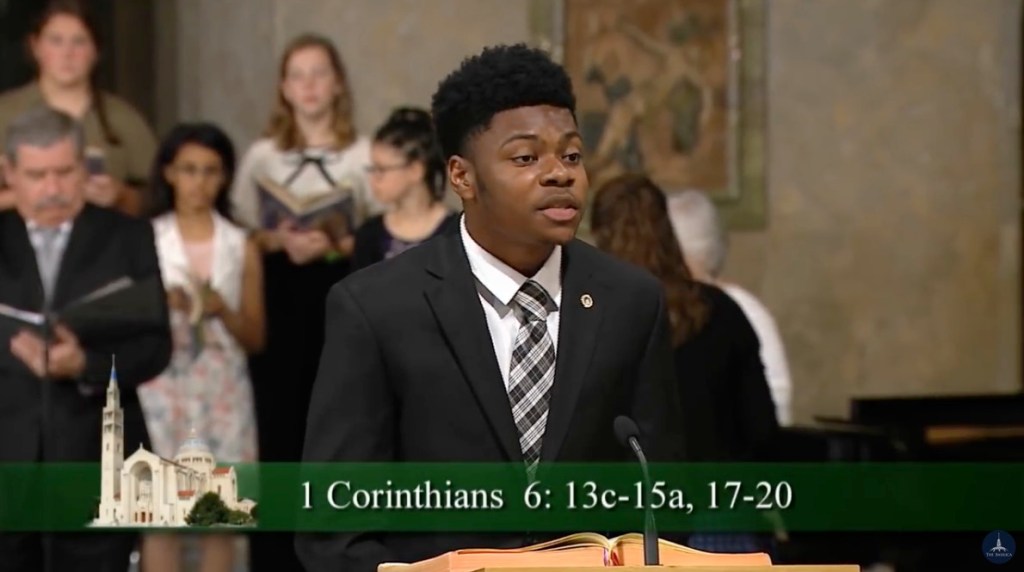
SOURCE: National Shrine of the Immaculate Conception; 2021, 2018
The Catholic
Lector

PROCLAIM – INSPIRE – LEAD
Lector Training
Videos
Lisa Bellecci-st.romain


Enhancing
Your Delivery

1 Sm 3:3b-10, 19

Some general tips for lectors reading 1 Sm 3:3b-10, 19 using the New American Bible (NAB) during Mass.
Emphasize significant words or phrases
Highlight key words or phrases to help convey the meaning more effectively.
For example, emphasize words like “lamp” (symbolic of God’s presence), “Eli” (representing the priest and servant of God), and “Samuel” (the young boy chosen by God).
Pause after introducing characters
Before mentioning characters like Samuel or Eli, briefly pause to make a clear distinction between them. This helps the congregation follow the narrative more easily.
Slow down during moments of revelation
When Samuel finally realizes that God is speaking to him, slow down your reading to emphasize the significance of this moment. It may also be effective to add a slight pause before uttering the word “Samuel” to build anticipation.
Use varying tones and volume
Adjust your tone and volume in moments of dialogue to differentiate between the voice of God and the human characters. When representing God’s speech, consider using a softer, more soothing tone while projecting the dialogue of Eli and Samuel with a more conversational tone.
Speed up during reading the narrative
During the narrative portions, where there is less dialogue and more description, you can increase your pace slightly to maintain the flow of the story. Be careful not to rush, but maintaining a steady rhythm can help engage the congregation.
Reflect the emotions in your voice
Pay attention to the emotional content of the text and let your voice reflect it. For example, when describing Samuel’s confusion or Eli’s realization, add a touch of sympathy or awe to your voice.
Ephesians 3:2-3a, 5-6

Some general tips for lectors reading Ephesians 3:2-3a, 5-6 using the New American Bible (NAB) during Mass.
Emphasize the special mission
Beginning with “You have heard of the stewardship of God’s grace…” (Ephesians 3:2), emphasize the phrase “stewardship of God’s grace.” This highlights the importance and uniqueness of the role being discussed.
Pause after “the mystery was made known to me by revelation” (Ephesians 3:3a)
This pause allows the congregation to absorb the idea that Paul received this message directly from God through a revelation. It emphasizes the divine nature of the message.
Emphasize the words “It has now been revealed to his holy apostles” (Ephesians 3:5)
These words signify a significant revelation impacting the apostles, so it’s important to emphasize them to convey their importance and significance.
Slow down during verse 6
Verse 6 contains a key message about the unity of Gentiles and Jews as equal participants in the promise of Christ. By slowing down the pace and enunciating clearly, you allow the congregation to fully grasp and appreciate the message of unity and inclusivity.
Vary tone and volume during dialogue
In verse 6, where Paul mentions the Gentiles being “coheirs, members of the same body, and copartners in the promise in Christ Jesus,” use a slightly elevated tone in your voice. This communicates the sense of enthusiasm and joy that comes with this revelation.
Consistency in pacing
Maintain a consistent pace throughout the passage, ensuring a steady rhythm that allows the congregation to follow along easily. Avoid rushing through the verses, giving the listeners time to absorb the message.
Reflect the gratitude and awe in your voice
As you read verses 2 and 3, which express Paul’s gratitude for the stewardship of God’s grace and his awe in having received the mystery through revelation, infuse your voice with sincere gratitude and a sense of wonder to convey Paul’s emotions.
General Notes
As a lector, it is an important responsibility to effectively convey the Word of God to the congregation during the Mass. Here are some practical tips:
1. Although tips on what words and phrases to emphasize and when to pause can be helpful, your delivery should ultimately depend on your own prayerful interpretation of the passage. From the series of tips given each week on this page, reader should choose which verses and words they want to emphasize. It’s important to find a balance that helps communicate the message effectively.
2. Familiarize yourself with the text: Read and study the Scripture passage several times before the Mass. Understand the context, the message it conveys, and the emotions it evokes.
3. Practice pronunciation and enunciation: Ensure that you know how to properly pronounce the words and names mentioned in the passage. Practice enunciating clearly and maintaining a steady pace throughout.
4. Use appropriate intonation and emphasis: Experiment with different ways to emphasize certain words or phrases that carry significant meaning. This can help in conveying the depth and impact of the message to the congregation.
5. Maintain a calm and confident demeanor: Approach the ambo with a serene presence and a sense of confidence. Maintain good posture, make eye contact with the congregation, and avoid rushing through the reading.
6. Speak slowly and clearly: Take your time while reading, ensuring that the words are clearly audible to everyone present. However, avoid artificially elongating words or sentences, as it may sound unnatural.
7. Pause when necessary: Pause at appropriate intervals, particularly at natural breaks in the text, such as commas or full stops. Pausing can help listeners absorb the message and reflect on its meaning.
8. Use nonverbal cues: Employ body language and gestures to effectively convey the emotions and ideas expressed in the passage. However, be mindful that gestures do not distract from the message or become exaggerated.
9. Maintain a respectful tone: Isaiah 61:1-2A, 10-11 is a text of hope and joy. Let the tone of your voice reflect the reverence and beauty of the passage. Be mindful of the emotions conveyed in the words and try to transmit them genuinely to the congregation.
10. Breathe and relax: Take a deep breath before beginning the reading to calm any nerves or anxiety. Remember, you are called to facilitate a meaningful encounter with the Word of God, and the Holy Spirit will guide you.
11. Pray before and after your reading: Seek God’s guidance and ask for His grace to effectively convey His message to the congregation. Offer a prayer of thanksgiving after the reading, asking for a blessing on the listeners and yourself.
By following these practical tips, you will be better equipped to deliver a clear, engaging, and spiritually uplifting reading during Mass.
Lector Prep
Greg Warnusz