Before the first reading:
Writing about five centuries before Jesus, the author of Proverbs wanted to remind fellow Jews that they were a people close to God, with a healthy civilization and admirable wisdom. The behavior of a capable, practical wife expresses this wisdom.
After the psalm, before the second reading:
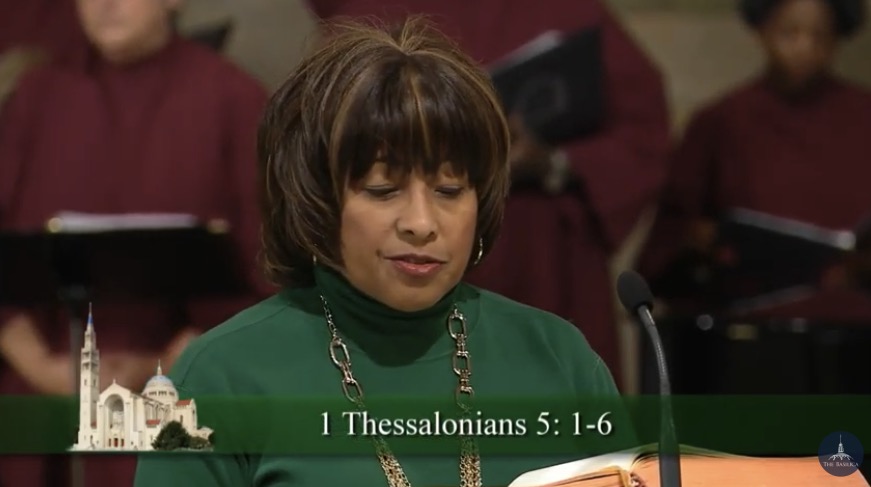
The earliest Christians were sure that the return of Jesus in glory, bringing history to its climax, would occur in their lifetimes. Saint Paul tells them they can’t know the day or hour, but that they always feel prepared nonetheless, because they live in the light.
Before the gospel acclamation:
Jesus told a story about an honest slave resisting the plans of a wicked master. A later Christian community was concerned about when Jesus would return, and how to live in the interim. Matthew adapts the the old story to their needs.
First Reading, Proverbs 31:10-13, 19-20, 30-31
Our Liturgical Setting: Today’s gospel, Matthew 25:14-30, is, one one level, about using one’s talents and being accountable for that use. It’s the second-last in this year’s series of episodes from Matthew.
The editors of the lectionary usually choose the first reading in light of the day’s gospel. The book of Proverbs is the best place to turn for practical advice about keeping busy in worthwhile ways. And this reading happily echoes last Sunday’s first reading, where wisdom was personified as a woman.
Proclaiming It: Pronounce “distaff” with a short “i” and the accent on the first syllable. (A distaff is an instrument used in spinning thread.) Pause after the line “[She] extends her arms to the needy,” because there’s a break in the thought there.
The Historical Situation: This is the earliest letter of Saint Paul that we still have. Paul’s audience believed that Christ has died, Christ is risen, and Christ will come again very soon! That’s the context of this exhortation to stay ready.
The “times and seasons” in the first sentence refer to the time when Jesus would return in glory, to judge the world and bring history to its end. However, elsewhere in the same letter, Paul urges the same audience not to abandon their day-to-day responsibilities just because they’re sure Jesus is about to return.
Proclaiming It: Emphasize the phrase “day of the Lord” in the second sentence. Do the same for the expression “that day” in the second paragraph. Also, let your voice express the contrasts throughout the reading.