


16th Sunday of Year B
Gathering
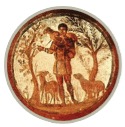
Gathering. This is the key concept of today’s liturgy. “But the remnant of my flock I myself shall gather,” says Yahweh (first reading). Jesus sees the crowd with compassion and exclaims, “they are like sheep without a shepherd” (Gospel), but he, the Good Shepherd, will gather them in only one flock (Jn 10:16). Jesus, the Good Shepherd, also gathers into one single flock those who were far (pagans) and those that were near (Jews) by means of his blood shed on the cross (second reading).
P. Antonio Izqeuirdo, L.C., Copyright © Dicastery for the Clergy
Doctrinal Messages
16th Sunday of Year B
Doctrinal Messages
Pastoral Suggestions
16th Sunday of Year B
Pastoral Suggestions
Pope Francis
Rest
18 July 2021 | Saint Peter’s Square
Jesus’s attitude that we observe in the Gospel of today’s liturgy (Mk 6:30-34) helps us to grasp two important aspects of life. The first is rest. To the Apostles returning from the labours of the mission who enthusiastically begin to relate everything they had done, Jesus tenderly directs this invitation to the Apostles: “Come away by yourselves to a lonely place, and rest a while” (v. 31). An invitation to rest.
In so doing, Jesus gives us a valuable teaching. Even though he rejoices on seeing his disciples’ happiness due to the wonders of their preaching, he does not spend time giving them compliments or asking questions. Rather, he is concerned about their physical and interior tiredness. And why does he do this? Because he wants to make them aware of a danger that is always lurking there for us too: the danger to be caught up in the frenzy of doing things, to fall into the trap of activism where what is most important are the results that we obtain and the feeling of being absolute protagonists. How many times this happens in the Church: we are busy, we run around, we think that everything depends on us and, in the end, we risk neglecting Jesus and we always make ourselves the centre.
The First Mission of the Apostles
22 July 2018 | Saint Peter’s Square
Today’s Gospel passage (Mk 6:30-34) tells us that after their first mission, the Apostles returned to Jesus and told him “all that they had done and taught” (v. 30). After the experience of the mission, which was undoubtedly thrilling but also arduous, they needed to rest. And understanding this well, Jesus wished to give them some relief and said to them, “Come away by yourselves to a lonely place, and rest for a while” (v. 31). But Jesus’ intention could not be fulfilled this time because the crowd, guessing the location of the lonely place where he would take the disciples by boat, ran there and got there ahead of them.
The same can happen today. At times we are not able to complete our projects because something urgent and unexpected occurs, disrupting our plans and [this] requires flexibility and being available to the needs of others.
In these situations, we are called to imitate what Jesus did: “As he landed he saw a great throng, and he had compassion on them, because they were like sheep without a shepherd; and he began to teach them many things” (v. 34). With this brief sentence, the Evangelist offers us a flash of singular intensity, taking a snapshot of the eyes of the divine Master and his teaching. Let us observe the three verbs in this frame: to see, to have compassion, to teach. We can call them the Shepherd’s verbs. The gaze of Jesus is not a neutral one — or worse, a cold and detached one because Jesus always looks with the eyes of the heart. And his heart is so tender and filled with compassion, that he is able to understand even the most hidden needs of people. Moreover, his compassion does not simply suggest an emotional response toward people in situations of distress. It is much more. It is God’s attitude and predisposition toward mankind and its history. Jesus appears as the fulfillment of God’s concern and care for his people.