Papal Homilies
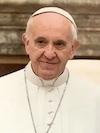
Parable of the Murderous Vintners
4 October 2020 | Saint Peter’s Square
27th Sunday of Year A
In today’s Gospel passage (cf. Mt 21:33-43) Jesus, foreseeing his passion and death, tells the parable of the murderous vintners, to admonish the chief priests and elders of the people who are about to take the wrong path. Indeed, they have bad intentions towards him and are seeking a way to eliminate him.
The allegorical story describes a landowner who, after having taken great care of his vineyard (cf. v. 33), had to depart and leave it in the hands of farmers. Then, at harvest time, he sends some servants to collect the fruit; but the tenants welcome the servants with a beating, and some even kill them. The householder sends other servants, more numerous, but they receive the same treatment (cf. vv. 34-36). The peak is reached when the landowner decides to send his son: the vinegrowers have no respect for him; on the contrary, they think that by eliminating him they can take over the vineyard, and so they kill him too (cf. vv. 37-39).
The image of the vineyard is clear: it represents the people whom the Lord has chosen and formed with such care; the servants sent by the landowner are the prophets, sent by God, while the son represents Jesus. And just as the prophets were rejected, so too Christ was rejected and killed.
At the end of the story, Jesus asks the leaders of the people: “When the owner of the vineyard comes, what will he do to those tenants?” (v. 40). And, caught up in the logic of the narrative, they deliver their own sentence: the householder, they say, will severely punish those wicked people and “let out the vineyard to other tenants who will give him the fruits in their seasons” (v. 41).
With this very harsh parable, Jesus confronts his interlocutors with their responsibility, and he does so with extreme clarity. But let us not think that this admonition applies only to those who rejected Jesus at that time. It applies to all times, including our own. Even today God awaits the fruits of his vineyard from those he has sent to work in it. All of us.
In any age, those who have authority, any authority, also in the Church, in the People of God, may be tempted to work in their own interests instead of those of God. And Jesus says that true authority is when one…
Parable of the Tenants
8 October 2017 | Saint Peter’s Square
27th Sunday of Year A
This Sunday’s liturgy offers us the parable of the tenants to whom a landowner lends the vineyard which he has planted, and then goes away (cf. Mt 21:33-43). This is how the loyalty of these tenants is tested: the vineyard is entrusted to them, they are to tend it, make it bear fruit and deliver its harvest to the owner. When the time comes to harvest the grapes, the landlord sends his servants to pick the fruit. However, the vineyard tenants assume a possessive attitude. They do not consider themselves to be simple supervisors, but rather landowners, and they refuse to hand over the harvest. They mistreat the servants, to the point of killing them. The landowner is patient with them. He sends more servants, larger in number than the previous ones, but the result is the same. In the end, he patiently decides to send his own son. But those tenants, prisoners to their own possessive behaviour, also kill the son, reasoning that, in this way, they would have the inheritance.
This narrative allegorically illustrates the reproaches of the prophets in the story of Israel. It is a history that belongs to us. It is about the Covenant which God wished to establish with mankind and in which he also called us to participate. Like any other love story, this story of the Covenant has its positive moments too, but it is also marked by betrayal and rejection. In order to make us understand how God the Father responds to the rejection of his love and his proposal of an alliance, the Gospel passage puts a question on the lips of the owner of the vineyard: “When therefore the owner of the vineyard comes, what will he do to those tenants?” (v. 40). This question emphasizes that God’s disappointment at the wicked behaviour of mankind is not the last word! This is the great novelty of Christianity: a God who, even though disappointed by our mistakes and our sins, does not fail to keep his Word, does not give up and, most of all, does not seek vengeance!
My brothers and sisters, God does not avenge himself. God loves, he does not avenge himself. He waits for us to forgive us, to embrace us. Through the “rejected stones” — and Christ is the first stone that the builders rejected — through situations of weakness and sin, God continues to circulate “the new wine” of his vineyard, namely mercy. This is the new wine of the Lord’s vineyard: mercy. There is only one obstacle to the tenacious and tender will of God…
SOURCE: The Holy See Archive at the Vatican Website © Libreria Editrice Vaticana
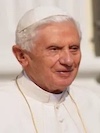
Pope Benedict XVI
SOURCE: The Holy See Archive at the Vatican Website © Libreria Editrice Vaticana
Pope St. John Paul II

HOME PAGE
CATHOLIC CULTURE
LIBRARY COLLECTION
(1979-2006)
Holy See Homily Notes

Theme of Readings
Coherence/Incoherence
The theme of coherence/incoherence serves as a thread unifying this Sunday’s texts: being what one is and acting in accordance with one’s nature. The vineyard, to be a true vineyard, must produce fine grapes and not wild ones (First Reading). He who has leased land from the landowner, must behave as a tenant and pay the sum established with the landowner at the proper time (Gospel). Those that act in a stable and constant way will live in God’s peace, which is beyond our understanding (Second Reading).
P. Antonio Izqeuirdo, L.C., Copyright © Dicastery for the Clergy
Doctrinal Messages
God is coherent with and faithful to his people Israel, from their origins and throughout the long journey of salvation history
Why did Israel, and the Church, a people so privileged by God, not respond with the same consistent attitude? God placed his confidence in humanity and in his people, and at the peak of his coherence sent his Son, expecting people to recognize, respect and obey him. But on the contrary, the people take advantage of the situation to kill him. Why? How is such a degree of incoherence, or perversity and malice, possible? What dwells in our hearts to allow us to act in such an unworthy and wretched way? The heart is an abyss, we are told by one of the Psalms. Yes, a possible abyss of greatness and coherence, but also of wickedness. Let us recall that all serious sins are, in a certain way, a crime against the very Son of God.
P. Antonio Izqeuirdo, L.C., Copyright © Dicastery for the Clergy
O Christian, know that you are a Christian, act like a Christian
God created the person to be a person in all fullness, according to what a person is called to be; God has made the Christian a Christian through baptism in order to be a Christian, to act like a Christian. What are the ways proper to Christian conduct?
a) The Christian will be what he is called to be if he bears good fruit, like the vine which yields an excellent wine (First Reading). Fruits of judgment and discernment in the light of the history of salvation, and fruits of justice, in other words, of those that have been justified and saved by the redeeming grace of God.
b) The Christian will be what he is called to be if, as tenant, he gives the landowner what is due according to what was established (Gospel), according to the covenant established between God and his people, between God and the baptized. As tenants, let us not believe that we are landowners. As tenants, let us allow the land of our existence to bear fruit. As tenants, let us thank the landowner for his benevolence towards us and let us show him our gratitude by delivering him the produce that he is due
P. Antonio Izqeuirdo, L.C., Copyright © Dicastery for the Clergy
Coherence and peace
Paul recognizes himself as coherent and faithful through the grace of Jesus the Lord, which is why he says to the Philippians, “Keep doing everything you learned from me and were told by me and have heard or seen me doing.” As a result of this consistent life, “…the God of peace will be with you” (Second Reading). It is the peace of those who in any circumstance will present their wishes to God in prayer, petition and thanksgiving; it is the peace of those who hold in high regard everything that is true, everything that is honorable, everything that is upright and pure, everything that we love, everything that is good, virtuous and praiseworthy in the world and in the environment in which we live (Second Reading).
P. Antonio Izqeuirdo, L.C., Copyright © Dicastery for the Clergy
Pastoral Suggestions
The difficult coherence of the Christian
Without exaggerating, it should be pointed out that in contemporary society it is more difficult to be a true Christian than in past times, because in the environment around us there is a lot of indifference to and even disdain for the Christian Faith.
a) It is difficult to confess integral faith in Christ, true God and true man; faith in the Church, human and divine at once, institutional and charismatic, holy and comprised of sinful members; faith in Catholic moral doctrine, with all of the implications and needs that this entails in the social arena, in the area of life and sexuality, in the family and professional sphere.
b) It is difficult to live and decide in a Christian way on something so important as who should be given the vote in municipal or regional administrative elections or in general political elections, or whether or not to marry a girl that is not a practicing Catholic or not a Catholic at all, or whether or not to engage in “dirty” business that goes against one’s moral principles …
P. Antonio Izqeuirdo, L.C., Copyright © Dicastery for the Clergy
Coherence is the source of peace in one’s conscience, while inconsistency breeds a lack of tranquility
When a person lives coherently, he feels gratified when he has done his job. When one is inconsistent, the conscience is filled with remorse day after day, while coherence brings serenity. When there is no coherence, often one does not do things well, one does things with very little will and only to fulfill a task. Without coherence, the life of a person ceases to be a history, and in the case of the Christian, it ceases to be a holy life and becomes a series of unconnected events, with no union or substance, often meaningless. When a person is coherent both with the human condition and the Christian Faith, he lives in a state of great equanimity, psychological and spiritual stability, and especially, in peace with God and with his own conscience.
P. Antonio Izqeuirdo, L.C., Copyright © Dicastery for the Clergy