
Young
Catholics

SOURCE: Young Catholics
Teen
Commentary
Life
Teen


Questions
for Teens
Gospel – Key Words
- nzgela
- leigbar
- ymar
- ntzaarhe
- vnirgi
- odg
- nos
- loyh riotp
- enohrt
- didav
- gidonkm
- reverof
- ceenvoi
- dhlic
- liha
- cerga
- revaf
- tsimomh ighh
- soerwdhaw
- yloh oen
- dlacel
- blesesd
- lbeveie
- drow
- elpbmisso
- madihnad
- lliw
- tnevres
- tle me itb
- rtadeped_
2nd Reading – Answers
- angel
- Gabriel
- Mary
- Nazareth
- virgin
- God
- Son
- Holy Spirit
- throne
- David
- kingdom
- forever
- conceive
- child
- hail
- grace
- favor
- most high
- overshadow
- holy one
- called
- blessed
- believe
- word
- impossible
- handmaid
- will
- servant
- let it be
- departed
Discussion Questions
2 Sm 7:1-5, 8b-12, 14a, 16
Q1: What did King David want to do?
A1: King David wanted to build a house for the Lord.
Q2: Where did David reside at that time?
A2: David resided in his own house while the Lord had given him rest from his enemies.
Q3: Did the Prophet Nathan approve of David’s plan?
A3: Yes, initially Prophet Nathan approved of David’s plan to build a house for the Lord.
Q4: How did Nathan feel about David’s plan eventually?
A4: Later, Nathan received the word of the Lord and told David that he should not build a house for God.
How can teenagers honor and serve God without necessarily building physical structures? Teenagers can honor and serve God by living a righteous and faithful life, following His commandments, and spreading His love and message to others.
Q5: What did the Lord promise to David instead of letting him build a house?
A5: The Lord promised to establish a house for David and raise up his offspring to succeed him.
How can teenagers ensure they establish a strong and righteous future for themselves? Teenagers can establish a strong and righteous future by seeking God’s guidance, staying true to their faith, making wise choices, and cultivating a heart for God.
Q6: What did the Lord say about David’s offspring?
A6: The Lord said that He would establish the throne of David’s offspring forever.
What assurance do teenagers have that God’s promises extend beyond their lives? Teenagers have the assurance that God’s promises extend beyond their lives because the Lord’s covenant with David ensures the eternal reign of His descendants.
Q7: How would God treat David’s offspring if they were to commit sin?
A7: If David’s offspring were to commit sin, the Lord would discipline them with a human rod and the afflictions of mortal men.
How can teenagers navigate through challenges and discipline, staying faithful to God? Teenagers can navigate through challenges and discipline by seeking God’s forgiveness, learning from their mistakes, and relying on His strength and guidance to remain faithful.
Q8: What everlasting promise did God make to David and his descendants?
A8: God promised that David’s house, kingdom, and throne would be established forever.
How can teenagers trust and rely on God’s promises for their own lives and future? Teenagers can trust and rely on God’s promises by having faith in His unfailing love, seeking His will through prayer and Scripture, and surrendering their lives to Him._
Discussion Questions
Rom 16:25-27
Q1: To whom does Paul attribute the revelation of the mystery that was kept secret for long ages?
A1: Paul attributes the revelation of the mystery to God.
Q2: How does Paul describe this mystery?
A2: Paul describes the mystery as something that was kept secret for long ages but has now been disclosed.
What are some spiritual mysteries or truths that teenagers may find challenging to understand or grasp? Some spiritual mysteries or truths that teenagers may find challenging to understand or grasp could include concepts like the Trinity, the nature of sin, salvation, or the purpose of suffering.
Q3: What is the purpose of disclosing the mystery according to Paul?
A3: The purpose of disclosing the mystery is to bring about the obedience of faith for all nations.
How can teenagers strive to demonstrate the obedience of faith in their own lives? Teenagers can strive to demonstrate the obedience of faith by following God’s commandments, trusting in His guidance, and living out their faith in their actions and relationships.
Q4: What does Paul say about the glory of God?
A4: Paul glorifies God, who alone is wise, through Jesus Christ, forever.
How can teenagers bring glory to God in their daily lives and interactions? Teenagers can bring glory to God by living in ways that reflect His love, compassion, and righteousness, and by sharing His message of hope and salvation with others.
Q5: How does Paul close his letter to the Romans?
A5: Paul closes his letter by acknowledging that the mystery has been made known to the Gentiles, leading them to obedience of faith.
What encouragement can teenagers take from this passage in their personal journey of faith? Teenagers can be encouraged by the fact that God’s plan of salvation is inclusive and extends to all nations, and that they too can experience the obedience of faith and be part of God’s redemptive work in the world.
Discussion Questions
Lk 1:26-38
Q1: Where did the angel Gabriel go?
A1: The angel Gabriel went to a town in Galilee called Nazareth.
Q2: Whom did the angel Gabriel greet?
A2: The angel Gabriel greeted a virgin named Mary, who was betrothed to a man named Joseph.
How should teenagers respond when unexpected or challenging situations come their way, just as they did for Mary? Teenagers should trust in God’s plan, remain obedient, and seek guidance and strength to navigate through unexpected or challenging situations.
Q3: What was Mary’s initial reaction upon seeing the angel?
A3: Mary was greatly troubled at the angel’s words and wondered what kind of greeting this might be.
How can teenagers respond when they feel troubled or unsure about a particular situation or decision? Teenagers can seek guidance and solace through prayer, talking to trusted adults or mentors, and seeking wisdom from Scripture.
Q4: What did the angel tell Mary?
A4: The angel told Mary that she had found favor with God and would conceive and bear a son, whom she should name Jesus.
How can teenagers find favor with God in their daily lives? Teenagers can find favor with God by living a life of obedience, seeking to honor Him in their choices and actions, and growing in their relationship with Him through prayer and Scripture.
Q5: How would Mary’s son be great?
A5: Mary’s son would be great, called the Son of the Most High, and would inherit the throne of David, reigning over the house of Jacob forever.
How can teenagers strive for greatness in their own lives, keeping in mind the example of Jesus? Teenagers can strive for greatness by following Jesus’ teachings, serving others, using their gifts and talents for the benefit of others, and seeking to make a positive impact in their communities.
Q6: How did Mary respond to the angel’s message?
A6: Mary humbly accepted the angel’s message, saying, “Behold, I am the handmaid of the Lord; let it be done to me according to your word.”
How can teenagers cultivate a humble and submissive heart towards God’s plans for their lives? Teenagers can cultivate a humble and submissive heart by surrendering their own desires and plans to God, seeking His will, and trusting that His plans are ultimately for their good and His glory.
Q7: What did the angel say in response to Mary’s acceptance?
A7: The angel reassured Mary that the Holy Spirit would come upon her and the power of the Most High would overshadow her, and that her child would be called holy, the Son of God.
How can teenagers rely on the power of the Holy Spirit in their own lives to bring about God’s plans and purposes? Teenagers can rely on the power of the Holy Spirit through prayer, drawing near to God, and actively following His guidance and leading in their everyday decisions and actions.
Fr. Mike
Schmidt
Ascension Presents
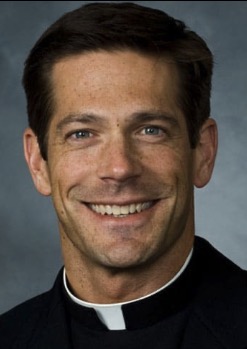

“God will never ask you to do more than Mary did.” And what did Mary do? She said “yes”. Today, on the eve of the celebration of Mary’s Immaculate Conception, Fr. Mike wants us to meditate on how we can learn to say “yes” to God from the ultimate example of what a “yes” looks like: Mary, our mother.
Q1: What is the central theme of Father Mike’s talk?
A1: The central theme is the role of Mary, the mother of Jesus, in Christian theology, specifically in relation to the dogma of the Immaculate Conception.
Q2: What song does Father Mike reference in the beginning of his talk?
A2: Father Mike references a song titled “Mary Did You Know,” which he sang years ago.
Q3: What does Father Mike explain about the doctrine of the Immaculate Conception?
A3: Father Mike explains that Mary was preserved from all states of original sin from her conception due to her son’s future life, death, and resurrection.
Q4: Which biblical figure does Father Mike liken Mary to in his talk?
A4: Father Mike likens Mary to Eve, pointing out their parallel roles in Christian theology.
Q5: What examples does Father Mike give to highlight Mary’s receptivity and obedience?
A5: Father Mike commends Mary for asking clarifying questions when needed and responding affirmatively to God’s plan.
Q6: How does Father Mike stress the concept of holiness in his talk?
A6: Father Mike emphasizes that holiness is not achieved through one’s own efforts but by cooperating with God and allowing Him to work within one’s life.
Q7: How does Father Mike challenge listeners at the end of his talk?
A7: Father Mike concludes by challenging listeners to identify where they feel called by God and encourages them to respond affirmatively._

Religion
Teacher
Jared Dees


Featured
Videos
Featured
Video
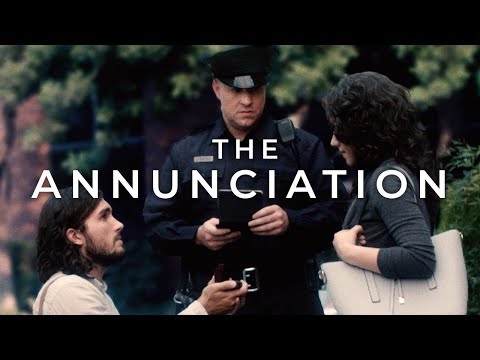
THE ANNUNCIATION FILM (2:17) – A short nontraditional 2018 Christmas film (44 minutes) imagined what the story would be like today. In a world where the “messiah” had not come yet, a frustrated angel Gabriel, a disagreeing college student Mary, and a dumbfounded boyfriend Joseph have to figure out a very troubling mission to bear a child who will put their lives upside down.
While watching this film students should compare and contrast this modern day adaptation tot he biblical passage in Luke 1:26-38.
Annunciation Film divided into four parts of 10 minute segments:

Find Catholic resources for Youth Ministry, Vacation Bible School (VBS), religious ed, catechists, Parish School of Religion (PSR), Confraternity of Christian Doctrine (CCD), Catholic families, Rite of Christian Initiation of Adults (RCIA) and Catholics of all ages.
