
Bible Study
Bible Study

Matt Zemanek

Fr. Geoffrey Plant

Fr. Bryan Kulawa
Word-Sunday
1st Reading: The Ideal Believer
2nd Reading: Surprise He’s Coming!
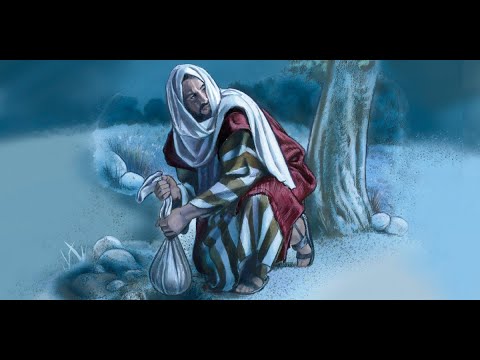
Gospel: The Parable of the Extortionist



Fr. Bryan Kujawa


Click on image to view Fr. Bryan’s playlist. Each week he posts three videos. You can switch between them by clicking on the upper right hand corner once video starts playing.



Discussion Questions
Vince Contreras

1. In the 1st Reading, from the chapter of Proverbs that extolls the virtues of the idealized wife, what qualities are praiseworthy in this person? Is it her looks? Her charm or her wit? What is it, and how does that relate to what God expects to see in you?
2. In the 2nd Reading, Paul is reminding the Thessalonians that they are not to sit around complacently waiting for the Lord’s return. What does he exhort them to be doing instead?
3. In Jesus’ parable, who does the master represent? The journey? The talents? The servants?
4. What happened to the two servants who doubled their investment? To the servant who histalent? On what basis were they rewarded?
5. How does the master’s treatment of the one-talent servant seem to you: Fair? Harsh?Lenient? Why?
6. Why do you think Jesus found it necessary to repeat his point so many times and in so manydifferent ways (as in chapters 23—25)?
7. If the master returned today, what would he say about how you have used what he has givenyou? How have you developed it? What kind of responsibility do you feel toward Godregarding your talents? Have you been hiding them?
8. Which of the three servants in the parable can you relate to most? Why?
9. What does it mean to you to “share your master’s joy”?
SOURCE: SundayScriptureStudy.com / used with permission
Fr. Frank Bird, SM

1. Have you experienced charm’ as deceptive and ‘beauty’ fleeting? Two quite different life-styles are presented as a ‘mirror’ to expose the reader. Where do you ‘see’ yourself?
2. What image speaks more to you: not sleeping, staying alert, being sober? How could you apply this ‘image’ to an application in your life?
3. Two different ‘images’ and perceptions of the Master are found. Servants 1 and 2 are spurred into creativity, Servant 3 is filled with fear. He will take no risks, avoid any wrongdoing, and will give back to God in ‘strict justice’ what was given. Is Servant 3 ‘self-ish’? His fear of judgement tends to paralyse him. He is not filled with a freedom and love for creative risk taking in works of mercy. Could this be an image of the Jewish community for Matthew? The Christian Community today?
4. Reflect personally and name your ‘talents’. From this parable what do you think God asks of you? If you were to be judged on your current use of your talents what might be the conclusion?
SOURCE: Living the Word resources are created by Fr Frank Bird a Marist priest and Mrs Bev McDonald, ACSD, distributed by Marist Laity Auckland, NZ
Anne Osdieck

1. Do you know some people like the woman in this reading? How are they “reaching out to the needy and extending their arms to the poor?” Are they feeding the hungry and caring for the sick? Are they working to end wars, fix racial justice and climate change? Are they doing something and not just talking?
2. Where would you put yourself on a continuum that has security with dying in peace at one end and constant dread at the other?
3. Are you willing to take risks, or are you paralyzed by fear? If you were a leader in the Church, what kind of risks would you take to insure the growth of the faithful?
SOURCE: Sunday Web Site at Saint Louis University
Fr. Clement
Thibodeau

1. In what ways has fear stood in the way of your developing some of your God-given talents and gifts? Fear of what? Failure? Loss? Ridicule from others? How can faith help us to overcome our fear? Is it really fear of God or fear of people that prevents you from developing your talents?
2. What negative experiences have you had that prevent you from offering your gifts in ministry in the Church community? Did anyone ever tell you that your gifts were not worthwhile? That you were not worthwhile? That you had nothing to offer? How can we validate each other’s gifts and make us feel that our gifts are needed? When was the last time you expressed appreciation for the gifts of people around you in family and in parish?
3. What are the ways you would suggest in which the Church could be more effective in offering its God-given gifts to the world? How could the Church improve its ways of communicating the good news of Jesus Christ? How could your parish be more effective in its liturgies, in celebrating the sacraments, in reaching out to those who are marginal in society or those who feel left out? How could we do better at reaching out to those who are divorced and remarried?
Christian Action
“If you give a person a fish, they eat for a day; if you teach them to fish, they eat every day.” Ask your parish pastoral staff for information on the Catholic Campaign for Human Development. See what your group or your family can do to help people help themselves.
SOURCE: Portland Diocese
Fr. Eamon Tobin

1. Name some of the talents or gifts God has given you. What gifts or talents have you developed? What gifts or talents still wait to be developed?
2. What gifts or talents have you shared in the past? Or do you currently share those gifts or talents with your Church or wider community?
3. Are you hiding a gift that you should be using to benefit others?
4. Is there a ‘stepping up to the plate’ that you have not done out of fear of failure? Can you name a time you ‘stepped up to the plate’ even though you had a fear of failure?
5. What is Jesus saying to you this Sunday about how a faithful disciple should act?
Responding to God’s Word
Share with the person next to you one way you can act on this week’s readings. Suggestion: Spend time thinking about a talent you have that has not been developed or is developed but has not been used to bless others.
SOURCE: Ascension Catholic Parish, Melbourne, FL

Kay Murdy
Together with God’s Word
Together with God’s Word
33rd Sunday of Year A
TO KNOW: Jesus’ parable of the talents was an allegory on wise stewardship for his disciples while they awaited his return and anticipated the Last Judgment. In the story, each servant was given a different sum of money to invest. (A talent was a Greek coin worth about 6,000 denarii, equal to a year’s wages. Its modern-day meaning of a special aptitude or gift is derived from the use of the word in this parable.) The first two servants made wise investments and doubled their money. The third servant, fearing his master’s rebuke should he fail, buried the money for safe keeping. When the master returned, each individual was asked to give an account of his stewardship. The wise servants were rewarded for their fidelity. They were given even greater responsibilities and were invited to the heavenly banquet. The one who saw his master as a tyrant and therefore acted unwisely was punished, losing the gift that had been given to him.
TO LOVE: In what ways do I use my time, treasure and talents to further the kingdom of God?
TO SERVE: Lord Jesus, help me to use the gifts you have given to me for the good of all.