
Featured
Videos


SOURCE: A Word Proclaimed
- 00:00 📖 Jesus cleanses the temple and replaces Passover feasts with himself in the Gospel of John.
- 02:32 📖 Jesus confronts the commercialization of the temple and the exploitation of the people by the religious leaders.
- 04:07 📖 Jesus cleanses the temple to keep it holy and free from commercialization.
- 05:24 📖 Jesus' disciples remembered his words about the Holy Spirit and recognized that his zeal for the house of God was fulfilled in his trial.
- 06:52 📖 The Jews misunderstood Jesus' reference to the temple as his body, but his resurrection is crucial for our justification.
- 08:01 📖 People believed in Jesus because of the signs he performed, but true belief requires a strong foundation beyond just impressive signs.
- 09:16 📖 God's healing power is evident in the story of a woman with melanoma, but despite witnessing miracles, Jesus did not fully trust people because he knew their true nature.
- 11:08 📖 Jesus is the new temple, and his body represents the church, with the resurrection of Christ containing the mystery of the resurrection of the whole body.

SOURCE: A Walk in the Word
Jesus' cleansing of the Temple symbolizes the purification of our own spiritual lives and the transition into a new age in the history of Salvation.
- 00:00 🙏 Jesus cleanses the temple at the beginning of his public ministry, leading many to believe in his name and symbolizing drawing close to the Lord.
- 11:18 🕍 Jesus cleanses the temple, driving out money changers and sellers of animals, denouncing the authorities for turning it into a marketplace and reminding them of the acceptance of Gentiles in worship.
- 24:01 🙏 Jesus fulfills Old Testament prophecies by cleansing the temple and calling for repentance and justice.
- 34:33 🕊️ During Lent, we are called to cleanse ourselves of corruption and repent of our sins in preparation for Easter, paralleling Jesus's cleansing of the Temple.
- 41:49 🕊️ Jesus demonstrates zeal for the Lord's house by cleansing the temple and refers to his own body as the temple that will be raised in three days.
- 45:51 🕍 Jesus prophesied the destruction of the temple and spoke of the temple of his body, performing miracles and signs but not fully trusting those who followed him, calling us to ponder if our hearts are still hardened and to invite the Lord to cleanse us from sin.
- 51:45 📜 Jesus cleanses the temple to root out sin and love God and neighbor, emphasizing the importance of implementing the Ten Commandments during Lent.
- 01:00:20 🙏 Jesus cleansed the temple of merchants, reminding us to prepare for worship, reflect on the readings, and draw closer to the Lord during Lent.

SOURCE: Hearers of the Word
- 00:00 📖 The Lent series focuses on the third Sunday of Lent, examining the significance of the temple in Jerusalem and Jesus' actions in John's gospel.
- 04:42 🕊️ Jesus cleanses the temple and speaks of raising his body, leading many to believe in him but not entrusting himself to them.
- 07:16 📖 The gospel of John, written in Greek by a Jewish author, contains rich symbolism and references to the Old Testament and synoptic traditions, with chapter 21 added to explain Jewish traditions.
- 10:14 📖 The passage discusses the significance of the Passover, Jesus' actions in the temple, and the question of authority, emphasizing the importance of handling the traditional name "cleansing of the temple" carefully in relation to Jesus' death and resurrection and the reorganization of Judaism after the temple's destruction in 70 A.D.
- 15:01 🙏 Worship and the role of the Holy Spirit in John 1 to 4, Jesus as the temple, prophetic gestures, and the false testimony about destroying the temple in John's gospel and Hebrews chapter 9.
- 18:47 📖 Belief in the Gospel of John is emphasized as an action, not just a concept, and Jesus demonstrates his authority by driving out sellers in the temple and speaking of raising his body in three days.
- 21:47 📖 Jesus performed miraculous signs but did not fully trust people; the importance of rebirth, true worship, and commandments in the context of readings from John and Exodus is discussed.
- 26:07 📜 The importance of the Ten Commandments, the paradox of the cross, and the power of Christ's resurrection are emphasized in the readings for this Sunday.

SOURCE: The Mass Readings Explained
- 00:00 🕍 Jesus cleanses the temple by driving out sellers and overturning tables, and he speaks of raising the temple in three days as a reference to his body, leading many to believe in him.
- 02:14 🕊 Jesus cleanses the temple during the Jewish Passover, symbolizing the connection between the passage and Lent, and driving out the money changers for reasons beyond just cheating.
- 03:29 🕍 Jesus is upset with the Jewish money changers conducting business in the temple, referring to it as his father's house.
- 05:03 🕊 Jesus cleanses the temple to stop it from being turned into a marketplace and to preserve its sacred space for prayer.
- 06:31 🕍 Jesus, a Jew, is questioned by the Judeans about his actions in the temple, leading to tension between the Galileans and Judeans.
- 08:13 🏛️ Jesus refers to the temple as his body, not the physical building, and the mention of 46 years is a reference to King Herod's building activities.
- 08:51 🕍 Herod expanded and beautified the temple to make people think he was the messiah, but Jesus shifted the focus to the temple of his body.
- 10:23 🕊 Jesus reveals that he is the dwelling place of God on earth, pointing forward to his resurrection and the passion, death, and resurrection of Christ.
Commentary
Highlights




Fr. George
Corrigan
OFM

Fr. Corrigan, OFM

Commentaries are arranged by Liturgical Year B order.
You are free to download and use for Bible Study, to evangelize, or anything that gives Glory to God. Enjoy.” — Fr. Corrigan
Michal E.
Hunt

Agape Bible Commentary
3rd Sunday of Lent B
INTRODUCTION
In the First Reading, the Ten Commandments were the foundation of the Law of the Sinai Covenant. They focused on love expressed with a two-part division concerning love for God followed by a series of laws dealing with expressing love for humanity. The articles of the Law were God's gift of love and protection for His covenant people. The Law, conceived in love, served as a tutor and a guide, teaching the children of Israel about sin and sacrifice and setting them apart as a holy people on the path to salvation.
Michal E Hunt, Copyright © 2014; revised 2023 Agape Bible Study; used with permission
God gave His people what we sing in today's psalm: "Lord, you have the words of everlasting life."The people expressed their love for God and His covenant union with them in obedience to the Law and by participating in the liturgy of the Jerusalem Temple's twice-daily worship service. The people offered the daily communal sacrifice of the unblemished Tamid lambs for their atonement and sanctification. Together with the morning and afternoon Tamid sacrifice, they also brought to God's altar their sin sacrifices, communion sacrifices, whole burnt gift offerings, and the feast days' festival offerings that bound them in their love relationship with the Almighty God.
Michal E Hunt, Copyright © 2014; revised 2023 Agape Bible Study; used with permission
In the Second Reading, St. Paul complains that the Jews demand spectacular signs or miracles while the Greeks want wisdom or reason that makes everything understandable. Paul reminds us that Christ crucified and resurrected is both the sign and the wisdom of God for humanity. He is the Living Word of God who makes possible God's gift of everlasting life in His eternal Kingdom.
Michal E Hunt, Copyright © 2014; revised 2023 Agape Bible Study; used with permission
In the Gospel Reading, Jesus gives a sign of His divine authority. He cleanses the Jerusalem Temple of the people's profane practice of buying and selling within the Temple precincts. His purification of His Father's house prepares the way for the inauguration of a new liturgy of worship "in spirit and in truth" (Jn 4:23) and a New Covenant (Lk 22:20). The New Covenant will open the gates of Heaven (CCC 536, 1026) and will give the gifts of eternal salvation and the Holy Spirit that the Old Covenant was incapable of providing.
Michal E Hunt, Copyright © 2014; revised 2023 Agape Bible Study; used with permission
Jesus went up to Jerusalem
At its highest point, Jerusalem is approximately 2,600 feet above sea level and built across three mountain ridges. God's Holy Temple was built on a mountain called Moriah. The place-name only appears twice in the Bible: where Abraham, in a test of faith, was to travel three days from Beersheba to the land of Moriah to offer his son Isaac to God as a sacrifice (Gen 22:1-2), and where Solomon built Yahweh's Temple (2 Chron 3:1). The Jerusalem Temple was the only place where God's ordained priests could offer sacrifice to the God of Israel. The people offered sacrifices in atonement for their sins as a covenant people and as individuals so communion with God could be restored (Dt 12:8-12).
14 He found in the Temple area [herion] those who sold oxen, sheep, and doves, as well as the money-changers seated there.
These animals were sold as "clean" animals, acceptable for sacrifice (Lev 11:1-30). The doves and pigeons were the sacrifices of the poor (Lev 5:7).The Law of the Covenant required that a Temple tax of a half-shekel once a year. Coins that bore the Roman Emperors' portraits or other pagan images were not accepted for paying the tax (Ex 20:4) or for making donations to the Temple treasury for the poor. Money-changers, for a profit, exchanged these coins for legal Tyrian coinage, which bore no images.
15 He made a whip out of cords and drove them all out of the temple area [herion], with the sheep and oxen, and spilled the coins of the money-changers and overturned their tables ...
The Temple police strictly enforced the rule that no weapons or sticks were allowed in the Temple precincts. Jesus may have taken the rushes used as bedding for the animals to fashion His whip. The area for the animal market and money changing tables was an outer court (herion in the Greek text) and was probably the largest courtyard, the Court of the Gentiles. This court was set aside for instructing the Gentile peoples concerning the One True God and where they could pray. They could not have access to any other parts of the Temple precinct. Since they had not yet submitted to the necessary rites concerned with conversion and becoming members of the Covenant family, Gentiles could not offer sacrifice at the Temple altar or attend Temple services. However, they could bring acceptable sacrifices to the chief priests to offer God on their behalf. The Gentiles' outer courtyard was the one place where they had the opportunity to come close to God in His Sanctuary.
16 and to those who sold doves, he said, "Take these out of here and stop making my Father's house a marketplace."
Perhaps because the doves were the sacrifices for the poor, Jesus seems to be less harsh with the dove sellers. Jesus is both fully God and man.He experienced all the human desires and conditions that we experience. However, unlike us, He was not tempted to sin, nor did He sin. His anger was righteous. He was angry at the profane activates that polluted the sanctity of His Father's house. The money-changers and merchants were robbing Israel through their inflated exchange rates, and the priests had a cut of the profits. He was also angry because turning the Court of the Gentiles into a market denied them the opportunity to worship, robbed them of being instructed in the true faith, and denied them the opportunity to pray in peace without the stink and clamor of the animals and the haggling of the money-changers (CCC# 583-84).
Michal E Hunt, Copyright © 2014; revised 2023 Agape Bible Study; used with permission
Catena
Aurea
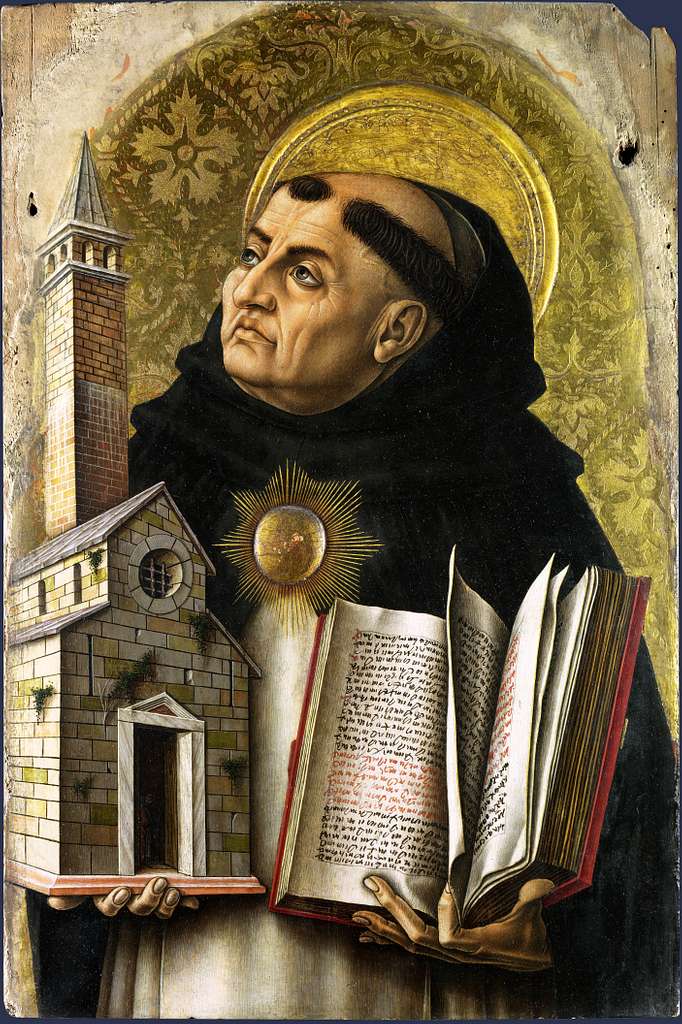
Compiled by
St. Thomas
Aquinas
Thomas Aquinas compiled this opus from sermons and commentaries on the Gospels written by the early Church Fathers, arranging their thoughts in such a way that they form a continuous commentary on each Gospel.
John 2:14–17
14. And found in the temple those that sold oxen and sheep and doves, and the changers of money sitting:
15. And when he had made a scourge of small cords, he drove them all out of the temple, and the sheep, and the oxen; and poured out the changers’ money, and overthrew the tables;
16. And said unto them that sold doves, Take these things hence; make not my Father’s house an house of merchandise.
17. And his disciples remembered that it was written, The zeal of thine house hath eaten me up.
BEDE. Our Lord on coming to Jerusalem, immediately entered the temple to pray; giving us an example that, wheresoever we go, our first visit should be to the house of God to pray. And He found in the temple those that sold oxen, and sheep, and doves, and the changers of money sitting. (Mat. 21)
AUGUSTINE. (Tr. x. c. 4) Such sacrifices were prescribed to the people, in condescension to their carnal minds; to prevent them from turning aside to idols. They sacrificed sheep, and oxen, and doves.
BEDE. Those however, who came from a distance, being unable to bring with them the animals required for sacrifice, brought the money instead. For their convenience the Scribes and Pharisees ordered animals to be sold in the temple, in order that, when the people had bought and offered them afterwards, they might sell them again, and thus make great profits. And changers of money sitting; changers of money sat at the table to supply change to buyers and sellers. But our Lord disapproving of any worldly business in His house, especially one of so questionable a kind, drove out all engaged in it.
AUGUSTINE. (Tr. x. c. 5) He who was to be scourged by them, was first of all the scourger; And when He had made a scourge of small cords, He drore them all out of the temple.
THEOPHYLACT. Nor did He cast out only those who bought and sold, but their goods also: The sheep, and the oxen, and poured out the changers’ money, and overthrew the tables, i. e. of the money changers, which were coffers of pence.
ORIGEN. (tom. x. in Joan. c. 16) Should it appear something out of the order of things, that the Son of God should make a scourge of small cords, to drive them out of the temple? We have one answer in which some take refuge, viz. the divine power of Jesus, Who, when He pleased, could extinguish the wrath of His enemies however innumerable, and quiet the tumult of their minds: The Lord bringeth the counsel of the heathen to nought. (Ps. 32, 33:10) This act indeed exhibits no less power, than His more positive miracles; nay rather, more than the miracle by which water was converted into wine: in that there the subject-matter was inanimate, here, the minds of so many thousands of men are overcome.
AUGUSTINE. (de Cons. Ev. l. ii. c. 67) It is evident that this was done on two several occasions; the first mentioned by John, the last by the other three.
ORIGEN. (tom. x. in Joan. c. 17) John says here that He drove out the sellers from the temple; Matthew, the sellers and buyers. The number of buyers was much greater than of the sellers: and therefore to drive them out was beyond the power of the carpenter’s Son, as He was supposed to be, had He not by His divine power put all things under Him, as it is said.
BEDE. The Evangelist sets before us both natures of Christ: the human in that His mother accompanied Him to Capernaum; the divine, in that He said, Make not My Father’s house an house of merchandize.
CHRYSOSTOM. (Hom. xxiii. in Joan. c. 2) Lo, He speaks of God as His Father, and they are not angry, for they think He means it in a common sense. But afterwards when He spoke more openly, and shewed that He meant equality, they were enraged. In Matthew’s account too, (c. 21) on driving them out, He says, Ye have made it (My Father’s house) a den of thieves. (21:13.) This was just before His Passion, and therefore He uses severer language. But the former being at the beginning of His miracles, His answer is milder and more indulgent.
AUGUSTINE. (Tr. x. in Joan. c. 4) So that temple was still a figure only, and our Lord cast out of it all who came to it as a market. And what did they sell? Things that were necessary for the sacrifice of that time. What if He had found men drunken? If the house of God ought not to be a house of merchandize, ought it to be a house of drunkenness?
CHRYSOSTOM. (Hom. xxiii. 2) But why did Christ use such violence? He was about to heal on the Sabbath day, and to do many things which appeared to them transgressions of the Law. That He might not appear therefore to be acting contrary to God, He did this at His own peril; and thus gave them to understand, that He who exposed Himself to such peril to defend the decency of the house, did not despise the Lord of that house. For the same reason, to shew His agreement with God, He said not, the Holy house, but, My Father’s house. It follows, And His disciples remembered what was written; The zeal of thine house hath eaten me up.
BEDE. (in loc.) His disciples seeing this most fervent zeal in Him, remembered that it was from zeal for His Father’s house that our Saviour drove the ungodly from the temple.
ALCUIN. Zeal, taken in a good sense, is a certain fervour of the Spirit, by which the mind, all human fears forgotten, is stirred up to the defence of the truth.
AUGUSTINE. (Tr. x. c. 9) He then is eaten up with zeal for God’s house, who desires to correct all that he sees wrong there; and, if he cannot correct, endures and mourns. In thine house thou busiest thyself to prevent matters going wrong; in the house of God, where salvation is offered, oughtest thou to be indifferent? Hast thou a friend? admonish him gently; a wife? coerce her severely; a maid-servant? even compel her with stripes. Do what thou art able, according to thy station.
ALCUIN. To take the passage mystically, God enters His Church spiritually every day, and marks each one’s behaviour there. Let us be careful then, when we are in God’s Church, that we indulge not in stories, or jokes, or hatreds, or lusts, lest on a sudden He come and scourge us, and drive us out of His Church.
ORIGEN. (tom. x. in Joan. c. 16) It is possible even for the dweller in Jerusalem to incur guilt, and even the most richly endowed may stray. And unless these repent speedily, they lose the capacity wherewith they were endued. He finds them in the temple, i. e. in sacred places, or in the office of enunciating the Church’s truths, some who make His Father’s house an house of merchandize; i. e. who expose to sale the oxen whom they ought to reserve for the plough, lest by turning back they should become unfit for the kingdom of God: also who prefer the unrighteous mammon to the sheep, from which they have the material of ornament; also who for miserable gain abandon the watchful care of them who are called metaphorically doves, without all gall or bitternessh. Our Saviour finding these in the holy house, maketh a scourge of small cords, and driveth them out, together with the sheep and oxen exposed for sale, scatters the heaps of money, as unbeseeming in the house of God, and overthrows the tables set up in the minds of the covetous, forbidding them to sell doves in the house of God any longer. I think too that He meant the above, as a mystical intimation that whatsoeveri was to be performed with regard to that sacred oblation by the priests, was not to be performed after the manner of material oblations, and that the law was not to be observed as the carnal Jews wished. For our Lord, by driving away the sheep and oxen, and ordering away the doves, which were the most common offerings among the Jews, and by overthrowing the tables of material coins, which in a figure only, not in truth, bore the Divine stamp, (i. e. what according to the letter of the law seemed good,) and when with His own hand He scourged the people, He as much as declared that the dispensation was to be broken up and destroyed, and the kingdom translated to the believing from among the Gentiles.
AUGUSTINE. (Tr. x. c. 6) Or, those who sell in the Church, are those who seek their own, not the things of Jesus Christ. They who will not be bought, think they may sell earthly things. Thus Simon wished to buy the Spirit, that he might sell Him: for he was one of those who sell doves. (The Holy Spirit appeared in the form of a dove.) The dove however is not sold, but is given of free grace1; for it is called grace.
BEDE. (in loc.) They then are the sellers of doves, who, after receiving the free grace of the Holy Spirit, do not dispense it freely2, as they are commanded, but at a price: who confer the laying on of hands, by which the Holy Spirit is received, if not for money, at least for the sake of getting favour with the people, who bestow Holy Orders not according to merit, but favour.
AUGUSTINE. (Tr. x. c. 7) By the oxen may be understood the Apostles and Prophets, who have dispensed to us the holy Scriptures. Those who by these very Scriptures deceive the people, from whom they seek honour, sell the oxen; and they sell the sheep too, i. e. the people themselves; and to whom do they sell them, but to the devil? For that which is cut off from the one Church, (1 Pet. 5:8) who taketh away, except the roaring lion, who goeth about every where, and seeketh whom he may devour?
BEDE. (in loc.) Or, the sheep are works of purity and piety, and they sell the sheep, who do works of piety to gain the praise of men. They exchange money in the temple, who, in the Church, openly devote themselves to secular business. And besides those who seek for money, or praise, or honour from Holy Orders, those too make the Lord’s house a house of merchandize, who do not employ the rank, or spiritual grace, which they have received in the Church at the Lord’s hands, with singleness of mind, but with an eye to human recompense.
AUGUSTINE. (Tr. x. c. 5) Our Lord intended a meaning to be seen in His making a scourge of small cords, and then scourging those who were carrying on the merchandize in the temple. Every one by his sins twists for himself a cord, in that he goes on adding sin to sin. So then when men suffer for their iniquities, let them be sure that it is the Lord making a scourge of small cords, and admonishing them to change their lives: which if they fail to do, they will hear at the last, Bind. him hand and foot. (Mat. 23)
BEDE. (in loco.) With a scourge then made of small cords, He cast them out of the temple; for from the part and lot of the saints are cast out all, who, thrown externally among the Saints, do good works hypocritically, or bad openly. The sheep and the oxen too He cast out, to shew that the life and the doctrine of such were alike reprobate. And He overthrew the change heaps of the money-changers and their tables, as a sign that, at the final condemnation of the wicked, He will take away the form even of those things which they loved. The sale of doves He ordered to be removed out of the temple, because the grace of the Spirit, being freely received, should be freely given.
ORIGEN. (tom. x. in Joan. c. 16) By the temple we may understand too the soul wherein the Word of God dwelleth; in which, before the teaching of Christ, earthly and bestial affections had prevailed. The ox being the tiller of the soil, is the symbol of earthly affections: the sheep, being the most irrational of all animals, of dull ones; the dove is the type of light and volatile thoughts; and money, of earthly good things; which money Christ cast out by the Word of His doctrine, that His Father’s house might be no longer a market.
ORIGINAL: e-Catholic 2000
John 2:18–22
18. Then answered the Jews and said unto him, What sign shewest thou unto us, seeing that thou doest these things?
19. Jesus answered and said unto them, Destroy this temple, and in three days I will raise it up.
20. Then said the Jews, Forty and six years was this temple in building, and wilt thou rear it up in three days?
21. But he spake of the temple of his body.
22. When therefore he was risen from the dead, his disciples remembered that he had said this unto them: and they believed the Scripture, and the word which Jesus had said.
THEOPHYLACT. (hoc loco.) The Jews seeing Jesus thus acting with power, and having heard Him say, Make not My Father’s house an house of merchandize, ask of Him a sign; Then answered the Jews and said unto Him, What sign shewest Thou unto us, seeing that Thou doest these things?
CHRYSOSTOM. (Hom. xxiii. 2) But were signs necessary for His putting a stop to evil practices? Was not the having such zeal for the house of God, the greatest sign of His virtue? They did not however remember the prophecy, but asked for a sign; at once irritated at the loss of their base gains, and wishing to prevent Him from going further. For this dilemma, they thought, would oblige Him either to work miracles, or give up His present course. But He refuses to give them the sign, as He did on a like occasion, when He answers, An evil and adulterous generation seeketh after a sign, and there shall no sign he given it, but the sign of Jonas the prophet; (Mat. 12:39) only the answer is more open there than here. He however who even anticipated men’s wishes, and gave signs when He was not asked, would not have rejected here a positive request, had He not seen a crafty design in it. As it was, Jesus answered and said unto them, Destroy this temple, and in three days I will raise it up.
BEDE. For inasmuch as they sought a sign from our Lord of His right to eject the customary merchandize from the temple, He replied, that that temple signified the temple of His Body, in which was no spot of sin; as if He said, As by My power I purify your inanimate temple from your merchandize and wickedness; so the temple of My Body, of which that is the figure, destroyed by your hands, on the third day I will raise again.
THEOPHYLACT. He does not however provoke them to commit murder, by saying, Destroy; but only shews that their intentions were not hidden from Him. Let the Arians observe how our Lord, as the destroyer of death, says, I will raise it up; that is to say, by My own power.
AUGUSTINE. (Tr. x. in Joan c. 11.) The Father also raised Him up again; to Whom He says, Raise Thou me up, and I shall reward them. (Ps. 41:10) But what did the Father do without the Word? As then the Father raised Him up, so did the Son also: even as He saith below, I and My Father are one. John 10:30.
CHRYSOSTOM. (Hom. xxiii. 3) But why does He give them the sign of His resurrection? Because this was the greatest proof that He was not a mere man; shewing, as it did, that He could triumph over death, and in a moment overthrow its long tyranny.
ORIGEN. (tom. x. in Joan. c. 20) Both those, i. e. both the Body of Jesus and the temple, seem to me to be a type of the Church, which with lively stones is built up into a spiritual house, into an holy priesthood; according to St. Paul, Ye are the body of Christ, and members in particular. (1 Cor. 12:27) And though the structure of stones seem to be broken up, and all the bones of Christ scattered by adversities and tribulations, yet shall the temple be restored, and raised up again in three days, and stablished in the now heaven and the new earth. For as that sensible body of Christ was crucified and buried, and afterward rose again; so the whole body of Christ’s saints was crucified with Christ, (each glorying in that cross, by which He Himself too was crucified to the world,) and, after being buried with Christ, hath also risen with Him, walking in newness of life. Yet have we not risen yet in the power of the blessed resurrection, which is still going on, and is yet to be completed. Whence it is not said, On the third day I will build it up, but, in three days; for the erection is being in process throughout the whole of the three days.
THEOPHYLACT. The Jews, supposing that He spoke of the material temple, scoffed: Then said the Jews, Forty and six years was this temple in building, and will Thou rear it up in three days?
ALCUIN. Note, that they allude here not to the first temple under Solomon, which was finished in seven years, but to the one rebuilt under Zorobabel. (Ezra 4:5) This was forty-six years building, in consequence of the hindrance raised by the enemies of the work.
ORIGEN. (tom. x. c. 22) Or some will reckon perhaps the forty and six years from the time that David consulted Nathan the Prophet on the building of the temple. David from that time was busy in collecting materials. But perhaps the number forty may with reference to the four corners of the temple allude to the four elements of the world, and the number six, to the creation of man on the sixth day.
AUGUSTINE. (iv. de Trin. c. 9. [v.]) Or it may be that this number fits in with the perfection of the Lord’s Body. For six times forty-six are two hundred and seventy-six days, which make up nine months and six days, the time that our Lord’s Body was forming in the womb; as we know by authoritative traditions handed down from our fathers, and preserved by the Church. He was, according to general belief, conceived on the eighth of the Kalends of April, (March 24) the day on which He suffered, and born on the eighth of the Kalends of January1. (Dec. 25) The intervening time contains two hundred and seventy-six days, i. e. six multiplied by forty-six.
AUGUSTINE. (b. lxxxiii. Quæst. 2. 5. f.) The process of human conception is said to be this. The first six days produce a substance like milk, which in the following nine is converted into blood; in twelve more is consolidated, in eighteen more is formed into a perfect set of limbs, the growth and enlargement of which fills up the rest of the time till the birth. For six, and nine, and twelve, and eighteen, added together are forty-five, and with the addition of one (which1 stands for the summing up, all these numbers being collected into one) forty-six. This multiplied by the number six, which stands at the head of this calculation2, makes two hundred and seventy-six, i. e. nine months and six days. It is no unmeaning information then that the temple was forty and six years building; for the temple prefigured His Body, and as many years as the temple was in building, so many days was the Lord’s Body in forming.
AUGUSTINE. (in Joan. Tr. x. c. 12) Or thus, if you take the four Greek words, anatole, the east; dysis, the west; arctos, the north; and mesembria, the south; the first letters of these words make Adam. And our Lord says that He will gather together His saints from the four winds, when He comes to judgment. Now these letters of the word Adam, make up, according to Greek figuring, the number of the years during which the temple was building. For in Adam we have alpha, one; delta, four; alpha again, one; and mi, forty; making up together forty-six. The temple then signifies the body derived from Adam; which body our Lord did not take in its sinful state, but renewed it, in that after the Jews had destroyed it, He raised it again the third day. The Jews however, being carnal, understood carnally; He spoke spiritually. He tells us, by the Evangelist, what temple He means; But He spake of the temple of His Body.
THEOPHYLACT. (ad loc. fin.) From this Apollinarius draws an heretical inference: and attempts to shew that Christ’s flesh was inanimate, because the temple was inanimate. In this way you will prove the flesh of Christ to be wood and stone, because the temple is composed of these materials. Now if you refuse to allow what is said, Now is My soul troubled; (John 12:27) and, I have power to lay it (My life) down, (ib. 10:18) to be said of the rational soul, still how will you interpret, Into Thy hands, O Lord, I commend My spirit? (Luke 23:46) you cannot understand this of an irrational soul: or again, the passage, Thou shall not leave My soul in hell. (Ps. 16:11)
ORIGEN. (tom. x. in Joan. c. 23) Our Lord’s Body is called the temple, because as the temple contained the glory of God dwelling therein, so the Body of Christ, which represents the Church, contains the Only-Begotten, Who is the image and glory of God.
CHRYSOSTOM. (Hom. xxiii. in Joan. 3) TWO. things there were in the mean time very far removed from the comprehension of the disciples: one, the resurrection of our Lord’s Body: the other, and the greater mystery, that it was God who dwelt in that Body: as our Lord declares by saying, Destroy this temple, and in three days I will raise it up. And thus it follows, When therefore He had risen from the dead, His disciples remembered that He had said this unto them: and they believed the Scripture, and the word which Jesus had said.
ALCUIN. For before the resurrection they did not understand the Scriptures, because they had not yet received the Holy Ghost, Who was not yet given, because Jesus was not yet glorified. (John 7:39) But on the day of the resurrection our Lord appeared and opened their meaning to His disciples; that they might understand what was said of Him in the Law and the Prophets. And then they believed the prediction of the Prophets that Christ would rise the third day, and the word which Jesus had spoken to them: Destroy this temple, &c.
ORIGEN. (t. x. c. 27) But (in the mystical interpretation) we shall attain to the full measure of faith, at the great resurrection of the whole body of Jesus, i. e. His Church; inasmuch as the faith which is from sight, is very different from that which seeth as through a glass darkly.
ORIGINAL: e-Catholic 2000
John 2:23–25
23. Now when he was in Jerusalem at the passover, in the feast day, many believed in his name, when they saw the miracles which he did.
24. But Jesus did not commit himself unto them, because he knew all men.
25. And needed not that any should testify of man: for he knew what was in man.
BEDE. (in loc.) The Evangelist has related above what our Lord did on his way to Jerusalem; now He relates how others were affected towards Him at Jerusalem; Now when He was in Jerusalem at the Passover, in the feast day, many believed in His Name, when they saw the miracles which He did.
ORIGEN. (tom. x. c. 30) But how was it that many believed on Him from seeing His miracles? for he seems to have performed no supernatural works at Jerusalem, except we suppose Scripture to have passed them over. May not however the act of His making a scourge of small cords, and driving all out of the temple, be reckoned a miracle?
CHRYSOSTOM. (Hom. xxiv. 1) Those had been wiser disciples, however, who were brought to Christ not by His miracles, but by His doctrine. For it is the duller sort who are attracted by miracles; the more rational are convinced by prophecy, or doctrine. And therefore it follows, But Jesus did not commit Himself unto them.
AUGUSTINE. (Tr. xi. in Joan. c. 2. 3) What meaneth this, Many believed in His Name—but Jesus did not commit Himself unto them? Was it that they did not believe in Him, but only pretended that they did? In that case the Evangelist would not have said, Many believed in His Name. Wonderful this, and strange, that men should trust Christ, and Christ trusts not Himself to men; especially considering that He was the Son of God, and suffered voluntarily, or else need not have suffered at all. Yet such are all catechumens. If we say to a catechumen, Believest thou in Christ? he answers, I do believe, and crosses himself. If we ask him, Dost thou eat the flesh of the Son of man? he knows not what we sayk, for Jesus has not committed Himself to him.
ORIGEN. (tom. x. c. 28) Or, it was those who believed in His Name, not on Him, to whom Jesus would not commit Himself. They believe on Him, who follow the narrow way which leadeth unto life; they believe in His Name, who only believe the miracles.
CHRYSOSTOM. (Hom. xxv. 1) Or it means that He did not place confidence in them, as perfect disciples, and did not, as if they were brethren of confirmed faith, commit to them all His doctrines, for He did not attend to their outward words, but entered into their hearts, and well knew how short-lived was their zeal1. Because He knew all men, and needed not that any should testify of man, for He knew what was in man. To know what is in man’s heart, is in the power of God alone, who fashioned the heart. He does not want witnesses, to inform Him of that mind, which was of His own fashioning.
AUGUSTINE. (Tr. xi. c. 2) The Maker knew better what was in His own work, than the work knew what was in itself. Peter knew not what was in himself when he said, I will go with Thee unto death; (Luke 22:33. ver. 61) but our Lord’s answer shewed that He knew what was in man; Before the cock crow, thou shalt thrice deny Me.
BEDE. An admonition to us not to be confident of ourselves, but ever anxious and mistrustful; knowing that what escapes our own knowledge, cannot escape the eternal Judge.
ORIGINAL: e-Catholic 2000
STCB Notes


Sermon
Writer


John 2:13-22 Exegesis
“Destroy this temple and in three days I will raise it up” (v. 19)
“Destroy this temple, (naon—the temple sanctuary) and in three days I will raise it up” (v. 19). In previous references to the temple, the word has been hiero, which refers to the whole temple complex. Now Jesus uses the word naon, which refers to the temple sanctuary.
On the surface, it appears that Jesus is challenging these Jewish leaders to destroy the Herodian temple and offering to rebuild it in three days—which is how they understand him. In this Gospel, it is typical that Jesus’ adversaries, and even his disciples, misunderstand him in this way.
These Jews, of course, could never bring themselves to accept this challenge—to destroy the great building as a way of testing Jesus to see how he might replace it in three days. The temple is the holy place where God dwells, and they could hardly imagine anyone destroying it (although the Romans will do so in 70 A.D.). The Synoptics record that, later, Jesus’ adversaries will accuse Jesus of threatening to destroy the temple and to rebuild it in three days (Mark 15:29), but they will not agree on their testimony (Mark 14:58-59). John’s Gospel provides our only record of what he actually said.
But, of course, at the second level of meaning, Jesus is alluding to his death and resurrection. It is his body that is the temple marked for destruction. Even Jesus’ own disciples will remain clueless about this second level of meaning until after the resurrection. At that point, they will remember that he said this (v. 22).
RICHARD NIELL DONOVAN was a Disciples of Christ clergyman who published SermonWriter, for a paid subscription, from 1997-2020. After he died, his family has generously provided his resources without subscription.