Commentary Intro to Mass Readings for Sunday
CommentaryIntro to Mass Readings for Sunday
March 15, 2026
March 15, 2026
4th Sunday of Lent (A)


Content produced, written, and narrated by Larry Broding. Copyright 2017. Titles and infographics created by TWTW, 2026. Permission given for personal use or for use in any non-profit ministry. Content may not be sold or used for personal financial gain.

The Barriers to Belief: Cynicism and Fear
Gospel: John 9:1-41

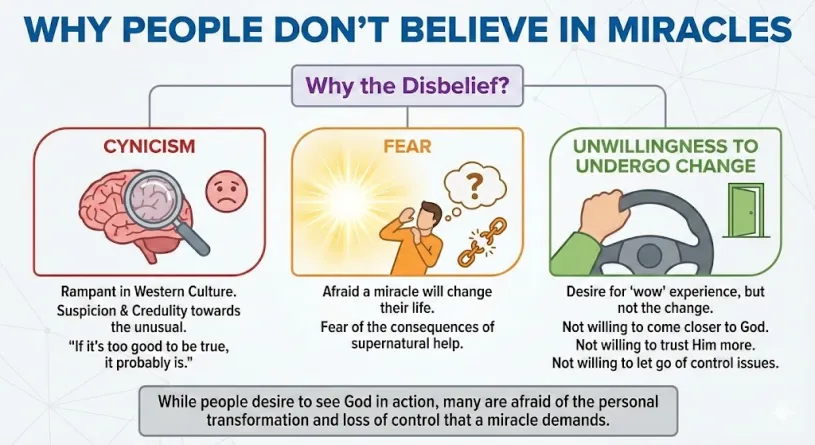
Why don’t people believe in miracles? Cynicism is rampant in Western culture. People treat the unusual or unbelievable with suspicion at best, and credulity at worst. The old saying still has currency today, if it’s too good to be true, probably is.
Why don’t people believe in miracles? Cynicism is one answer, but fear is another. Many believers are afraid that a miracle will change their life. Of course they want that wow experience of supernatural help. Of course they want to see God clearly in action. But are these people willing to undergo the change God expects from the miracle? Are they willing to come closer to God? Are they willing to trust Him more? Are they willing to let go of their control issues? I’m afraid in many cases, the answer is no.
The Unexpected Miracle and Scandal
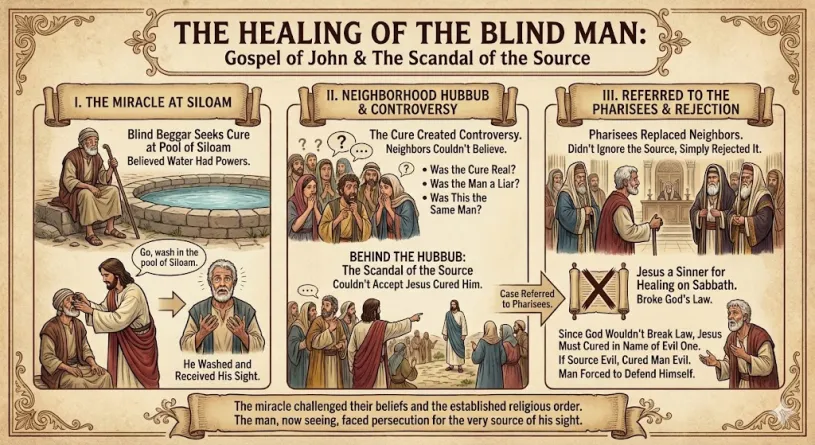
In the Gospel of John, a blind beggar sought a cure by placing himself by the pool of Siloam, a local gathering point for water. Neighbors believed that the movement of the water in the pool had curative powers, so the beggar waited for the right moment. What he didn’t expect was a visit from Jesus, who took mud and smeared it in the man’s eyes and told him to go wash in the pool. The man did, and so received his sight.
The cure created a controversy, for his neighbors couldn’t quite believe. The man could not see, and that fact didn’t fit into the daily narrative of the neighborhood. Was the cure real? Was the man a liar? Was this the same man that the neighbors knew for years? Behind the local hubbub was the scandal of source.
People could not or would not accept the fact that Jesus had cured the man. To settle the fight, the neighbors referred the case to the Pharisees at the local synagogue. They picked up where the neighbors left off, but they didn’t ignore the subject of the source. They simply rejected it. This Jesus was a sinner because he cured on the Sabbath. This broke God’s law about work on the holy day. Since God couldn’t possibly break his own command, Jesus must have cured in the name of the evil one. If the source was evil, the one who was cured must be evil as well. So the man with new sight had to defend himself.
The Cost of Sight and a Step of Faith
He and his cure challenged the preconceived notion of the leaders. What’s your opinion about this man who healed you? They demanded. He’s a prophet, the man replied. That line of reasoning lost the man the argument and his place in society. The leaders along with the neighborhood couldn’t accept the cure and its source. So the man was ejected from the synagogue.
Now he was alone. He had his sight, but his family, friends, and place in society were gone. The only one left was Jesus. So the man placed his faith and his fate in the hands of the one who healed. Only he, not his neighbors or his leaders, were willing to undergo the change his miracle demanded. Only the cured man was willing to take a step further in faith.
Laziness, Pride, and Seeing Through God’s Eyes
Why are people unwilling to accept the invitation that the miracle places before them? One answers laziness, another’s pride. Some are too set in their ways to want their daily routine upset by God’s activities. Some are unwilling to be humbled by the activity of a higher source.
In either case, people don’t want to see the situation through God’s eyes. In the first book of Samuel, God challenged the great prophet to see the situation the way he saw it. Samuel visited the family of Jesse so he could anoint a new king. One by one, Jesse presented his sons, and one by one, God told Samuel to seek another. God didn’t want the most handsome or the strongest or the bravest son. He wanted the youngest and so least important son to be his anointed one.
The son was David, who was destined to become the greatest king Israel ever had. As God challenged Samuel, so he challenges us to set aside our laziness and pride to see people and their situation through his eyes to trust him more and more.
The Ultimate Challenge: Walking in the Light
As St. Paul stated in his letter to the Ephesians, God is challenging us to walk in the light, not in the darkness. Many people want to see miracles, but they’re either too cynical or too afraid, too lazy or too proud to do anything about miracles. Very few people see miracles because very few people are willing to step out and trust the source of those miracles. Do we fall into the temptation of blissful ignorance based upon laziness or pride? Would we rather walk in the dark than in the light? Would we rather trust ourselves than place our fate in God’s hands, despite the consequences? The challenge a cured man faced is the same one we face today.


Larry Broding
Word-Sunday

1 Sam 16:1b, 6-7, 10-13a
God Judges the Heart
How does God judge us? How does he know we are ready for his will?
Preparing a homily on the anointing of King David? It is easy to focus solely on the young shepherd boy’s unexpected rise to greatness. However, Larry Broding’s insightful commentary on 1 Samuel 16 shifts the spotlight back to where it truly belongs: the uncompromising, divine initiative of God. Broding beautifully unpacks the profound tension between human hesitation and God’s perfect providence, offering a rich, pastoral framework for your message.

Why this commentary matters for your homily:

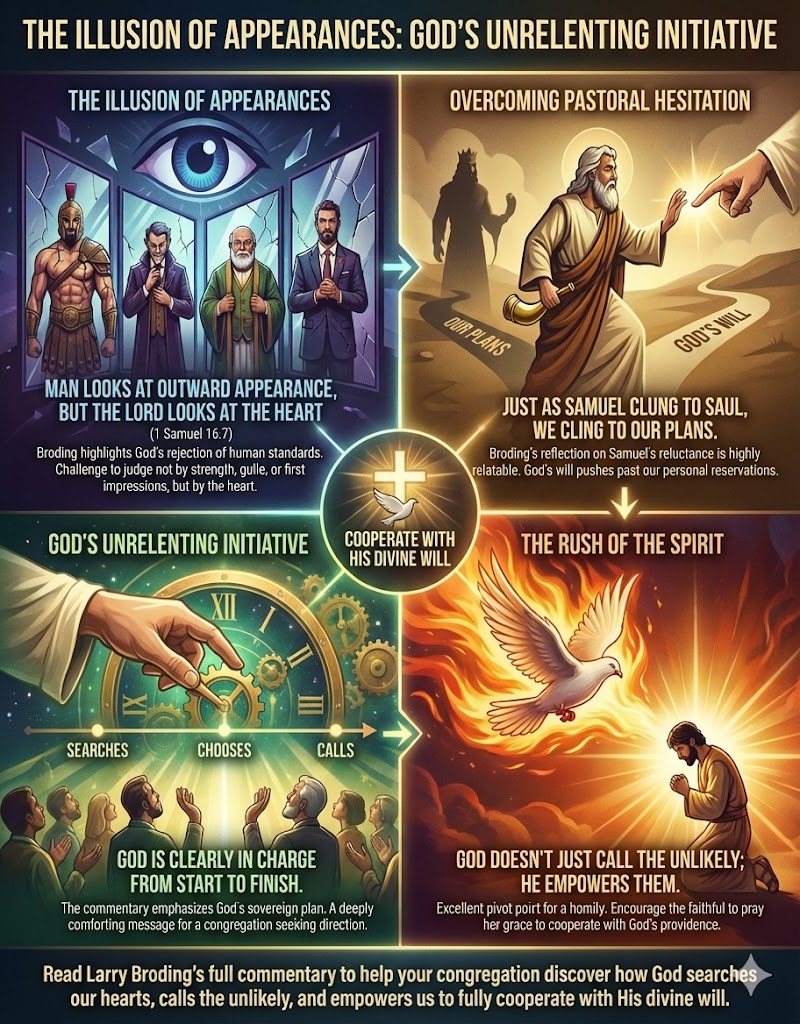
- The Illusion of Appearances: Broding highlights the high point of the narrative—God’s rejection of human standards. This provides a powerful angle to challenge your parishioners on how easily we judge by physical strength, guile, or first impressions, rather than the heart.
- Overcoming Pastoral Hesitation: Just as Samuel clung to the hope that King Saul would repent, we often cling to our own plans. Broding’s reflection on Samuel’s reluctance is highly relatable and illustrates how God’s will pushes past our personal reservations.
- God’s Unrelenting Initiative: The commentary emphasizes that God is clearly in charge from start to finish. He searches, He chooses, and He calls at the appropriate time—a deeply comforting message for a congregation seeking direction.
- The Rush of the Spirit: Broding reminds us that God doesn’t just call the unlikely; He empowers them. This is an excellent pivot point for a homily, encouraging the faithful to pray for the grace to freely and fully cooperate with God’s providence.
Read Larry Broding’s full commentary to help your congregation discover how God searches our hearts, calls the unlikely, and empowers us to fully cooperate with His divine will.
THE WORD THIS WEEK infographics on this page were created using using GOOGLE’S AI Gemini 3 Pro. You are free to use the them in any non-profit ministry. Proper attribution, however, must be given to Larry Broding at Word-Sunday.com.
Larry Broding
Word-Sunday
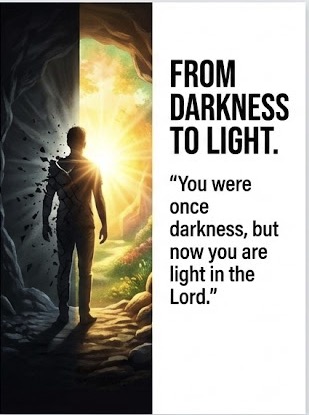
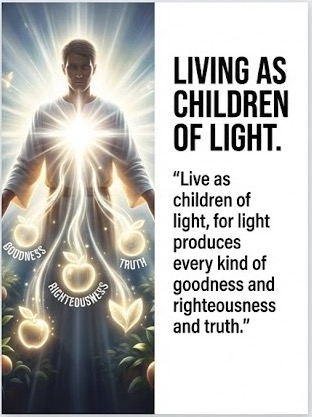
Ephesians 5:8-14
Wake Up, Sleepy Head!
Have you ever been in a rut? What put you “back on track?”
Preaching on the classic biblical metaphors of light and darkness can sometimes feel repetitive or overly abstract. Larry Broding’s commentary cuts through the clichés by grounding these opposing images in something deeply relatable: the painful tension between our public personas and our private realities. His insights offer a compelling, urgent angle on spiritual stagnation and the masks we wear, making it an excellent resource for your homily preparation.
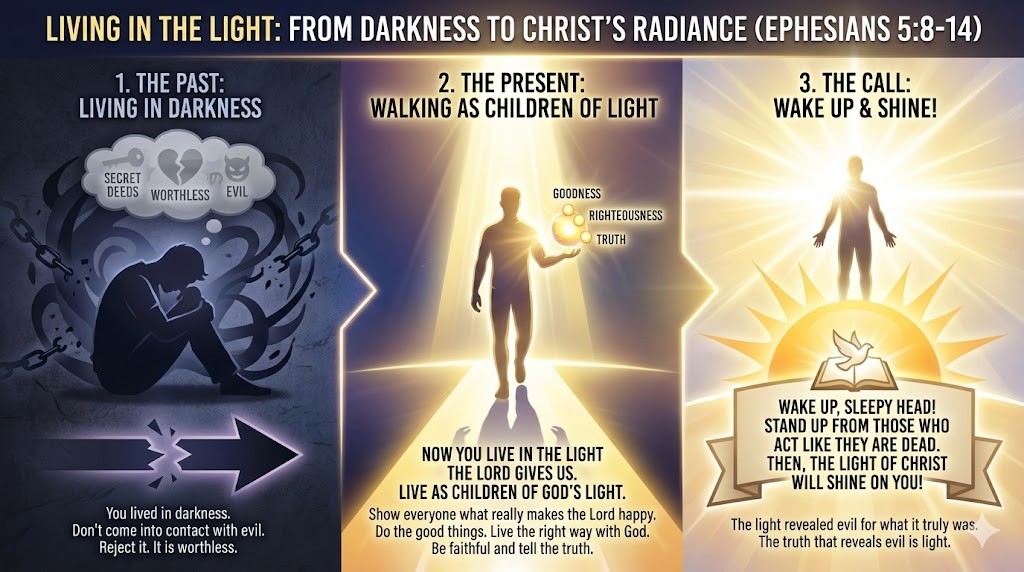
Why this commentary matters for your homily:
- Public Face vs. Private Reality: The commentary challenges the stark disparity between the “happy face” shown to the world and the despair or compromise hidden inside. This provides a perfect starting point for preaching on the need for genuine, unhypocritical authenticity.
- The Danger of the “Spiritual Rut”: Broding provides a piercing look at how spiritual complacency leads to a slow, downward spiral of hidden sin. This gives you a pastoral framework to address the quiet struggles of believers who have become lazy in their faith and are just maintaining appearances.
- Faith as a Public Witness: Rather than viewing light and darkness merely as internal moral states, Broding highlights how they represent life lived out in the open—before neighbors, community, and the nation.
- An Urgent Call to Action: The commentary culminates in the bold, unavoidable wake-up call of the text. It equips you to challenge your parishioners to “WAKE UP” from their spiritual slumber and allow the Lord’s light to shine into the hidden areas of their lives.
Read Larry Broding’s full commentary to help your congregation bridge the gap between their public personas and private lives, waking up from spiritual ruts to step authentically into the light of the Lord.

THE WORD THIS WEEK infographics on this page were created using using GOOGLE’S AI Gemini 3 Pro. You are free to use the them in any non-profit ministry. Proper attribution, however, must be given to Larry Broding at Word-Sunday.com.
Larry Broding
Word-Sunday
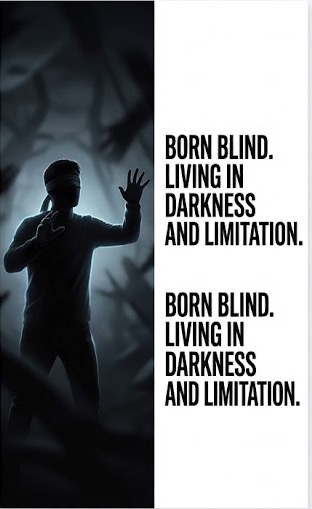


John 9:1-41
The Gift of True Sight
Have you ever played a game with a blindfold? Or, have you ever been on a trust walk, where you are blindfolded and led by another person?
Preaching the lengthy, familiar narrative of the man born blind can often feel daunting, especially when trying to keep the congregation engaged from start to finish. Larry Broding’s commentary breathes fresh life into this profound encounter by moving beyond standard interpretations and diving deep into the vibrant cultural and historical backdrop of first-century Jerusalem. His insights provide a rich, multi-layered foundation to help your parishioners see this miracle with fresh eyes.
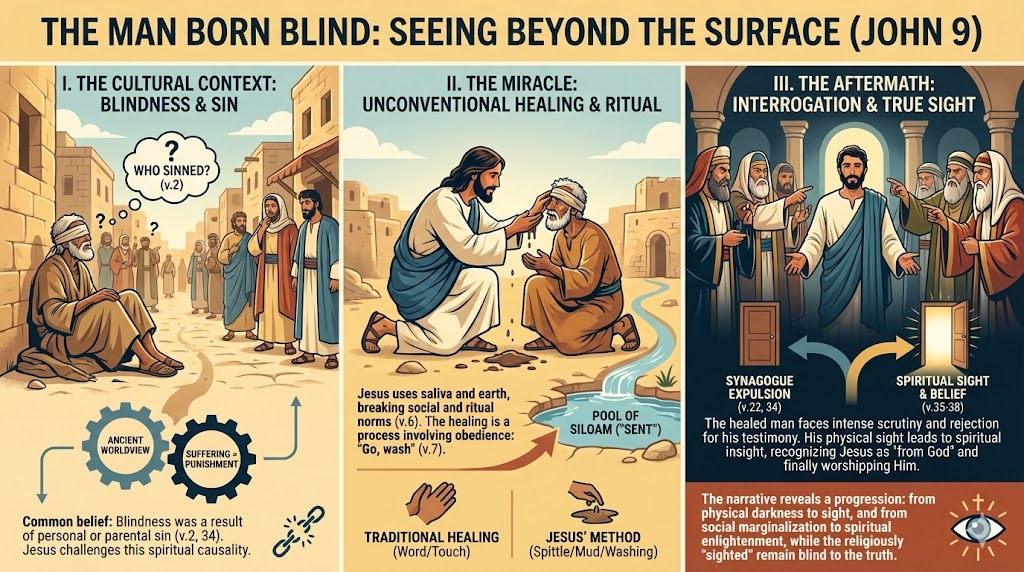
Why this commentary matters for your homily:
- Shattering the “Karma” Myth: Broding immediately dismantles the common assumption that suffering is a direct punishment for sin. This allows you to preach a deeply pastoral message of hope, emphasizing that our struggles can become the very canvas upon which God’s glory and activity are made manifest.
- The Brilliant Backdrop of Sukkot: By situating this miracle during the Festival of Booths, Broding provides vivid, cinematic imagery. Describing the massive temple lampstands that illuminated all of Jerusalem adds incredible weight and context to Jesus’s declaration, “I AM the light of the world.”
- The Cynicism of the Crowd: Broding brilliantly explains the static, open, and highly suspicious nature of ancient neighborhoods. This psychological insight helps explain why the neighbors reacted with disbelief rather than joy, drawing a powerful parallel to the skepticism and resistance to genuine transformation we still see in society today.
- The Courage of Association: The commentary highlights how the healed man quickly realizes his own reputation and reality are entirely tethered to Jesus. When backed into a corner by the legalistic Pharisees, he boldly declares Christ a prophet—a fantastic model for preaching on the cost and courage of public discipleship.
Read Larry Broding’s full commentary to help your congregation step out of the darkness of cynicism and spiritual blindness, and into the brilliant, life-changing light of Christ’s revelation.

THE WORD THIS WEEK infographics on this page were created using using GOOGLE’S AI Gemini 3 Pro. You are free to use the them in any non-profit ministry. Proper attribution, however, must be given to Larry Broding at Word-Sunday.com.