March 10, 2024
COMMENTARIESBIBLE STUDIES
Fr. Francis MartinHector MolinaKieran O'MahonyBrant Pitre
YouTube player

SOURCE: A Word Proclaimed

KEY INSIGHTS w/ Timestamps

Through Jesus's act of love on the cross, we are saved and called to love like him, ultimately bringing the world back to the Father.

  • 00:00 📖 Jesus died on the cross out of love, and through his love, we are saved and called to love like him.
  • 02:16 📖 Jesus is raised up and alludes to the fourth servant song in Isaiah, knowing he will be exalted by the father and willing to give his life for the world.
  • 04:35 📖 Belief in Jesus and his act of love on the cross saves from eternal death and opens the way for anyone to enter into this world.
  • 07:00 🙏 Jesus shows his love for the Father through his crucifixion, and by praying and gazing at his side, one can see the heart of Christ and the fire of love that brings the world back to the Father.
  • 09:01 🙏 Accepting the gift of repentance brings us back into eternal contact with God, while rejecting it leads to self-condemnation.
  • 10:28 🙏 People reject God out of fear and turn to darkness, but the new evangelization aims to show them the truth of Jesus Christ.
  • 12:44 🌟 Surrender to God and show love to others to convince the world of the truth.
  • 14:11 📖 Obey Jesus by keeping his commandments and recognizing him, then you will step into the light.
YouTube player

SOURCE: A Walk in the Word

KEY INSIGHTS w/ Timestamps

Belief in Jesus brings eternal life and salvation, and we are called to boldly profess and proclaim our faith.

  • 00:00 📖 Jesus tells Nicodemus he must be lifted up like the bronze serpent, whoever believes in him will have eternal life, and God sent his son to save the world, not condemn it.
  • 08:12 📖 Jesus references the lifting up of the bronze serpent in the wilderness as a symbol of his passion and death, pointing to the concept of being "lifted up" leading to eternal life.
  • 15:41 🐍 God commanded Moses to make a bronze serpent to heal the Israelites, paralleling their temptation with forbidden fruit and ingratitude for God's provision.
  • 20:10 📖 Jesus, sinless, was made a sin offering to condemn sin, and believing in him brings eternal life and salvation.
  • 29:15 🌟 Belief in Jesus brings salvation and light, while Nicodemus regrets not openly declaring himself as a follower and we are called to boldly profess and proclaim our faith.
  • 32:52 📖 God demonstrates mercy and fidelity through King Cyrus, who proclaims the restoration and rebuilding of Jerusalem after the Babylonian conquest and Exile.
  • 39:57 🙏 Trust in God's faithfulness and find hope in the promises of the Lord, as demonstrated through the crucifixion of Jesus and his love for Israel.
  • 45:20 🙏 God's mercy and grace are available through penance and reconciliation, as Jesus offers us more than physical healing and restoration, providing us with the bread of life and eternal salvation.
YouTube player

SOURCE: Hearers of the Word

KEY INSIGHTS w/ Timestamps

Belief in the son of God leads to eternal life and salvation through God's self-giving love and grace.

  • 00:00 📖 The presentation focuses on the significance of "God so loved the world" in John chapter 3 and the rebuilding of the temple in Jerusalem.
  • 04:28 📖 The book of Chronicles offers hope for the future through King Cyrus, prioritizing Jerusalem above all else, while the psalm expresses raw emotion in response to the exile in Babylon.
  • 07:55 📖 We are saved by God's grace, not by our own works, and are called to love as Christ loved us, with emphasis on Christ's sacrifice and exaltation.
  • 12:09 📖 Belief in the son of man leads to eternal life, as God sent his son to save the world and those who believe in him are not condemned, but those who do evil hate the light, presented through parallel scenes in John's gospel with Nicodemus and John the Baptist, leading to catechetical affirmations and the presentation of salvation through five different lenses.
  • 16:48 🐍 The bronze snake teaches that people can be healed by looking at what is hurting them, serving as a symbol of renewal and healing in Canaanite religion and the holy of holies in Jerusalem.
  • 19:42 📖 The Bible references ascending and descending, tied to the son of man, emphasizing the importance of faith and belief in Jesus' crucifixion and resurrection, and the eternal life believers have with Christ.
  • 23:12 📖 Jesus' crucifixion reveals God's true identity and leads to salvation through his self-giving love.
  • 25:53 📖 Belief in the son of God leads to eternal life and judgment, emphasizing the importance of living in truth and reflecting on God's faithfulness, love, and grace.
YouTube player

SOURCE: The Mass Readings Explained

KEY INSIGHTS w/ Timestamps

Jesus compares his impending sacrifice on the cross to the lifting up of the bronze serpent by Moses, showing how he will save humanity from the power of sin and death.

  • 00:00 📖 Jesus compares the lifting up of the serpent by Moses to his own lifting up, referencing Numbers 21 and the Israelites' complaints about food and water during the exodus.
  • 01:43 🐍 God sent fiery serpents to punish the Israelites, but Moses made a bronze serpent on a pole so that anyone bitten could look at it and live, which Jesus references in the gospel.
  • 03:04 🐍 The story of the bronze serpent in the Bible parallels the story of Adam and Eve, showing how the Israelites recapitulate the fall of humanity by rejecting God's gift and bringing death upon themselves.
  • 04:35 🔥 God commands Moses to make a bronze serpent to save the Israelites from demonic attack, and Jesus makes a typological connection with the Old Testament.
  • 05:56 🐍 Jesus draws parallels between himself and the bronze serpent, using it as a symbol of his own impending sacrifice for eternal life.
  • 06:36 🔥 Jesus points forward to the cross, where he takes on the sin of humanity to put death to death and save us from the power of the serpent.
  • 07:55 📖 Jesus explains the meaning of the cross as a solution to the diabolical attacks, sending his son to save the world from perishing and to have eternal life.
  • 09:07 📖 Jesus uses the image of light and darkness to illustrate the battle between good and evil, with the serpent in the wilderness representing Satan and the devil, and Christ on the cross delivering us from their power.

Fr. George
Corrigan, OFM

RECENT
YEAR B


Fr. Corrigan, OFM

2024 - RECENTCOMMENTARY

Commentaries are arranged by Liturgical Year B order.

You are free to download and use for Bible Study, to evangelize, or anything that gives Glory to God. Enjoy.” — Fr. Corrigan

Agape Bible Commentary

4th Sunday of Lent B

1st Reading: The Babylonian Exile and the Return

Today's First Reading recalls the Davidic Kingdom's destruction, a kingdom that God promised David would endure forever (2 Sam 7:16, 29; 23:5; 2 Chron 13:5; Ps 89:2-5; Sir 45:25). See the list of God's covenants. In God's judgment against Judah's citizens who had abandoned His Covenant, He used the Babylonian army as His instrument of judgment, allowing them to destroy the Jerusalem Temple and take the people into exile in pagan Babylon. However, God did not reject His people. Centuries earlier, through the prophet Isaiah, He gave them the promise of returning to their homeland, fulfilled through a pagan king named Cyrus that God used as His instrument of restoration.

Michal E Hunt, Copyright © 2014; revised 2023 Agape Bible Study; used with permission

Responsorial: The Song of the Exiles

The Responsorial Psalm repeats the covenant people's lament as they were displaced from their homeland and taken away into exile. Amid their suffering, they remembered God's promise of a future restoration to their Promised Land and the promise of a Davidic king to shepherd God's people in an eternal covenant (2 Sam 7:16-17, 29; 23:5; Ez 34:23-24).

Michal E Hunt, Copyright © 2014; revised 2023 Agape Bible Study; used with permission

2nd Reading: Salvation in Christ is a gift of Grace

In today's Second Reading, St. Paul reminds us that God is rich in mercy and always keeps His promises.  God promised David that his kingdom would endure forever and a future Davidic heir would rule all nations (Ps 2:7-9).  Jesus is that Davidic son and heir (Lk 1:31-32) whose sovereignty over all nations will restore all repentant sinners and bring them back from the exile of sin and death to the Promised Land of Heaven.

Michal E Hunt, Copyright © 2014; revised 2023 Agape Bible Study; used with permission

Gospel: Jesus Came to Offer God's Gift of Eternal Life

The Gospel Reading tells us that Jesus will restore His people through a spiritual rebirth, making every sinner in exile a child in the family of God. We can view the Old Covenant people's 6th-century BC exile in Babylon as a symbol for all who are alienated from God by sin since every sinner is a displaced person. Only those who repent their alienation and long for restoration can be saved and restored through the atoning sacrifice Jesus offered for humanity on the Altar of the Cross.

Michal E Hunt, Copyright © 2014; revised 2023 Agape Bible Study; used with permission

God So Loved the World...

16 For God so loved the world that he gave his only [begotten/monogene] Son, so that everyone who believes in him might not perish but might have eternal life.  17 For God did not send his Son into the world to condemn the world, but that the world might be saved through him.

John 3:16 is one of the best-known verses in the Bible. When Jesus says God the Father did not send Him into the world to judge the world, He means that God sent Him into the world to announce the Kingdom of God and to offer the gift of salvation.  Judgment comes later and depends on whether or not one decides to receive Christ as Lord and Savior.

Jesus continues in verses 18-21 to say that to believe in His "name" is to believe everything that He revealed about His true nature, human and divine.  It is to believe Jesus is the Son of God, to believe that He died for our sins and that He rose from the dead to raise those who believe in Him to eternal life.But is there any in-between in so far as judgment is concerned?  No. In rejecting Christ, one rejects salvation and eternal life.  There is no "middle ground."  This is what Peter preached in Acts 4:11-12 to the members of the Jewish Law Court when he said, "This is the stone which you, the builders, rejected but which has become the cornerstone.  Only in him is there salvation; for of all the names in the world given to men, this is the only one by which we can be saved" (emphasis added).

But what about the poor soul who never heard the Gospel and therefore never had the choice?  They will be judged by their consciences and the innate, natural law that God has placed in the heart of every human being (see Rom 2:12-16).  However, there is a problem because sin can erode one's conscience to the point where a conscience will no longer be aware of the degree of wickedness.  That is why the spread of the Gospel across the earth is so important and so necessary to bring salvation to every human being (also see Lk 12:47-48 and CCC # 846-48).

Michal E Hunt, Copyright © 2014; revised 2023 Agape Bible Study; used with permission

LEARN MORE

Compiled by
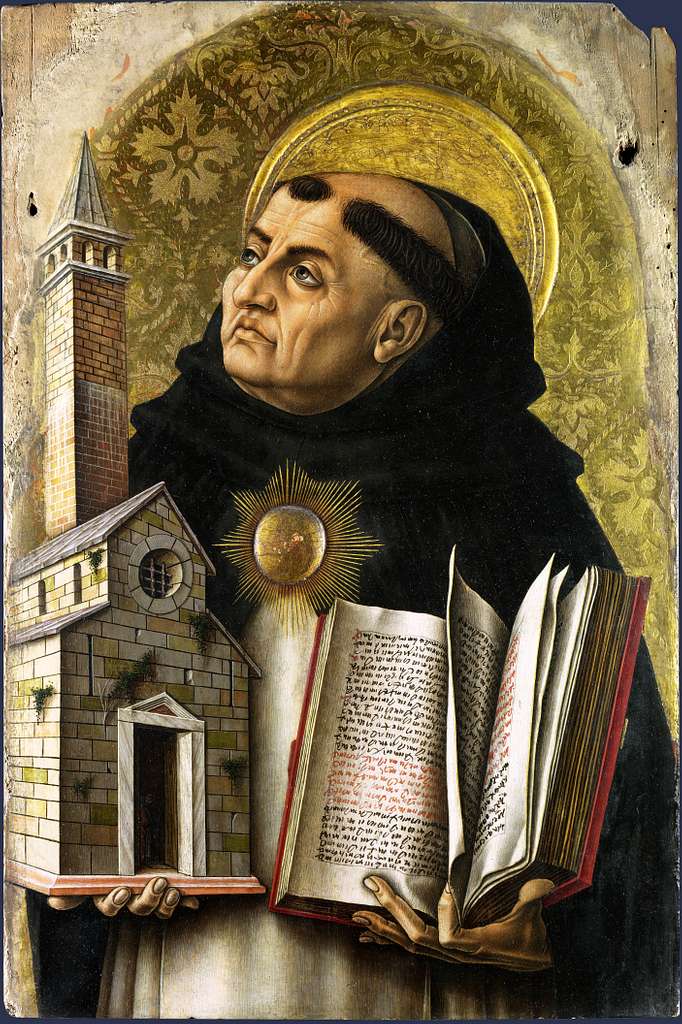
St. Thomas
Aquinas


Thomas Aquinas compiled this opus from sermons and commentaries on the Gospels written by the early Church Fathers, arranging their thoughts in such a way that they form a continuous commentary on each Gospel.

SECTION ONE

John 3:14–15

14. And as Moses lifted up the serpent in the wilderness, even so must the Son of man be lifted up:

15. That whosoever believeth in him should not perish, but have eternal life.

CHRYSOSTOM. (Hom. xxvii. 1) Having made mention of the gift of baptism, He proceeds to the. source of it, i. e. the cross: And as Moses lifted up the serpent in the wilderness, even so must the Son of man be lifted up.

BEDE. He introduces the teacher of the Mosaic law, to the spiritual sense of that law; by a passage from the Old Testament history, which was intended to be a figure of His Passion, and of man’s salvation.

AUGUSTINE. (de Pecc. mer. et remiss. c. xxxii) Many dying in the wilderness from the attack of the serpents, Moses, by commandment of the Lord, lifted up a brazen serpent: and those who looked upon it were immediately healed. The lifting up of the serpent is the death of Christ; the cause, by a certain mode of construction, being put for the effect. The serpent was the cause of death, inasmuch as he persuaded man into that sin, by which he merited death. Our Lord, however, did not transfer sin, i. e. the poison of the serpent, to his flesh, but death; in order that in the likeness of sinful flesh, there might be punishment without sin, by virtue of which sinful flesh might be delivered both from punishment and from sin.

THEOPHYLACT. (in loc.) See then the aptness of the figure. The figure of the serpent has the appearance of the beast, but not its poison: in the same way Christ came in the likeness of sinful flesh, being free from sin. By Christ’s being lifted up, understand His being suspended on high, by which suspension He sanctified the air, even as He had sanctified the earth by walking upon it. Herein too is typified the glory of Christ: for the height of the cross was made His glory: for in that He submitted to be judged, He judged the prince of this world; for Adam died justly, because he sinned; our Lord unjustly, because He did no sin. So He overcame him, who delivered Him over to death, and thus delivered Adam from death. And in this the devil found himself vanquished, that he could not upon the cross torment our Lord into hating His murderers: but only made Him love and pray for them the more. In this way the cross of Christ was made His lifting up, and glory.

CHRYSOSTOM. (Hom. xxvii. 2) Wherefore He does not say, ‘The Son of man must be suspended, but lifted up, a more honourable term, but coming near the figure. He uses the figure to shew that the old dispensation is akin to the new, and to shew on His hearers’ account that He suffered voluntarily; and that His death issued in life.

AUGUSTINE. (Tr. xii. c. 11) As then formerly he who looked to the serpent that was lifted up, was healed of its poison, and saved from death; so now he who is conformed to the likeness of Christ’s death by faith and the grace of baptism, is delivered both from sin by justification, and from death by the resurrection: as He Himself saith; That whosoever believeth on Him should not perish, but have everlasting life. What need then is there that the child should be conformed by baptism to the death of Christ, if he be not altogether tainted by the poisonous bite of the serpent?

CHRYSOSTOM. (Hom. xxvii. 2) Observe; He alludes to the Passion obscurely, in consideration to His hearer; but the fruit of the Passion He unfolds plainly; viz. that they who believe in the Crucified One should not perish. And if they who believe in the Crucified live, much more shall the Crucified One Himself.

AUGUSTINE. (Tr. xii. c. 11) But there is this difference between the figure and the reality, that the one recovered from temporal death, the other from eternal.

ORIGINAL: e-Catholic 2000

SECTION TWO

John 3:16–18

16. For God so loved the world, that he gave his only begotten Son, that whosoever believeth in him should not perish, but have everlasting life.

17. For God sent not his Son into the world to condemn the world; but that the world through him might be saved.

18. He that believeth on him is not condemned: but he that believeth not is condemned already, because he hath not believed in the name of the only begotten Son of God.

CHRYSOSTOM. Having said, Even so must the Son of man be lifted up, alluding to His death; lest His hearer should be cast down by His words, forming some human notion of Him, and thinking of His death as an evil1, He corrects this by saying, that He who was given up to death was the Son of God, and that His death would be the source of life eternal; So God loved the world, that He gave His only begotten Son, that whosoever believeth in Him should not perish, but have everlasting life; as if He said, Marvel not that I must be lifted up, that you may be saved: for so it seemeth good to the Father, who hath so loved you, that He hath given His Son to suffer for ungrateful and careless servants. The text, God so loved the world, shews intensity of love. For great indeed and infinite is the distance between the two. He who is without end, or beginning of existence, Infinite Greatness, loved those who were of earth and ashes, creatures laden with sins innumerable. And the act which springs from the love is equally indicative of its vastness. For God gave not a servant, or an Angel, or an Archangel, but His Son. Again, had He had many sons, and given one, this would have been a very great gift; but new He hath given His Only Begotten Son.

HILARY. (vi. de Trin. c. 40) If it were only a creature given up for the sake of a creature, such a poor and insignificant loss were no great evidence of love. They must be precious things which prove our love, great things must evidence its greatness. God, in love to the world, gave His Son, not an adopted Son, but His own, even His Only Begotten. Here is proper Sonship, birth, truth: no creation, no adoption, no lie: here is the test of love and charity, that God sent His own and only begotten Son to save the world.

THEOPHYLACT. (in loc.) As He said above, that the Son of man came down from heaven, not meaning that His flesh did come down from heaven, on account of the unity of person in Christ, attributing to man what belonged to God: so now conversely what belongs to man, he assigns to God the Word. The Son of God was impassible; but being one in respect of person with man, who was passible, the Son is said to be given up to death; inasmuch as He truly suffered, not in His own nature, but in His own flesh. From this death follows an exceeding great and incomprehensible benefit: viz. that whosoever believeth in Him should not perish, but have everlasting life. The Old Testament promised to those who obeyed it, length of days: the Gospel promises life eternal, and imperishable.

BEDE.1; Note here, that the same which he before said of the Son of man, lifted up on the cross, he repeats of the only begotten Son of God: viz. That whosoever believeth in Him, &c. For the same our Maker and Redeemer, who was Son of God before the world was, was made at the end of the world the Son of man; so that He who by the power of His Godhead had created us to enjoy the happiness of an endless life, the same restored us to the life we have lost by taking our human frailty upon Him.

ALCUIN. Truly through the Son of God shall the world have life; for for no other cause came He into the world, except to save the world. God sent not His Son into the world to condemn the world, but that the world through Him might be saved.

AUGUSTINE. (Tr. xii. c. 12) For why is He called the Saviour of the world, but because Ho saves the world? The physician, so far as his will is concerned, heals the sick. If the sick despises or will not observe the directions of the physician, he destroys himself.

CHRYSOSTOM. (Hom. xxviii. 1) Because however He says this, slothful men in the multitude of their sins, and excess of carelessness, abuse God’s mercy, and say, There is no hell, no punishment; God remits us all our sins. But let us remember, that there are two advents of Christ; one past, the other to come. The former was, not to judge but to pardon us: the latter will be, not to pardon but to judge us. It is of the former that He says, I have not come to judge the world. Because He is merciful, instead of judgment, He grants an internal remission of all sins by baptism; and even after baptism opens to us the door of repentance, which had He not done all had been lost; for all have sinned, and come short of the glory of God. (Rom. 3:23) Afterwards, however, there follows something about the punishment of unbelievers, to warn us against flattering ourselves that we can sin with impunity. Of the unbeliever He says, ‘he is judged already.’—But first He says, He that believeth on Him is not judged. He who believeth, He says, not who enquires. But what if his life be impure? Paul very strongly declares that such are not believers: They confess, he says, that they know God, but in works deny Him. (Tit. 1:16) That is to say, Such will not be judged for their belief, but will receive a heavy punishment for their works, though unbelief will not be charged against them.

ALCUIN. He who believes on Him, and cleaves to Him as a member to the head, will not be condemned.

AUGUSTINE. (Tr. xii. c. 12) What didst thou expect Him to say of him who believed not, except that he is condemned. Yet mark His words: He that believeth not is condemned already. The Judgment hath not appeared, bat it is already given. For the Lord knows who are His; who are awaiting the crown, and who the fire.

CHRYSOSTOM. (Hom. xxviii. 1) Or the meaning is, that disbelief itself is the punishment of the impenitent: inasmuch as that is to be without light, and to be without light is of itself the greatest punishment. Or He is announcing what is to be. Though a murderer be not yet sentenced by the Judge, still his crime has already condemned him. In like manner he who believes not, is dead, even as Adam, on the day that he ate of the tree, died.

GREGORY. (1. xxvi. Mor. c. xxvii. [50.]) Or thus: In the last judgment some perish without being judged, of whom it is here said, He that believeth not is condemned already. For the day of judgment does not try those who for unbelief are already banished from the sight of a discerning judge, are under sentence of damnation; but those, who retaining the profession of faith, have no works to shew suitable to that profession. For those who have not kept even the sacraments of faith, do not even hear the curse of the Judge at the last trial. They have already, in the darkness of their unbelief, received their sentence, and are not thought worthy of being convicted by the rebuke of Him whom they had despised Again; For an earthly sovereign, in the government of his state, has a different rule of punishment, in the case of the disaffected subject, and the foreign rebel. In the former case, he consults the civil law; but against the enemy he proceeds at once to war, and repays his malice with the punishment it deserves, without regard to law, inasmuch as he who never submitted to law, has no claim to suffer by the law.

ALCUIN. He then gives the reason why he who believeth not is condemned, viz. because he believeth not in the name of the only begotten Son of God. For in this name alone is there salvation. God hath not many sons who can save; He by whom He saves is the Only Begotten.

AUGUSTINE. (de Pecc. mer. et Rem. l. 1. c. 33) Where then do we place baptized children? Amongst those who believe? This is acquired for them by the virtue of the Sacrament, and the pledges of the sponsors. And by this same rule we reckon those who are not baptized, among those who believe not.

ORIGINAL: e-Catholic 2000

SECTION THREE

John 3:19–21

19. And this is the condemnation, that light is come into the world, and men loved darkness rather than light, because their deeds were evil.

20. For every one that doeth evil hateth the light, neither cometh to the light, lest his deeds should be reproved.

21. But he that doeth truth cometh to the light, that his deeds may be made manifest, that they are wrought in God.

ALCUIN. Here is the reason why men believed not, and why they are justly condemned; This is the condemnation, that light is come into the world.

CHRYSOSTOM. (Hom. xxviii. 2) As if He said, So far from their having sought for it, or laboured to find it light itself hath come to them, and they have refused to admit it; Men loved darkness rather than light. Thus He leaves them no excuse. He came to rescue them from darkness, and bring them to light; who can pity him who does not choose to approach the light when it comes unto him?

BEDE. (in loc. c. 1) He calls Himself the light, whereof the Evangelist speaks, That was the true light; whereas sin He calls darkness.

CHRYSOSTOM. (Hom. xxviii. 2) Then because it seemed incredible that man should prefer light to darkness, he gives the reason of the infatuation, viz. that their deeds were evil. And indeed had He come to Judgment, there had been some reason for not receiving Him; for he who is conscious of his crimes, naturally avoids the judge. But criminals are glad to meet one who brings them pardon. And therefore it might have been expected that men conscious of their sins would have gone to meet Christ, as many indeed did; for the publicans and sinners came and sat down with Jesus. But the greater part being too cowardly to undergo the toils of virtue for righteousness’ sake, persisted in their wickedness to the last; of whom our Lord says, Every one that doeth evil, hateth the light. He speaks of those who choose to remain in their wickedness.

ALCUIN. Every one that doeth evil, hateth the light; i. e. he who is resolved to sin, who delights in sin, hateth the light, which detects his sin.

AUGUSTINE. (Conf. l. x. c. xxiii. [34.]) Because they dislike being deceived, and like to deceive, they love light for discovering herself, and hate her for discovering them. Wherefore it shall be their punishment, that she shall manifest them against their will, and herself not be manifest unto them. They love the brightness of truth, they hate her discrimination; and therefore it follows, Neither cometh to the light, that his deeds should be reproved.

CHRYSOSTOM. (Hom. xxvii. 2) No one reproves a Pagan, because his own practice agrees with the character of his gods; his life is in accordance with his doctrines. But a Christian who lives in wickedness all must condemn. If there are any Gentiles whose life is good, I know them not. But are there not Gentiles? it may be asked. For do not tell me of the naturally amiable and honest; this is not virtue. But shew me one who has strong passions, and lives with wisdom. You cannot. For if the announcement of a kingdom, and the threats of hell, and other inducements, hardly keep men virtuous when they are so, such calls will hardly rouse them to the attainment of virtue in the first instance. Pagans, if they do produce any thing which looks well, do it for vain-glory’s sake, and will therefore at the same time, if they can escape notice, gratify their evil desires as well. And what profit is a man’s sobriety and decency of conduct, if he is the slave of vain-glory? The slave of vain-glory is no less a sinner than a fornicator; nay, sins oven oftener, and more grievously. However, even supposing there are some few Gentiles of good lives, the exceptions so rare do not affect my argument.

BEDE. Morally too they love darkness rather than light, who when their preachers tell them their duty, assail them with calumny.

But he that doeth truth cometh to the light, that his deeds may be made manifest, that they are wrought in God.

CHRYSOSTOM. (Hom. xxviii. 3) He does not say this of those who are brought up under the Gospel, but of those who are converted to the true faith from Paganism or Judaism. He shews that no one will leave a false religion for the true faith, till he first resolve to follow a right course of life.

AUGUSTINE. (de Pecc. mer. et Remiss. l. i. c. 33) He calls the works of him who comes to the light, wrought in God; meaning that his justification is attributable not to his own merits, but to God’s grace.

AUGUSTINE. (Tr. xii. 13, 14) But if God hath discovered all men’s works to be evil, how is it that any have done the truth, and come to the light, i. e. to Christ? Now what He saith is, that they loved darkness rather than light; He lays the stress upon that. Many have loved their sins, many have confessed them. God accuseth thy sins; if thou accuse them too, thou art joined to God. Thou must hate thine own work, and love the work of God in thee. The beginning of good works, is the confession of evil works, and then thou doest the truth: not soothing, not flattering thyself. And thou art come to the light, because this very sin in thee, which displeaseth thee, would not displease thee, did not God shine upon thee, and His truth shew it unto thee. And let those even who have sinned only by word or thought, or who have only exceeded in things allowable, do the truth, by making confession, and come to the light by performing good works. For little sins, if suffered to accumulate, become mortal. Little drops swell the river: little grains of sand become an heap, which presses and weighs down. The sea coming in by little and little, unless it be pumped out, sinks the vessel. And what is to pump out, but by good works, mourning, fasting, giving and forgiving, to provide against our sins overwhelming us?

ORIGINAL: e-Catholic 2000

Richard Niell
Donovan

John 3:14-21 Exegesis

“As Moses lifted up the serpent in the wilderness” (v. 14). The story is from Numbers 21:4-9, and every Jewish child knows it. The Israelites sinned by grumbling against God for bringing them out of Egypt into the wilderness. God punished them with a plague of fiery serpents, killing many Israelites. The Israelites confessed their sin and begged for mercy, so God told Moses to make a bronze serpent and hold it aloft on a pole. Whoever looked up at the bronze serpent was saved from the fiery serpents—given new life—born anew.

Keep in mind Jesus’ earlier comment about being born anew (v. 3) and Nicodemus’ question about re-entering his mother’s womb to be born again(v. 4). Jesus might expect Nicodemus to link the serpent story to Jesus’ words about being born anothen—again—from above.

“even so must the Son of Man be lifted up, that whoever believes in him should not perish, but have eternal life” (zoe aionios) (v. 14-15). The parallels between the Moses story and the Jesus story are several. In both stories:

  • The people were in danger of death because of their sin.
  • God provides the agent of salvation—the bronze serpent in the first story and the Son of Man in the second.
  • The agent of salvation is lifted up.
  • The people are saved by looking at—or believing in—God’s agent of salvation.

However, there are two significant differences:

  • The bronze snake was only a piece of bronze, having no saving power in itself. When Israelites began to make offerings to the bronze serpent, treating it as an idol, Hezekiah destroyed it (2 Kings 18:4). Jesus, however, is invested with saving power and is worthy of our worship.
  • Looking at the “lifted up” bronze snake gave the Israelites extended physical life. Looking upon the“lifted up” Jesus gives us eternal life.

The term, “lifted up,” has multiple meanings in this Gospel. It refers to Jesus’ cross, but it also refers to his resurrection/ascension/glorification. Jesus will be lifted up on the cross, the great Paschal sacrifice; he will be raised up on the third day, conquering death. His cross and his resurrection/ascension are simply different facets of his glorification. This Gospel does not include an account of the ascension itself, but does include several allusions to it by Jesus (6:62; 7:33; 13:3; 14:28; 16:10, 16, 28; 17:11, 13; 20:17).

RICHARD NIELL DONOVAN was a Disciples of Christ clergyman who published SermonWriter, for a paid subscription, from 1997-2020. After he died, his family has generously provided his resources without subscription.