Fr. Tony’s 8-Minute Homily

Nelson Mandela: From Prison to President
Yosemite: Warnings Ignored
Churchill: Send Me One Line Back
—Begin w/ Anecdote

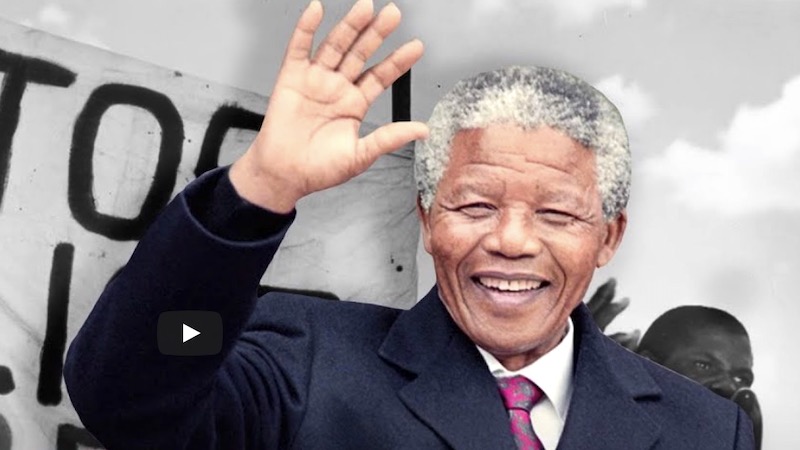
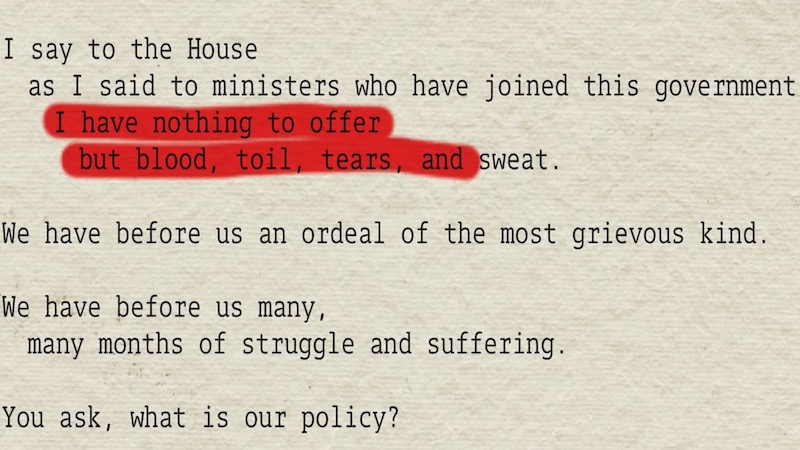
Nelson Mandela: From Prison to President
South Africa is a country blessed by God in a great many ways. But the country which should have been a haven for all the peoples of Southern Africa became instead a heaven for a privileged white minority. Many people tried in vain to change South Africa’s apartheid system. Finally, Nelson Mandela appeared on the scene. He too tried to bring about reforms. But like reformers before him, he was rejected. Worse, he was hounded by the government, and ended up spending twenty-seven years in prison. However, he not only survived prison, but came out of it with the respect of his enemies and of the entire world. Furthermore, he came out without bitterness. He immediately sought reconciliation with the leaders of the regime that kept him, in prison.
SOURCE: Flor McCarthy in New Sunday and Holy Day Liturgies; quoted by Fr. Botelho
But even greater things were to follow. The man once rejected was to become the President of a new multi-racial South Africa. The stone which the builders rejected became the cornerstone of a new and better building.
—Begin w/ Anecdote

Yosemite: Warnings Ignored
Recently the New York Times Magazine showed a series of photographs of a rock formation in Yosemite National Park near Bridal Veil Falls. A prominent sign in yellow plastic was attached to the rocks which clearly said: “DANGER! Climbing or scrambling on rocks and cliffs is extremely dangerous. They are slippery when dry or wet. Many injuries and even fatalities have occurred.” One picture showed a woman walking on the rocks in a tight dress and high heels. Another showed a couple walking on the rocks. The man was carrying his dog apparently because he thought it was too slippery for the dog. Another showed a man carrying a month-old baby in his arms while walking on the rocks.
SOURCE: “Slippery Slope in Yosemite” New York Times Magazine, September 9, 1994, p. 14.
What causes us to ignore clear warnings? Why do folks rip the plastic cover off a pack of cigarettes, when all of us know the Surgeon General’s warning by heart? Why do people remove the safety shield from power saws? Why do people ignore their doctor’s warnings about being overweight and under-exercised? Why do entire civilizations ignore warnings about pollution, or the revolutionary pressures that economic and political injustice creates? Today’s Gospel tells us how the Jewish religious leadership ignored the even the final warning given by Jesus after Palm Sunday.
—Begin w/ Anecdote
Churchill: “Send Me One Line Back”
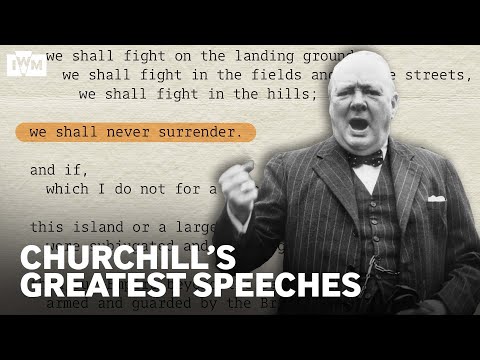
The former British Prime Minister, Winston Churchill, had proposed marriage to Muriel Wilson, the daughter of a wealthy shipping tycoon. Soon after Wilson rejected him, Churchill sent a handwritten letter asking to see her again. “Don’t slam the door,” Churchill, then 30, begged Wilson, a year younger. “I can wait; perhaps I shall improve with waiting,” he wrote. “Why shouldn’t you care about me someday?” Pleading in a postscript, Churchill added, “Send me one line back.” Later he wrote her again. “Of course, you do not love me a scrap,” he wrote. At the same time, he insisted on the existence of “a key if I could only find it, if you would only let me look for it which would unlock both our hearts.”
SOURCE: “Cox News Service
The man who would one day provide a strong voice for the aspirations of the British people was once rejected just as many of us may have been rejected. Few things hurt as much as rejection. In today’s Gospel, Jesus tells us a story of his painful rejection by the Chosen People.
Fr. Tony’s
Commentary
27th Sunday of Year A
Fr. Tony started his homily ministry (Scriptural Homilies) in 2003 while he was the chaplain at Sacred Heart residence, applying his scientific methodology to the homily ministry. By word of mouth, it spread to hundreds of priests and Deacons, finally reaching Vatican Radio website. These homilies reach nearly 3000 priests and Deacons by direct email every week.
The clipart is from the archive of Father Richard Lonsdale © 2000. It may be freely reproduced in any non-profit publication.
Bearing Fruit
The common theme of today’s readings is the necessity of bearing fruit in the Christian life. The readings warn us of the punishment for spiritual sterility, ingratitude, and wickedness.
1st Reading – Is 5:1-7

In today’s first reading, called, Isaiah’s Song of the Vineyard, the prophet describes God’s care of, and expectations for, His Chosen People. God’s Chosen People failed to bear fruit, in spite of the blessings lavished upon them by a loving and forgiving God. Further, they were poor tenants in the Lord’s vineyard. Hence, God laments: “I expected My vineyard to yield good grapes. Why did it yield sour ones instead?”
In the Responsorial Psalm (Ps 80), the Psalmist pleads with God to look down from Heaven and to “take care of this vine,” knowing that if any good is to come of the vine, it will be the doing of God, not the people.
2nd Reading – Phil 4:6-9
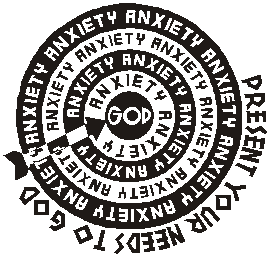
In the second reading, Paul tells Philippians about the high expectations he has for them, reminding them that they need to become fruit-producing Christians by praying and giving thanks to God and by practicing justice, purity, and graciousness in their lives.
Gospel – Mt 21:33-43

In today’s Gospel, Jesus tells an allegorical parable in which the landowner is God, the vineyard is Israel as God’s special people, and the tenants are the political and religious leaders of Israel. The story emphasizes the failure of the tenants, the Chosen People of God and their leaders, to produce fruits of righteousness, justice, and mercy. Giving a theological explanation of Israel’s history of gross ingratitude through the parable, Jesus reminds us Christians that, since we are the “new” Israel, enriched with additional blessings and provisions in the Church, we are expected to show our gratitude to God by bearing fruits of the kingdom, fruits of the Holy Spirit, in our lives, giving Him all the Glory.
Fr. Tony’s Life
Messages
27th Sunday of Year A
Are we good fruit-producers in the vineyard of the Church?

Jesus has given the Church everything necessary to make Christians fruit-bearing: a) The Bible to know the will of God. b) The priesthood to lead the people in God’s ways. c) The Sacrament of Reconciliation for the remission of sins. d) The Holy Eucharist as our spiritual Food and Drink. e) The Sacrament of Confirmation for a dynamic life of Faith. f) The Sacrament of Matrimony for the sharing of love in families, the fundamental unit of the Church. g) The Sacrament of (Last) Anointing to restore and strengthen spiritual life and bring mental emotional and physical healing as well, if that is what God wills h) Role models in thousands of saints We are expected make use of these gifts and produce fruits for God.
Are we fruit-producers in the vineyard of the family?
By the mutual sharing of blessings, by sacrificing time and talents for the members of the family, by humbly and lovingly serving others in the family, by recognizing and encouraging each other and by honoring and gracefully obeying our parents, we become producers of “good fruit” or good vines in our families and give God the Glory for these accomplishments.
Are we ready to face these hard questions?
Have we come close to fulfilling God’s dream about us? What kind of grapes do we as a parish community produce? Are they sweet or sour? What is our attitude toward everything God has given to us? Are we grateful stewards for everything God has given to us, or are we like the ungrateful tenants who acted as if they owned everything God had given them? Do we practice justice every day of our lives? Do we recognize the righteousness of God that keeps us from self-righteousness? Do we remember to show mercy? Is our parish a real sign of Jesus’ presence and love? What kind of impact do we have? Do we measure the quality of our parish by what happens during Mass, or on what happens when we leave Church? Obviously, both are important but there cannot be one without the other.
HOME | FAITH SHARING QUESTIONS