
⬅️ ➡️

2023
Preaching the Word

Fr. Tony’s 8-minute Homily

HOMILIESCONNECTIONSPAPAL HOMILIESFR. TONY

Chance-Taking Adventurous Voyagers

How to Stay Safe Without Taking Risk

Caught Off Guard
YouTube player

VIDEO (3:48)

YouTube player

VIDEO (4:44) – From getting struck by lightning or meteorite, to getting into a car or plane crash, we shall dive into the infrequently talked about topics and compare the chances of dying from these unfortunate events. What are some of the most common mutations or diseases? Which natural disaster is likely to claim the most lives. What are your odds of dying next year or even tomorrow? Compare the area size of the heptagon to visualize the odds of such events happening.

YouTube player

VIDEO (14:35) – For the first time in 70 years, archaeologists have uncovered new areas of ancient Pompeii. With exclusive access to the dig, see how the latest artifacts and DNA science are changing history and discover the real stories of what happened to the unfortunate souls who didn’t escape the city gates.
Fr. Tony's Homily

Fr. Tony’s
Commentary

33rd Sunday of Year A

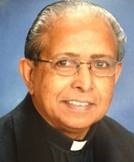
Fr. Tony started his homily ministry (Scriptural Homilies) in 2003 while he was the chaplain at Sacred Heart residence, applying his scientific methodology to the homily ministry. By word of mouth, it spread to hundreds of priests and Deacons, finally reaching Vatican Radio website. These homilies reach nearly 3000 priests and Deacons by direct email every week.

The clipart is from the archive of Father Richard Lonsdale © 2000. It may be freely reproduced in any non-profit publication.

1st Reading

The first reading suggests that we should be as diligent and industrious as a loyal and faithful wife, in the use of our God-given gifts and talents with “the fear of the Lord.” Unlike the one-talent man, she takes her gifts and “brings forth good, not evil”; she “reaches her hands to the poor and extends her arms to the needy.

CONTINUE READING

First reading, Proverbs (31:10-13, 19-20, 30-31) explained: The book of Proverbs is the best place to find practical advice about life.  This first reading describes a good and faithful woman – a gracious wife and mother - who does all her household duties faithfully and efficiently and finds time to reach out a helping hand to the poor and the needy. Unlike the “wicked, lazy servant” in the Gospel, this faithful and loving wife works diligently to bring good to others and is judged praiseworthy for increasing the quality of life within and around her. Since she practices love for both God and neighbor it has pleased God to say: “Her value is far beyond a pearl” (v 10).  This reading suggests that we should be as diligent and industrious as a loyal and faithful wife in the use of our God-given gifts. Unlike the one-talent man, she takes her gifts and “brings forth good, not evil” (v 12)she “reaches her hands to the poor and extends her arms to the needy” (v 20). The author of Proverbs believes everyone should be creatively and lovingly active. Writing against a cultural background which stressed the exploits of men, the Sacred Author sees the "worthy wife" (v 10), as a dynamic, ingenious individual.  Hence, the ideal Old Testament woman is no empty-headed sex object but a model held up for imitation by both women and men.

The clipart is from the archive of Father Richard Lonsdale © 2000. It may be freely reproduced in any non-profit publication.

2nd Reading
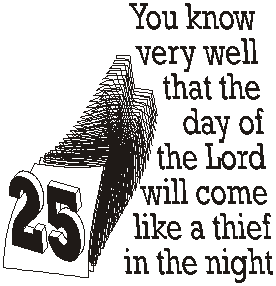
In the second reading, Paul advises us to keep awake and be sober, encouraging and building each other up as we wait for the “Day of the Lord.” He challenges the Thessalonians to turn fear of the Lord into positive, constructive and life-affirming action.  

CONTINUE READING

Second Reading, (1 Thessalonians 5:1-6) explained: When the Thessalonians first accepted the Christian Faith, they thought that their imitation of Jesus' death and Resurrection would be a short-term experience.  Everyone, including Paul, was certain that Jesus' Second Coming was very near. As time went on without that Coming, the Thessalonian Church seethed with rumors about its exact date. People were more concerned with "times and seasons" of Christ’s second coming than with living their Faith.  Paul assured his readers that it was foolish to worry about the "day of the Lord(v 2).  Instead of expecting an imminent Parousia, Christians should always "stay alert and sober,” (v 6), doing their duties faithfully.  “We belong neither to darkness nor to night; therefore, let us not be asleep like the rest, but awake and sober!”(vv 5-6). Paul means that our wholehearted dedication to the responsibilities of Christian living will earn for us the Lord's praise at the Final Judgment.  Paul reminds us that the children of light are destined not for wrath but for salvation when the Lord comes.  He warns us that the Day of the Lord will come "like a thief in the night" (v 4), when we least expect it.  Thus, we should keep awake and be sober, encouraging and building each other up as we wait for the “Day of the Lord.”  Only those who live each day to the fullest will be ready when Jesus' special Day arrives.

The clipart is from the archive of Father Richard Lonsdale © 2000. It may be freely reproduced in any non-profit publication.

Gospel

Today’s Gospel challenges us to ask the questions: Are we using our talents and gifts primarily to serve God?  Are we doing everything we can to carry out God’s will? The parable of the talents challenges us to do something positive, constructive and life-affirming with our talents here and now. 

CONTINUE READING

ExegesisThe context: The parable is set in the last of Jesus’ five great discourses -- this one   focusing on Jesus’ eschatological teaching.  The three parables in the twenty-fifth chapter of Matthew (The Wise and Foolish Virgins, The Talents, The Last Judgment) are about the end times, the end of the world, and the end (intent, purpose, and upshot) of our lives.  Matthew's account provided good advice to the early Christian community as to how they are to behave in this period following Jesus’ Resurrection and Ascension while they await his imminent second coming.  Whatever had been given to them — money, talent, opportunity — was meant to bear fruit for the glory of God and the salvation of souls. The same is true for all of us. Perhaps, Jesus was condemning the Jewish religious authorities. They were like the third servant, so carefully bent on preserving in its purity the tradition with which they had been entrusted that they lost their openness for new things and refused to accept Jesus’ message. In the early community the parable was allegorized. The master was equated with Christ, his departure with the ascension, and his delayed return with the delay of the Parousia or the “second coming.”

The story: A very rich person, about to set off on a journey, entrusted very large sums of money (talents) to three of his slave servants, each according to his personal ability:  five, two, and one.  A talent was worth between five and six thousand denarii -- or about 15 years’ wages for a simple day laborer.  Even one talent could be worth more than a laborer would earn in a lifetime. The rich man freely bestowed responsibility and a chance for unsupervised action on all three slaves.  These amounts were enormous to these slaves who had nothing and earned nothing.  Through skillful trading and investing, the slave with the five talents managed to make five more -- doubling his master's money.  The slave with the two talents did the same.  The third slave buried his talent in the ground.  He was afraid to take the risk, afraid of the consequences of losing all the money, and afraid of the master’s reaction if he did.  On the day of accounting, the master rewarded the two clever slaves ("Come, share your master's joy" vv 21, 23), but punished the third slave whom he called "wicked and slothful" (v. 26).  He took the third slave's talent and gave it to the first slave.  Clearly the master did not want security -- but initiative.  He exposed the third slave's explanation as a mere excuse for irresponsibility and laziness.  Even the most timid person could at least have invested the one talent with bankers and gained the interest from it, the master pointed out (v 27).

The four lessons taught by Jesus through the parable.

1) God gives each person different gifts for his or her intended uses.  Everything is gift, and everything is meant to be given back in service of love for the Lord. We are only asked to make full use of what we have been uniquely given and to use our talents for the benefit of the community as a whole. The human family is charged with preserving the beauty, diversity, and integrity of nature as well as fostering its productivity. (2) The better our work the greater our responsibility.  God gives more responsibilities to those who make the best use of their God-given talents.  (3) The lazy and the unproductive will be punished.  Even the person with only one talent has something to offer to others.  If he fails to do some positive good work, he will lose what he has.  If he tries and fails, he will meet compassion and forgiveness. (4) God blesses generous sharers and punishes the selfish hoarders.  Those who share generously the gifts they have been given are likely to find themselves constantly and immeasurably enriched, while those who jealously and selfishly preserve, out of fear, what they have been given, will lose it.  In short, the parable outlines the result of abundant, grace-filled stewardship of God's resources. A person who does not refuse a gift of the Lord’s receives it and consequently has more. The trustworthiness of the profitable servants ensures their share in the “joy of the Lord.” because the wealth of life and talent given them has  been invested to bear fruit in labors of faith, hope, and charity.

The challenge given by the parableTake the risk for Christ. God, who risked everything in the person of Jesus Christ for the sake of our salvation, expects us to do more than simply cling to safety.  Hence, Jesus is encouraging his followers not to be afraid but, trusting in his help, to take chances in using their talents for the glory of God and for the salvation of their neighbors.  Overwhelmed by the fear of being eternally condemned to Hell, many of us identify ourselves with the servant who quickly buried the talent he received from his master.  Our concern with our eternal salvation is so intense that we concentrate only on the possibility of loss and become afraid to risk extending love to others in our spiritual life.  We presume that forming relationships is always risky, and showing love to another might mean having to change our actions to meet the needs of that other.  There's always a danger we might "do the wrong thing" and lose the grace we have. The parable teaches us that a “take-no-chances” policy is not Christian. 

 The object lesson: Our lame excuses invite punishment: The third servant decided to avoid risk-taking and showed too much caution with money.  His excuse was that, after all, he had not been given explicit orders about how to do his investing.  Besides, any type of business is risky and the master might hold him accountable for any loss.  He probably knew as well  the long-standing rabbinic teaching that anyone who buries money that has been put into his care is no longer liable for its safety. Through this description of a lazy servant Jesus teaches us that that there is no "safe" position in life.  Christian living is strenuous business involving occasional risk-taking.  God expects us to use our every talent for personal growth, community service, and religious witness.  Hence, this parable reminds us of the terrible punishments which lie in store for those who do not produce new spiritual wealth from the talents God has placed in their stewardship.   “While the parable of the wise and foolish virgins shows that “good intentions are not enough,” and the last judgment story reminds us to care for the poor and needy, this parable of the talents describes the “terrible punishments which lie in store for those who do not produce new wealth from the talents God has placed in their stewardship.” (Letter by the Lay Commission on Catholic Social Teaching and the U.S. Economy). 

The clipart is from the archive of Father Richard Lonsdale © 2000. It may be freely reproduced in any non-profit publication.

Fr. Tony’s Life
Messages

33rd Sunday of Year A

Some of us are clearly very gifted with valuable abilities, but there is no one, absolutely no one, who can say he has been gifted with nothing. We may be especially talented in teaching children or cooking meals or repairing homes or programming computers.  So, we should ask ourselves how we are using our particular gifts in the service of our Christian community and the wider society.  Why not follow the example of people who use their God-given talents the best way possible, like, for instance, nursing assistants who take great pride in keeping their patients clean and comfortable, or carpenters who gain enormous satisfaction from building quality homes, or teachers who find joy in the discoveries of the classroom, or attorneys who keep the goal of justice at the very center of their practices? 


God calls us to live in a world of abundance by taking risks and being generous. In addition to our homes and families, the best place to do this is in our parish.  This means that we should be always willing to share our abilities in creative worship in the Church and innovative educational events in the Sunday school.   We can fulfill needs we will find right in our parish: feeding the hungry, visiting the sick or the elderly, housing the homeless, and welcoming strangers in our midst.  We need to make the bold assumption that there’s going to be a demand for every one of our talents in our parish community.  We should step out, with confidence, believing that every God-given gift we have is going to be exceedingly useful and fruitful! 


All of us in the Church today have received at least one talent. We have received the gift of Faith. Our responsibility as men and women of Faith is not just to preserve and “keep” the Faith. We need to work with it. We need to offer it to the men and women of our times. Unless we do this, we stand in danger of losing the Faith just as the third servant lost his talent. The way to preserve the Faith, or any other talent that God has given us, is to put it to work and make it bear fruit.  


Are today’s readings trying to tell us that there should be no differences among us and we should drop all titles and honors?  Actually, all such titles and polite forms are meant to remind each of us of our specific responsibilities in society.  Each of us has a name, an identity and a personality.  Today’s readings remind us that whatever we are and have is not simply a birthright, but a gift given to us by God, a loving Father.  In addition, the fruitful use of everything we are and have owes very much to the generosity and care of both God and our loving neighbors for us.  St. Francis of Assisi ceaselessly reminded his friars that if they could boast about anything as their own, it was their sins.  Hence, let us use everything we are and have in a way that brings glory to God and His family. 

HOME | FAITH SHARING QUESTIONS

Fr. Tony’s Homily

Fr. Tony’s Homily

Fr. Tony’s Homily

Fr. Tony’s Homily

Fr. Tony’s Homily