⬅️ ➡️

2023
Preaching the Word

Fr. Tony’s 8-minute Homily

TOP-RATEDPAPAL HOMILIESFR. TONY

What is Your Purpose in Life?

The Scout Motto: Be Prepared

The Man Who Forgot His Parachute
YouTube player

VIDEO (2:40) – We brought in people ages 0-100 to answer some of life’s big questions. Well, technically, we couldn’t find anyone 100 years old – but we did find a gentleman who is 105. In this episode, we asked the question, “What is your purpose in life?”

YouTube player

VIDEO (9:52) – Whether in the wilderness on a hiking/camping trip, on an everyday outing, or even sitting in the comfort of your home, you should always be prepared for disaster, injury or attack. Many lives have been ruined or lost due to a lack of preparation. You can mitigate the damage of a catastrophic event, or even a small inconvenient accident, by looking at your life and situation, and getting prepared.

YouTube player

VIDEO (1:58) – Ivan Lester McGuire Skydiving Accident – Forgotten Parachute
Fr. Tony's Homily

Fr. Tony’s
Commentary

32nd Sunday of Year A

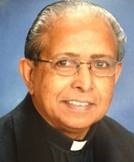
Fr. Tony started his homily ministry (Scriptural Homilies) in 2003 while he was the chaplain at Sacred Heart residence, applying his scientific methodology to the homily ministry. By word of mouth, it spread to hundreds of priests and Deacons, finally reaching Vatican Radio website. These homilies reach nearly 3000 priests and Deacons by direct email every week.

The clipart is from the archive of Father Richard Lonsdale © 2000. It may be freely reproduced in any non-profit publication.

1st ReadingWis 6:12-16

Fr. Tony's Homily

Because Jesus’ parable in today’s Gospel has five well-prepared wise women, the first reading chosen for today is one which personifies wisdom as a woman. The author advises Jews in Alexandria not to envy the wisdom of the pagan philosophers, because they themselves have true wisdom in their Sacred Scripture, a wisdom which regulates not only this life but the next also.  Hence, they must live their lives in strict conformity with the Divine wisdom given them so generously by God.  

CONTINUE READING

Jesus' parable in today’s Gospel shows us five well-prepared, wise women, and the first reading chosen for today offers us Wisdom, personified as a woman.  Writing in Greek to the dispersed Jews living in the cosmopolitan city of Alexandria, in Egypt, around 100 BC, the author wants his fellow Jews to seek wisdom and learn from her.  Wisdom is a Divine gift – but a gift that will not elude the one who seeks it sincerely. 

What the author suggests is that the faithful adherence of the Alexandrian Jews to their ancestral religion in their somewhat hostile environment is seeking after Divine Wisdom.  The Jews need not envy the wisdom of the pagan philosophers, because they themselves have true Wisdom in their Sacred Scripture, a Wisdom which regulates not only this life but the next as well.  

They must live their lives in strict conformity with the Divine Wisdom given them so generously by God.  Those who are watchful enough to find and welcome Wisdom will also find that they will be prepared for the rest of the journey – from this life to the next. Wisdom (Whom we, in our blessed times, recognize as the Second Person of the Blessed Trinity Incarnate (St. Louis-Marie de Montfort The Love of Eternal Wisdom), is searching for those who are waiting.  

The message given by the first reading is clear: God willingly reveals Himself, but mysteriously in His own way, according to His own timetable.  God can be found, but only by those who never give up the search, yet patiently await His initiative. “The deepest wisdom and fullest readiness is to live chastely, honestly, non-violently (Mt 5), and to meet our neighbors’ basic needs (Mt 25).” (Fr. Dennis Ham)

The clipart is from the archive of Father Richard Lonsdale © 2000. It may be freely reproduced in any non-profit publication.

2nd ReadingI Thes 4:13-18

Fr. Tony's Homily

In the second reading, Paul offers Christian wisdom, assuring those Christians who expected Jesus’ second coming in their lifetime that the death and Resurrection of Jesus is powerful enough to save even those who die before Jesus’ second coming. But they need to be alert, well-prepared, and vigilant. 

CONTINUE READING

First Thessalonians is the earliest of Paul's letters.  When he wrote it, contemporary Christians, including Paul himself, expected Jesus to come very soon -- within their lifetime -- to rebuild the Kingdom and to establish his glorious reign.  So they needed to be vigilant in order not to miss his return.  Some quit their jobs in the belief that the Kingdom was at hand.  But then, as the years passed, there seemed to be no signs of the Second Coming.  

Paul writes this earliest Christian letter to respond to the community's fears and questions about those who die before the Parousia: will the few Christians who die in this short period somehow miss out on the benefits of Jesus' return?  Paul says they will not, because what God has wrought in the death and Resurrection of Jesus is powerful enough to save even those who have already "fallen asleep." 

Paul helps them to realize that they need to believe in what the Lord has done for us. He doesn’t want them to fret. He explains, “We do not want you to be unaware, brothers and sisters, about those who have fallen asleep, so that you may not grieve like the rest, who have no hope” (1 Thes 4:13). Instead, the Thessalonians should prepare themselves for the Kingdom.  The central idea is clear: only the alert and the vigilant can experience God coming in their lives.  Those who are asleep to the present never seem to notice God's Presence. 

The clipart is from the archive of Father Richard Lonsdale © 2000. It may be freely reproduced in any non-profit publication.

Gospel – Mt 25:1-13

Fr. Tony's Homily

In the Gospel parable of the ten virgins, the foolish virgins represent the “Chosen People of God” who were waiting for the Messiah but were shut out from the messianic banquet because they were unprepared.  The parable teaches us that, like the five wise virgins, we should attend to duties of the present moment, preparing now, rather than waiting until it is too late. 

CONTINUE READING

Gospel exegesis: Context: Today’s Gospel passage is situated in the context of Jesus’ discourse (Mt 25 and 26), on the end times and the second coming of Christ.  After speaking of the destruction of the Temple (Mt 24:1-3) and the end of the age (Mt 24:4-51), Jesus gives us the parable of the wise and the foolish bridesmaids to illustrate teachings about the coming of the Kingdom.  This parable, along with three others in chapter 25 and 26, offers pointed application for the waiting faithful in the early Church as they come to terms with an unexpected delay in the Parousia (or the second coming of Christ), which most expected in their lifetime. 

The parable tells a story which could have happened at any time in a Palestinian village and which could still happen today.  Since a wedding was a great occasion, the whole village lined up at the sides of the road to wish God’s blessings on the bride being taken in procession by her groom to her new home.  The invited ones would join the procession, which started from the bride’s house and moved to the groom’s house, to take part in the week-long celebration of the marriage. Since the bridegroom might come to the bride’s house unexpectedly, the bridal party had to be ready at any time, with accompanying virgins (bridesmaids in our day), carrying lighted torches and jars of reserve oil.  Five of these virgins neglected to bring reserve oil, and so had to run to the dealers to buy some. They missed the arrival of the groom’s party, and so, lost their chance to take part in the celebration.  They lost not only the opportunity of witnessing the marriage ceremony, but also of participating in the week-long celebration that followed.   

The meaning of the parable: This parable has both a local and a universal meaning.  The local meaning is that the foolish virgins represent the “Chosen People of God” who were waiting for the Messiah but were shut out from the Messianic banquet because they were unprepared. “The division between the wise and the foolish virgins becomes the division between those in Matthew’s church who keep the commandments of Christ, the new lawgiver of the church, and those who hear his words but fail to do what he commands.” (Fr. Reginald Fuller).  The universal meaning is that the five foolish virgins represent those who fail to prepare for the end of their lives.  What matters is not the occasional or the last-minute burst of spiritual fervor but habitual attention to one’s responsibilities before God.  At the final judgment, there will be no depending upon the resources of others, no begging or borrowing of grace.   Some are used to depending upon others’ prayers, others’ gifts, others’ compassion and others’ Faith. Butthere are certain things we must win or acquire for ourselves for we cannot borrow them from others. Close relationship with God is the most important thing. The parable implies that we should attend to duties of the present moment, preparing now rather than waiting until it is too late. 

The allegorical interpretation of the parable: The virgins represent the Church or Christian community that is waiting for Christ’s Second Coming.  The Bridegroom is Christ.  The wedding feast is the great and joyous occasion in which Christ comes for his Church (Rv 19:9).  The delay of the Bridegroom corresponds to the delay of the Second Coming (Parousia).  The Bridegroom's arrival in the dark of night is the Second Coming itself.  The closing of the door is the final judgment. Many Old Testament texts also presuppose the imagery of God as Israel’s husband or bridegroom (e.g., Is 54:5; Jer 31:32; Hos 2:16). The rejection of the foolish maidens is the Last Judgement and, perhaps, the foolish maidens represent Israel and the wise ones the Gentiles

“Make sure you have enough oil!” Literally, our text answers the question, "What shall we do while we wait?"  The answer is:  "Make sure you have enough oil for your lamps!"  Scripture scholars of the past and the present have reflected on what this oil symbolizes, and they have arrived at different, but related, views.  (i) Perhaps, the best explanation is that the oil stands for ourpersonal relationship with God who is the Source and Power behind our good deeds or "fruit-bearing" (Mt 3:8, 10; 7:16, 17, 18, 19, 20; 12:33; 13:8, 23, 26; 21:19, 34, 41, 43).  This relationship is not something that one can attain overnight or borrow from someone else as the foolish virgins attempted to do.  This “state of grace” is something we must receive from God personally and directly. (ii) In Scripture, oil is often a symbol for the Holy Spirit.  It is when we submit our work, our intentions, our purpose to the Holy Spirit that He fills our deeds with power and effectiveness. (iii) Oil stands for character and Christian values which we cannot borrow – or buy, the foolish virgins’ choice.  That metaphor of “oil” refers to the way we do -- or do not -- live the virtuous life that God freely empowers us to live. You cannot “borrow” these virtues at the last moment; you must “live” them. These Gospel words are very sobering, and they  remind us that we can never use the excuse,  “But no one told me.”  (iv) Oil stands for “spiritual capital” (our merits) – all that we build up by good works:  concern for the needy and acts of justice.  (v) Perhaps, oil refers to real Christian Faith.  (vi) Oil is the spirit of reconciliation with the others and a willingness to share our lives and blessings with others.  (vii) Oil may also be a generic reference to faithful and obedient discipleship as presented in the whole Gospel.   

Warnings given by the parable: 1) The parable warns us that there are certain things which cannot be obtained at the last minute:   a) a good relationship with God, b) good character, c) merits from good deeds of sharing, forgiving love and humble service done to others. 2) The parable also warns us of certain elements in Christian life that cannot be borrowed: a) relationship with God, b) ideal character, c) Faith.  

The parable when applied to Holy Mass: We have to learn three lessons from this parable: 1) an eager, expectant waiting for the Lord’s coming in all his ways; 2) a recognition that we can’t borrow what we’re going to need to meet the Lord when we comes; and 3) a loving admonition from the Lord not to procrastinate in making our preparations until it’s too late. This Mass is meant to help us with each of the three. If we’re truly ready to meet the Lord each week here, with our souls clean from serious sins, with our hearts hungering for Him, with the Lord himself, the Light of the World, burning inside of us, fueled by the oil of love, we’ll never be caught off guard, whether he comes today, tomorrow, or eighty years from now. Our response to today’s word of the Lord, and to the tremendous Gift that is the Mass which is offered here every day, will determine whether, in the final analysis, we’re foolish or we’re wise. Is our soul thirsting for the living God more than a man in the desert pants for water? Are we keeping perpetual vigil seeking Wisdom Incarnate? Have we come asking the Lord to fill not just our lamps but our flasks so that we can make a total self-offering? The Lord who knows us wants to give us all these gifts. “The Bridegroom is here. Let us go out to meet Christ the Lord!

The clipart is from the archive of Father Richard Lonsdale © 2000. It may be freely reproduced in any non-profit publication.

Fr. Tony’s Life
Messages

32nd Sunday of Year A

Wise Christians live each day in the light of Jesus’ vision.  Such people find Him in the most ordinary experiences of daily living — in the people they meet, the events that take place, and the situations in which they find themselves.  They carefully make their daily choices for God. They are ready to put the commandment of love into practice by kindness and forgiveness.  There is absolutely no better way to prepare for the final call than to learn to spend each day in the company of Jesus, remembering his assurance, “I am with you always.” (CCC #1036, #2612: vigilant in waiting for the Lord’s return). The following short prayer should be always on their lips: “Lord, grant that all my thoughts, intentions, actions and responses may be directed solely to Your love and service this day. Help me, Lord, to seek, to find, and to respond to You in every single experience this day.”  When we eventually hear the final call, “Get up! The Master is coming!”  we will not be worried, but   happy and more than ready to meet Him, as well as old friends and family, in Heaven.  God has made this promise to us: “Those who are wise will shine like the brightness of the heavens, and those who lead many to righteousness, like the stars for ever and ever” (Dn 12:3).


Spiritual readiness, preparation and growth do not just happen.  They come as a result of intentional habits built into one’s life.  We cannot depend on a Sunday morning Mass to provide all our spiritual needs.  We cannot depend on Christian fellowship to provide us with spiritual development. These things come through routine, mundane attention to ordinary spiritual disciplines — making sure we have enough oil: spiritual fuel.  They come when we habitually take time for prayer and being alone with God. They come through reading God’s Word; living a sacramental life; performing acts of service for others; being morally faithful; obeying God with love, and spending time with other Christians for mutual prayer, study, and encouragement.  These are the things which, along with the normal difficulties of life, enable one to grow in Christ and to be prepared for Christ’s coming. Without these things we will not be prepared. The preparation cannot be hit-or-miss, nor can it be postponed.  We dare not procrastinate, lest death come unexpectedly and ruin us.  We need to develop those things which encourage our spiritual growth into holy habits in our lives, for that growth must take precedence over other interests and claims on our time and attention. As these habits become entrenched, they cease to be a struggle for us and begin to be a source of strength and blessing.  They make our lives powerful against the onslaught of the world.  


Oil in Scripture is often a symbol for the Holy Spirit.  Perhaps we try to spring into action without first submitting our work to the Holy Spirit.  Or perhaps we lack the oil of kindness and compassion.  There’s no way we can be ready to meet Jesus without the essential oils of compassion and mercy.  Perhaps we lack   the oil of patience and sympathy.  Without such oil, we’re ill-equipped to deal with someone who comes to us in need of long-term love and guidance.  Perhaps we’re short of the oil of education and instruction, or we’re not adequately trained and lack proper skills to be of service in areas where help is needed.  Perhaps God is calling us to take our expertise and skills to another level in order that we may more adequately meet Jesus in the people God allows to enter our lives. I need to have the oil of being in the state of grace.  If I do not,  I am in the empty a state of mortal sin.Ignatius of Loyola’s famous prayer is the prayer of the follower of Jesus; ‘Lord, teach me to know you more, love you more, and serve you more faithfully in my life.’ (Spiritual Exercises). The “more” indicates that our spiritual life on earth is always in process,  never a finished product: like love and friendship it grows in our lives. It is exciting that Jesus is never gone from us:risen from the dead he is always alive, always new. Our reading of the Gospel, our sharing at Mass and the sacraments and our personal prayer keep this relationship always alive, always new.


Are today’s readings trying to tell us that there should be no differences among us and we should drop all titles and honors?  Actually, all such titles and polite forms are meant to remind each of us of our specific responsibilities in society.  Each of us has a name, an identity and a personality.  Today’s readings remind us that whatever we are and have is not simply a birthright, but a gift given to us by God, a loving Father.  In addition, the fruitful use of everything we are and have owes very much to the generosity and care of both God and our loving neighbors for us.  St. Francis of Assisi ceaselessly reminded his friars that if they could boast about anything as their own, it was their sins.  Hence, let us use everything we are and have in a way that brings glory to God and His family. 

HOME | FAITH SHARING QUESTIONS

Fr. Tony’s Homily

Fr. Tony’s Homily

Fr. Tony’s Homily

Fr. Tony’s Homily

Fr. Tony’s Homily