April 21, 2024

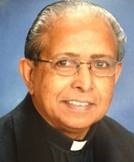
Fr. Tony’s 8-minute Homily

HOMILIESCONNECTIONSHOLY SEEFR TONY
Fr. Tony's Homily

Fr. Tony

4th Sunday of Easter B

Fr.Tony’s homilies reach nearly 3000 priests and Deacons by direct email every week.

The clipart is from the archive of Father Richard Lonsdale © 2000. It may be freely reproduced in any non-profit publication.

On the Fourth Sunday of Easter, called Good Shepherd Sunday,we continue to reflect on the meaning of the Resurrection.This is also the World Day of Prayer for Vocations. Today, we celebrate the risen Lord as the Good Shepherd who lays down his life for his sheep. The priest in charge of a parish is called pastor because “pastor” means shepherd. As shepherd, he leads, feeds, nurtures, comforts, corrects, and protects Christ’s sheep, the people of the parish. The earliest Christians saw Jesus as the fulfillment of the ancient Jewish dream of a Good Shepherd. They also wished to include the Gentiles as part of God’s flock.

SOURCE: Fr. Tony’s Homilies / Used with permission

1st Reading Explained

In today’s first reading, Peter asserts unequivocally before the Jewish assembly that there is no salvation except through Christ, the Good Shepherd — the one whom the Jewish leaders have rejected and crucified and in whose name the apostles preach and heal.

CONTINUE READING

First reading, Acts 4:8-12 explained: After describing the Ascension of Jesus in the first chapter and the Descent of the Holy Spirit in the second chapter, the Acts of the Apostles describes in its third chapter Peter’s healing and preaching ministry. The healing of the cripple and the resulting evangelization by Peter resulted in his arrest by the Temple guards. They hauled Peter, with John, his companion, to the assembly of the leaders, elders and the scribes. Today’s reading tells us that in the trial before the Sanhedrin (Acts 4:5-22), Peter was empowered by the Holy Spirit to bear a renewed Easter witness to the Son of God, Jesus Christ the Nazarene, who had been unjustly crucified, but whom God had raised from the dead. Peter explained that he had healed the cripple in the name of Jesus, whom the Jews had despised and rejected but whom God had made into the cornerstone (kephale gonias in Greek), of the Kingdom of God. What moved Peter to act on behalf of the cripple was his Faith in the Lord Jesus Christ who, as the Good Shepherd, cares for such people. In imitation of the Lord who had always cared for the sick and the lowly, Peter was also moved by the same risen Lord to command the healing, then reach out to assist the cripple to stand, — which he did — and then, “walking, leaping and praising God,” the formerly-crippled may, fully healed, entered the Temple with Peter and John. The people, recognizing the formerly crippled beggar, flocked to the pair in great excitement. It was then that Peter made the startling statement about salvation coming only through Christ Jesus: “Salvation is to be found through Him alone. In all the world there is no one else whom God has given who can save us.”

SOURCE: Fr. Tony's Homilies / Used with permission

2nd Reading Explained

In the second reading, St. John tells us how Yahweh, the Good Shepherd of the Old Testament, expressed His love for us through His Son Jesus, the Good Shepherd, by making us His children. In today’s Gospel Jesus introduces himself as the “Good Shepherd.” Jesus claims that as Good Shepherd he knows his sheep and loves them so much he is ready to die for them.

CONTINUE READING

Second Reading, 1 John 3:1-2 explained: The New American Bible in its introduction to John’s letters states that John wrote these letters to the Judeo-Christian community some of whose members were advocating false doctrines (2:18-26; 3:7). They refused to accept the full Divinity and full humanity of Jesus, disregarded the commandment of love of neighbor, refused to accept Faith in Christ as the source of sanctification, and denied the redemptive value of Jesus’ death.  After recognizing and correcting these errors, John, in today’s second reading, reminds his people that they should remember their privileges. First, it is their privilege to be called the children of God. John clarifies that we are not merely called the children of God; we are God’s children in actuality. It is by grace, through Baptism, that we become God’s children. The more we know and love the God we believe in, the more we will strive to act and live as God’s children, and so, gradually become more and more like the God we believe in. The culmination of all our privileges as children of God will occur when Christ appears, for only then will we see him “as He really is,” and then we shall be like Him!

SOURCE: Fr. Tony's Homilies / Used with permission

Gospel Explained

he Gospel text offers us both comfort — the Good Shepherd knows us, provides for us, and loves us – and a double challenge: to become good shepherds to those entrusted to our care and good sheep in our parish, the sheepfold of Jesus the Good Shepherd.

CONTINUE READING

Gospel exegesis: The context: It was in the wintertime, probably the time of the Jewish Hanukkah feast (the Feast of Dedication), which commemorated the triumph of the Jewish commander Judas Maccabaeus over the Syrian leader Antiochus IV Epiphanes in 165 B.C.  Jesus was walking on the east side of the Temple, which offered protection against the cold winds from the desert.  The Jews had gathered round him.  They were not sure whether or not Jesus was the promised Messiah.  They tried to assess the situation by asking Jesus whether he was the Christ or simply a wandering preacher, one of the many wandering preachers and healers.   Instead of giving them a straight answer, Jesus tells them that he is the Good Shepherd and explains to them his role as such.

Shepherds in the Old Testament:  In the Old Testament, the image of the Shepherd is often applied to God as well as to the leaders of the people.  The book of Exodus several times calls Yahweh a Shepherd.  Likewise, the prophets Isaiah and Ezekiel compare Yahweh’s care and protection of His people to that of a shepherd.   “He is like a shepherd feeding his flock, gathering lambs in his arms, holding them against His breast and leading the mother ewes to their rest.” (Is 40:11).  Ezekiel represents God as a loving Shepherd Who searches diligently for his lost sheep.  Psalm 23 is David’s famous picture of God as The Good Shepherd: “The Lord is my shepherd; I shall not want; He makes me lie down in green pastures; He leads me beside still waters; He restores my soul.”(Ps 23:1-2). The prophets often use harsh words to scold the selfish and insincere shepherds (or leaders of the people),  of their day. For example, the Lord God, through Jeremiah, decrees: “Doom for the shepherds who allow the flock of my pasture to be destroyed and scattered”(Jer 23:1). Through Ezekiel, the Lord God scolds the religious leaders promising them, “Trouble for the shepherds of Israel who feed themselves! Shepherds ought to feed their flock” (Ez 34:2).

The Good Shepherd in the New Testament: Introducing himself as the Good Shepherd of his flock, Jesus makes five claims in today’s Gospel:

1) He knows his sheep and his sheep hear his voice: Just as the Palestinian shepherds knew each sheep of their flock by name, and each sheep knew its shepherd and his voice, so Jesus knows each one of us, our needs, our merits, and our faults.  Of course, the knowledge talked of here is not mere intellectual knowing but the knowledge that comes from love and experience, and leads  one to express care and concern for all others. Jesus loves us as we are, with all our limitations, and he expects us to receive and return his love by keeping his word.  He speaks to us at every Mass, through the Bible, through our pastors, through our parents, family, and friends, and through the events of our lives.  “God whispers to us in our pleasures, He speaks to us in our consciences, and He SHOUTS in our pains; it is His megaphone to rouse a deaf world!” (C.S. Lewis, The Problem of Pain, Ch. 6 “Human Pain”).

2) He gives eternal life to his sheep by receiving us into his sheepfold through Baptism. Jesus also strengthens our Faith by giving us the Holy Spirit in Confirmation,  supplies food for our souls in the Holy Eucharist and the Divine words of the Holy Bible, and he makes our society holy by the Sacraments of Matrimony and the Priesthood.

3) He protects his sheep by placing them in the loving hands of his Almighty Father.  Without Him to guide us and protect us, we are easy prey for the spiritual wolves of this world: that includes Satan, as well as the seven deadly sins of   pride, avarice, envy, gluttony, anger, lust and sloth.

4) .  He goes in search of his stray lambs and heals his sick ones. In the first part of chapter ten of John’s Gospel, Jesus adds two more roles to the work of the good shepherd.  Jesus heals the wounds of our souls by the Sacrament of Reconciliation and strengthens us in illness and old age by the Sacrament of the Anointing of the Sick.

5) Jesus dies for his sheep:  Just as the shepherds of ancient days protected their sheep from wild animals and thieves by risking their own lives and even dying, so Jesus suffered and died in expiation for the sins of all people.

In the final part of today’s Gospel, Jesus invites those who are touched and saved by the love of the Shepherd, to shepherd and care for others. “There are other sheep that are not of this fold and these I have to lead as well.” Though Jesus cares for his own, he loves all of us and takes responsibility for all of us without exception, for God has created all of us and loves us all. Jesus ultimately dies because he cares for all peoples.

“The other sheep.” Jesus’ reference to other sheep and to one flock (v. 16) points to the universality and unity of the community of believers.  By “the other sheep” Jesus probably meant the poor, the tax collectors and sinners who were generally ostracized by society. Like the Jews, the earliest Church considered the Gentiles and unbelievers as the “other sheep”; that error ended while Peter was still living, and Paul combatted it throughout his ministry to the Gentiles.  We are now being challenged to recognize our own list of those whom we fear or scorn because their attitudes or behaviors differ from ours. Let us pray for the day when there will be “one flock, one Shepherd,” both in this world and in our own hearts.

Bishop Clarke provides us with  an excellent commentary on the “other sheep” and the responsibilities the Church recognizes  and teaches that we all have to them: “The document you refer to is called Lumen Gentium, the Dogmatic Constitution on the Church, which was issued in 1964 by the Ecumenical Council of Vatican II. In Chapter 2 it focuses on “The People of God.” The bishops insist that all people are called to belong to the new People of God, to a catholic unity (#13). The bishops recognized that there are non-Catholic Christians (#15), Jews, Moslems and even “heathens” who have never heard of Christ or God (#16). Yet, they are “related to the People of God in various ways,” and “those too may achieve eternal salvation” (#16) if they try to do His will as they know it through the dictates of their conscience. We are all called to the fullness of Truth and the unity found only in the Roman Catholic Church. It is the sacramental life of the Church, God’s chosen way, that strengthens us on our spiritual journey. Together with the doctrinal safety provided by our Church’s official Magisterium (teaching office), we are enabled or empowered or offered the means to respond properly to our call to holiness. We are called to follow the Good Shepherd, and be united under the leadership of the Pope, who is the successor to St. Peter. So our Catholic task always remains the same: to spread the Good News by word and action, and do everything we can to work towards unity in the People of God under the leadership of our Holy Father, Pope  John Paul II. Until there is unity, our mission work is not complete. We respect other people’s beliefs; but we always lovingly invite them to come into the embrace of “one flock under one shepherd.” (Bishop Clarke).

SOURCE: Fr. Tony's Homilies / Used with permission

Fr. Tony’s
Life
Messages

4th Sunday of Easter B

Everyone who is entrusted with the care of others is a shepherd. Hence Bishops, pastors, parents, teachers, doctors, nurses, bosses, government officials, and politicians are all shepherds. Since shepherding a diocese, a parish, a civil community, a workplace, or a family is very demanding, the shepherds need dedication, commitment, sacrifice, and vigilance every day. We become good shepherds by loving those entrusted to us, praying for them, spending our time and talents for their welfare, and guarding them from physical and spiritual dangers. Parents must be especially careful of their duties as shepherds, becoming role models for their children by leading exemplary lives and living out what they are trying to teach their children.

SOURCE: Fr. Tony’s Homilies / Used with permission


Our local parish is our sheepfold, and our pastors are our shepherds.   Jesus is the High Priest, the bishops are the successors of the apostles, the Pastors. Associates and Deacons, are their helpers, and the parishioners are the sheep.  Hence, as the good sheep of our parish, a) Let us hear and follow the voice of our shepherds through their homilies, Bible classes, counseling and advice.  b) Let us take the spiritual food given by our pastors through regular and active participation in the Holy Mass and by frequenting the sacraments, prayer services, renewal programs and missions.  c) Let us cooperate with our pastors by praying for them always, by thanking and praising them for all they are doing for all of us, by giving them positive occasional suggestions (rather than negative criticisms), for the welfare of the parish, and generally giving them friendly, supportive encouragement. Let us also cooperate in the activities of various councils, ministries, and parish associations.

SOURCE: Fr. Tony’s Homilies / Used with permission


Let us pray that we may all both  receive and accept God’s offered vocations to the Priesthood, the diaconate and the consecrated life as well as to Marriage  and the single state, so that we may have more holy and Spirit-filled shepherds to lead, feed, and protect a receptive Catholic community. Christian thinking on vocation has been summarized in one profound saying: “All are priests, some are priests, but only one is the Priest.” Christ Jesus is the Priest in the full sense because he is the one mediator between God and humanity who offered Himself as a unique sacrifice on the cross.  The universal priesthood of all believers, the sharing of all the baptized in the priesthood of Christ, has received special emphasis since Vatican II. Those who are called to make a lifelong commitment to serve as ordained ministers share the ministerial priesthood of Jesus. On this World Day of Prayer for Vocations   we are asked to encourage and pray for our young men to respond to God’s call to serve His Church in the ministerial priesthood and for all of us that we may live out our vocations as He wills.

SOURCE: Fr. Tony’s Homilies / Used with permission


Jesus wants us to be a community which shares and in which everything is shared; a community which knows how to recognize Jesus in the poor, the marginalized, and the sick; a community that brings healing into people’s lives; and a community of peacemakers and not makers of division or conflict.

SOURCE: Fr. Tony’s Homilies / Used with permission


We are not to keep the gift of Faith locked in our hearts, but to share it with our children, our families and our neighbors, always remembering the words,: “Every believer in this world must become a spark of Christ’s light,” spoken by Pope St. John XXIII. “We all have scars from our own Good Fridays that remain, long after our own experiences of resurrection.  Our ‘nail marks’ remind us that all pain and grief, all ridicule and suffering, are transformed into healing and peace in the love of God that we receive  from, and extend to. others. The “nail marks” of Jesus are all around us in the lives of those living out their own Calvarys.  Jesus calls us to be willing to place ourselves in the pain and struggle of others and bring the joy and peace of Easter into hearts, entombed in winter cold and darkness.” (Connections).  

SOURCE: Fr. Tony’s Homilies / Used with permission

HOME | QUESTIONS | TOPICS | CONNECTIONS

Fr. Tony’s Homily

Fr. Tony’s Homily

Fr. Tony’s Homily

Fr. Tony’s Homily

Fr. Tony’s Homily