May 9 or 12, 2024

Fr. Tony’s 8-minute Homily

HOMILIESCONNECTIONSHOLY SEEFR TONY
Fr. Tony's Homily

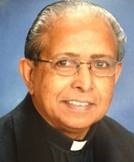
Fr. Tony

Ascension B

Fr.Tony’s homilies reach nearly 3000 priests and Deacons by direct email every week.

The clipart is from the archive of Father Richard Lonsdale © 2000. It may be freely reproduced in any non-profit publication.

Today’s readings describe the Ascension of the Lord Jesus into his Heavenly glory after promising his disciples the Holy Spirit as their source of Heavenly power and commanding them to bear witness to him throughout the world by their lives and preaching. But the ascended Jesus is still with us through his indwelling Holy Spirit as he has promised, “I am with you always; yes, to the end of time.” Today’s feast is a celebration of Jesus’ final glorification after his suffering, death, and Resurrection – a glory in which we, too, hope to share.

SOURCE: Fr. Tony’s Homilies / Used with permission

1st Reading Explained

The first reading gives an account of the event of the Ascension as recorded in the first chapter of the Acts of the Apostles. First, Jesus instructedhis apostlesto remain in Jerusalem and wait for the baptism by the Holy Spiritso that they might become his “witnesses to the ends of the earth” by the power of the Holy Spirit. Then a cloud took Jesus from the sight of the disciples and two Heavenly messengers in white garments gave them the assurance of Jesus’ “second coming” or return in glory. The Refrain for today’s Responsorial Psalm (Ps 47) suggests that by his Ascension, the risen Lord “mounts his throne” in glory.

CONTINUE READING

The first reading (Acts 1:1-11)  gives an account of the event of Ascension as recorded in the first chapter of the Acts of the Apostles. First, Jesus instructed his apostles to wait in Jerusalem for “the promise of the Father about which you have heard me speak; for John baptized with water, but in a few days you will be baptized with the Holy Spirit” (Acts 1:4-5), so that they might become his “witnesses to the ends of the earth” by the power of the Holy Spirit. Then “a cloud took him from their sight” (Acts 1:9), and two Heavenly messengers in white garments gave them the assurance of Jesus’ return in glory.

Today’s Responsorial Psalm (Ps 47) sings, For the LORD, the Most High, the Awesome, is the Great King over all the earth… (Ps 47:3), celebrating God’s universal Kingship. The Psalm was originally sung in connection with a cultic procession honoring the Ark of the Covenant. By his Ascension, Jesus, the risen Lord, enters into the Glory of God.  As the Responsorial Psalm refrains has us sing,  “God mounts his throne to shouts of joy, a blare of trumpets for the Lord!

SOURCE: Fr. Tony's Homilies / Used with permission

2nd Reading Explained

In the second reading, Paul explains the theological meaning of Jesus’ exaltation, giving us the assurance that one day, we, too, will be ascending to Heavenly Glory, provided we fulfill the mission entrusted to us by the ascending Lord.

CONTINUE READING

SIn the second reading (Eph 1:17-23  or 4:1-13): Paul explains the theological meaning of Jesus’ exaltation by saying,   “May God enlighten the eyes of our hearts so that we may know the great hope to which we have been called(Eph 1:18).  Our great hope is that one day we too will be ascending to Heavenly glory, provided we complete our part of the mission entrusted to us by our ascending Lord. Our mission is to preach the Good News of salvation to the whole world by word and deed. We will continue to receive the Divine assistance and spiritual gifts necessary for our Christian witness-bearing through the Gift of Jesus and the Father to us of the Holy Spirit living within us.

SOURCE: Fr. Tony's Homilies / Used with permission

Gospel Explained

Today’s Gospel describes how Jesus ascended to Heaven after giving his final blessing and missionary command to his disciples. The command was to “proclaim the Good News to the whole creation,” “to be his witnesses,” and “to make disciples of all nations.” (Mt 28:16-20, Mk 16:15-20, Lk 24:46-53, Acts 1:1-11).

CONTINUE READING

Exegetical notes: A) The Ascension: Each Sunday we profess through the Creed, “He ascended into Heaven.”  Christ’s Ascension was the culmination of God’s Divine plan for Christ Jesus, his return to his Father with “Mission Accomplished.”  Jesus’ Ascension is the grand finale of all his words and works done for us and for our salvation.  It is a culmination, but not the conclusion.  One wonder is that, though Jesus is now with God in glory, he continues to remain with us, dwelling within us together with the Father and the Holy Spirit: “Lo, I am with you always.” The Feast of the Ascension celebrates one aspect of the Resurrection, namely Jesus’ exaltation.  He did not wait 40 days to be glorified at God’s right hand. That had already happened at his Resurrection. Like the 40 days after Easter during which He appeared to many in Israel, this public Ascension into Heaven was given to us for our sakes. The 40 days allowed many to experience personally Jesus’ Resurrection and his being alive in a glorified body as fact to be counted upon — reality, and the fulfillment of prophecy. The focus of this Feast is the Heavenly reign of Christ, and the Lord’s being “seated at God’s right hand,” meaning that He alone will be in control of the continuing plan of salvation through the Holy Spirit, unrestricted by time, space, or culture. It is there, at the “right hand of God,” that Jesus continues to make intercession for all of us with the Father.  Thus, the Paschal Mystery — Jesus’ passion, death, Resurrection, Ascension, and the sending of the Holy Spirit – is a single, unbroken Reality, which is to be understood by Faith. By His Ascension, Jesus, the risen Christ, True God and True Man, is One with the Father and the Holy Spirit in glory forever.

  1. B) A belief based on Sacred tradition and Sacred Scripture: There is no written evidence of celebrations of this event until the fourth century, when one of the early Church Fathers, Augustine of Hippo, preached about it in a sermon. It is widely believed that the feast has been observed since the time of the Apostles, dating back to 68 AD. There are many references both in the Old and New Testament of the Bible, concerning Ascension. Some of these references refer to events that occured before the event. For example, in Psalms, David foretold the Ascension of the Lord when he spoke of the enthronement of the Lord at the right hand of the Father, Psalms (110:1). The Lord Jesus Himself had spoken to His disciples about His Ascension. For example, while they struggled to understand Jesus’ suffering and death, He told them that He was “going to the Father,” Jn (14:12). While on trial, Jesus had told the High Priest, “From now on, you will see the Son of Man, seated at the right hand of God most powerful, and coming on the clouds of heaven,” Mt (26:64). While Mary Magdalene was at the tomb weeping, Jesus referred to His coming Ascension and return to the Father, Jn (20:17). The apostle Peter, in his sermon at Pentecost and in his first letter to Christian communities, cited David’s prediction and asserted the resurrection of Jesus Christ and His Ascension to the throne at right hand of God (Acts 2:34-36; 1 Pt 3:22). However, only the Gospel of Luke and the Acts of the Apostles have descriptions of the event itself (Lk 24:50-53; Acts 1:9-11). Although there is considerable overlap between these two texts, Luke, probably the author of both books, gives us an inside glimpse into how the events, as reported by his sources, occurred. In the Gospel, Luke recounts that Jesus had led his disciples out of the city of Jerusalem to a place near Bethany, and “he raised his hands and blessed them. As he blessed them, he parted from them and was taken up to Heaven,” Lk 24:50-51). So, as Jesus was blessing his disciples, much as a priest would bless the people, two things occurred. Jesus “parted from them” and “was taken up to Heaven.”
  2. C) The Ascension account: The Biblical accounts of the Ascension focus not so much on the details of the event as on the mission Jesus gave to his disciples.  For example, in the accounts narrated in Luke and Acts, the Ascension took place in Jerusalem.  In Matthew and Mark, on the other hand, the event occurred in Galilee. All accounts, however, agree that the Ascension, a real event, happening in real time, and observed by real people, took place on a mountain.  In Luke and Acts, the Ascension happened forty days after the Resurrection, a period during which Jesus appeared repeatedly to his followers.  In Matthew and Mark there is no indication of the time period between the Resurrection and the Ascension.  The Gospel writers apparently were not aiming at accuracy of historical detail, for their concern was with transmitting Our Lord’s message to all the world.
  3. D) The Ascension message: Preach the Good News and be my witnesses:” Matthew, Mark and Acts record Jesus’ last words differently: 1) “You will receive power when the Holy Spirit has come upon you; and you will be My witnesses in Jerusalem, in all Judea and Samaria, and to the ends of the earth” (Acts 1:8).  2) “Go therefore and make disciples of all nations baptizing them in the Name of the Father, and of the Son, and of the Holy Spirit, teaching them to observe all that I have commanded you. And behold, I am with you always, until the end of the age” (Mt 28:19-21).  3) “Go into all the world and proclaim the Good News to the whole creation” (Mk 16:15).  All are in agreement that (a) Jesus gave his disciples a mission of bearing witness to him by preaching and living the Good News.  They are to tell and re-tell the story of Jesus’ life, suffering, death and Resurrection, Ascension, and sending of the Holy Spirit upon the Apostles and Mary.  (b) He assured them of the Divine assistance of the Holy Spirit in the carrying out of this mission. There is a question you may have heard, which goes, “If you were accused of being a Christian, would they find enough evidence to convict you?” Today’s Gospel challenges us to provide enough evidence!  Augustine proclaimed these words on the Feast: “Today our Lord Jesus Christ ascended into heaven; let our hearts ascend with him. Listen to the words of the Apostle: ‘If you have risen with Christ, set your hearts on the things that are above where Christ is, seated at the right hand of God; seek the things that are above, not the things that are on earth.’ For just as he remained with us even after his Ascension, so we too are already in Heaven with him, even though what is promised us has not yet been fulfilled in our bodies.”
  4. E) Christmas and Ascension: The Ascension is most closely related in meaning to Christmas. In Jesus, the human and the Divine became united in the person and life of one man. That’s Christmas.  At the Ascension, this human being – the Person with the risen, glorified body of Jesus – became for all eternity a part of who God IS.  It was not the spirit of Jesus or the Divine nature of Jesus alone that ascended to the Father.  It was the risen Jesus, whole, alive, and entire, in his glorified Body that ascended. This is the Body which the disciples had touched, the Body in which Jesus had eaten and drunk with them both before and after His Resurrection, a real, physical body, but now, risen from the dead, a gloriously restored body, bearing the marks of nails and a spear.  This is what/Who ascended.  This is what/Who, now and forever, is a living, participating part of God. The Ascension, along with the Incarnation, is here to tell us that it is a good thing to be a human being; indeed, it is a wonderful and an important and a holy thing to be a human being.  It is such an important thing that God did it.  Even more, the fullness of God now includes what it means to be a human being.

[Biblical basis for the defense of a literal Ascension: Two of the Evangelists, Mark (16:19-20), and Luke twice (Lk 24:50-53; Acts 1: 6-12), recount a literal Ascension.  1) Mark says, “He was taken up into Heaven, and took His seat at the right hand of God” (Mk 16:19). Like all the evangelists, Mark was concerned with an accurate report of the events and teachings of Jesus’ life on earth as the Messiah of God, Savior of humankind and the universe. Further, Mark is seen traditionally to be associated with Peter and to be the recorder of Peter’s account of his experiences with Jesus during the three or so years of Jesus’ life in flesh and time. Mark’s purpose was to save the materials of the eyewitnesses (as these people were beginning to be eliminated by martyrdom), and to spread the Good News to other local Church communities as well as to his own. If the Ascension had not happened visibly, he would certainly not have said it did.

2) Luke, who declares specifically at the head of his Gospel the pains he has taken to verify the accuracy of the details of every event he narrates (Lk 1:1-4), declares his reason for this labor: “I, too, have decided, after investigating accurately anew, to write it down in an orderly sequence for you, most excellent Theophilus, so that you may realize the certainty of the teachings you have received” (Lk 1:3-4).  In his Gospel account of the Ascension, Luke says, “Then He led them [out] as far as Bethany, raised His hands and blessed them. As He blessed them, He parted from them and was taken up to Heaven. They did Him homage and then returned to Jerusalem with great joy, and they were continually in the Temple, praising God” (Lk 24: 50-53).

3) Luke wrote Acts, as he explains, as a continuation of his verified, accurate “narrative of the events that have been fulfilled among us” (Lk 1:1), which had already been written down by “eyewitnesses.” His verifications of the events in the later history of the Apostles, would certainly have been given the same painstaking attention, and labor he had employed in composing the Gospel and for the same reason – to provide certainty in the teachings Theophilus had received. Luke picks up the account with the 40-day period after the Resurrection, material he had not unfolded in the Gospel.

4) When he comes to the Ascension, Luke reports the initial question of the Apostles about the restoration of the Kingdom to Israel, meaning the Kingdom of God, and Jesus’ response: “It is not for you to know the times or seasons that The Father has established by His own authority(Acts 1:6-7). Luke also includes Jesus’ promise that the Holy Spirit will come to them — “you will be My witnesses in Jerusalem, throughout Judea and Samaria, and to the ends of the earth” (Acts 1:8). Thus, Theophilus (and so all of us), are assured that the teachings we have from the successors of the Apostles come to us from the Holy Spirit Who, Jesus had told them, (and us), before His death and Rising,  “will not come unless I go.”

5) Immediately thereafter, Luke reports, “When He had said this, as they were looking on, He was lifted up, and a cloud took Him from their sight” (Acts 1:9). Not only does this “lifting up” complete the meaning and purpose of the “lifting up” of the crucifixion, it also states that the Ascension was aliteral reality, just as His Resurrection was literally real and just as His sufferings and His death on the cross were literally real.  From that it follows that all that flows from this Paschal Mystery’s reality is also real, from God, and essential for belief.

6) That Luke meant the details he had so carefully gathered and checked to be taken literally is demonstrated by his inclusion of what happened next. He reports,

While they [the Apostles and disciples] were still looking intently up at the sky as He was going, suddenly two men dressed in white garments stood beside them. They said, ‘Men of Galilee, why are you standing there, looking at the sky? This Jesus Who has been taken up from you into Heaven will return in the same way as you have seen Him going into Heaven’” (Acts 1:10-11). 

7) And now we see why it is so important for Theophilus (and for us, today), to understand that the Ascension was a literal reality: it is the promise of Jesus’ own return to us in glory, to judge the living and the dead and to take us home with Him.   As for the mountain, Matthew (Mt 28:16-20) mentions the mountain and ends with the declaration of the Lord, “And behold, I will be with you always, until the end of the age” Luke also reports the mountain, but not until he has dealt with the really important truths we have just examined. He ends his account with the report, “Then they returned to Jerusalem from the Mount called Olivet, which is a Sabbath day’s journey away” (Acts 1:12)]. 

SOURCE: Fr. Tony's Homilies / Used with permission

Fr. Tony’s
Life
Messages

Ascension B

In today’s Gospel, Jesus gives his mission to all believers: “Go out to the whole world and proclaim the Gospel to every creature.” This mission is not given to a select few but to all believers. To be a Christian is to be a proclaimer and an evangelizer. There is a difference between preaching and proclaiming. “We preach with words but we proclaim with our lives.” As we celebrate the Lord’s return to His Father in Heaven – His Ascension — we are being commissioned to go forth and proclaim the Gospel of life, love, hope, and peace, by the witness of our lives. On this day of hope, encouragement and commissioning, let us renew our commitment to be true disciples everywhere we go, beginning with our family and our parish, “living in a manner worthy of the call [we] have received.” Pope Francis’ Apostolic Exhortation, Evangelii Gaudium, says: “All the baptized, whatever their position in the Church or their level of instruction in the Faith, are agents of evangelization, and it would be insufficient to envisage a plan of evangelization to be carried out by professionals while the rest of the faithful would simply be passive recipients. … Indeed, anyone who has truly experienced God’s saving love does not need much time or lengthy training to go out and proclaim that love.”

SOURCE: Fr. Tony’s Homilies / Used with permission


According to Luke, the disciples “returned to Jerusalem with great joy.” Apparently, Jesus’ exaltation and final blessing gave them, as it gives us, the assurance that, though absent, Jesus is still present, even in the pain and sorrow we undergo. That is why St. Augustine assures us, “Christ is now exalted above the Heavens, but he still suffers on earth all the pain that we, the members of his Body, have to bear. He showed this when He cried out from above: ‘Saul, Saul, why do you persecute Me?’ and when He said: ‘I was hungry and you gave me food.’ While in Heaven He is also with us; and while on earth we are with Him. He is here with us by His Divinity, His power and His love. We cannot be in Heaven, as He is on earth, by Divinity, but in Him, we can be there by love.” (Sermon on the Ascension of the Lord, Mai” 98,1-7: PLS 2, 429-495) With a spirit of wisdom and insight to know him clearly,” (Eph 1:17), we can discover Christ’s presence at every turn of our life’s journeys to his final return at the end of time.

SOURCE: Fr. Tony’s Homilies / Used with permission


Jesus gave us lessons in Faith, Hope, Love, forgiveness, mercy, and Redemption. We cannot put these lessons on a shelf and ignore them. They stand before us in the person of Jesus. Although no longer visibly present in the world, He is present in his words. We must make his words real in our lives and in the lives of others. Christianity was meant to be a Faith in which Jesus’ followers would help and care for others, just as Jesus had done, and in so doing, care for Jesus in them. But the spreading of the Good News to all nations is not a goal that can be attained by human might and craft. This is why Jesus promises to empower his messengers with His abiding presence and that of the Holy Spirit. The challenge of sharing the Good News with all mankind should, therefore, begin with our admission that we have often been arrogant and overbearing. We must learn to be humble and let the Holy Spirit lead the way.

SOURCE: Fr. Tony’s Homilies / Used with permission


Perhaps some of the nagging doubts, which inevitably accompany the journey of Faith, could be lessened by our meditating on the Ascension and its implications. When we are too far from Faith to pray on our own, let us remember that we have an advocate with the Father, Jesus Christ, the Righteous, praying for us. When the trials of life feel too heavy to bear, we must remember that Christ will come again in glory, the same glory in which He arose from the tomb, the same glory in which He ascended, and the same glory in which He currently abides. Though our limited perception might find Jesus absent, our Lord is fully present, participating in every moment of our lives. By His Ascension, Christ has not deserted us but has made it possible for the Holy Spirit to enter all times and places. In this way it is possible for each of us to be transformed by the power of the Holy Spirit into agents or instruments of Christ. We are enlivened, and our actions become animated in a new way by Holy Spirit as we serve the God we love. Each of us, particularly, each ministerial priest, has become “another Christ” (alter Christus) in the world.

SOURCE: Fr. Tony’s Homilies / Used with permission


We are not to keep the gift of Faith locked in our hearts, but to share it with our children, our families and our neighbors, always remembering the words,: “Every believer in this world must become a spark of Christ’s light,” spoken by Pope St. John XXIII. “We all have scars from our own Good Fridays that remain, long after our own experiences of resurrection.  Our ‘nail marks’ remind us that all pain and grief, all ridicule and suffering, are transformed into healing and peace in the love of God that we receive  from, and extend to. others. The “nail marks” of Jesus are all around us in the lives of those living out their own Calvarys.  Jesus calls us to be willing to place ourselves in the pain and struggle of others and bring the joy and peace of Easter into hearts, entombed in winter cold and darkness.” (Connections).  

SOURCE: Fr. Tony’s Homilies / Used with permission

HOME | QUESTIONS | TOPICS | CONNECTIONS

Fr. Tony’s Homily

Fr. Tony’s Homily

Fr. Tony’s Homily

Fr. Tony’s Homily

Fr. Tony’s Homily