
This Week’s
Theme
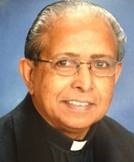
Fr. Tony
Feast of the Holy Family B
Fr. Tony started his homily ministry (Scriptural Homilies) in 2003 while he was the chaplain at Sacred Heart residence, applying his scientific methodology to the homily ministry. By word of mouth, it spread to hundreds of priests and Deacons, finally reaching Vatican Radio website. These homilies reach nearly 3000 priests and Deacons by direct email every week.
The clipart is from the archive of Father Richard Lonsdale © 2000. It may be freely reproduced in any non-profit publication.
On the last Sunday of the year, we celebrate the Feast of the Holy Family. We are here to offer all the members of our own families on the altar for God’s blessing.
SOURCE: Fr. Tony’s Homilies / Used with permission
1st Reading Explained
Today’s scriptures present the heads of two families, Abraham and Joseph, promptly obeying God with trusting faith. Abraham put his trusting faith in one God and obeyed His instruction to migrate to an unknown country. Hence in the first reading Abraham dares to ask his God the gift of a son to begin the fulfillment of His promise to make him the patriarch of a big nation.
2nd Reading Explained
In the second reading St. Paul tells us how Abraham came out victorious when his faith was tested by daringly accepting the challenge of sacrificing his only son Isaac.
Gospel Explained

Today’s gospel presents the head of the Holy Family Joseph faithfully obeying God’s law given through Moses concerning the purification of the mother and the redeeming of the child by presenting Mary and child Jesus in the Temple. On the Feast of the only perfect Family that ever lived on this earth, all of us, as family members, need to examine ourselves and see how well we are fulfilling the grave responsibilities which God has placed on us.
Fr. Tony’s
Life
Messages
Feast of the Holy Family B
By celebrating the Sunday following Christmas as the Feast of the Holy Family, the Church encourages us to look to the Family of Jesus, Mary and Joseph for inspiration, example and encouragement. They were a model family in which both parents worked hard, helped each other, understood and accepted each other, and took good care of their Child so that He might grow up not only in human knowledge but also as a Child of God. Jesus brought holiness to the family of Joseph and Mary as Jesus brings holiness to us, by embracing us in His family. The Catechism of the Catholic Church (2223) gives the following advice to the parents: “Parents have the first responsibility for the education of their children. They bear witness to this responsibility first by creating a home where tenderness, forgiveness, respect, fidelity, and disinterested service are the rule.” The CCC adds: “Parents have a grave responsibility to give good example to their children.” (2223).
SOURCE: Fr. Tony’s Homilies / Used with permission
The feast of the Holy Family reminds us that as the basic unit of the universal Church, each family is called to holiness. In fact, Jesus Christ has instituted two sacraments in His Church to make society holy – the sacrament of priesthood and the sacrament of marriage. Through the sacrament of priesthood, Jesus sanctifies the priest as well as his parish. Similarly, by the sacrament of marriage, Jesus sanctifies not only the spouses but also the entire family. The husband and wife attain holiness when they discharge their duties faithfully, trusting in God, and drawing on the presence and power of the Holy Spirit through personal and family prayer, meditative reading of the Bible, and devout participation in Holy Mass. Families become holy when Christ Jesus is present in them. Jesus becomes truly present in the parish church through the sacrifice of the Holy Mass. Similarly, Jesus becomes truly present in a family when all the members live in the Christian spirit of sacrifice. This happens when there is mutual understanding, mutual support and mutual respect. There must be proper care and respect given by children to their parents and grandparents, even after they have grown up and left home.
SOURCE: Fr. Tony’s Homilies / Used with permission
A senior Judge of the Supreme Court once congratulated the bride and groom in a marriage with a pertinent piece of advice: “See that you never convert your family into a court room; instead let it be a confessional. If the husband and wife start arguing like attorneys, in an attempt to justify their behavior, their family becomes a court of law and nobody wins. On the other hand, if the husband and the wife — as in a confessional — are ready to admit their faults and try to correct them, the family becomes a heavenly one.” Thus we can avoid the dangers we watch in dysfunctional families as presented in TV in the shows like Married with Children, The Simpson’s, Everyone Loves Raymond and Malcolm in the Middle.
SOURCE: Fr. Tony’s Homilies / Used with permission
HOME | QUESTIONS | TOPICS | CONNECTIONS