
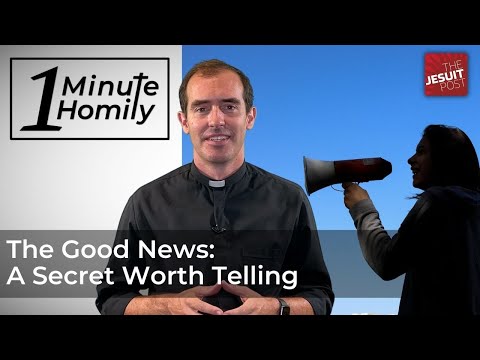
SOURCE: The Jesuit Post

SOURCE: Archdiocese of Brisbane Homilies


SOURCE: Fr. Kevin’s Homilies
Listening, particularly to the word of God and the voices of marginalized people, is a powerful and transformative act that can inspire wisdom, holiness, and service, and is desperately needed in today’s world and church.

Bishop Robert Barron
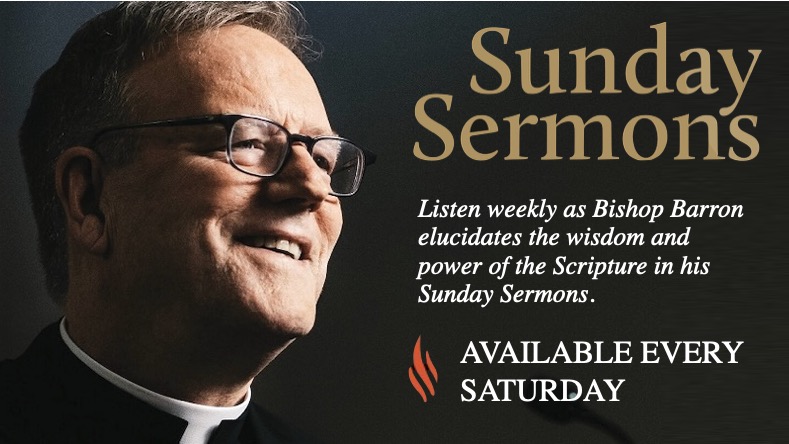

2024 HOMILY – Friends, our Gospel for today is the evocative scene of Jesus healing a man who cannot hear and cannot speak. This man is beautifully symbolic of many in our culture today: we don’t listen to God, and therefore we can’t speak clearly about God. To us, as to him, Jesus says, “Ephphatha!”—be opened to the Word of God!
SOURCE: Word on Fire
Deacon Peter McCulloch
Ephphatha Moments
Is.35:4-7a; Jas.2:1-5; Mk.7:31-37
2024 EXCERPT: In our noisy and crowded world, it can be hard to find the peace we need to engage with our deeper, spiritual selves.
This is why we often yearn to withdraw to somewhere quiet for rest, reflection and healing. It’s a natural desire, and it’s reflected in Mark’s Gospel today.
Jesus is in Gentile territory, and a man who is deaf and cannot speak is brought to Him for healing. Jesus could have cured the man then and there, but instead He takes him to a quiet place where He gives him His undivided attention.
On Listening with the Heart
Is.35:4-7a; Jas.2:1-5; Mk.7:31-37
2021 EXCERPT: Many years ago, I worked with a young woman who just wouldn’t stop talking. She was bright, and I wanted her to learn new things, but I got nowhere. She wouldn’t stop talking long enough to listen.
What they say is true: God gave us two ears and one mouth, to listen twice as much as we talk.
Fr. Andrew Ricci

Facing our fears with faith in the Lord
2021 PODCAST: In every age there are situations and circumstances that foster fear in our hearts. Our answer? We turn to the Lord in faith for the healing grace we need to face the obstacles that frighten us. In other words, we place our hope in Christ for the strength we need each and every day.
Fr. Austin Fleming


Opening Our Hearts and Souls: The Deeper Message of Jesus’ Healing
2015 EXCERPT: There is, of course, nothing wrong in praying for miracles. But the greater, deeper, longer-lasting healing of our souls is truly Jesus’ purpose and is what’s most deserving of our prayer. When Jesus takes the deaf mute aside from the crowd he touches the man’s ears and tongue and says, “Ephphatha!” “Be opened!”
I doubt there’s even one person here this morning who doesn’t have something closed up within that needs to be opened. Perhaps that could be our prayer today: to pray for the Lord to touch each of us and to open what’s closed up, inside us.
Dominican Blackfriars


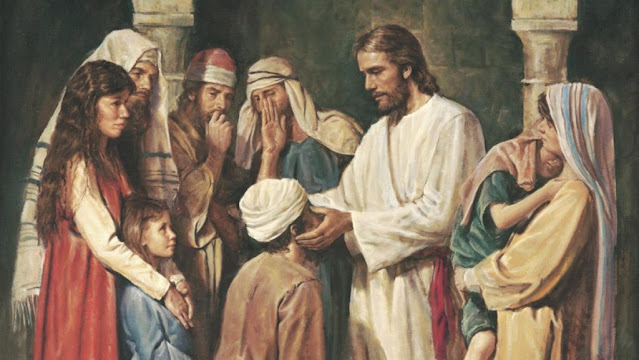
2021 EXCERPT: The account of the healing of the deaf and dumb man in the Gospel is very graphic and dramatic. Often Christ heals through a simple word of command. In the healing of the deaf and dumb man, however, Christ puts his fingers into his ears and puts his spittle onto his tongue, before commanding him to be healed.
By its sheer physicality this healing makes very real for us the fact of the bodily Incarnation of the Son of God. Christ is God made present for the people of his time as a human being, a man very much of flesh and blood, and he interacted with other human beings of flesh and blood in very physical ways. The graphic details of the healing of the deaf and dumb man emphasize and make very evident that the incarnate Son of God is a real physical human being. We even have recorded the very words Christ spoke, the Aramaic word, ‘Ephphatha’ ‘Be opened,’ preserved across all the centuries for us.
Fr. Charles E. Irvin
The Power of Ephphatha: Living a Life Open to God’s Word

EXCERPT: Ephphatha – be opened. Are we open or are we closed? Ephphatha — be open to what life offers you. If you are living all closed up and apart from the goodness that surrounds you, you need to be healed. Are you open to others around you living in peace, friendship, and mutual sharing, or are you closed off from them? We need to be open to hearing what people have to say to us and stop feeling defensive or protective. Many of us remember that when we were teens we listened to the words of our parents and teachers without hearing what they are saying.
Ephphatha – be opened. In terms of speech, what do we have to say to others? Do we talk with others but speak only of matters that are of little importance? Sometimes we simply chatter and do not share with others what’s in our hearts, share our inner thoughts and our feelings. Is it fear that closes our hearts and shuts our mouths? Perhaps we are too concerned about what others might think of us. Perhaps we want to keep to ourselves. Perhaps it may be other things. But the basic thing we need to see is that we are mute, that our tongues are silent and our mouths are shut when it comes to things that really matter. We need healing.
Fr. Leon Ngandu, SVD
Fr. Leon Ngandu, SVD
Jesus Opens our Spiritual Ears and Tongues to Hear and Proclaim the Word of God
2024 EXCERPT: September is the month of the Word of God. The Church encourages us to study, meditate, share, and pray with the Bible often and often. The Scripture readings of this Mass teach us that our call as Jesus’ disciples is to hear and “speak” or proclaim the Word of God wherever we live. In the Gospel, Jesus heals a deaf man with a speech impediment, fulfilling the prophecy that Isaiah tells us in our first reading. In the second reading, Saint James proclaims the Word of God to his Church members, inviting them to avoid discrimination among them. We, too, need Jesus to open our spiritual ears and tongues so that we can hear and “speak” or proclaim God’s Word wherever we live.
Fr. Joe Jagodensky, SDS
2021 EXCERPT: Jesus says, “A guy who can’t hear walks into a bar. On top of that his speech isn’t Christian and barely human. What’s the guy to do? The bartender doesn’t know sign language and the deaf guy really wants a drink. Point to the tap beer or the liquor bottle? Play charades for a half hour? He’s thirsty. The guy who can’t hear and whose speech is garbled.
“One thing leads to another,” so the saying goes. Jesus says, “One thing leads to the other thing.” You can only get to the other thing until you address the first thing. AA isn’t only about not drinking any more, it’s about honestly exploring your life with the power of your “Higher Power,” however you define that. Stop taking recreational drugs doesn’t make your life now healthy and whole. (By the way, what a dumb phrase. There’s nothing “recreational” about drug abuse.)
Fr. George Smiga

There Is No Need to Judge

2009 EXCERPT: You may remember how last April there was a dramatic and unusual episode on the English TV show “Briton’s Got Talent.” The show is the European version of “American Idol,” where ordinary people come before a live audience and panel of judges and demonstrate their abilities. On the particular episode I have in mind, a frumpy, overweight English woman was a contestant. Her name was Susan Boyle. From the time she stepped onto the stage, you could hear whispering and giggles from the audience. For a show that was accustomed to the young and the glamorous, this old maid with a frumpy hairdo was clearly out of place. Everyone expected that her performance would be a disaster. When she told the judges that her ideal was to become a musical star like her idol, Elaine Paige, the audience burst into derisive laughter.
But then, Susan Boyle began to sing. And it was not long into her rendition of “I Dreamed a Dream” that the laughter stopped. Her voice was amazing: clear, melodic, and deeply moving. By the time she finished her performance, the entire audience and the judges as well were on their feet, cheering and applauding. You see, they had determined that they knew what to expect. But they were wrong. They judged this woman on her appearance, but her voice was a miracle.
Today’s second reading from the letter of James warns us about judging others on their appearance. James tells his readers that, when we judge people according to the way that they dress or the money that they have, they are acting in a way that is contrary to the gospel. James’ remark makes perfect sense. We all understand that when we judge by appearance, we can often be wrong. Say for example, you were to meet a young person dressed in black, with spiked hair, wearing a dog collar and many tattoos.
Fr. Anthony Ekpunobi, C.M.

2021 EXCERPT: This Sunday the church presents us with the sacramental presence of God through Jesus’ healing of a deaf and dumb man. The manner of this healing process revealed the sacramental presence of God established through the salvific ministry of Jesus Christ. Our Loving Father in his divine wisdom preferred to reveal his presence through Jesus in the sacraments of the church. The sacraments are efficacious signs of grace, instituted by Christ and entrusted to the Church, by which divine life is dispensed to us (CCC 1113). What this means is that ‘the whole liturgical life of the Church revolves around the Eucharistic sacrifice and the sacraments’ (Ibid). God is visible in the sacraments.
Msgr. Joseph Pellegrino

Hear and Proclaim

2024 EXCERPT: Today’s Gospel presents Jesus healing a man who was deaf and who had a speech impediment. Jesus took him of by himself away from the crowd, put his finger into the man’s ears, touched his tongue and looking up to heaven in prayer said, “Ephphathah.” Be opened. Ephphatha is an Aramaic word, the language of the every day Hebrew person. It was the language that Jesus spoke. He certainly also had a working knowledge of Hebrew, he read from the Hebrew scriptures. As a carpenter’s son, and himself sometimes called a carpenter, he may have had a knowledge of the language of trade, Greek. Perhaps, he spoke Greek to Pilate. He probably didn’t speak Latin, although we don’t know that.
The Aramaic word, Ephphatha, became part of the Rite of Baptism from the days of the primitive Church to our own times. When you brought your babies to be baptized, one of the rites after the baptism is the priest touching the baby’s ears and mouth and praying, “The Lord Jesus made the deaf hear and the dumb speak. May he soon touch your ears to receive his word, and your mouth to proclaim his faith to the praise and glory of God the Father.”
Msgr. Charles Pope
The Lord Gives a Well-Trained Tongue
2021 EXCERPT: The Gospels do not simply tell us stories of people who lived thousands of years ago; they tell us our story, and this Sunday’s Gospel is no different. We encounter a deaf man with a speech impediment living in a pagan land; this man represents each of us. If you are prepared to accept it, you are also Jesus, for His story and His work are largely yours as well.
Let’s look at today’s Gospel, remembering that it is our story.
I. The PLACE of the Gospel
II. The PROBLEM that emerges
III. The PROCESS
IV. The PROCLAMATION
Bishop John Louis


2021 EXCERPT: If a double amputee athlete can run faster than millions of ‘physically’ able people, are the latter rather not the physically challenged? Again, most of us can see the black and white keys of the keyboard, but cannot play the organ; whereas, the blind Steve Wonder, for instance, who cannot see even the colour differentiation of the black and white keys, is wonderful on the keyboard. Who, then, is physically challenged: Steve Wonder or those who cannot play the keyboard?…
The music teacher of the blind Steve Wonder saw in him, not a physical challenge, but a talent. Similarly, in the blind who seek His healing by faith, Jesus sees not darkness or gloom, but the potential or ability to appreciate God’s glory. So, He heals them so that their potential of praising God flourishes. For example, in John 9, when people were debating why the man was born blind, Jesus said it was meant to reveal the glory of God. Thus, when Jesus eventually opened the eyes of the man, the latter praised God and His goodness.
Fr. Michael Chua

2018 EXCERPT: Have you ever found yourself in a shouting match where your opponent and you have tried, without much success, to silence the other? So many words are exchanged but few registers. Whatever reasonable arguments that may be put forward are drowned out by the noise of each other’s voice competing in ascending crescendo. It’s hard to make sense of anything, when our hearts and minds are closed, even as our ears are assaulted by the noise coming from the other. The art of active listening, of really hearing one another, is already difficult to learn, hard to do, under ordinary circumstances. It’s almost impossible in the heat of the argument. Wouldn’t it be amazing if right when we were in the middle of an argument (right before you slam the phone receiver down or stomp out of the room), we could scream: “EPHPHATHA!”?
Fr. Vincent Hawkswell
2024 EXCERPT: This Sunday’s first reading prophesies the eyes of the blind shall open, the ears of the deaf shall open, the limbs of the lame leap, and the tongues of the speechless sing. In the Gospel reading, Jesus fulfills this prophecy.
With respect to spiritual life, we all need healing. As we say in the Communion Antiphon, “My soul is thirsting for the living God.” If we do not believe this, and live as though we believe it, then we are as sick as anyone Jesus ever cured.
2021 EXCERPT: The theme of this Sunday’s Readings is “Be opened.”
In the First Reading, it is “the eyes of the blind,” “the ears of the deaf,” etc. In the Second, it is the eyes through which we see our neighbours. In the Gospel Reading, it is the deaf and those who cannot speak.
Fr. Tommy Lane
Be Opened

2021 EXCERPT: We open the door to allow God’s word in when we listen to God’s word during every Mass and when we read the Bible at home. We also open the door and allow God into our lives when we pray. If we do not pray to God every day, we will become deaf to God. When people ask me about how to pray, I say to pray the way that you are comfortable. Prayer is a conversation with God, a heart to heart conversation with God, opening your heart to God. Your ears were blessed by Jesus in baptism and prayer is opening your ears once again to hear God speak to you and you speak to God. There are various ways we can do this. I find it helpful to begin prayer by reading a passage from the Bible and reflecting on it leading me to prayer or reading part of a spiritual book and allowing it to lead me to prayer. Another possibility is the Rosary. While we pray the prayers, we are reflecting on the most important events, or mysteries as we call them, in the lives of Jesus and Mary. Every Hail Mary is a gift of a rose to Our Lady, our spiritual Mother. Some easy listening spiritual music in the background can help lead someone into prayer or concentrating on a picture of the Sacred Heart or a statue of Our Lady. There are so many ways to help us to pray. Prayer is a conversation with God, a heart to heart to God. When people ask me about how to pray, I say to pray the way that you are comfortable. But one thing is certain, if we do not pray to God every day, and open our ears to God every day, we will become deaf to God.
Fr. John Kavanaugh, S.J.
“Faith, Yes, But … ”

EXCERPT: It is Christ who saves us, yes, not our works. And it is by faith in him that we accept salvation. But this does not mean that all our other actions count for nothing. The authenticity of our faith is tested out by the fruit it bears, particularly in our relations to each other—more particularly still, in our relationship to the poor. The Letter of James is not unique in stressing action. Most of the words attributed to Jesus do the same.
Concern for the poor and the marginal is not a pet theory fabricated by liberation theologians or some left-wing ideology. It is as old as Isaiah: “Say to those whose hearts are frightened, be strong, fear not. … The eyes of the blind will be opened the ears of the deaf be cleared.” Our God is concerned with the fate of those visibly wounded and at the margins of life.
Bishop Frank Schuster
Ephphatha Be Opened”
2021 EXCERPT: Are there great figures in the bible who
hear the Word of God? Yes! But here is the rub. Is Israel often deaf to the Word of God? Yes! Israel in the bible is often listening to other gods, the false gods of their neighbors or the voice of popular culture. Sometimes Israel simply closes their ears because the Word of God is too challenging. God speaks but they don’t listen. My friends, what happens if we can’t hear, what follows? Well, speech becomes compromised. Israel, by closing their ears to the Word of God, is no longer able to speak effectively or convincingly. Israel becomes a deaf-mute. Israel needs God’s healing.
Now watch carefully the details of this miracle of the healing of the deaf-mute. There are three moments we must not overlook. First, the Gospel says Jesus began by taking the deaf-mute away from the crowd. This is important. What makes Israel deaf? Israel is lost in the loudness of worldly concerns. Israel must get away from the crowd so that they can hear the Word of God again, and so do we at times, right?
What happens next? Jesus touches the man’s ears. Jesus spits and touches his tongue and says “ephphatha…Be opened!” Now, to our ears, that image sounds a little gross. However, for St. Augustine, the spittle of Jesus is evocative of his inner nature, his divinity. Israel needs to be touched by God’s inner nature so to hear his voice and proclaim it once more. Bishop Barron says that this awesome moment of Jesus touching the deaf mute is evocative of the beautiful painting by Michelangelo in the Sistine Chapel. God reaches out from heaven to touch Adam. There is an electricity of touch. Jesus touches the deaf mute to reestablish a link to the divine.
Jesus’ Gentle Touch: Exploring the Significance of Simple Gestures

2021 EXCERPT: As Christians, we are often a people of contradiction. We call ourselves a community of faith, of hope, and of love but sometimes we can be faithless, hopeless and loveless. Week after week we say, I believe in One God, in Christ who died for us, in one Church, the communion of saints, the forgiveness of sins, and life everlasting. And we do believe. But, being human, sometimes our faith can be long on propositions and short on self-giving and commitment. Sometimes we tend to forget that without a “yes” to Jesus, a “yes” to propositions is sterile. It can become an empty ritual.
