🎤 – PODCASTS | 🗒️ – TRANSCRIPTS | 🖥️ – VIDEOS |
🗒️ – Homiletic Pastoral Review
6th Sunday of Year B

Jesus as Good Listener

In his 2021 homily, Fr. Linton’s discusses the difference between hearing and listening. He explains that hearing is a physical sense, while listening requires effort, desire, and focus. Good listeners allow others to talk, ask relevant questions, and show interest through non-verbal communication. Fr. Linton emphasizes the importance of listening in Christianity, highlighting Jesus as a good listener and the leper as a bad listener. He states that Jesus saves people to love, honor, and obey God, and encourages listeners to imitate Christ. The homily emphasizes the significance of listening in personal relationships and spiritual growth._
Fr. Edward Linton, O.S.B., a monk of Saint Meinrad Archabbey, was ordained in 1991. He currently serves as Director of the Institute for Continuing Theological Education (ICTE) at the Pontifical North American College in Rome, Italy.
Who knows your name, and why do they know it?

In his 2018 homily, addresses the human desire to be truly known and loved by someone we trust. He illustrates this longing by referring to the theme song of the TV sitcom “Cheers,” which reflects the desire to go where everybody knows your name.
Fr. Karje relates this to the encounter between Jesus and the leper in the Gospel, where the leper not only asks to be made clean but also seeks inclusion in the community from which he was cast out. This act of boldness and the leper’s desire for communion inspire others to come together and grow as a community. Fr. Karje encourages direct and honest prayer, inviting individuals to boldly let themselves be known by Jesus, who can break through the isolating walls around their hearts. The homily concludes by affirming that being known by Jesus will alleviate the feeling of being alone.
Fr. John Kartje, a priest of the Archdiocese of Chicago, has served in both parishes and campus ministry. He is the rector of Mundelein Seminary.
Our Need for Christ

We so often pity those who live with great suffering or are cast out of society. With a false sense of independence, we can forget that all of us share that brokenness in our souls and are equally in need Christ’s healing.
Fr. Joseph Scolaro is a priest of the Diocese of Rockville Centre, New York.
🖥️ – Basilica of the National Shrine
6th Sunday of Year B

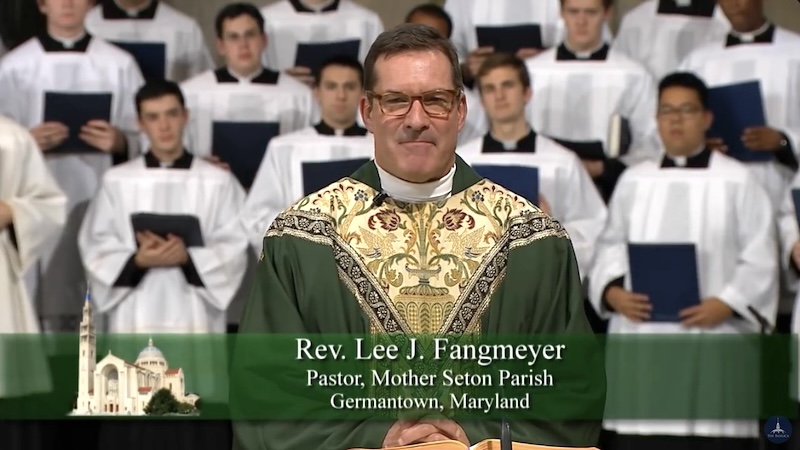
Original Sin and its Impact on Our Lives
In a homily given by Fr. Fangmeyer, the concept of original sin and its effect on human nature is explored. Fr. Fangmeyer recounts a conversation with old high school friends who viewed original sin as something imposed by the church to enforce obedience. However, he argues that there is an inherent awareness within us that something is wrong or broken. This awareness separates us from others, just as the leper in the first reading was separated from society. Fr. Fangmeyer highlights the need for a higher power to fix and complete us, and Jesus is presented as the answer to this need. Through Jesus’ healing touch, he restores us and brings us back into a relationship with the Father. Fr. Fangmeyer emphasizes that we are called to be witnesses of this healing and restoration to others, showing that as sinners who have been loved and healed, we can find hope and freedom in Jesus.
🗒️ – Dominican Blackfriars
6th Sunday of Year B

Sixth Sunday of the Year B. | Fr Bruno Clifton, O.P. finds profound meaning in leprosy.
🎤 – Bishop Robert Barron
6th Sunday of Year B

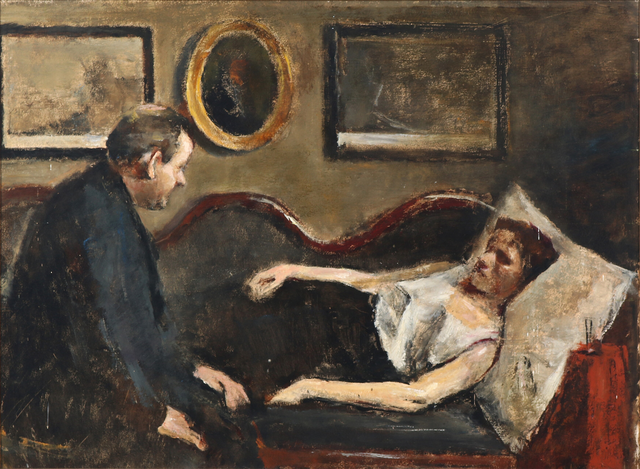
Go Tell the Priests
2021 PODCAST: Friends, today’s Gospel centers around Jesus’ healing of a leper. Although there aren’t many lepers around today, there are plenty of people that we treat as outsiders or pariahs. We should welcome them as Jesus does.
RELATED SERMONS:
The Leper and Evangelization (2018)
Evangelizing Out of the Encounter (2015)
All are One in God (2012)
Becoming Fit for Worship (2009)
Giving God the Glory (2006)
Seeking the Lost (2003)

6th Sunday of Year B

The Leper’s Cure
In his 2018 homily, Fr. Hahn, reflects on the significance of three elements coming together on this particular day in the liturgical life (the same is true for 2024). It is February 11th, which is traditionally celebrated as the Feast of Our Lady of Lourdes, known for the miraculous healings experienced there. Additionally, it is the World Day of Prayer for the Sick, where prayers are offered for those who are sick and ailing. Lastly, it marks the conclusion of the Gospel of Mark’s first chapter, with the story of Jesus healing the leper.
Fr. Hahn highlights the broader symbolism of sickness in Scripture, representing physical, spiritual, personal, and interpersonal illnesses. Jesus’ healing of the leper signifies his desire to heal all aspects of our lives. Fr. Hahn discusses the concept of the “Messianic secret” in Mark’s Gospel, where Jesus incrementally reveals his identity to the people. He emphasizes that God is always with us, even if it may sometimes feel distant, and he speaks to us through various means like the Eucharist, the Word, and our conscience.
The homily concludes by encouraging believers to share their own encounters with Christ, to speak positively about the Church, and to undertake the upcoming season of Lent as a time of emptying ourselves of distractions, so we may be filled with God’s grace and live for His glory.
🗒️ – Fr. Charles E. Irvin
6th Sunday of Year B

In his homily, Father Irvin focuses on the question of Jesus’ identity and the theme of outcasts in the Gospel of Mark. He highlights that Jesus came for the outcasts, the sinners, and those who are often disdained by society. Father Irvin points out the irony that Jesus, who came for outcasts, himself became an outcast, forced to stay outside of towns. He also emphasizes how our society tries to keep Jesus out of public spaces and dilute the meaning of religious holidays.
Father Irvin encourages us to reflect on who we consider to be “in” or “out” in our own lives, and to recognize that we too are outcasts in need of God’s healing from the leprosy of sin. He suggests bringing Jesus into our conversations and observing the reactions, reminding us of the importance of our personal relationship with Jesus.
Father Irvin concludes by urging us to consider the role of confession and the sacrament of reconciliation in our spiritual lives, as a means of healing and re-entering God’s community. He reminds us that Jesus, who was crucified outside the walls of Jerusalem, ultimately brings us into the Garden of Resurrection, free from sin and outcast no longer.
🗒️ – Fr. Jim Chern
6th Sunday of Year B
Fr. Chern emphasizes the significance of being noticed and loved, as it can bring healing to the souls of those who feel alone or unloved. He encourages the congregation to recognize the “lepers” among them and become vessels for Christ’s compassion. Fr. Chern concludes by urging the community to invite others to Mass during the season of Lent, as an act of compassion and an opportunity for healing and reconnecting with God._
🗒️ – Fr. Austin Fleming
6th Sunday of Year B

Breaking Down the Walls of Exclusion: Recognizing and Overcoming Discrimination
In this homily, Fr. Austin reflects on the concept of exclusion and discrimination in society. He begins by discussing how in ancient times, the sick were labeled as “unclean” and forced to live outside of the community. Fr. Austin draws attention to the fact that even in modern times, similar discrimination can be seen in schools, neighborhoods, workplaces, families, and even within the Church. This discrimination often manifests itself through gossiping and gossiping about the perceived flaws or uncleanliness of others. Fr. Austin emphasizes Pope Francis’ condemnation of gossip and highlights how it perpetuates divisions and prejudices within society.
Fr. Austin notes that Jesus’ act of touching the unclean man would have been seen as unclean by society. However, it is through this touch that the leper is healed and welcomed back into the community. He concludes by urging his listeners to reflect on their own actions and recognize how they may be excluding others. He emphasizes the need to change hearts and minds, to forgive those who have hurt us, and to reach out and engage with those we have previously cut off.
🗒️ – Fr. Joe Jagodensky, SDS
6th Sunday of Year B
No Homily Available
6th Sunday of Year B


Restoring the Untouchable
In this Sunday’s gospel, Fr. Langeh describes how Jesus cures a man afflicted with leprosy, a repulsive skin disease. He explains that the reading reminds Christians to bring healing to the world in the manner of Christ’s compassion, especially for the marginalized. The role of priests as healers is highlighted, and they are advised to withdraw to a “lonely place” like Jesus to pray for effective ministry. The importance of trusting in God’s love during times of trial is emphasized, referencing Jesus’ endurance of suffering and death. Christians are called to keep their eyes fixed on Jesus, the leader and perfecter of faith.
🗒️ – Fr. George Smiga
6th Sunday of Year B

Touching the Leper
2015 EXCERPT: There are no zombies in the bible. But lepers would come rather close to creating the fear that we associate with the walking dead. Leprosy was a terrible disease that gradually ate away at the body. The people of Jesus’ time did not understand the disease, but they knew it could spread. So they quarantined lepers…
So, if somebody with a dreaded and contagious skin disease would come up to you and want to shake your hand, what would you do? All of us would pull back and say, “No, stay away. There’s no sense that both of us become infected.” We would keep the leper away. Jesus does not. In today‘s gospel when he sees the leper he is moved to compassion. He stretches out his hand and touches him. Why would Jesus do this? He is not inviting us to set aside medical hygiene and go around touching infected people. Jesus touches the leper to show us what God does. Jesus reveals in this action that our God is willing to push past any barrier to touch and to save the infected, the ostracized, and the doomed.
🗒️ – Fr. Anthony Ekpunobi, C.M.
6th Sunday of Year B

🗒️ – Msgr. Joseph Pellegrino
6th Sunday of Year B

Hearts Enlarged by Christ

In his homily Msgr. Pellegrino reflects on Jesus’ encounter with a leper. Leprosy was a feared and ostracized condition in ancient times, with lepers being considered unclean and forced to live outside society. However, Jesus, moved by compassion, disregarded societal norms and touched and healed the leper. Msgr. Pellegrino emphasizes that as Christians, we have the power to extend the healing touch of Christ to others, not just physically but also emotionally and spiritually. He challenges us to be ministers of healing, welcoming back those who are spiritually sick or have left the church. Moreover, Msgr. Pellegrino emphasizes the importance of not allowing hatred to consume us and reminds us of the Christian qualities of compassion and mercy._
🗒️ – Msgr. Charles Pope
6th Sunday of Year B
In the Gospel this Sunday, we see the healing of a leper (this means you and me). In Scripture, leprosy describes more than just a physical affliction; it is a metaphor for sin as well. Obviously leprosy itself is not sin, but its effects are similar. Like leprosy, sin disfigures us; it deteriorates us; it distances us (lepers had to live apart from the community) and it brings death if left unchecked… Today’s Gospel suggests four steps to find healing from the spiritual leprosy of sin.
🗒️ – Bishop John Louis
6th Sunday of Year B

🗒️ – Fr. Michael Chua
6th Sunday of Year B

🗒️ – Fr. Tom Lynch
6th Sunday of Year B

Clergy E-Notes
“…if the family is the sanctuary of life, the place where life is conceived and cared for, it is a horrendous contradiction when it becomes a place where life is rejected and destroyed. So great is the value of a human life, and so inalienable the right to life of an innocent child growing in the mother’s womb, that no alleged right to one’s own body can justify a decision to terminate that life, which is an end in itself and which can never be considered the “property” of another human being.”
— Pope Francis
🗒️ – Fr. Phil Bloom
6th Sunday of Year B

Show Yourself to the Priest
In his homily, Fr. Bloom discusses the role of priests in the early Church and how they continue to play a critical role in the sacrament of Reconciliation. He explains that by the beginning of the second century, the Church had a well-defined hierarchy of bishops, priests, and deacons. These priests fulfilled the functions once performed by Jewish priests, such as offering sacrifices. With the destruction of Jerusalem and the end of temple sacrifices, Christian priests began to offer the one sacrifice of Christ.
Fr. Bloom points to the Gospel reading, where Jesus commands a healed leper to show himself to the priest. While this initially speaks to the requirement for re-integration into the community of Israel, the Church Fathers saw a deeper application. Fr. Bloom explains that Jesus alone can heal the leprosy of sin, but full integration requires the ministry of priests.
The priest’s role in the sacrament of Reconciliation is highlighted by Fr. Bloom’s personal story of meeting a man who had suffered severe burns. Fr. Bloom prays with the man, blesses him with holy water, and anoints him, symbolizing the healing power of Christ working through the priest.
Fr. Bloom concludes by reminding the congregation that like the leper, we all have scars that only Jesus can see. We look to Jesus for healing and are grateful for the ministry of his priests who act as instruments of his healing and forgiveness.
🗒️ – Fr. Vincent Hawkswell
6th Sunday of Year B
🗒️ – Fr. Tommy Lane
6th Sunday of Year B

Jesus became like a Leper for Us All
In this homily, Fr. Lane reflects on the story of the man with a skin disease who approached Jesus for healing in Mark 1:40-45. Fr. Lane highlights the importance of understanding the cultural context of the man’s condition, as those with skin diseases were considered ritually unclean and had to live in quarantine outside of their community. Jesus, moved by compassion, not only heals the man but also touches him, an act that would render Jesus himself ritually unclean.
Fr. Lane emphasizes that Jesus took on the man’s condition, becoming like a leper himself, in order to heal him. He reflects on Jesus’ sacrifice on the cross, where Jesus took on the sins of humanity to bring about redemption. Fr. Lane encourages the congregation to pray and place themselves in the presence of Jesus, just as the leper did, and to share their needs and concerns with him. He reminds them to trust in Jesus’ compassion and to allow him to bless them.
Overall, Fr. Lane’s homily emphasizes the powerful act of compassion Jesus demonstrates by healing the leper and how it relates to Jesus’ sacrifice on the cross.
🗒️ – Fr. John Kavanaugh, S.J.
6th Sunday of Year B

Living by Appearances
EXCERPT: Pimples. Boils. Ugliness. Wrinkles. Fat. Sores. Open wounds. Rashes. Blotches. Blemishes. Disfigurement.
The thought of such afflictions can be particularly unnerving—especially in a culture that lives by appearances and first impressions. Although quite possibly every culture prizes the surface of things, ours seems to have made a science of the old advertising slogan: “Looking good is everything.”
Looking bad is disastrous. It is the fate of the outsider, the face of the other, marginalized and excluded. Surface defects seem inescapable, since our appearances are so evident and immediate.
🗒️ – Bishop Frank Schuster
6th Sunday of Year B
Spiritual Leprosy
Bishop Schuster discusses the concept of “spiritual leprosy” and how it relates to the biblical understanding of physical leprosy. He explains how in biblical times, those with leprosy were seen as sinners and were segregated from the community. However, God’s response to suffering is his solidarity with humanity through Jesus Christ.
The Gospel reading tells the story of a leper who comes to Jesus and asks to be made clean. Moved with compassion, Jesus heals him. Bishop Schuster emphasizes the importance of recognizing our own spiritual leprosy and seeking healing through the sacraments and the presence of God in our lives. He also urges listeners to reflect on the “lepers” in their own lives and how they can show love and compassion to those who are marginalized or excluded. The beginning of Lent is seen as an opportunity for self-reflection and growth in our relationship with God.
🗒️ – Fr. Michael Cummins
6th Sunday of Year B
Being imitators of Christ
In his homily, Fr. Cummins reflects on the readings of the day. He draws from the insights of Fr. Robert Barron and Bishop Vincenzo Paglia to provide a deeper understanding of the significance of Jesus as the Messiah.
Fr. Barron emphasizes that Jesus fulfills the prophecy of the Messiah by gathering the scattered tribes of Israel, not through political or military might, but through his power to heal. Fr. Cummins highlights how illness in Jesus’ time, particularly leprosy, resulted in exclusion and isolation from the community. However, Jesus’ healing not only restores the individual’s health but also their relationship with the community.
Bishop Paglia notes the striking fact that the leper approached Jesus, defying the cultural norms of exclusion. This occurred because Jesus created an environment of compassion and mercy that drew in the sick, sinners, and the poor. Fr. Cummins calls on the Christian community to imitate Christ and be agents of compassion and mercy to those who are isolated and cut off in our world today. By doing so, we too can be healed of our own fears and prejudices.
6th Sunday of Year B

6th Sunday of Year B