Key Themes
Palm Sunday (A)

Palm Sunday (A)
Study, Pray, Serve
PODCAST: Courtesy of Fr. Andrew Ricci (Superior, Wisconsin) *
PASSION
The passion of our Lord Jesus Christ

Matthew 26:14-27:66 or Matthew 27:11-54
- The Passion Narrative is among the earliest traditions to be handed down in written form.
- In Matthew’s passion account, all the events proceed according to God’s will as revealed in the Hebrew Scriptures.
- Jesus, the servant and Son of God, has poured himself out to overcome humanity’s separation from God.
FIRST READING
This is the prophet Jesus from Nazareth
Isaiah 50:4-7
- The reading from Isaiah is part of the third Servant Song.
- The song communicates the servant’s belief that, no matter how cruel or indifferent people are, God’s justice will prevail.
- Suffering is never an end in itself.
SECOND READING
Your attitude must be Christ’s

Philippians 2:6-11
- Paul’s letter to the Philippians was written while Paul was in prison in Rome.
- Despite being imprisoned, Paul expresses confidence and joy in the Lord.
- Paul stresses that our salvation is Jesus’ kenosis, the Greek word for Jesus’ “emptying” of himself from glory.
SOURCES: Titles and key points courtesy of Our Sunday Visitor; The clipart is from the archive of Father Richard Lonsdale © 2000. The clipart may be freely reproduced in any non-profit publication.
Movie Connections
Palm Sunday (A)

The Wizard of Oz (1939)
A major moment in the film is when Dorothy and her friends enter Emerald City to meet the Wizard. This scene can be compared to the biblical story of Jesus’ triumphant entry into Jerusalem. Both involve a procession towards a powerful figure – for Dorothy entering the Emerald City, it’s the Wizard; for Jesus’ as he enters into Jerusalem, it’s the temple.

Million Dollar Baby (2004)
The triumph and tragedy in Million Dollar Baby and the story of Jesus share many similarities in terms of the themes of perseverance, faith, and self-worth. Both stories show how success and failure are part of a larger narrative of life and how the choices we make determine the outcomes for ourselves and those around us. The triumph of accomplishment is bittersweet when juxtaposed with the tragedy of loss, but in both cases, there is something profound and meaningful in the journey that makes the destination worthwhile. As we navigate our own triumphs and tragedies in life, we can learn…

Passion of Christ (2004)
The passion scenes depicted in “The Greatest Story Ever Told” (1965) and “The Passion of Christ” (2004) are both powerful and emotional moments in their respective tales. These scenes are pivotal moments in the stories and represent the ultimate sacrifice made by the central protagonists. Despite the differences in their approach, both films succeed in conveying the intense emotion and depth of sacrifice that is embodied in the passion scene. Each film emphasizes different aspects of the story, but they both communicate the magnitude of what is happening in the moment.
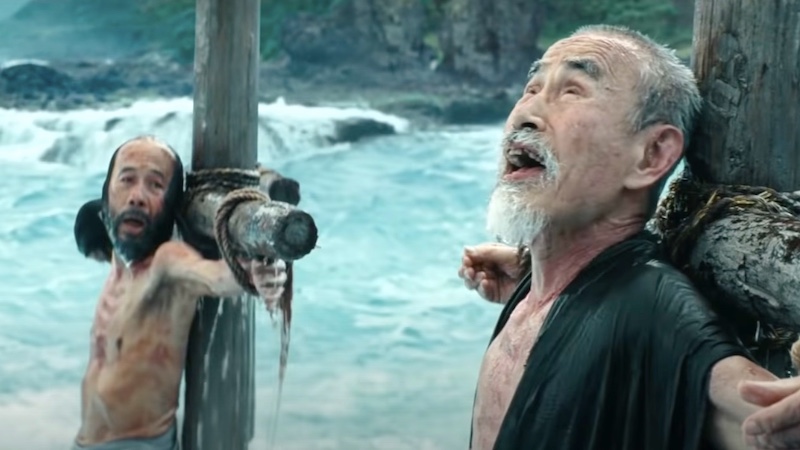
Silence (2006)
Scorsese artfully employs the crucifixion motif to explore the themes of faith, sacrifice, and martyrdom in Silence. The motif serves as a powerful symbol of the enduring legacy of Christ’s teachings and the sacrifices that people are willing to make for their belief in him. Indeed, the film serves as a testament to the enduring importance of faith, even in the face of unspeakable suffering and persecution.
DISCLAIMER: The text on this page was generated by an AI Chatbot named ChatGPT which works by using algorithms to analyze and generate text based on prompts and questions from a user. The text has been edited and checked for inconsistencies and inaccuracies. However, due to limitations in the current state of AI technology, readers are advised to use their own critical analysis and fact-checking skills for reference or decision-making purposes.
Art Connections
Palm Sunday (A)

Stations of the Cross, San Luis, Colorado

Stations of the Cross, also known as the Via Dolorosa or Way of Sorrows, is a traditional subject in Christian art that depicts a series of 14 events from the time Jesus is condemned to death until his burial in the tomb. These events are commonly visited and reflected upon during the Lenten season, particularly on Good Friday. One of the most notable depictions of this powerful religious journey can be found in San Luis Colorado by Humberto Maestas.
Maestas, a prominent Chicano artist, sculptor, and painter, created his interpretation of the Stations of the Cross in the early 1980s. He used his art as a way of exploring his own cultural heritage while also commemorating the struggles, suffering, and injustices faced by the Chicano community. It was with this ambition that he undertook the project of creating the Stations of the Cross in San Luis Colorado, Colorado.
Maestas’ masterpiece, situated in San Luis Colorado on the valley floor, comprises a series of simple, bronze sculptures that line the path up Chapel Hill. At the bottom of the hill are the first two stations: Jesus is condemned to death and Jesus takes up his cross. These sculptures are unique for their poignant realism, conveying the suffering of the condemned Man through a gentle gesture of Justice and encircled group of faithful. Each of the remaining ranges of three stations stretch across alternating stone piers on opposite sides of the via crucis.
The serenity of the outdoor campus enhances the potent combination of spiritual recognition and artistic artistry intoned by the gesture of each sculpture. As visitors climb up through the series of fourteen stations, taking in Maestas’ unique and memorable cast of characters, they gradually become more deeply connected to the story of Jesus’ last moments on earth. The viewer is allowed to approach the story from a place of emotion, empathy, and identification with the voice of the Chicano creator.
Overall, Humberto Maestas’ depiction of the Stations of the Cross in San Luis Colorado serves as a testament to the power of art to inspire, provoke and enrich, even as it highlights the spiritual connection between personal identity and shared, iconic stories. As such, this artistic masterpiece share sentiments of both cultural identity and religious identity with its audience, that together create a new experience of both culture and faith.
How to Make a Palm Leaf Cross (Easy Tutorial)

Passion Sunday or Palm Sunday is the beginning of the Holy Week when Christians all around the world commemorate the entry of Jesus into Jerusalem, riding a donkey, and receiving palm branches from crowds of people, as recorded in the Gospels. As a symbol of this historic event and in keeping with tradition, many people today still make palm leaf crosses from palm branches on Passion Sunday.
The process of making a palm leaf cross is quite simple and can be done in a matter of minutes, with varying techniques adapted over time. Most commonly, however, a palm frond is composed of two skinny branches, which can be bent and then woven together. The basic method is to twist one end of the palm frond around the other end to form the center of the cross. The two ends are then bent or folded upward, perpendicular to the center, creating the arms of the cross that point straight up.
The palm leaf cross is a tangible expression of the joy and reverence felt when receiving blessings on Palm Sunday. The cross is symbolic and meaningful, and it serves as a reminder of the powerful message of love and grace that Jesus brought to the world through His teachings and sacrifice. Furthermore, it is also a reminder that we, as Christians, must strive to embody these same values in our daily lives.
Beyond its religious significance, however, making a palm leaf cross on Passion Sunday is a reflection of a rich cultural tradition passed down from generation to generation. It provides an opportunity to engage in a creative and reflective activity, to connect with the wider community of believers, and to express our faith in a tangible way.
DISCLAIMER: The text on this page was generated by an AI Chatbot named ChatGPT which works by using algorithms to analyze and generate text based on prompts and questions from a user. The text has been edited and checked for inconsistencies and inaccuracies. However, due to limitations in the current state of AI technology, readers are advised to use their own critical analysis and fact-checking skills for reference or decision-making purposes.
Song Connections
Palm Sunday (A)

The Passion Song by Sean Carter is a powerful retelling of the story of Holy Week, the final week leading up to Jesus Christ’s death on the cross and resurrection from the dead. This song masterfully captures the intense emotions of this deeply significant period, from the joyful celebration of Jesus’ triumphant entry into Jerusalem to the sorrow and grief of his betrayal, trial, and eventual crucifixion.
The song opens with the jubilant chorus, “Hosanna, Hosanna, blessed be the Rock,” as Jesus rides into Jerusalem on a donkey, surrounded by cheering crowds. The joy in the air is palpable, and both the lyrics and the music capture the excitement and sense of hope that Jesus’ arrival inspired in his followers.
However, the tone quickly shifts as the song moves into the events of Holy Thursday and Good Friday. In hauntingly beautiful verses, the lyrics describe the Last Supper, where Jesus broke bread with his disciples and spoke of his impending death. We hear the anguish in his voice as he prays in the Garden of Gethsemane, asking God to let the cup of suffering pass from him, even as he submits to God’s will.
The chorus comes back in, but this time the refrain has changed to “Crucify him, crucify him, let him bleed for our sins.” The transition is stark, betraying the duplicity of the crowd and the depths of humanity’s collective sinfulness. But even as the verses continue to describe Jesus’ trials and the horrors of his crucifixion, there is an undercurrent of hope and redemption that runs throughout. The bridge of the song proclaims that “death has lost its victory, and the grave has been denied,” echoing the power and significance of Easter Sunday, when Christ rises from the dead.
The Passion Song is a deeply affecting meditation on the final days of Jesus’ life, weaving together music and lyrics to create a unified work of art. It captures the emotional spectrum of Holy Week, from exultation to sorrow to hope, in a way that is both creative and reverent. Listening to this song is like taking a journey through the events of that fateful week, feeling the triumphs and the tragedies along the way, and ultimately emerging with a renewed sense of the power and majesty of Christ’s sacrifice.
Johnny Cash & the Carter Family – 1962

LIVE TV PERFORMANCE – “Were You There” is a spiritual that is most commonly associated with the Passion of Christ. The lyrics describe various elements of the Passion narrative, including Jesus’ arrest, trial, crucifixion, burial, and resurrection. The song invites the listener to participate in the narrative, asking questions like “were you there when they crucified my Lord?” and “were you there when they laid him in the tomb?” In this way, the song creates a powerful sense of communal participation and empathy with the suffering and sacrifice of Jesus.
DISCLAIMER: The text on this page was generated by an AI Chatbot named ChatGPT which works by using algorithms to analyze and generate text based on prompts and questions from a user. The text has been edited and checked for inconsistencies and inaccuracies. However, due to limitations in the current state of AI technology, readers are advised to use their own critical analysis and fact-checking skills for reference or decision-making purposes.
Acrostic Poems
Palm Sunday (A)
GOSPEL READING
Triumphant
Tall palms waved as He made His way
Riding donkey, humble yet grand
In awe, the people gathered to pray
United in praise for this triumphant man
Marching forward, He fulfilled prophecy
Pharisees watched, plotting defeat
Humility and love characterized His sovereignty
Against all odds, He brought victory complete
New hope spread among the crowd
Triumphant, Jesus had arrived loud and clear.
SECOND READING
Humility
Humbled was Christ,
Understanding His Father’s plan.
Made in human likeness,
Inviting us to a deeper faith.
Love incarnate,
In sacrifice He embraced,
Taking the form of a servant,
Yielding to the cross.
Haiku
Palm Sunday (A)
GOSPEL READING
Riding on a colt,
Jesus enters Jerusalem,
People shout with joy.
“Hosanna! Hosanna!,”
The people shout with delight,
Jesus is praised high.
FIRST READING
Suffering servant,
Tongue like the learned, wakens,
God’s comforting voice.
I offer my back,
To those who strike, pull my beard,
Endure their disgrace.
Iambic Pentameter Sonnets
Palm Sunday (A)
GOSPEL
Lord’s Triumphal Entry into Jerusalem
As Jesus rode into Jerusalem town,
The hosts of people lauded as a king;
They sang and shouted praises, bending down
To lay before Him palm fronds as an offering.
The crowd cried out, “Hosanna to the One
Who comes in the name of the Lord above!”
With glory shining bright as the sun,
They deemed Him savior, son of perfect love.
The Pharisees watched warily, with spite,
As Jesus made His way upon the beast.
But they could find no reason to indict
The man who filled the people’s souls with peace.
So now, we too may shout with joy and glee,
Our praises ringing out for all to see.
Cardinal Bergoglio’s Election to Pope
Amidst the rush of wind and throngs of voice,
A humble man from Latin land did rise,
A shepherd to the faithful with a choice,
To lead and guide them with a servant’s eyes.
From far and wide, they hailed their new chief,
A man who shunned high pomp and luxury,
With open heart and arms stretched out, so brief,
He blessed the people with his piety.
The world looked on in wonder and surprise,
As this Jesuit priest took his place,
A pope for our time, his spirit alight,
Guiding us with love, mercy and grace.
May Christ our Lord bless Francis from above,
Who came with humble heart and gift of love.
SECOND READING
Humility of Jesus
In form divine, though equal with the Lord,
He did not count His status as His prize,
But chose instead to yield His just reward,
To take the form of man, and human guise.
Yet even in this lowly form, He strove
To serve and teach, to do His Father’s will,
And humbly bore the scorn of those He loved,
Enduring all the pain and grief, until
His lowliness was raised to highest place,
And every tongue would confess Him as Lord,
All heaven and earth would bow before His face,
And every knee would bend to Him adored.
So let us follow in His humble way,
And honor Him as Lord, both night and day.
Humility of Church Leaders
In wisdom and in love the Church must lead,
For Christ our Lord has set the perfect goal,
And in all things, we must His Word heed,
And follow it with passion and with soul.
For though we may be weak, and oft may fail,
Our faithful deeds will life and spirit bring,
As we shine forth His light, and boldly scale
The heights of grace that bring to Him to sing.
For He who was enthroned and reigns above,
Has called each one of us to serve His plan,
And in His holy Church to live and love,
And offer hope and solace to all man.
So let us follow Him who leads us on,
And serve His cause until the day is done.
DISCLAIMER: The text on this page was generated by an AI Chatbot named ChatGPT which works by using algorithms to analyze and generate text based on prompts and questions from a user. The text has been edited and checked for inconsistencies and inaccuracies. However, due to limitations in the current state of AI technology, readers are advised to use their own critical analysis and fact-checking skills for reference or decision-making purposes.
Featured Connections
Palm Sunday (A)
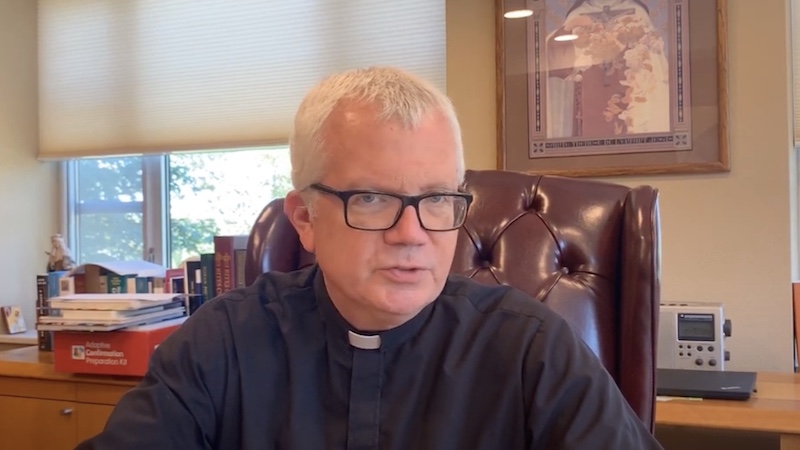
Catholic Bishops: Leading with Humility
SECOND READING
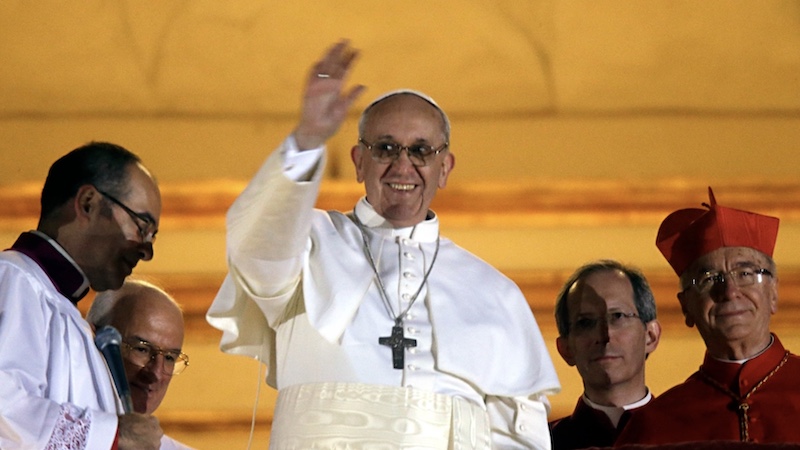

Triumph to Tragedy – The Story of Jesus and Barney
GOSPEL READING
New Content Every Week