Commentary Intro to Mass Readings for Sunday
CommentaryIntro to Mass Readings for Sunday
March 15, 2026
March 29, 2026
Palm Sunday (A)


Video produced, written, and narrated by Larry Broding. Copyright 2017.
A Personal Memory

by Larry Broding
In early March several years ago I drove to work a little late on a Monday morning. I was driving westbound on a local freeway when I saw two police cars traveling eastbound. Both suddenly rotated their lights up, blared their sirens and sped off to the city I just left.
I said a prayer for the people in the situation that would involve those officers. I arrived at work about 10 a.m. turned on the computer and processed the paperwork from the day before. About 1030 I finally turned my attention to the messages on the phone machine.
The second message stopped my heart. “Dad, this is Paul. I wanted to call and tell you I’m alright. There’s been a shooting at Santana High School. Looks like we’re going to be evacuated to the parking lot across the street.”
I ran into the other room and turned on the television to the local news. Sure enough the news helicopters were circling the high school that my son attended. It was a school that was only two blocks from my house and was sealed off by the police. SWAT officers were beginning to enter the school building by building.

My mouth dropped and my heart sank. I ran back to my office and called my wife. She was a school psychologist who had training in crisis response for children. She also worked at an elementary school only five minutes away from the high school. Andrea, I said, did you hear what happened? Yes, she said. I heard it about a half an hour ago.
From what they’re telling us I’m going over to the parking lot and help the high school response team. I got a call from Paul. He’s alright.
“Good,” my wife said. “Let me know when you see him.”
DISCUSSION QUESTIONS
TRY IT OUT: Copy and paste a question into the Catholic Assistant (bottom right corner) to receive an AI-generated response.
- In moments of sudden panic, uncertainty, or breaking news, what is your immediate reflex? How can we train ourselves to turn to prayer first?
- How does God meet us in those terrifying gaps between hearing bad news and knowing the full outcome?
Reunion, Reflection, and Mourning
I got off the phone. I organized my religious education classes for the afternoon and turned the paperwork over to our teen ministry director. I got back on the road and arrived home about one in the afternoon. 45 minutes later Andrea and Paul walked through the door.
I don’t think I was ever so happy to see them as I was at that moment. For dinner that night I cooked some steaks on the grill and my wife made a salad. One of Paul’s closest friends came on over. We ate dinner together and talked for a long time. The shock of the shooting had given away to adrenaline. The next several days life stopped.
Both the high school and the elementary schools were closed for a morning period. Paul talked a lot with his friends. Andrea stayed close to home for Paul’s sake.
I went to work but wore a t-shirt with Santana High School printed on it as my way to grieve. The nation focused on a tragedy that reminded everyone of the Columbine High School shooting. We walked down the four-lane road that passed the high school entrance. Two of the lanes were blocked off by the broadcast trucks from every network and cable news organization I could imagine. That week the media circus intruded our private lives and our private grieving. The following Friday the city sponsored a memorial service for the two boys that were killed in the shooting.
We arrived at a local megachurch, one of those so-called non-denominational churches that have become popular over the last 20 years in America. Local and state politicians spoke. Some gave eulogies. Others gave civic pep talks. Then the senior pastor spoke words of soul as spiced with the born-again boilerplate typical of these churches. With that the citywide period of mourning ended.
We went on with our lives and grieved privately.
DISCUSSION QUESTIONS
TRY IT OUT: Copy and paste a question into the Catholic Assistant (bottom right corner) to receive an AI-generated response.
- Why is the simple presence of loved ones so powerfully restorative after a trauma?
- How do you balance the need for community mourning with the necessity of private, quiet reflection?
- When walking alongside someone who has experienced a tragedy, how can we offer authentic spiritual comfort without resorting to clichés?
Echoes of Tragedy and Shared Empathy

The broadcast depicted on screen portrays the actual attack; however, Larry Broding’s image and setting are a dramatized recreation.
Six months later I was getting ready for work when my wife called. “Turn on the TV,” she said.
“Why?”
“Just turn it on. “
I did and I saw the video of the terrorist attack on the Twin Towers in New York. I sighed.
“It”s just like the Santana shooting all over again,” I said. My wife agreed.
We all remember sharp points of tragedy in our lives. Do you remember when John F. Kennedy was shot? I do. Or when Martin Luther King, Robert Kennedy, George Wallace, Ronald Reagan, or Pope John Paul II were shot? I do.
Tragedy seems to transcend politics or religion or culture. It can be a shared experience if we allow our empathy to rule our hearts. And years later we can rekindle the experience with a simple question, were you there with us?

DISCUSSION QUESTIONS
TRY IT OUT: Copy and paste a question into the Catholic Assistant (bottom right corner) to receive an AI-generated response.
- What “sharp points of tragedy” in your own life or in history have left a lasting mark on your worldview?
- Why do you think shared sorrow has such a unique power to unite us when so many other things divide us?
- How can we “allow our empathy to rule our hearts”?
Holy Week and the Way of the Cross
Every year Holy Week asks us to rekindle the experience of Christ’s death and share it. It beckons us to walk the way of the cross when, in the words of Isaiah’s prophecy, Jesus was rejected and abused by men.
On that path we can learn the true meaning of Paul’s words to the Philippians.
Christ Jesus, though he was in the form of God,
did not regard equality with God
something to be grasped.
Rather, he emptied himself,
taking the form of a slave,
coming in human likeness;
and found human in appearance,
he humbled himself,
becoming obedient to the point of death,
even death on a cross.
During one week in the year the meaning of those words become palpable. In faith we can answer the question posed by the old gospel standard, were you there when they crucified the Lord? Yes, we were there with you. We saw him nailed to the tree and it truly gave us wonder.
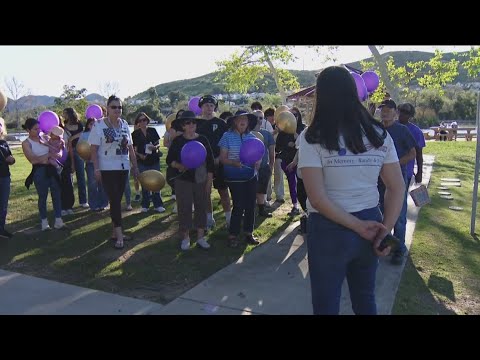
25th Anniversary of Santana High School Shooting Victims
MARCH 8, 2026
DISCUSSION QUESTIONS
TRY IT OUT: Copy and paste a question into the Catholic Assistant (bottom right corner) to receive an AI-generated response.
- How does viewing Good Friday as a palpable, shared tragedy change the way you approach the days leading up to Easter?
- How can entering into the reality of Jesus’s profound suffering help us process the suffering we witness in our own communities today?
- The spiritual asks, “Were you there when they crucified my Lord?” What does it mean for you, personally, to be “there” with Jesus this Holy Week, rather than just being a distant spectator to the story?


Larry Broding
Word-Sunday
Isaiah 50:4-7
Shame For Doing
God’s Will?
Preaching Hope to A Weary Flock
Preaching hope to a weary flock is one of the most profound challenges a pastor faces. When parishioners feel distant from God or overwhelmed by the cynicism of the modern world, finding the right words to break through their despair is crucial. Larry Broding’s commentary on the prophet of Second Isaiah offers a powerful, empathetic framework for addressing these exact moments of spiritual exile. By unpacking the historical struggles of the uprooted Jews in Babylon, Broding provides rich context and deep Christological connections to elevate your next homily and inspire your listeners.

Non-profits have permission to use TWTW clip art.
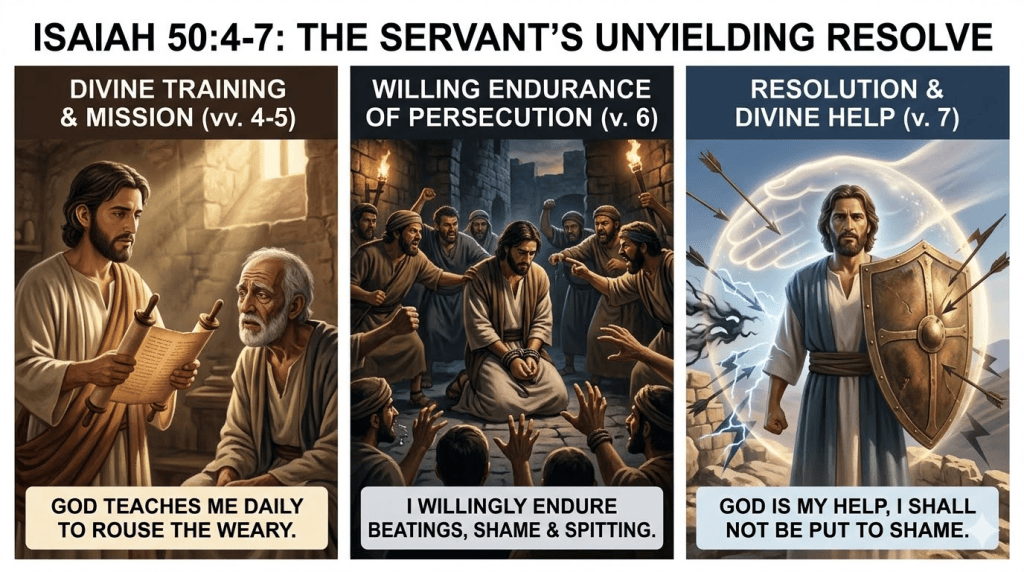
Non-profits may freely reproduce this infographic for bulletin use.
Why this commentary matters for your homily:

- Bridges the Gap Between Exile and Today: Helps you draw striking, relatable parallels between the despairing Jews in Babylon and the modern believer who feels isolated, cynical, or distant from God.
- Connects Ancient Prophecy to the Passion: Equips you with the profound insights early Christians used to link the unknown prophet’s steadfast obedience with the humiliation and ultimate vindication of Jesus Christ.
- Addresses the Reality of Ridicule: Provides a pastoral lens to discuss the very real cynicism and pushback believers face when they try to share good news or do God’s will in a skeptical culture.
- Provides Actionable Encouragement: Guides your parishioners through difficult realities, answering the vital questions of how to sustain ourselves and lean on God’s grace when criticized for doing good.ival.
Read Larry Broding’s full commentary to help your congregation find the courage to do good in the face of criticism and trust in God’s ultimate vindication.
Click banner to SHOW/HIDE outline. Use the Catholic Assistant Homily Helper
(bottom right corner) to expand any specific section of this outline?
First Reading Visual Aid

THE WORD THIS WEEK infographics on this page were created using using GOOGLE’S AI Gemini 3 Pro. You are free to use the them in any non-profit ministry. Proper attribution, however, must be given to Larry Broding at Word-Sunday.com.
Larry Broding
Word-Sunday
Philippians 2:6-11
Empty Himself
Preaching the Majesty of Christ’s Humility
Preaching on the profound mysteries of the Incarnation and the Passion requires a delicate balance of deep theology and accessible faith. Larry Broding’s commentary on the famous “Christ Hymn” in Paul’s letter to the Philippians offers preachers a rich, dynamic framework for connecting these two pillars of Christian belief. By exploring the historical roots of this passage as a song sung by the earliest Christian communities, Broding provides a beautiful lens through which your parishioners can grasp the breathtaking humility of the Savior they worship.
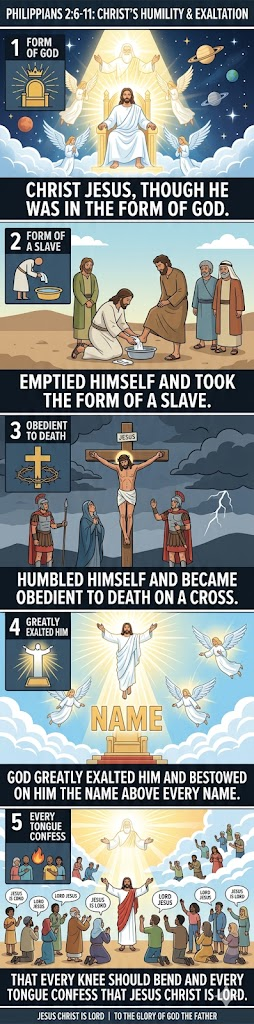
Non-profits have permission to use TWTW clip art.
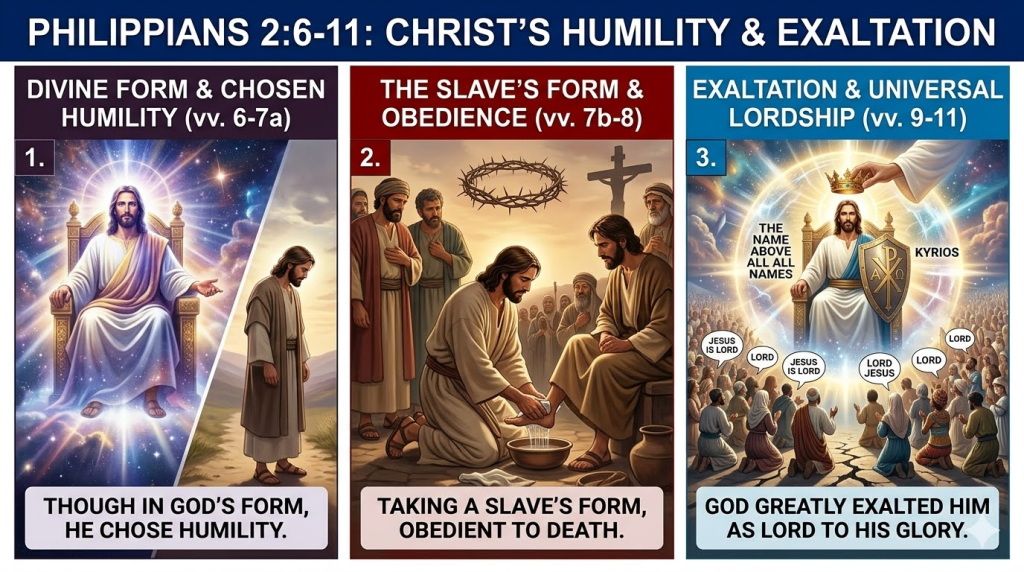
Non-profits may freely reproduce this infographic for bulletin use.
Why this commentary matters for your homily:
- Unlocks Early Christian Worship: Reveals how the earliest believers understood and sang about Jesus as Isaiah’s Suffering Servant, providing a vivid historical connection for your listeners.
- Clarifies Deep Theology: Brilliantly breaks down the “emptying” of the Incarnation and the “humbling” of the Passion, making these complex theological concepts accessible, moving, and highly preach-able.
- Traces the Divine Arc: Follows the majestic descent of Christ from His divine origin into humanity, and His triumphant return through God’s resurrection and glorification, offering a perfect, ready-made narrative structure for your message.
- Inspires a Faithful Response: Explains the core “why” behind the ancient hymn—equipping you to move your congregation from passive listening to active worship and a genuine profession of faith in response to Christ’s self-giving nature.
Read Larry Broding’s full commentary to help your congregation marvel at the breathtaking humility of the Son of God and respond with a renewed, joyful profession of faith.
Click banner to SHOW/HIDE outline. Use the Catholic Assistant Homily Helper
(bottom right corner) to expand any specific section of this outline?
First Reading Visual Aid
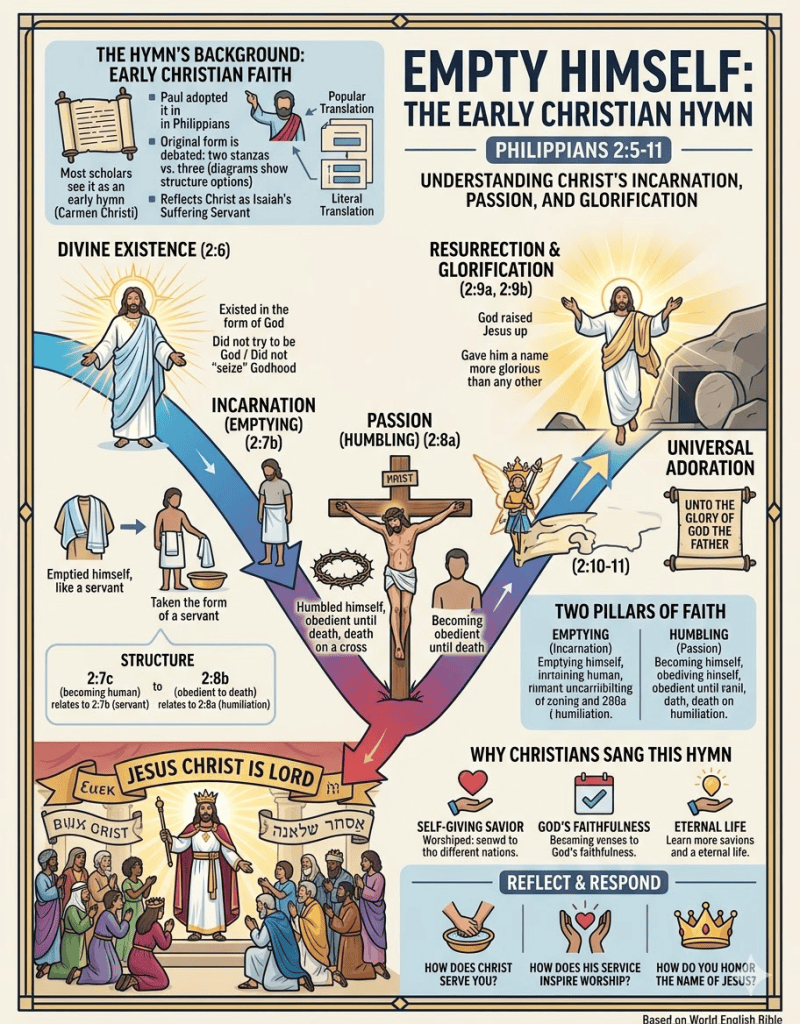
THE WORD THIS WEEK infographics on this page were created using using GOOGLE’S AI Gemini 3 Pro. You are free to use the them in any non-profit ministry. Proper attribution, however, must be given to Larry Broding at Word-Sunday.com.
Matthew 21:1-11
Beginning of Glory
PALM PROCESSION at beginning of the Mass
Preaching the start of Holy Week requires navigating one of the most jarring emotional shifts in the Gospel narrative: the triumphant entry into Jerusalem followed swiftly by the agonizing march to Calvary. Larry Broding’s commentary captures the profound paradox of the Galilean who entered the Holy City in fleeting earthly glory, only to face the ultimate shame of the cross alone. By focusing on the tension between human expectations and the divine will, Broding provides a compelling theological framework to help your parishioners enter deeply into the true meaning of the days ahead.
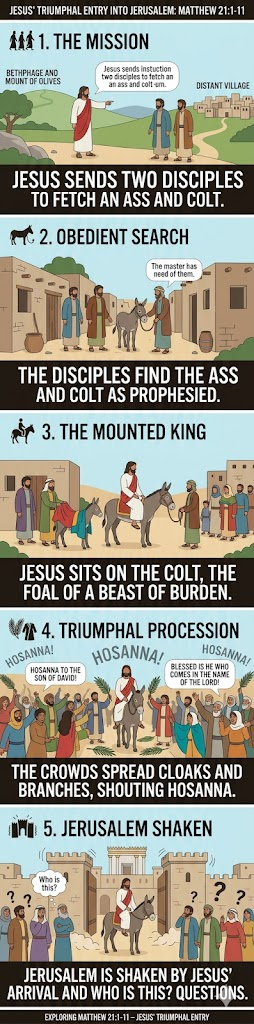
Non-profits have permission to use TWTW clip art.

Non-profits may freely reproduce this infographic for bulletin use.
Why this commentary matters for your homily:
- Contrasts the Fickle Crowds: Vividly illustrates the rapid shift from the joyful locals hailing a “country boy” to the bloodthirsty mob demanding his crucifixion, warning us of the fleeting nature of earthly glory.
- Subverts Human Expectations: Highlights Jesus’ deliberate choice to reject the popular, expected roles of a warrior king or temple-cleansing high priest, choosing instead to reveal Himself as Isaiah’s Suffering Servant.
- Reframes the Passion Narrative: Shifts the focus away from a tragic political failure and grounds the events entirely in Christ’s unwavering mission to fulfill the will of the Father.
- Provides a Pastoral Call to Action: Challenges believers to set aside their own preconceived notions about Lent and intentionally dedicate this week to walking with the Lord toward His death and ultimate vindication.
Read Larry Broding’s full commentary to help your congregation set aside their own expectations, embrace the true mission of the Suffering Servant, and walk faithfully with the Lord toward His glorious resurrection.
PASSION OF OUR LORD
You Say…
Why Was Jesus Condemned By the Sanhedrin?
Condemnation, Crucifixion and Burial
Click banner to SHOW/HIDE outline. Use the Catholic Assistant Homily Helper
(bottom right corner) to expand any specific section of this outline?
Gospel Visual Aid
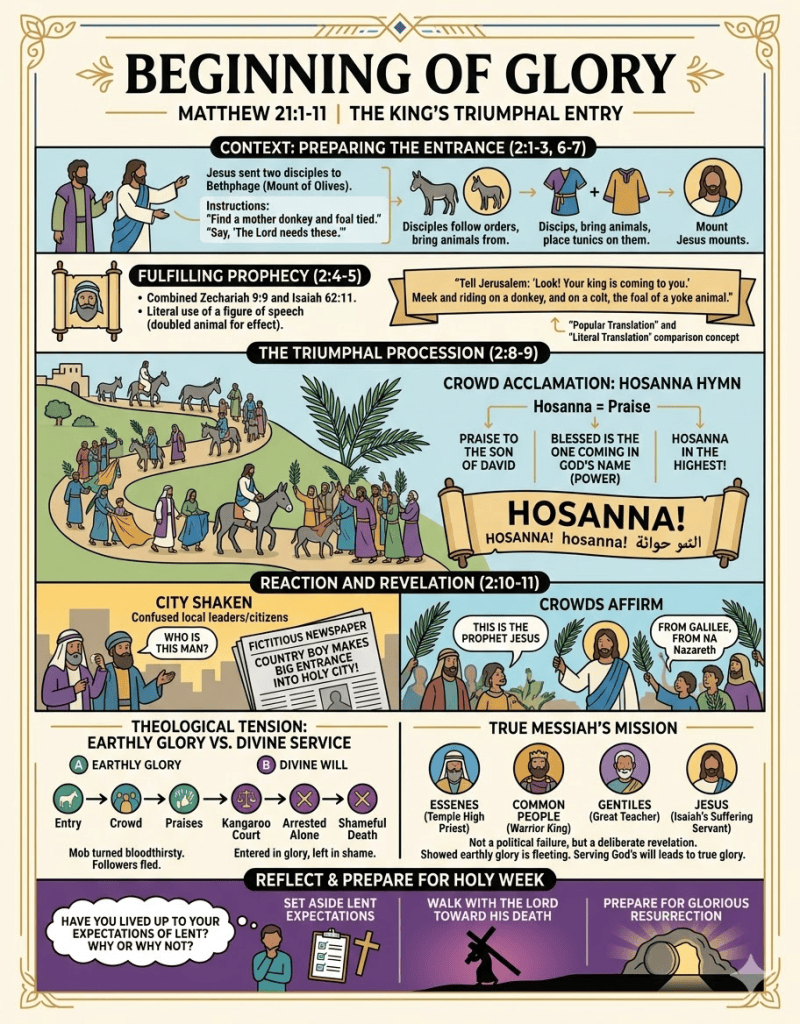
THE WORD THIS WEEK infographics on this page were created using using GOOGLE’S AI Gemini 3 Pro. You are free to use the them in any non-profit ministry. Proper attribution, however, must be given to Larry Broding at Word-Sunday.com.