Papal Homilies
June 28, 2026



NOTABLE QUOTES
Francis
In his 2020 reflection, Pope Francis spoke directly on the hierarchy of love and the paradox of the cross found in Matthew’s Gospel.
“Jesus asks his disciples to take the demands of the Gospel seriously, even when that requires sacrifice and effort. The first demanding request that he addresses to those who follow him is that of putting love for him above family affection… Jesus certainly does not intend to undervalue love for parents and children, but he knows that if family bonds are put in first place, they can deviate from the true good… When, instead, love for parents and children is inspired and purified by love for the Lord, it then becomes wholly fruitful and produces good fruits within the family itself and well beyond it.”
Benedict XVI
While Pope Benedict XVI frequently tied the themes of this specific liturgy to the calling of the priesthood and total consecration, his overarching teaching on Matthew 10:38 perfectly frames the challenging demands of this Sunday’s readings:
“The world offers you comfort. But you were not made for comfort, you were made for greatness.”
(Note: Commentators frequently connect this famous quote to this Gospel passage, highlighting how “picking up your cross” means letting go of self-serving comfort to put God and hospitality to others first.)
St. John Paul II
Not Available
13th Sunday of Year A

Theme of the Readings
FROM THE ARCHIVES (1999)
A focal point of this Sunday’s liturgy is the dignity of the human person and the Christian. In the Gospel it is written: “he who does not take up his cross and follow me is not worthy of me,” which in positive terms is equivalent to saying: “he who takes up his cross and follows me is worthy of me.” The worthy Christian is the one who is prepared to renounce self and possessions in favor of a superior value. In the first reading we are shown human worthiness as manifest in hospitality to strangers, one of the values most appreciated in the ancient world. Finally, the Letter to the Romans gives a vigorous account of the new life we receive through baptism, which makes us worthy of being incorporated in the mystery of Christ the Redeemer.
Doctrinal Messages
Human dignity is highly rated in today’s society, even if this expression can have very different meanings. We only speak of dignity with reference to man, not to inferior beings, nor with reference to God. It is true that we say that God is worthy of praise, of adoration… but we never speak of “God’s worthiness.” Man alone is worthy or unworthy, as a human being, as a believer, as a professional, etc. With this expression we mean to indicate the elevation, the nobility and the exaltation of the human being who rises above other worldly creatures and the logical correspondence of human actions with these characteristics of his being. When this correspondence is lacking, man degenerates and becomes unworthy of himself and of his high vocation.
In today’s first reading, taken from the Book of Kings, we find a trait predominant in the human concept and dignity of that time: hospitality, particularly with strangers. The wealthy Shunamite who welcomes Elisha into her house shows herself to be worthy by nature, according to the social concepts of the time. Today we could translate this trait of human dignity using terms like solidarity, welcome to immigrants or social charity. The dignity of which the Gospel speaks consists in following Christ, and thus being prepared to leave everything (father, mother, children…) in order to follow him, bravely and decisively taking up one’s cross each day. This is a step forward in the dignity of man, not based on human nature, but on the revelation and grace of God. This step is taken by means of baptism, by which we are submerged in Christ’s paschal mystery and we participate in God’s life in our mortal bodies and in the here and now of our personal history and of our society (second reading).
To those who conform their lives with both their human and their Christian dignity, a rich reward is promised which surpasses human possibilities. To the Shunamite, who was barren and whose husband was old, Elisha promised the reward of embracing a son within one year. Jesus, for his part, promises eternal life to all those who are prepared to lose their life on earth. He also promises intimacy with him and with the Father to those who practice Christian hospitality and charity. And St. Paul in his letter to the Romans maintains that the baptized are already here on earth “alive to God in Jesus Christ.”
Pastoral Suggestions
The meaning of human and Christian dignity. Since so much is being said about dignity but giving it such different meanings, it is appropriate to explain what the Gospel and the Church understand by this word. Moreover, from what has been said above, we will insist on the foundation of this dignity. It is founded on the order among creatures (the image and likeness of God), and it is founded on revelation as adopted sons of God. This dignity is therefore deeply rooted in God’s plan for man and not in anthropological concepts born from the human mind. All this will enable us to clarify certain realities of today’s mentality or human institutions, which proclaim themselves as such in the name of human dignity, based almost exclusively on notions of freedom and autonomy, but which in fact attack authentic dignity. For example, abortion, drug dependency, sexual promiscuity, blasphemy, the lack of religious practice, etc. Freedom is certainly an element of human dignity (it might perhaps be necessary here to explain freedom from and freedom for), but it is not the only one. Intelligence and discernment also go with it, along with the love for truth and good, the will to overcome and to surrender.
Solidarity. The Church and governmental and non-governmental organizations do much in this field to respond to the almost infinite needs of our world. This international solidarity is very good, and it must be increasingly promoted. With all this, I prefer now to refer to that “small solidarity,” which knocks at our door every day. Solidarity with the family next door who asks a favor of you, with the migrant who comes to you looking for a job; with third world nationals who sell flowers or paper tissues at the traffic lights; with the handicapped person who is sure to be found in your parish as in many others; with a few of the projects of the parish priest or the parish pastoral council; with a some of the school activities in which your children are involved, etc. The two forms of solidarity complement one another. We must show the greater one, Jesus would tell us, without failing to show the lesser.
SOURCE: YEAR A DICASTERY NOTES (1999)
Message of Pope Francis
AT A GLANCE
- The Primacy of Christ: A disciple’s relationship with Jesus demands absolute priority over all earthly bonds, including family. This “all-absorbing relationship” is the foundation of Christian identity.
- The Transparent Disciple: When Christ is at the center of a person’s life, they become “transparent” to His presence, acting as a true ambassador who brings Christ—and the Father’s love—to others.
- The Danger of Duplicity: Christian integrity requires a simple, cohesive heart. A disciple cannot live with “one foot in two shoes” by trying to serve both the spirit of Jesus and the spirit of the world.
- Missionary Reciprocity: Mission is a two-way street. When a disciple leaves everything for Jesus, the People of God recognize Christ in them; in turn, serving the people purifies and renews the disciple’s own faith.
QUESTIONS FOR REFLECTION
- “Do you meet with Jesus? Do you pray to Jesus?” How would you honestly describe the daily quality of your personal relationship with Christ?
- Is there any valid earthly affection, comfort, or relationship that you are unintentionally placing before your commitment to Christ?
- In what areas of your daily life do you struggle with a “duplicitous heart,” trying to balance the demands of the Gospel with the expectations of a worldly spirit?
- When people encounter you in your daily routine, can they readily perceive that Jesus is truly the Lord and center of your life?
ACTIONABLE
TAKEAWAYS
- Prioritize the Encounter: Commit to a specific, uninterrupted time for prayer each day this week to directly answer Christ’s call to “meet with Him.”
- Practice Transparency: Identify one area of your life where you have been compromising with a worldly spirit. Choose honesty and simplicity over duplicity in that specific area today.
- Offer a “Cup of Cold Water”: Find a concrete way to welcome or serve someone in your community with affectionate faith this week. Recognize that in serving them, you are drawing closer to Jesus Himself.
13th Sunday of Year A
Life of a Missionary Disciple
2 July 2023 – Saint Peter’s Square (Angelus)
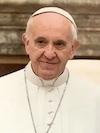
Today’s liturgy presents to us the last lines of the missionary discourse in Chapter 10 of the Gospel of Matthew (cf. 10:37-42), by which Jesus instructs the 12 Apostles at the moment in which, for the first time, he sends them on mission to the villages of Galilee and Judea. In this final part, Jesus underscores two essential aspects for the life of a missionary disciple: the first, that his bond with Jesus is stronger than any other bond; the second, that the missionary brings not himself, but Jesus, and through Him the love of the heavenly Father. These two aspects are connected, because the more Jesus is at the centre of the heart and of the life of a disciple, the more this disciple is “transparent” to His presence. The two go hand in hand.
The Priority of the Bond with Christ
“He who loves father or mother more than me is not worthy of me…” (Mt 10:37), Jesus says. A father’s affection, a mother’s tenderness, the gentle friendship among brothers and sisters, all this, even while being very good and valid, cannot be placed before Christ. Not because he wants us to be heartless and ungrateful, but rather, on the contrary, because the condition of a disciple demands a priority relationship with the teacher.
Any disciple, whether a layman or laywoman, a priest or a bishop: an all-absorbing relationship. Perhaps the first question that we must ask a Christian is: “Do you meet with Jesus? Do you pray to Jesus?”. The relationship. One could almost paraphrase the Book of Genesis: Therefore a man shall leave his father and his mother and cleave to Jesus and the two shall become one (cf. Gen 2:24).
Disciples as Ambassadors of Jesus
Those who allow themselves to be drawn into this bond of love and of life with the Lord Jesus become his representatives, his “ambassadors”, above all in the way of being, of living. To the point that Jesus himself, in sending his disciples on mission, says to them: “He who receives you receives me, and he who receives me receives him who sent me” (Mt 10:40). It is important that the people be able to perceive that for that disciple Jesus is truly “the Lord”; He is truly the centre of his or her life, the everything of life.
Rejecting Duplicity and the Worldly Spirit
It does not matter then if, as for every human being, he or she has limitations and even makes mistakes — as long as he or she has the humility to recognize them; the important thing is that they not have a duplicitous heart — and this is dangerous. I am a Christian; I am a disciple of Jesus; I am a priest; I am a bishop, but I have a duplicitous heart. No, this is not okay. One must not have a duplicitous heart, but a simple, cohesive heart; one must not keep one foot in two shoes, but be honest with oneself and with others.
Duplicity is not Christian. This is why Jesus prays to the Father so that the disciples may not fall prey to the worldly spirit. You are either with Jesus, with the spirit of Jesus, or you are with the spirit of the world.
Reciprocity in Mission: The Priest and the People of God
Here our experience as priests teaches us something very beautiful, something very important: it is precisely this welcoming of the holy, faithful People of God; it is precisely that “cup of cold water” (Mt 10:42) that the Lord speaks of today in the Gospel, given with affectionate faith, which helps you to be a good priest! There is a reciprocity in mission too: if you leave everything for Jesus, the people recognize the Lord in you; but at the same time it helps you to convert each day to him, so as to renew and purify yourself from compromises and to overcome temptations.
The closer a priest is to the People of God, the closer will he feel to Jesus, and the closer a priest is to Jesus, the closer will he feel to the People of God.
Message of Pope Benedict XVI
AT A GLANCE
- The Paradox of Fear: Jesus provides a dual mandate: do not fear human judgment or existential void, but cultivate a holy “fear” of God. Those who truly fear God are liberated from worldly terrors.
- Defining Holy Fear: Rather than a paralyzing terror, the “fear of God” is the beginning of wisdom. It is a profound, sacred respect for God’s sovereign authority combined with the absolute security of a child in its mother’s arms.
- The Antidote to Nihilism: Modern existential anxiety and nihilism stem from humanity trying to take God’s place as the lord of life and death. True peace is found by resting in the victory of the Incarnate Word, Jesus Christ, on the Cross.
- Love Conquers Dread: Growing in intimacy with God allows His perfect love to cast out all fear, empowering believers to witness to the Gospel even in the face of intense opposition or suffering.
QUESTIONS FOR REFLECTION
- What specific human or worldly fears currently hold the most power over your daily decisions and peace of mind?
- How does viewing the “fear of God” as a filial, trusting relationship—rather than a dread of punishment—shift your understanding of his sovereignty?
- In what areas of your life are you tempted to play the “lord of good and evil,” trying to control outcomes rather than surrendering them to Christ?
- Looking at the bold example of St. Paul, what is one area of your life where you feel called to witness to the Gospel more courageously?
ACTIONABLE
TAKEAWAYS
- Audit Your Fears: Write down your primary anxieties this week. Explicitly hand each one over to Christ in prayer, actively choosing to replace human dread with trust in God’s providence.
- Practice Spiritual Infancy: When hit by a sudden wave of existential anxiety or panic, pause and pray Psalm 131 (Ps 130 in the text). Visualize yourself as a quieted child in the arms of a loving Father.
- Imitate the Pauline Witness: Commit to one concrete act of Christian witness or charity this week that pushes you outside your comfort zone, relying on Christ’s promise: “Do not be afraid, for I am with you.”
- Celebrate the Liturgical Life: Mark your calendar for upcoming feast days or ecclesial milestones (like the solemnity of Sts. Peter and Paul). Use these liturgical high points to renew your personal consecration to Christ through the intercession of Mary and the Apostles.
13th Sunday of Year A
Overcoming Human Anguish through the Fear of God
22 June 2008 | St Peter’s Square

In this Sunday’s Gospel we find two invitations from Jesus: on the one hand to “have no fear” of human beings, and on the other, to “fear” God (cf. Mt 10: 26, 28). We are thus encouraged to reflect on the difference that exists between human fears and the fear of God.
Fear is a natural dimension of life. In childhood we experience forms of fear that subsequently are revealed to be imaginary and disappear; other fears emerge later which are indeed founded in reality: these must be faced and overcome with human determination and trust in God. However, especially today, there is a deeper form of fear of an existential type and which sometimes borders on anguish: it is born from a sense of emptiness, linked to a certain culture permeated with widespread theoretical and practical nihilism.
Defining the True “Fear of God”
In the face of the broad and diversified panorama of human fears, the Word of God is clear: those who “fear” God “are not afraid”. Fear of God, which the Scriptures define as “the beginning of knowledge” coincides with faith in him, with sacred respect for his authority over life and the world.
To be without “fear of God” is equivalent to putting ourselves in his place, to feeling we ourselves are lords of good and evil, of life and death. Instead, those who fear God feel within them the safety that an infant in his mother’s arms feels (cf. Ps 130: 2). Those who fear God are tranquil even in the midst of storms for, as Jesus revealed to us, God is a Father full of mercy and goodness.
Perfect Love Casts Out All Fear
Those who love him are not afraid: “There is no fear in love”, the Apostle John wrote, “but perfect love casts out fear. For fear has to do with punishment, and he who fears is not perfected in love” (1 Jn 4: 18). Believers, therefore, are not afraid of anything because they know they are in the hands of God, they know that it is not evil and the irrational which have the last word, but rather that the one Lord of the world and of love is Christ, the Word of God Incarnate, who loved us to the point of sacrificing himself for us, dying on the Cross for our salvation.
The Example of St. Paul and the Jubilee Call
The more we grow in this intimacy with God, imbued with love, the more easily we overcome any form of fear. In the passage of today’s Gospel, Jesus repeats several times the exhortation to have no fear. Jesus reassures us, as he reassured the Apostles and as he did St Paul by appearing to him one night in a vision at a particularly difficult moment in his preaching: “Do not be afraid”, he said, “for I am with you” (Acts 18: 9).
Strong in the presence of Christ and comforted by his love, the Apostle to the Gentiles, the 2,000th anniversary of whose birth we are preparing to celebrate with a special Jubilee Year, did not even fear martyrdom. May this great spiritual and pastoral event inspire in us too a renewed trust in Jesus Christ who calls us to proclaim and witness to his Gospel without being afraid of anything.
I therefore invite you, dear brothers and sisters, to prepare yourselves to celebrate with faith the Pauline Year, which, please God, I shall solemnly inaugurate next Saturday at 6: 00 o’clock in the evening in the Basilica of St Paul Outside-the-Walls, with the liturgy for First Vespers of the Solemnity of Sts Peter and Paul. Let us immediately entrust this ecclesial initiative to the intercession of St Paul and of Mary Most Holy, Queen of Apostles and Mother of Christ, the source of our joy and our peace.
Message of Pope Saint John Paul II
AT A GLANCE
- The Command to Proclaim: Just as Christ instructed the disciples to move the private message into the public light, the Church is called to proclaim the Gospel through the modern “housetops”—our global communications networks.
- The Answer to the Human Heart: Amidst profound existential questions about life, purpose, and suffering, the Church offers the only satisfying answer: Jesus Christ.
- Engagement, Not Retreat: While media culture often promotes relativism or entertainment over truth, the Church must not withdraw. Instead, we are called to an active, imaginative, and courageous engagement with all forms of media.
- A Prophetic Duty: Christian communicators have a specific vocation to challenge the false idols of our age (materialism, hedonism, consumerism) and boldly declare the truth of the Word made flesh.e.
QUESTIONS FOR REFLECTION
- Internalizing the Message: In my daily life, do I share the truth of the Gospel with the same urgency as I share personal news or opinions?
- Evaluating Media: How does my personal consumption of media (news, social platforms, entertainment) shape my understanding of “truth”? Do I allow the media to dictate my worldview, or do I filter it through the lens of faith?
- Identifying the “Housetops”: Where are my personal “housetops”? In what spaces—digital or physical—do I have the opportunity to speak of Christ, and how am I currently utilizing those spaces?
- Overcoming Fear: Am I hesitant to speak about my faith in public or online? What specifically do I fear, and how does the example of the Apostles encourage me to persist?
ACTIONABLE
TAKEAWAYS
- Curate for Truth: Be intentional about the content you support, share, and promote online. Use your personal digital presence to amplify messages that uphold human dignity and the Gospel, rather than those that thrive on division or falsehood.
- Speak with Intention: Identify one conversation or digital interaction this week where you can move beyond small talk to offer a perspective rooted in Christian hope or values.
- Practice Intellectual Courage: When you encounter media narratives that dismiss absolute truth or promote consumerism, take a moment to reflect on a specific scripture or teaching of the Church that contradicts that narrative. Use that as a foundation for your own internal stance.
- Pray for Media Professionals: Specifically pray for those working in journalism, technology, and entertainment—that they may be guided by the Holy Spirit to seek, speak, and defend the truth.
13th Sunday of Year A
“Preach from the housetops”:
The Gospel in the Age of Global Communication
27 May 2001 | 35th WORLD COMMUNICATIONS DAY
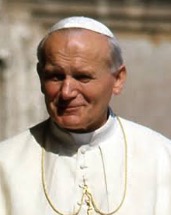
The theme chosen for World Communications Day 2001 echoes the words of Jesus himself. It could not be otherwise, for it is Christ alone whom we preach. We remember his words to his first disciples: “What I tell you in the dark, utter in the light; and what you hear whispered, proclaim upon the housetops” (Mt 10:27). In the secret of our heart, we have listened to the truth of Jesus; now we must proclaim that truth from the housetops.
In today’s world, housetops are almost always marked by a forest of transmitters and antennae sending and receiving messages of every kind to and from the four corners of the earth. It is vitally important to ensure that among these many messages the word of God is heard. To proclaim the faith from the housetops today means to speak Jesus’ word in and through the dynamic world of communications.
The Church’s Role in a Changing World
In all cultures and at all times—certainly in the midst of today’s global transformations—people ask the same basic questions about the meaning of life: Who am I? Where have I come from and where am I going? Why is there evil? What is there after this life? (cf. Fides et Ratio, 1). And in every age the Church offers the one ultimately satisfying answer to the deepest questions of the human heart—Jesus Christ himself, “who fully reveals man to himself and brings to light his high calling” (Gaudium et Spes, 22). Therefore, the voice of Christians can never fall silent, for the Lord has entrusted to us the word of salvation for which every human heart longs. The Gospel offers the pearl of great price for which all are searching (cf. Mt 13:45-46).
It follows that the Church cannot fail to be ever more deeply involved in the burgeoning world of communications. The global communications network is extending and growing more complex by the day, and the media are having an increasingly visible effect on culture and its transmission. Where once the media reported events, now events are often shaped to meet the requirements of the media. Thus, the relationship between reality and the media has grown more intricate, and this is a deeply ambivalent phenomenon. On the one hand, it can blur the distinction between truth and illusion; but on the other, it can open up unprecedented opportunities for making the truth more widely accessible to many more people. The task of the Church is to ensure that it is the latter which actually happens.
Navigating Media Culture and Evangelization
The world of the media can sometimes seem indifferent and even hostile to Christian faith and morality. This is partly because media culture is so deeply imbued with a typically postmodern sense that the only absolute truth is that there are no absolute truths or that, if there were, they would be inaccessible to human reason and therefore irrelevant. In such a view, what matters is not the truth but “the story”; if something is newsworthy or entertaining, the temptation to set aside considerations of truth becomes almost irresistible. As a result, the world of the media can sometimes seem no more friendly an environment for evangelization than the pagan world of the Apostles’ day. But just as the early witnesses to the Good News did not retreat when faced with opposition, neither should Christ’s followers do so today. The cry of Saint Paul echoes among us still: “Woe to me if I do not preach the Gospel” (1 Cor 9:16).
Yet, as much as the world of the media may at times seem at odds with the Christian message, it also offers unique opportunities for proclaiming the saving truth of Christ to the whole human family. Consider, for instance, satellite telecasts of religious ceremonies which often reach a global audience, or the positive capacities of the Internet to carry religious information and teaching beyond all barriers and frontiers. Such a wide audience would have been beyond the wildest imaginings of those who preached the Gospel before us. What is therefore needed in our time is an active and imaginative engagement of the media by the Church. Catholics should not be afraid to throw open the doors of social communications to Christ, so that his Good News may be heard from the housetops of the world!
The Mission Ad Gentes and the Prophetic Task
It is vital too that at the beginning of this new millennium we keep in mind the mission ad gentes which Christ has entrusted to the Church. An estimated two thirds of the world’s six billion people do not in any real sense know Jesus Christ; and many of them live in countries with ancient Christian roots, where entire groups of the baptized have lost a living sense of the faith, or no longer consider themselves members of the Church and live lives far removed from the Lord and his Gospel (cf. Redemptoris Missio, 33). Certainly, an effective response to this situation involves much more than the media; but in striving to meet the challenge Christians cannot possibly ignore the world of social communications. Indeed, media of every kind can play an essential role in direct evangelization and in bringing to people the truths and values which support and enhance human dignity. The Church’s presence in the media is in fact an important aspect of the inculturation of the Gospel demanded by the new evangelization to which the Holy Spirit is summoning the Church throughout the world.
As the whole Church seeks to heed the Spirit’s call, Christian communicators have “a prophetic task, a vocation: to speak out against the false gods and idols of the day—materialism, hedonism, consumerism, narrow nationalism…” (Ethics in Communications, 31). Above all, they have the duty and privilege to declare the truth—the glorious truth about human life and human destiny revealed in the Word made flesh. May Catholics involved in the world of social communications preach the truth of Jesus ever more boldly and joyfully from the housetops, so that all men and women may hear about the love which is the heart of God’s self-communication in Jesus Christ, the same yesterday, and today, and forever (cf. Heb 13:8).