18th Sunday of Year B

August 4, 2024 Holy See

[ez-toc]

PAPAL HOMILIES

VATICAN MEDIA LIVE

18th Sunday of Year B

YEAR B

Faith

It may be asserted that today’s liturgical texts concentrate on faith as a central principle of human existence. Faith gives sense to the life of the Israelites who walk exhausted across the desert and assures them that they have not been abandoned, that God, with his power and fatherly love, is with them (first reading). Faith interprets the life of Jesus’ listeners so that they may be able to see in the multiplication of the loaves a sign of God’s effective presence in their midst (Gospel). Faith gives sense to the Christian, making him discover that he is no longer an old man but a new one, and that he must make the newness of Christ shine in his life (second reading).

P. Antonio Izqeuirdo, L.C., Copyright © Dicastery for the Clergy

Catechism Cross-References

Catechism
Cross-References

First Reading

Ex 16:2-4, 12-15

No need to fill out form. Scroll down and look for YELLOW highlights.

Courtesy of Catholic Cross Reference Online

Second Reading

Eph 4:17, 20-24

No need to fill out form. Scroll down and look for YELLOW highlights.

Courtesy of Catholic Cross Reference Online

Gospel Reading

Jn 6:24-35

No need to fill out form. Scroll down and look for YELLOW highlights.

Courtesy of Catholic Cross Reference Online

Doctrinal Messages

18th Sunday of Year B

YEAR B

Doctrinal Messages

Faith as memory

The believer is a man of memory. He must remember, always remember. He must remember the history of the Christian faith, which does not begin in our century, but goes back many centuries, to the story of Abraham, the prototype of faith in God for all generations. He must remember the many wonders that God has worked throughout this centuries-old history, as is narrated to us in the first reading taken from the Book of Exodus. The Israelites who had left Egypt victorious and happy now walk in the desert tired, discouraged, without horizons of hope. But God, the liberating God, does not leave them in their predicament; rather, he now becomes the God who is their companion and the guide of their journey in the desert, taking care of their needs. Can a father abandon his children? We must also remember the great gift that God has bestowed upon us in his Son Jesus Christ, who has come into this world to do good, as a true doctor of bodies and souls. We must remember the loaves multiplied to nourish bodies, and remember the bread of his Word and of his Eucharist to nourish souls. We must remember the early Christians who were transformed through their immersion in the baptismal waters, and remember our baptism, through which we have been incorporated in Christ and in his Church. This simple exercise of memory does a world of good to the believer, to the Christian!

P. Antonio Izqeuirdo, L.C., Copyright © Dicastery for the Clergy

Faith as hermeneutics

Whether we like it or not, the believer is interpreted according to his faith. We could say, "Tell me who you believe in, what you believe, and I will tell you who you are, how you live." Therefore, faith in Christ gives meaning to the lives of all Christians. In other words, their way of thinking, acting, working, living, loving, their way of doing their jobs is and must be enlightened by their faith in Jesus Christ. When this faith in Christ is not something confined to a few individuals, but is shared by a group or a majority, then it becomes Christian culture: faith invades all areas of community and social life. In the midst of the difficulties and temptations experienced by the Israelites, in the midst of the purely political and socio-economic requests of Jesus’ listeners, faith helped them to interpret the events and works of God from a different perspective, purified precisely by the medicine of faith. This very faith interpreted the life of the early Christians in such a way that it converted them into new men, "created on God’s principles, in the uprightness and holiness of the truth." As the believers in Christ increased in the first century and in those that followed, they became the leaven of the human dough, they created a culture, and finally succeeded in forging society according to their faith in Jesus Christ. Isn’t this a great challenge that we Christians are called to in a so-called post-Christian environment, which is still socially and culturally rooted in Christianity? The historic mission of the believers in Christ, at the beginning of the 21st century, is to make these roots flourish so that Christ may once again pervade our society.

P. Antonio Izqeuirdo, L.C., Copyright © Dicastery for the Clergy

The recipients of God’s superabundance

God’s generosity is for the people (first reading), for a large crowd, coming from all of the villages. God also shows his generosity by addressing it not to a certain number of privileged men, but to all. No one is excluded from the divine bread. Only those who do not accept it, because they have been filled with other loaves, or because out of arrogance they believe that Jesus’ bread (barley bread) is the bread of the poor, of common people – only these are excluded.

This divine bread is his Word of Life, which gives life to those who receive it; it is the bread of charity (the Christian, who through his charity becomes bread for the others) that meets the most basic requirements of all human beings. The divine Word is especially the bread of the Eucharist, prefigured in the multiplication of loaves (CCC 1335). God’s generosity is man’s supreme equalizing factor; it does away with all differences among men, because there is no one who is not in need of God’s generosity.

P. Antonio Izqeuirdo, L.C., Copyright © Dicastery for the Clergy

Pastoral Suggestions

18th Sunday of Year B

YEAR B

Pastoral Suggestions

Bread and faith, faith and bread

God never abandons us in our most fundamental requirements. This is why he rescues his people with bread, meat and water in their long journey from Egypt to the Promised Land. Jesus, in turn, in imitating God his Father, before a multitude of people growing weak with hunger, follows that divine gesture by multiplying loaves and fish. However, although bread is necessary, it is not sufficient. It must be accompanied by faith, so that God is not a mere benefactor, but also the transcendental and holy God; so that the people do not see Jesus as a candidate to the kingdom, but as the Messiah of Israel and the Son of God. The social dimension of Christianity is obvious, but it emerges from the faith in Jesus Christ. And its value would be lessened if it were separated from faith, for it would become a gratuitous supermarket or a social charity agency. Bread without faith lacks the Christian flavor. Faith without bread is simply tasteless. As Christians, we are urged to combine in our work bread and faith and faith and bread. Unfortunately, their separation has wrought much havoc within the very life of the Church and in the image of Christianity as perceived by non-Christians. If each person heeds the call to unite bread and faith, faith and bread, Christianity and the world will be better off, and they will open up a sound path for the third Christian millennium.

P. Antonio Izqeuirdo, L.C., Copyright © Dicastery for the Clergy

The power of faith

As human beings, we are used to seeing power in money, weapons, influence, the State, the moral authority of people like Mother Theresa of Calcutta and Pope John Paul II. With today’s liturgy, I would like to emphasize the power of faith. It is evident that the moral authority of Mother Theresa of Calcutta or of John Paul II does not mainly stem from their qualities, but from their faith, a faith in God so great that it is able to break barriers and destroy walls, a faith so ardent that in their self-giving, they are not held back by age, sickness or the difficulties that may arise in their work for God. We may think of the material and spiritual work of Mother Theresa, the collapse of the Berlin wall, the journeys to the holy places of Christianity for the Great Jubilee of the Incarnation. However, there are many other aspects, not so evident but extremely effective, which show the power of faith in their lives. Let us reflect with simplicity and gratefulness on the power of faith in ourselves, in the people that surround us and with whom we live, in many Christians scattered throughout the world. How the power of faith shines forth in Marian shrines like Lourdes, Fatima and Guadalupe! Ask yourselves what you can do to make other people experience first hand the power of faith. The power of faith is the lever that supports and elevates the world.

P. Antonio Izqeuirdo, L.C., Copyright © Dicastery for the Clergy

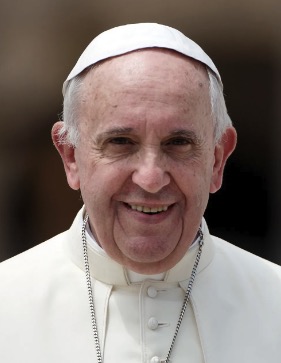
Pope Francis

Why Do We Seek the Lord?

1 August 2021 | Saint Peter’s Square

Why do we seek the Lord? Why do I seek the Lord? What are the motivations  for my faith, for our faith? We need to discern this, because among the many temptations we encounter in life, among the many temptations there is one that we might call idolatrous temptation. It is the one that drives us to seek God for our own use, to solve problems, to have thanks to Him what we cannot obtain on our own, for our interests. But in this way faith remains superficial and even, if I may say so, faith remains miraculous: we look for God to feed us and then forget about Him when we are satiated. At the centre of this immature faith is not God, but our own needs. I think of our interests, many things … It is right to present our needs to God’s heart, but the Lord, who acts far beyond our expectations, wishes to live with us first of all in a relationship of love. And true love is disinterested, it is free: one does not love to receive a favour in return! This is self-interest; and very often in life we are motivated by self-interest.

A second question that the crowd asks Jesus can help us: “What must we do, to be doing the works of God?” (v. 28). It is as if the people, provoked by Jesus, were saying: “How can we purify our search for God? How do we go from a magical faith, which thinks only of our own needs, to a faith that pleases God?” And Jesus shows the way: He answers that the work of God is to welcome the One whom the Father has sent, that is, welcoming Himself, Jesus. It is not adding religious practices or observing special precepts; it is welcoming Jesus, it is welcoming Him into our lives, living a story of love with Jesus. It is He who will purify our faith. We are not able to do this on our own. But the Lord wants a loving relationship with us: before the things we receive and do, there is Him to love. There is a relationship with Him that goes beyond the logic of interest and calculation.

READ MORE


God’s Great Gift

5 Agust 2018 | Saint Peter’s Square

God’s work does not consist so much in “doing” things, but in “believing” in Him whom He sent. This means that faith in Jesus allows us to carry out God’s works. If we allow ourselves to be involved in this loving and trusting relationship with Jesus, we will be able to perform good works that exude the fragrance of the Gospel for the good and needs of our brothers and sisters.

The Lord invites us not to forget that, if it is necessary to worry about bread, it is even more important to nurture our relationship with Him, to strengthen our faith in Him, who is the “bread of life” who came to satisfy our hunger for truth, our hunger for justice and our hunger for love.

READ MORE


xxxxxxxxx

29 March 2015 | Saint Peter’s Square

18th Sunday of Year B

At the heart of this celebration, which seems so festive, are the words we heard in the hymn of the Letter to the Philippians: “He humbled himself” (2:8). Jesus’ humiliation.

These words show us God’s way and, consequently, that which must be the way of Christians: it is humility. A way which constantly amazes and disturbs us: we will never get used to a humble God!

Humility is above all God’s way: God humbles himself to walk with his people, to put up with their infidelity. This is clear when we read the the story of the Exodus. How humiliating for the Lord to hear all that grumbling, all those complaints against Moses, but ultimately against him, their Father, who brought them out of slavery and was leading them on the journey through the desert to the land of freedom.

This week, Holy Week, which leads us to Easter, we will take this path of Jesus’ own humiliation. Only in this way will this week be “holy” for us too!

We will feel the contempt of the leaders of his people and their attempts to trip him up. We will be there at the betrayal of Judas, one of the Twelve, who will sell him for thirty pieces of silver. We will see the Lord arrested and carried off like a criminal; abandoned by his disciples, dragged before the Sanhedrin, condemned to death, beaten and insulted. We will hear Peter, the “rock” among the disciples, deny him three times. We will hear the shouts of the crowd, egged on by their leaders, who demand that Barabas be freed and Jesus crucified. We will see him mocked by the soldiers, robed in purple and crowned with thorns. And then, as he makes his sorrowful way beneath the cross, we will hear the jeering of the people and their leaders, who scoff at his being King and Son of God.

READ MORE

SOURCE: The Holy See Archive at the Vatican Website © Libreria Editrice Vaticana