Papal Homilies, Pope Francis, Pope Benedict, Pope John Paul II, Pope Leo
October 25, 2026
⭐⭐⭐ Pope Leo XIV



Holy See
- The Bible
- Catechism of the Catholic Church
- Codes of Canon Law
- Ecumenical Councils
- Official Acts of the Holy See
- Social Doctrine of the Church
- Abuse of Minors, the Church’s Response
- Press Office
- Vatican News – Radio Vaticana
- L’Osservatore Romano
- Vatican Websites
- Vatican City State
- Basilicas and Papal Chapels – Virtual Tours
- Liturgical Celebrations
- Tickets for Papal Audiences and Celebrations
30th Sunday of Year A

Love for God and Neighbor
FROM THE ARCHIVES (1999)
Love for God and neighbor sums up the message of this Thirtieth Sunday. In the First Reading, it is formulated in a negative sense: “You will not ill-treat widows or orphans… If you lend money to any of my people, to anyone poor among you, you will not play the usurer with him… You will not revile God…” The Gospel text provides us with a positive formulation: “You must love the Lord your God with all your heart, with all your soul… You must love your neighbor as yourself.” In the first Letter of Paul to the Thessalonians, the same principle is set forth in the negative form (abandon all idols), and in the positive form (follow the example of Christ and of Paul himself, as it is the model to all believers of Macedonia and Achaia).
Doctrinal Messages
The moral of the covenant.
The text of the First Reading is part of the code of Yahweh’s covenant with Israel (Ex 20:22-23:19), and sets forth some of the terms of the pact in which God appears as the protector of the marginalized in the society of that time. The terms are contained in the Decalogue: love for God, the first tablet (1st to 3rd commandments), and love for one’s neighbor the second (4th to 10th commandments). The legislative texts of the Pentateuch already set forth concrete and special applications of the Decalogue, for example the text of the First Reading. As the centuries went by, many other precepts became part of the tradition of Israel, until they numbered 623, in order to safeguard in the best possible way the observance of the law, down to the slightest details. At Jesus’ time, the different groups and schools of Pharisees discussed the possibility of being able to reduce all the precepts to a single one. With Jesus Christ, in whom the New Covenant between God and his new people began (namely the Church), all the precepts were summarized in one, a compendium of the whole divine revelation: You will love God… and you will love your neighbor. Those that do not love God or their neighbor, simply break the morality of the New Covenant.
The Fundamental Option
All people, when they reach the full age of discernment and decision-making, implicitly or explicitly make a fundamental option for God, for their neighbor, for human and Christian values, etc; or for what is opposite to them. The fundamental option of the individual, and especially of the Christian, cannot be other than the option for love and from love, during his entire life. The fundamental option directs and steers all actions in one’s life, it creates a spirit, a style of being and living, it marks one’s existence. The fundamental option pours unity into one’s being and actions, and it also brings peace. The fundamental option subordinates everything to its object. In other words, for a Christian, it subordinates everything to love in its two-fold nature, divine and fraternal. By its very nature, the fundamental option leaves all other possible options by the wayside, or at least it assigns them a secondary and auxiliary role, at the service of the fundamental option.
The requirements of love.
Love, as the fundamental option of the Christian, implies certain requirements. Some are negative: do not revile God, leave your idols, do not turn your attention away from the needy, do not rob your brother through usury. What are the negative requirements in contemporary society, in the social and cultural milieu of your life? The positive requirements are clear: love God with all of your heart, with all of your soul and with all of your mind; love your neighbor as you love yourself.
Pastoral Suggestions
Give morality a religious basis
In a society in which frequently the basis of morality is democratic consensus or the legislation in force, the moral life of the Christian must spring from his life of faith: a living, integral, operational faith that affects ideas and behaviors, both private and public. Without this foundation, morality staggers and runs the risk of collapsing before the external attacks and inner questions. O Christian! Act, behave like a Christian, according to the Decalogue and the Gospel of Love: the love of benevolence, generous and disinterested love, which only seeks the good of the loved one. O Christian! Your behaviors must stem from your covenant with God in baptism, confirmation, in the sacrament of marriage, under the witness of the Church, which is at once promoter and guarantor of such a covenant.
Option in life for love
Any other option is either wrong or partial. What are the ways today to opt for God’s love? The Catechism of the Catholic Church singles out the following, among others: prayer, worship, praise, joyful participation in the Eucharistic Celebration on Sundays and feast days, the habitual and simple exercise of the theological virtues in everyday life. It also adds avoiding superstition, idolatry, magic, any form of irreligiousness and atheism, agnosticism, blasphemy, sacrilege, contempt of the sacraments… And what are the ways in which we can manifest our fundamental option for our neighbor? We also find them in the Catechism. By way of example: piety, obedience and gratitude towards one’s parents; the education of children to faith and virtues; cooperating for the good of society in justice, solidarity and freedom; the rejection of voluntary murder, abortion, euthanasia, scandal; the respect of health and the body’s integrity, both of one’s own and of one’s neighbor; the opposition to and rejection of sins against the sixth and ninth commandments: fornication, pornography, prostitution, rape, homosexuality, wantonness, etc.
SOURCE: YEAR A DICASTERY NOTES (1999)
P. Antonio Izqeuirdo, L.C., Copyright © Dicastery for the Clergy, The header image is an AI-generated visual concept illustrating the central themes, scripture quotes, and visual motifs from this week’s Mass readings.

30th Sunday of Year A
Jesus Establishes Two Essential Principles
25 October 2020 | Saint Peter’s Square
The Question and Jesus’ Twofold Commandment
In today’s Gospel passage (cf. Mt 22:34–40), a doctor of the Law asks Jesus “which is the great commandment” (v. 36), that is, the principal commandment of all divine Law. Jesus simply answers: “You shall love the Lord your God with all your heart, and with all your soul, and with all your mind” (v. 37). And he immediately adds: “And a second is like it, You shall love your neighbour as yourself” (v. 39).
Overcoming the Snare: Two Essential Principles
Jesus’ response takes up and joins two fundamental precepts which God gave his people through Moses (cf. Dt 6:5; Lv 19:18). Thus, he overcomes the snare laid “to test him” (Mt 22:35). His questioner tries to draw him into a dispute among the experts of the Law regarding the hierarchy of the prescriptions. Instead, Jesus establishes two essential principles for believers of all times—two essential principles for our lives:
- Love Over Forced Compliance: Moral and religious life cannot be reduced to an anxious and forced obedience. There are people who seek to fulfil the commandments in an anxious or forced manner, but Jesus helps us understand that our moral and religious life must have love as its foundation.
- Inseparable Direction: Love must tend together and inseparably toward God and toward neighbour. This is one of the primary innovations of Jesus’ teachings: what is not expressed in love of neighbour is not true love of God; likewise, what is not drawn from one’s relationship with God is not true love of neighbour.
The Heart of Prayer and Fraternal Charity
Jesus concludes his response with these words: “On these two commandments depend all the law and the prophets” (v. 40). This means that all the precepts the Lord has given to his people must be related to love of God and neighbour. All the commandments serve to implement and express that twofold, indivisible love.
- Love for God is expressed above all in prayer, particularly in adoration. We neglect the adoration of God a great deal. We recite prayers of thanksgiving and supplications to ask for something, but we neglect adoration. Adoring God is precisely the heart of prayer.
- Love for neighbour, which is also called fraternal charity, consists in closeness, listening, sharing, and caring for others. So often we neglect to listen to others because it feels tedious or takes up our time, or we neglect to accompany and support them in their suffering and trials. Yet we always seem to find time to gossip. We do not have time to console the afflicted, but so much time to gossip. Be careful!
The Apostle John writes: “he who does not love his brother whom he has seen, cannot love God whom he has not seen” (1 Jn 4:20). Here we see the true unity of these two commandments.
The Verification of Holiness and the Call to Begin Anew
Jesus helps us return to the living and gushing wellspring of Love—God himself—to be loved completely in a communion that nothing and no one can break. This communion is a gift to be requested each day, as well as a personal commitment not to let our lives become enslaved by the idols of the world.
The proof of our journey of conversion and holiness always consists in love of neighbour. This is the test: if I say “I love God” and do not love my neighbour, it does not work. The verification that I love God is that I love my neighbour. As long as there is a brother or sister to whom we close our hearts, we will still be far from being disciples as Jesus asks us.
Yet his divine mercy does not allow us to be discouraged; rather, it calls us to begin anew each day to live the Gospel consistently.urage to help build a civilization of love rooted in justice and authentic fraternity.

October 18, 2020
30th Sunday of Year A
LOVE: The Fullness of the Law
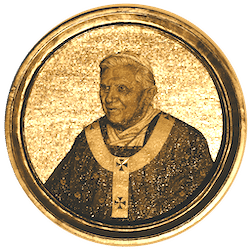
26 October 2008 | Vatican Basilica – CAPPELLA PAPALE FOR THE CONCLUSION
OF THE 12th ORDINARY GENERAL ASSEMBLY OF THE SYNOD OF BISHOPS
The Gospel: The Greatest Commandment and the Totality of Love
The Word of the Lord, resounding a short while ago in the Gospel, reminded us that the whole divine law is summarized in love. The Evangelist Matthew narrates that after Jesus had answered the Sadducees, silencing them, the Pharisees met to put him to the test (cf. Mt 22:34–35). One of them, a doctor of the law, asked him: “Teacher, which is the greatest commandment in the law?” (Mt 22:36).
The question makes apparent the concern, present in ancient Jewish tradition, over finding a unifying principle in the various formulations of God’s will. This was not an easy question, considering that in the law of Moses, a good 613 precepts and prohibitions are contemplated. How does one discern, among all of these, which is the most important?
Jesus does not hesitate, and readily responds: “You shall love the Lord your God with all your heart, and with all your soul, and with all your mind. This is the great and first commandment” (Mt 22:37–38). Jesus quotes the Shema in his answer, the prayer the pious Israelite recites several times a day, especially in the morning and in the evening (cf. Dt 6:4–9; 11:13–21; Num 15:37–41): the proclamation of the integral and total love due to God, as the only Lord.
Emphasis is placed on the totality of this dedication to God, listing the three faculties that define man in his deep psychological structures: heart, soul, and mind. The word mind (diánoia) contains the rational element. God is not only the object of love, commitment, will, and sentiment, but also of the intellect, which should not be excluded from this realm.
Then, however, Jesus adds something which had not been asked by the doctor of the law: “And a second is like it, You must love your neighbour as yourself” (Mt 22:39). The surprising aspect of Jesus’ answer consists in the fact that he establishes a similarity between the first and the second commandments, defined this time too with a biblical formula drawn from the Levitical holiness code (cf. Lev 19:18). By the end of the passage, the two commandments become connected in a fundamental union upon which all of biblical Revelation rests: “On these two commandments the whole law is based, and the prophets as well” (Mt 22:40).
Scriptural Harmony: Exodus and Thessalonians on Concretizing Love
The Gospel passage makes clear that being disciples of Christ means practicing his teachings, which can be summarized in the first and greatest commandment of the divine law: the commandment of love.
Even the First Reading, taken from the Book of Exodus, insists on the duty of love—a love witnessed concretely in relationships between persons, which must be relationships of respect, collaboration, and generous help. The neighbour to be loved is the stranger, the orphan, the widow, and the needy; in other words, those who have no earthly defender. The holy author goes into detail, as in the case of the garment pawned by a poor person (cf. Ex 22:25–26). In this instance, God himself vouches for the neighbour’s plight.
In the Second Reading, we find a concrete application of this supreme commandment of love in one of the first Christian communities. St. Paul writes to the Thessalonians, leading them to understand that, while having known them for such a short time, he appreciates them and holds them dear in his heart. Because of this, he pinpoints them as “a model for all the believers of Macedonia and Achaia” (1 Thess 1:7).
Weaknesses and difficulties were not lacking in this recently founded community, but it is love that surpasses all, renews all, and conquers all: the love of those who, knowing their own limits, docilely follow the words of Christ, the divine Teacher, passed down through one of his faithful disciples. “You, in turn, became imitators of us and of the Lord, receiving the word despite great trials, with the joy that comes from the Holy Spirit,” the Apostle wrote. He continued: “For not only has the word of the Lord sounded forth from you in Macedonia and Achaia, but your faith in God has gone forth everywhere” (1 Thess 1:6, 8).
The lesson we draw from the Thessalonians’ experience, which is common to every authentic Christian community, is that neighbourly love is born from docile listening to the divine Word. It is a love that withstands difficult trials for the truth of the divine Word; in this way, true love grows and truth shines in all its splendour. How important it is to listen to the Word and incarnate it in personal and community life!
Conclusion of the Synod: Gratitude and Fraternal Communion
In this Eucharistic celebration, which closes the work of the Synod, we sense in a particular way the bond between loving listening to the Word of God and disinterested service to the brethren. How many times over the past days have we heard reflections highlighting today’s emerging need for a more intimate listening to God, for a truer knowledge of his Word of salvation, and for a more sincere sharing of faith nourished at the table of the divine Word.
Dear and venerable Brothers, thank you for the contribution each of you has offered in analyzing the Synod’s theme: “The Word of God in the life and the mission of the Church.” I greet you all with great affection. I address a special greeting to the Cardinals, the Delegate Presidents of the Synod, and the General Secretary, whom I thank for their constant dedication. I greet you, dear brothers and sisters, who have come from every continent bringing your enriching experience. In returning home, give everyone an affectionate greeting from the Bishop of Rome.
I greet the Fraternal Delegates, the Experts, the Auditors, the Invited Guests, the members of the General Secretariat of the Synod, and all those who work with the press.
A special thought goes to the Bishops of Continental China, who could not be represented during this Synodal Assembly. I speak on their behalf and thank God for their love for Christ, their communion with the universal Church, and their faithfulness to the Successor of Peter. They are present in our prayer, along with all the faithful entrusted to their pastoral care. We ask the “Chief Shepherd” (1 Pet 5:4) to give them joy, strength, and apostolic zeal to guide, with wisdom and farsightedness, the Catholic community of China that we love so dearly.
The Ecclesial Mission: Nourishment for the New Evangelization
All of us who have taken part in the work of the Synod carry a renewed awareness: the Church’s principal task, at the start of this new millennium, is above all to nourish herself on the Word of God in order to make the new evangelization more effective.
What is needed now is that this ecclesial experience reach every community. We must translate the Word we have heard into gestures of love, because this is the only way to make the Gospel proclamation credible, despite the human weaknesses that mark individuals. First of all, this requires an intimate knowledge of Christ and ever more docile listening to his Word.
In this Pauline year, making the words of the Apostle our own: “Woe to me if I do not preach the gospel” (1 Cor 9:16), I hope with all my heart that Paul’s yearning will be felt in every community with conviction as a vocation in the service of the Gospel. At the start of the Synod, I recalled Jesus’ appeal: “the harvest is rich” (Mt 9:37)—an appeal we must never tire of answering, no matter what difficulties we encounter.
So many people are seeking, sometimes unknowingly, to encounter Christ and his Gospel; many need to find in him the meaning of their lives. Giving a clear, common witness to a life shaped by the Word of God is therefore an indispensable criterion to verify the mission of the Church.
Pastoral Biblical Promotion: Formation, Truth, and Culture
The readings offered for our meditation remind us that the fullness of the law, as of all the divine Scriptures, is love. Anyone who believes they have understood the Scriptures, or any part of them, without undertaking to build the twofold love of God and neighbour, proves to be far from having grasped their deeper meaning.
How can we put this commandment into practice without living, intense contact with the Sacred Scriptures? The Second Vatican Council asserts that “access to sacred Scripture ought to be open wide to the Christian faithful” (Dei Verbum, 22), so that persons, encountering the truth, may grow in authentic love. This is an indispensable requisite for evangelization today.
Because encounters with Scripture can fall prey to subjectivity and arbitrariness rather than remaining an authentic ecclesial act, a robust and credible pastoral promotion of the Bible is essential. We must announce, celebrate, and live the Word within the Christian community, dialoguing with the cultures of our time, placing ourselves at the service of truth rather than current ideologies, and deepening the dialogue God wishes to have with all humanity (cf. ibid., 21).
To this end, special care should be given to the preparation of pastors, equipping them to foster the biblical movement with appropriate means. Ongoing efforts to cultivate biblical literacy among the laity should be encouraged, along with the formation of group leaders, paying particular attention to the young. We must also support efforts to share faith through the Word of God with those who are “far away,” especially those who are sincerely seeking the meaning of life.
The Liturgy as the Living Home of the Word
The privileged place where the Word of God resounds and edifies the Church is undoubtedly the liturgy. Here, the Bible is revealed as a book of the people and for the people: a heritage and testament handed on so that the salvation history witnessed in the text becomes concrete in our own lives.
There exists a vital, reciprocal relationship of belonging between the people and the Book: the Bible remains a living Book with the people as its reading subject. The people cannot exist without the Book, because in it they find their purpose, their vocation, and their identity.
This mutual belonging is celebrated in every liturgical assembly. Through the Holy Spirit, the assembly listens to Christ, for it is he who speaks when Scripture is read in the Church and welcomes the Covenant that God renews with his people. Scripture and liturgy converge with a single aim: bringing the people into dialogue with the Lord and into obedience to his will. The Word issued from the mouth of God returns to him in the form of a prayerful, lived response that wells up from love (cf. Is 55:10–11).
Entrustment to Mary and Apostolic Journeys
Let us pray that from renewed listening to the Word of God, guided by the Holy Spirit, an authentic renewal in the universal Church and in every community may spring forth.
We entrust the fruit of this Synodal Assembly to the maternal intercession of the Virgin Mary. I also entrust to her the Second Special Assembly of the Synod for Africa, which will take place in Rome in October of next year. Next March, I intend to go to Cameroon to deliver the Instrumentum laboris of that Synodal Assembly to representatives of the Episcopal Conferences of Africa. From there, God willing, I will proceed to Angola to pay homage to one of the most ancient sub-Saharan Churches.
May Mary Most Holy—who offered her life as the “servant of the Lord” (Lk 1:38) so that everything would happen according to the divine will, and who exhorts us to do whatever Jesus tells us (cf. Jn 2:5)—teach us to recognize in our lives the primacy of the Word that alone grants us salvation. Amen!

30th Sunday of Year A

Catechism of the Catholic Church
Table of Contents with Paragraph Numbers
Paragraphs |
Part / Section / Chapter / Paragraph / Article |
1-25 |
|
1-3 |
|
4-10 |
|
11-12 |
|
13-17 |
|
18-22 |
|
23-25 |
|
26-1065 |
|
26-184 |
|
27-49 |
|
27-30 |
|
31-35 |
|
36-38 |
|
39-43 |
|
44-49 |
|
50-141 |
|
51-73 |
|
51-53 |
|
54-64 |
|
65-67 |
|
68-73 |
|
74-100 |
|
75-79 |
|
80-83 |
|
84-95 |
|
96-100 |
|
101-141 |
|
101-104 |
|
105-108 |
|
109-119 |
|
120-130 |
|
131-133 |
|
134-141 |
|
142-184 |
|
144-165 |
|
144-149 |
|
150-152 |
|
153-165 |
|
166-184 |
|
168-169 |
|
170-171 |
|
172-175 |
|
176-184 |
|
185-1065 |
|
185-197 |
|
198-421 |
|
199-421 |
|
199-231 |
|
200-202 |
|
203-213 |
|
214-221 |
|
222-227 |
|
228-231 |
|
232-267 |
|
232-237 |
|
238-248 |
|
249-256 |
|
257-260 |
|
261-267 |
|
268-278 |
|
275-278 |
|
279-324 |
|
282-289 |
|
290-292 |
|
293-294 |
|
295-301 |
|
302-314 |
|
315-324 |
|
325-355 |
|
328-336 |
|
337-349 |
|
350-354 |
|
355-384 |
|
356-361 |
|
362-368 |
|
369-373 |
|
374-379 |
|
380-384 |
|
385-421 |
|
386-390 |
|
391-395 |
|
396-409 |
|
410-412 |
|
413-421 |
|
422-682 |
|
430-455 |
|
430-435 |
|
436-440 |
|
441-445 |
|
446-451 |
|
452-455 |
|
456-570 |
|
456-483 |
|
456-460 |
|
461-463 |
|
464-469 |
|
470-478 |
|
479-483 |
|
484-512 |
|
484-486 |
|
487-507 |
|
508-511 |
|
512-570 |
|
514-521 |
|
522-534 |
|
535-560 |
|
561-570 |
|
571-630 |
|
574-594 |
|
577-582 |
|
583-586 |
|
587-591 |
|
592-594 |
|
595-630 |
|
595-598 |
|
599-605 |
|
606-618 |
|
619-623 |
|
624-628 |
|
629-630 |
|
631-658 |
|
632-635 |
|
636-637 |
|
638-658 |
|
639-647 |
|
648-650 |
|
651-655 |
|
656-658 |
|
659-667 |
|
665-667 |
|
668-682 |
|
668-677 |
|
678-679 |
|
680-686 |
|
683-1065 |
|
687-747 |
|
689-690 |
|
691-701 |
|
702-716 |
|
717-730 |
|
731-741 |
|
742-747 |
|
748-975 |
|
751-780 |
|
751-757 |
|
758-769 |
|
770-776 |
|
777-780 |
|
781-810 |
|
781-786 |
|
787-796 |
|
797-801 |
|
802-810 |
|
811-870 |
|
813-822 |
|
823-829 |
|
830-856 |
|
857-865 |
|
866-870 |
|
871-945 |
|
874-896 |
|
897-913 |
|
914-933 |
|
934-945 |
|
946-962 |
|
949-953 |
|
954-959 |
|
960-962 |
|
963-975 |
|
964-970 |
|
971 |
|
972 |
|
973-975 |
|
976-987 |
|
977-980 |
|
981-983 |
|
984-987 |
|
988-1019 |
|
992-1004 |
|
1005-1014 |
|
1015-1019 |
|
1020-1065 |
|
1021-1022 |
|
1023-1029 |
|
1030-1032 |
|
1033-1037 |
|
1038-1041 |
|
1042-1050 |
|
1051-1060 |
|
1061-1065 |
|
1066-1690 |
|
1076-1209 |
|
1077-1134 |
|
1077-1112 |
|
1077-1083 |
|
1084-1090 |
|
1091-1109 |
|
1110-1112 |
|
1113-1134 |
|
1114-1116 |
|
1117-1121 |
|
1122-1126 |
|
1127-1129 |
|
1130 |
|
1131-1134 |
|
1135-1209 |
|
1136-1199 |
|
1136-1144 |
|
1145-1162 |
|
1163-1178 |
|
1179-1186 |
|
1187-1199 |
|
1200-1209 |
|
1207-1209 |
|
1210-1690 |
|
1212-1419 |
|
1213-1284 |
|
1214-1216 |
|
1217-1228 |
|
1229-1245 |
|
1246-1255 |
|
1256 |
|
1257-1261 |
|
1262-1274 |
|
1275-1284 |
|
1285-1321 |
|
1286-1292 |
|
1293-1301 |
|
1302-1305 |
|
1306-1311 |
|
1312-1314 |
|
1315-1321 |
|
1322-1419 |
|
1324-1327 |
|
1328-1332 |
|
1333-1344 |
|
1345-1355 |
|
1356-1381 |
|
1382-1401 |
|
1402-1405 |
|
1406-1419 |
|
1420-1532 |
|
1422-1498 |
|
1423-1424 |
|
1425-1426 |
|
1427-1429 |
|
1430-1433 |
|
1424-1439 |
|
1440-1449 |
|
1450-1460 |
|
1461-1467 |
|
1468-1470 |
|
1471-1479 |
|
1480-1484 |
|
1485-1498 |
|
1499-1532 |
|
1500-1513 |
|
1514-1516 |
|
1517-1519 |
|
1520-1523 |
|
1524-1525 |
|
1526-1532 |
|
1533-1666 |
|
1536-1600 |
|
1537-1538 |
|
1539-1553 |
|
1554-1571 |
|
1572-1574 |
|
1575-1576 |
|
1577-1580 |
|
1581-1589 |
|
1590-1600 |
|
1601-1666 |
|
1602-1620 |
|
1621-1624 |
|
1625-1637 |
|
1638-1642 |
|
1643-1654 |
|
1655-1658 |
|
1659-1666 |
|
1667-1690 |
|
1667-1679 |
|
1677-1679 |
|
1680-1690 |
|
1681-1683 |
|
1684-1690 |
|
1691-2557 |
|
1699-2051 |
|
1700-1876 |
|
1701-1715 |
|
1710-1715 |
|
1716-1729 |
|
1716-1717 |
|
1718-1719 |
|
1720-1724 |
|
1725-1729 |
|
1730-1748 |
|
1731-1738 |
|
1739-1742 |
|
1743-1748 |
|
1749-1761 |
|
1750-1754 |
|
1755-1756 |
|
1757-1761 |
|
1762-1775 |
|
1763-1766 |
|
1767-1770 |
|
1771-1775 |
|
1776-1802 |
|
1777-1782 |
|
1783-1785 |
|
1786-1789 |
|
1790-1794 |
|
1795-1802 |
|
1803-1845 |
|
1804-1811 |
|
1812-1829 |
|
1830-1832 |
|
1833-1845 |
|
1846-1876 |
|
1846-1848 |
|
1849-1851 |
|
1852-1853 |
|
1854-1864 |
|
1865-1869 |
|
1870-1876 |
|
1877-1948 |
|
1878-1896 |
|
1878-1885 |
|
1886-1889 |
|
1890-1896 |
|
1897-1927 |
|
1897-1904 |
|
1905-1912 |
|
1913-1917 |
|
1918-1927 |
|
1928-1948 |
|
1929-1933 |
|
1934-1938 |
|
1939-1942 |
|
1943-1948 |
|
1949-2051 |
|
1950-1986 |
|
1954-1960 |
|
1961-1964 |
|
1965-1974 |
|
1975-1986 |
|
1987-2029 |
|
1987-1995 |
|
1996-2005 |
|
2006-2011 |
|
2012-2016 |
|
2017-2029 |
|
2030-2051 |
|
2032-2040 |
|
2041-2043 |
|
2044-2046 |
|
2047-2051 |
|
2052-2557 |
|
2075-2082 |
|
2083-2195 |
|
2084-2141 |
|
2084-2094 |
|
2095-2109 |
|
2110-2128 |
|
2129-2132 |
|
2133-2141 |
|
2142-2167 |
|
2142-2149 |
|
2150-2155 |
|
2156-2159 |
|
2160-2167 |
|
2168-2195 |
|
2168-2173 |
|
2174-2188 |
|
2189-2195 |
|
2196-2257 |
|
2197-2257 |
|
2201-2206 |
|
2207-2213 |
|
2214-2231 |
|
2232-2233 |
|
2234-2246 |
|
2247-2257 |
|
2258-2330 |
|
2259-2283 |
|
2284-2301 |
|
2302-2317 |
|
2318-2330 |
|
2331-2400 |
|
2331-2336 |
|
2337-2359 |
|
2360-2379 |
|
2380-2391 |
|
2392-2400 |
|
2401-2463 |
|
2402-2406 |
|
2407-2418 |
|
2419-2425 |
|
2426-2436 |
|
2437-2442 |
|
2443-2449 |
|
2450-2463 |
|
2464-2513 |
|
2465-2470 |
|
2471-2474 |
|
2475-2487 |
|
2488-2492 |
|
2493-2499 |
|
2500-2503 |
|
2504-2513 |
|
2514-2533 |
|
2517-2519 |
|
2520-2527 |
|
2528-2533 |
|
2534-2557 |
|
2535-2540 |
|
2541-2543 |
|
2544-2547 |
|
2548-2550 |
|
2551-2557 |
|
2558-2865 |
|
2558-2758 |
|
2559-2565 |
|
2566-2649 |
|
2566-2567 |
|
2568-2597 |
|
2590-2597 |
|
2598-2622 |
|
2620-2622 |
|
2623-2649 |
|
2626-2628 |
|
2629-2633 |
|
2634-2636 |
|
2637-2638 |
|
2639-2643 |
|
2644-2649 |
|
2650-2696 |
|
2652-2662 |
|
2661-2662 |
|
2663-2682 |
|
2680-2682 |
|
2683-2696 |
|
2692-2696 |
|
2697-2758 |
|
2700-2724 |
|
2700-2704 |
|
2705-2708 |
|
2709-2719 |
|
2720-2724 |
|
2725-2745 |
|
2726-2728 |
|
2729-2733 |
|
2734-2741 |
|
2742-2745 |
|
2746-2758 |
|
2752-2758 |
|
2759-2865 |
|
2761-2776 |
|
2762-2764 |
|
2765-2766 |
|
2767-2772 |
|
2773-2776 |
|
2777-2802 |
|
2777-2778 |
|
2779-2785 |
|
2786-2793 |
|
2794-2796 |
|
2797-2802 |
|
2803-2854 |
|
2807-2815 |
|
2816-2821 |
|
2822-2827 |
|
2828-2837 |
|
2838-2845 |
|
2846-2849 |
|
2850-2854 |
|
2855-2865 |
|
2857-2865 |
|
Matthew 22:34-40
Search Engine created by Jeff Pinyan
30th Sunday of Year A
Exodus 22:20-26
Search Engine created by Jeff Pinyan
30th Sunday of Year A
Thessalonians 1:5c-10
Search Engine created by Jeff Pinyan
30th Sunday of Year A
 Highlight text or double-click a paragraph anywhere on the site to ADD TO NOTES. You can also click ASK AI to copy your selection to the clipboard with a command prompt, ready for you to paste manually into the chat above.