June 15, 2025
June 15, 2025


Papal Homilies
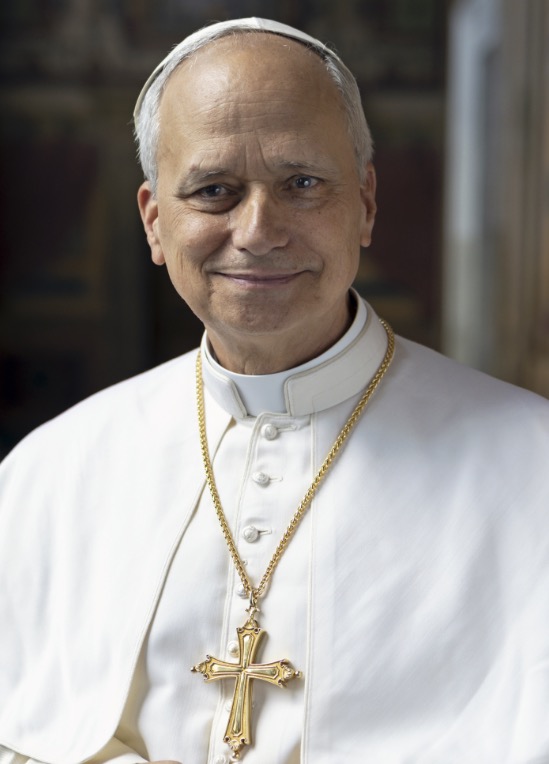

FORBES (7:39) – Pope Leo XIV delivers his first remarks to a U.S. audience since becoming Pontiff during his visit to Chicago, Illinois. (SOLEMNITY OF THE MOST HOLY TRINITY, June 14, 2025)
Pope Leo XIV Speaks To U.S. Audience For First Time Since Becoming Pontiff

This livestream allows viewers to witness the Pope’s addresses during Papal Audiences, as well as other Vatican events and news. The livestream is part of the Vatican Media Center’s efforts to share the latest updates on Pope Leo XIV, the Holy See, and the Church worldwide with a global audience.
Vatican Calendar
TRANSCRIPTS – Pope’s Addresses
Recent Addresses
JUNE 14, 2025 – Video Message of the Holy Father to the young people of Chicago and the whole world
JUNE 12, 2025 – To the Clergy of the Diocese of Rome
JUNE 10, 2025 – To Participants in the Jubilee and the Meeting of Pontifical Representatives
JUNE 7, 2025 – To participants in the Ecumenical Symposium on the occasion of the 1700th Anniversary of the Council of Nicaea


Homiletic Suggestions (2025)
edited by Father Gaetano Piccolo (SI)

Most Holy Trinity (Year C)
Dicastery for the Clergy
Homily Notes
“Operation Trinity”
The texts of today’s liturgy lead us towards “Operation Trinity”: a top secret operation in God’s heart, which is being revealed little by little, for example with the personification of Wisdom (first reading). In the Gospel, Jesus Christ introduces us to “Operation Trinity” by revealing to us the interaction between the Father, the Son and the Holy Spirit. Finally, the text of the Letter to the Romans shows the consequences of “Operation Trinity” on the lives of Christians, especially as a result of the work of the Spirit.
© Dicastery for the Clergy A | B | C
Doctrinal Messages
Pastoral Suggestions
Francis
Featured Homilies
Pope Francis
Most Holy Trinity (Year C)

A Revolution in Our Way of Life
12 June 2022 – Saint Peter’s Square
This is why celebrating the Most Holy Trinity is not so much a theological exercise, but a revolution in our way of life. God, in whom each Person lives for the other in a continual relationship, in continual rapport, not for himself, provokes us to live with others and for others. Open. Today we can ask ourselves if our life reflects the God we believe in: do I, who profess faith in God the Father, Son and Holy Spirit, truly believe that I need others in order to live, that I need to give myself to others, that I need to serve others? Do I affirm this in words or do I affirm it with my life?
The Triune God, dear brothers and sisters, must be manifested in this way — with deeds rather than words. God, who is the author of life, is transmitted not so much through books as through witness of life. He who, as the evangelist John writes, “is love” (1 Jn 4:16), reveals himself through love. Let us think about the good, generous, gentle people we have met; recalling their way of thinking and acting, we can have a small reflection of God-Love. And what does it mean to love? Not only to wish them well and to be good to them, but first and foremost, at the root, to welcome, to be open to others, to make room for others, to give space to others. This is what it means to love, at the root.
To understand this better, let us think of the names of the divine Persons, which we pronounce every time we make the sign of the cross: each name contains the presence of the other. The Father, for example, would not be such without the Son; likewise, the Son cannot be considered alone, but always as the Son of the Father. And the Holy Spirit, in turn, is the Spirit of the Father and the Son. In short, the Trinity teaches us that one can never be without the other. We are not islands; we are in the world to live in God’s image: open, in need of others and in need of helping others. And so, let us ask ourselves this last question: in everyday life, am I too a reflection of the Trinity? The sign of the cross I make every day — the Father and the Son and the Holy Spirit — is that sign of the cross we make every day a gesture for its own sake, or does it inspire my way of speaking, of encountering, of responding, of judging, of forgiving?
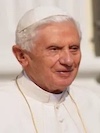
Benedict XVI
Pope Benedict XVI
Most Holy Trinity (Year C)
Manifestation of Holiness
3 June 2007 | Saint Peter’s Basilica
Today, we are celebrating the Solemnity of the Most Holy Trinity. After the Easter Season, after reliving the event of Pentecost which renews the Baptism of the Church in the Holy Spirit, we turn our gaze, so to speak, towards “the open Heavens”, to enter with the eyes of faith into the depths of the mystery of God, one in substance and three in Persons: Father, Son and Holy Spirit.
While we allow this supreme mystery to envelop us, let us admire God’s glory which is reflected in the lives of the saints. Let us contemplate it above all in those whom I have just presented for the veneration of the universal Church: George Preca, Simon of Lipnica, Charles of St Andrew Houben and Marie Eugenie of Jesus Milleret…
In the First Reading from the Book of Proverbs, Wisdom comes on the scene and stands beside God as his assistant, his “architect” (cf. 8: 30). The “panoramic view” of the cosmos, seen through the eyes of Wisdom, is stupendous. Wisdom herself admits: “[I was] playing on the surface of his earth; and I found delight in the sons of men” (8: 31).
Wisdom likes to dwell in the midst of human beings, because in them she recognizes the image and likeness of the Creator. This preferential relationship of Wisdom with human beings calls to mind a famous passage from another of the wisdom books, the Book of Wisdom: We read: Wisdom “is a breath of the power of God…. Though she is but one, she can do all things, and while remaining in herself, she renews all things; in every generation she passes into holy souls and makes them friends of God, and prophets” (Wis 7: 25-27).
SOURCE: The Holy See Archive at the Vatican Website © Libreria Editrice Vaticana If you are unable to access the Vatican website, click here to check if it is down.

St. John Paul II
Saint Pope John Paul II
Most Holy Trinity (Year C)
Feast of Holiness
10 June 2001 | Feast of Blessed Trinity
1. “Blessed be God the Father and his only-begotten Son and the Holy Spirit: for great is his love for us” (Entrance Antiphon).
The entire liturgy is focused on the Trinitarian mystery, source of life for every believer, but especially today, on the feast of the Blessed Trinity.
“Glory to the Father, glory to the Son, glory to the Holy Spirit“: every time we proclaim these words, the synthesis of our faith, we adore the only true God in three Persons. With amazement we contemplate the mystery that completely surrounds us. Mystery of love, mystery of ineffable holiness.
“Holy, holy, holy, Lord God of sabbaoth” we will sing in a little while, entering into the heart of the Eucharistic prayer. The Father created everything with his wisdom and loving providence; the Son redeemed us with his death and resurrection; the Holy Spirit sanctifies with the fullness of his gifts of grace and mercy.
We can correctly define today’s solemnity as the feast of holiness. It is a perfect day for the ceremony of the canonization of the five blesseds: Luigi Scrosoppi, Agostino Roscelli, Bernardo da Corleone, Teresa Eustochio Verzeri, Rafqua Pietra Choboq Ar-Rayès.
2. “Justified … by faith, we are in peace with God by means of our Lord Jesus Christ” (Rom 5,1).
For the apostle Paul, as we have heard in the second reading, holiness is a gift which the Father communicates to us through Jesus Christ. Faith in him is the principle of sanctification. By faith man enters the order of grace; by faith he hopes to take part in the glory of God. This hope is not a vain illusion, but the sure fruit of an ascetic path through many trials, that are faced with patience and proven virtue.
This was the experience of St Luigi Scrosoppi, during a life entirely spent for the love of Christ and his neighbour, especially, the weaker and the defenceless.
“Charity, charity”: this exclamation burst from his heart at the moment of leaving the world for heaven. He exercised charity in an exemplary way, above all, in the service of abandoned orphan girls, involving a group of teachers, with whom he was able to start the Congregation of the “Sisters of Divine Providence”.
Charity was the secret of his long and untiring apostolate, nourished by a constant contact with Christ, contemplated and imitated in the humility and poverty of his birth at Bethlehem, in the simplicity of his life of hard work at Nazareth, in the complete immolation on Calvary, and in the astonishing silence of the Eucharist. Consequently, the Church holds him up to priests and to the faithful as a model of a deep and effective union of communion with God and the service of his neighbour. In other words, he is a model of a life lived in intense communion with the Holy Trinity.
3. “Great is his love for us“. The love of God for men is revealed with special emphasis in the life of St Agostino Roscelli, whom we contemplate today in the splendour of holiness. His existence, entirely permeated by deep faith, can be considered a gift offered for the glory of God and the good of souls. Faith made him ever obedient to the Church and her teachings, in docile adherence to the Pope and to his own bishop. From faith he knew how to draw comfort in bleak times, in bitter difficulties and in painful events. Faith was the solid rock to which he held on tightly in order to avoid yielding to discouragement.
He felt the duty to communicate the same faith to others, above all, to those whom he approached in the ministry of confession. He became a master of the spiritual life, especially for the congregation of sisters founded by him. The sisters always found him serene even in the the most trying situations. St Agostino Roscelli exhorts us always to trust in God, immersing ourselves in the mystery of his love.
SOURCE: The Holy See Archive at the Vatican Website © Libreria Editrice Vaticana If you are unable to access the Vatican website, click here to check if it is down.

Most Holy Trinity (Year C)