APR 13, 2025


Papal Homilies

TIP: You can rewind the livestream up to twelve hours, allowing you to catch up on any events or addresses you may have missed.

SOURCE: Vatican News – English
This livestream allows viewers to witness the Pope’s addresses during Papal Audiences, as well as other Vatican events and news. The livestream is part of the Vatican Media Center’s efforts to share the latest updates on Pope Francis, the Holy See, and the Church worldwide with a global audience.

Fr. Gaetano Piccolo (SI)
The Dicastery for the Clergy deals with everything that concerns the priests and deacons of the diocesan clergy with regard to their persons, their pastoral ministry and what is necessary for its fruitful exercise. In these matters it offers the Bishops appropriate assistance.

Pain!
Palm Sunday C
Pain! A historical reality and God’s plan. Here lies the center of the message of Palm Sunday. The servant of Yahweh (first reading) suffers blows, insults and spitting, but the Lord helps him and shows him the meaning of pain. Saint Paul, in the Christological hymn of the Letter to the Philippians (second reading), points to Christ who “emptied himself, taking the form of a slave.” In the account of the Passion according to Saint Luke, Jesus faces unspeakable and countless forms of suffering, like a slave, but he knows that everything has been foreseen by the Father, and thus entrusts his spirit to the Father.
P. Antonio Izqeuirdo, L.C., © Dicastery for the Clergy A | B | C
Doctrinal Messages
Palm Sunday C
VATICAN
DAILY
BULLETIN
The Vatican Daily Bulletin is the official news source for the Pope’s activities and statements, providing accurate and up-to-date information. Published daily, it keeps the public informed about the Church’s activities and decisions.
Pastoral Suggestions
Palm Sunday C
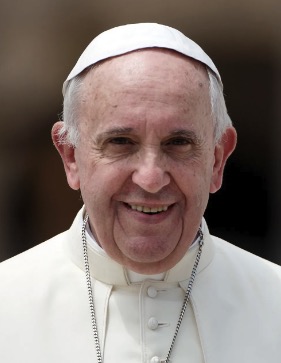
Pope Francis
Palm Sunday C

Palm Sunday
10 April 2022 | Saint Peter’s Square
On Calvary, two ways of thinking collided. In the Gospel, the words of the crucified Jesus are in sharp contrast with the words of those who crucified him. The latter keep saying: “Save yourself”. The leaders of the people said: “Let him save himself, if he is the Christ of God, his Chosen One” (Lk 23:35). The soldiers said the same thing: “If you are the King of the Jews, save yourself” (v. 37). Finally, one of the criminals, echoing their words, said to him: “Are you not the Christ? Save yourself” (v. 39). Save yourself. Take care of yourself. Think of yourself. Not of others, but only of your own well-being, your own success, your own interests: your possessions, your power, your image. Save yourself. This is the constant refrain of the world that crucified the Lord. Let us think about it.
Against this self-centred mindset is God’s way of thinking. The mantra “save yourself” collides with the words of the Saviour who offers his self. Like his adversaries, Jesus speaks three times in today’s Gospel (cf. vv. 34.43.46). Yet he did not claim anything for himself; indeed, he did not even defend or justify himself. He prayed to the Father and offered mercy to the good thief. One of his words, in particular, marked the difference with regard to the mantra “save yourself”. He said: “Father, forgive them” (v. 34).
Let us reflect on the Lord’s words. When did he say them? At a very specific moment: while he was being crucified, as he felt the nails piercing his wrists and feet. Let us try to imagine the excruciating pain he suffered. At that moment, amid the most searing physical pain of his Passion, Christ asked forgiveness for those who were piercing him. At times like that, we would scream out and give vent to all our anger and suffering. But Jesus said: Father, forgive them.
Benedict XVI
Palm Sunday C

25th World Youth Day
28 March 2010 | Saint Peter’s Square
The Gospel of the blessing of the palms that we have heard gathered here in St Peter’s Square, begins with the sentence: “[Jesus] went on ahead, going up to Jerusalem” (Lk 19: 28). At the very beginning of today’s Liturgy, the Church anticipates her response to the Gospel saying: “Let us follow the Lord”. This clearly expresses the theme of Palm Sunday. It is the sequela. Being Christian means considering the way of Jesus Christ as the right way for being human as that way which leads to our destination, to a completely fulfilled and authentic humanity. In a special way I would like to repeat to all young people on this 25th World Youth Day that being Christian is a path or, better, a pilgrimage; it is to travel with Jesus Christ, to journey in the direction he has pointed out and is pointing out to us.
But what direction is this? How do we find it? Our Gospel passage offers two clues in this regard. In the first place it says that it is an ascent. This has first of all a very concrete meaning. Jericho, where the last part of Jesus’ pilgrimage began, is 250 metres below sea-level, whereas Jerusalem the destination is located at 740 to 780 metres above sea level: a climb of almost 1,000 metres. But this external route is above all an image of the internal movement of existence that occurs in the following of Christ: it is an ascent to the true heights of being human. Man can choose an easy path and avoid every effort. He can also sink to the low and the vulgar. He can flounder in the swamps of falsehood and dishonesty. Jesus walks before us and towards the heights. He leads us to what is great, pure. He leads us to that healthy air of the heights: to life in accordance with the truth; to courage that does not let itself be intimidated by the gossip of prevalent opinions; to patience that bears with and sustains the other. He guides people to be open towards the suffering, to those who are neglected. He leads us to stand loyally by the other, even when the situation becomes difficult. He leads us to the readiness to give help; to the goodness that does not let itself be disarmed, even by ingratitude. He leads us to love he leads us to God.
Jesus “went on ahead, going up to Jerusalem”. If we interpret these words of the Gospel in the context of the way Jesus took in all its aspects a journey which, precisely, continues to the end of time in the destination, “Jerusalem”, we can discover various levels indicated. Of course, first of all, it must be understood that this simply means the place, “Jerusalem”: it is the city in which God’s Temple stood, whose uniqueness must allude to the oneness of God himself. This place, therefore, proclaims two things: on the one hand it says that there is only one God in all the world, who exceeds by far all our places and times; he is that God to which the entire creation belongs. He is the God whom all men and women seek in their own depths, and of whom, in a certain way, they all have some knowledge. But this God gave himself a Name. He made himself known to us, he initiated a history with human beings; he chose a man Abraham as the starting point of this history. The infinite God is at the same time the close God. He, who cannot be confined to any building, nevertheless wants to dwell among us, to be totally with us.