Catholic Digest, Homily Themes
Catholic Digest, Homily Themes
June 7, 2026







Body and Blood of Christ (A)
Welcome to Catholic Digest, a comprehensive online space dedicated to deepening your engagement with the Sunday liturgy throughout the week.
Rather than leaving the message of the Mass in the pews, this collection serves as a dynamic bridge between the Sunday readings and your daily life. Through a diverse array of perspectives—ranging from art and film to mental health and ordained ministry—this digest offers profound ways to reflect on scripture. Whether you are looking for theological insights, visual meditation, or practical spiritual care, the sections below are curated to help you carry the Word of God into your lived experience.
Recent Blog Posts (Updated Daily)
Our Blogs section features recent, daily-updated posts from a variety of contributors reflecting on the Sunday readings. These voices bring fresh, personal, and theological insights to the scriptures, helping you uncover new layers of meaning in familiar texts. It serves as a continuous conversation throughout the week, ensuring the Word remains an active part of your daily meditation.
Sunday Examen
The Examen offers a guided examination of conscience tailored directly to the themes of the Sunday readings. Rooted in the Catholic tradition of prayerful reflection, this tool helps you review your week through the specific moral and spiritual lens provided by the liturgy. It is designed to invite repentance, gratitude, and a clearer awareness of God’s presence in your everyday choices.
Diaconate Reflection
In the Diaconate section, you will find a weekly reflection exploring the unique ministry of the permanent diaconate, using the Sunday scriptures as a foundation. This provides valuable insight into how deacons are called to serve the Church in charity, word, and liturgy. It is an excellent resource for those seeking to understand this vital vocation or for anyone looking to connect the scriptures to a life of active service.
Word and Art – Bishop John P. Dolan
Word and Art features an engaging weekly video series presented by Bishop John P. Dolan of the Diocese of Phoenix. Drawing upon his academic background in church art and architecture, Bishop Dolan explores the Sunday readings through the rich visual tradition of the Church. This visual meditation helps bring the biblical narrative to life, revealing the deep connections between sacred scripture and sacred beauty.
Faith & Film
Faith and Film bridges the gap between secular culture and the sacred by showcasing both mainstream and religious media that resonate with the themes of the Sunday readings. By analyzing the narratives, characters, and moral dilemmas depicted on screen, this section demonstrates how the enduring truths of scripture echo throughout modern storytelling.
Holy Ads
The Holy Ads section takes a unique approach to evangelization by highlighting television commercials that surprisingly align with the messages of the Sunday readings. This creative exploration challenges readers to find glimpses of grace and moral reflection in the most unexpected places, proving that the search for meaning and truth permeates all aspects of media and commerce.
Faith Talk – Cardinal Timothy Dolan
Featuring a concise, one-minute reflection by Cardinal Timothy Dolan, Faith Talk delivers a sharp and spiritually nourishing insight perfectly suited for busy schedules. With his trademark warmth and pastoral clarity, Cardinal Dolan unpacks a core truth from the liturgy, giving you a focused spiritual takeaway to carry through your day.
Vocations to the Priesthood
The Vocations to the Priesthood essay draws a direct line between the Sunday readings and the call to priestly ministry. By exploring the scriptural models of sacrifice, leadership, and pastoral care, this section encourages prayer for vocations while offering profound reflections on the nature of the priesthood for both those discerning and those supporting them.
Soul Care
Recognizing the deep connection between spiritual and mental wellbeing, Soul Care provides a weekly essay that links the Sunday readings to emotional and psychological health. This section offers practical, faith-based wisdom for navigating anxiety, grief, relationships, and personal growth, ensuring that the healing message of the Gospel reaches the whole person.
Pro-Life Reflection
The Pro-Life Reflection section examines the Sunday readings through the lens of the Church’s commitment to the dignity of human life. It offers thoughtful commentary on how the scriptures challenge us to protect and cherish life from conception to natural death, providing spiritual grounding for advocacy and compassionate action.
Formed – On Demand Videos
For those looking to go deeper through digital media, the Formed section highlights upcoming on-demand videos and Catholic content curated for the current week. This acts as a viewing guide to high-quality Catholic teaching, documentaries, and entertainment that align with the liturgical calendar and ongoing spiritual formation.
Catholic Press
Finally, the Catholic Press section keeps you informed with the latest Catholic news headlines. To make it easy to follow both local and national Catholic journalism, this section features a comprehensive index of links to all major Catholic diocesan newspapers and magazines. By staying connected to the universal Church—from the happenings in your own diocese to international reporting—readers can see how the timeless truths proclaimed on Sunday are being lived out, challenged, and defended in today’s world.
Theology, Apologetics & Evangelization
These channels focus on explaining and defending the Catholic faith, often engaging with modern culture and other viewpoints.
- Bishop Robert Barron (Word on Fire): One of the most influential voices in the Church, offering cultural commentary, movie reviews, and deep theological deep-dives.
- Ascension Presents: A powerhouse channel featuring popular figures like Fr. Mike Schmitz (known for the “Bible in a Year” and “Catechism in a Year” podcasts) and Fr. Josh Johnson, offering accessible videos on faith and life.
- Catholic Answers: The premier channel for Catholic apologetics, featuring live Q&A shows where apologists answer tough questions from callers.
- Pints with Aquinas (Matt Fradd): Long-form interviews and discussions on theology, philosophy, and culture, often over a drink.
- The Counsel of Trent (Trent Horn): Trent Horn, a Catholic Answers apologist, provides rebuttals to atheist and Protestant arguments, as well as commentary on current events.
- Jimmy Akin: A senior apologist at Catholic Answers known for his fairness and deep knowledge, covering everything from bizarre questions to deep theology.
- Breaking In The Habit (Fr. Casey Cole, OFM): A young Franciscan friar who offers fresh, accessible reflections on faith, vocations, and everyday life.
- Thomistic Institute: Excellent, high-quality animated videos and lectures explaining the philosophy and theology of St. Thomas Aquinas.
Body and Blood of Christ (A)
PRACTICAL
ACTIONS
Remembrance & Humility
- Practice a “Blessing Audit”: Spend 10 minutes at the end of the week writing down 3 specific moments where God provided for you in a difficult situation. Actively fight “spiritual amnesia” by keeping a running log of past prayers answered.
- Fast from a Digital/Physical Comfort: Choose one day a week to voluntarily lean into a small “wilderness” experience. Give up coffee, social media, or a specific comfort for 24 hours to intentionally remind your body that you “do not live by bread alone,” but by what satisfies the soul.
- Catch Your Self-Sufficiency: The moment you catch yourself feeling proud of an accomplishment, a financial win, or a personal success, immediately pause and pray: “Thank you, Lord, for giving me the breath, talents, and opportunity to do this. It belongs to You.”
Communal Unity & Participation
- The “One Body” Speech Check: Before you speak or text about someone in your parish, workplace, or family, ask yourself if your words are fracturing or healing the body of Christ. If it’s gossip or tribalism, choose silence or a word of defense instead.
- Bridge a Social Divide at Church: Don’t just sit with the same people or rush out to the parking lot after Mass. Intentionally introduce yourself to someone of a different age, background, or social circle in your parish community to honor the “unity in diversity.”
- Offer a Cup of Blessing: Bring the horizontal reality of communion alive by serving someone in need this week. Prepare a meal for a sick neighbor, donate to a local food pantry, or check in on someone you know is feeling isolated.
Remaining in Christ’s Presence
- Spend 15 Minutes in Adoration: Visit a chapel or quiet church to spend time directly in the presence of the Blessed Sacrament. If you can’t go in person, dedicate 15 minutes of uninterrupted, silent prayer at home entirely focused on thanking Jesus for the gift of His Real Presence.
- Examine Your Conscience Before Mass: Don’t let receiving communion become an unthinking habit. Take 5 minutes on Saturday night or Sunday morning to sincerely evaluate your heart, ensuring you are approaching the altar with reverence, a clean soul, and deep desire.
- Live the “Post-Communion” Sending: When you receive Christ, you become a living tabernacle carrying Him into the world. On Monday morning, intentionally choose one specific environment (like a stressful meeting or a difficult conversation) to explicitly let Christ’s patience, mercy, and truth rule your reactions.
Body and Blood of Christ (A)

Parishes have permission to copy/paste this graphic in bulletin.
“Remember how for forty years now the Lord, your God, has led you in the wilderness… He therefore let you be afflicted with hunger, and then fed you with manna…”
This passage confronts our spiritual amnesia, our pride, and how we handle times of scarcity or abundance.
- Amnesia vs. Remembrance: Have I forgotten the times God delivered me from difficulty, or have I grown cynical, treating His past blessings as mere coincidence?
- The Illusion of Self-Sufficiency: Do I say in my heart, “My own power and the might of my own hand have gotten me this wealth” (Deut 8:17), forgetting that every breath and resource is a gift?
- Spiritual Hunger: When God allows me to experience spiritual dryness or “hunger” in the wilderness of life, do I grumble and turn to worldly comforts (addictions, distractions, superficial pleasures), or do I trust that He is testing and forming my heart?
- “Not by Bread Alone”: Do I prioritize feeding my physical, emotional, or social desires over feeding my soul with the Word of God?

Parishes have permission to copy/paste this graphic in bulletin.
“The cup of blessing that we bless, is it not a participation in the blood of Christ? The bread that we break, is it not a participation in the body of Christ? Because the loaf of bread is one, we, though many, are one body…”
St. Paul focuses intensely on koinonia—our horizontal communion with one another because of our vertical communion with Christ.
- The Sin of Division: If I receive the Eucharist, which is the sacrament of unity, am I simultaneously harboring division, bitterness, or malice toward others? Am I actively fracturing the body of Christ through gossip, judgment, or political and social tribalism?
- Isolationism: Do I view my faith as purely “Jesus and me,” ignoring my responsibility to the local community, the poor, and the vulnerable who sit in the pews next to me?
- Indifference to Communion: Do I approach the “cup of blessing” casually, without recognizing the profound reality that I am participating in the actual blood and body of Christ?
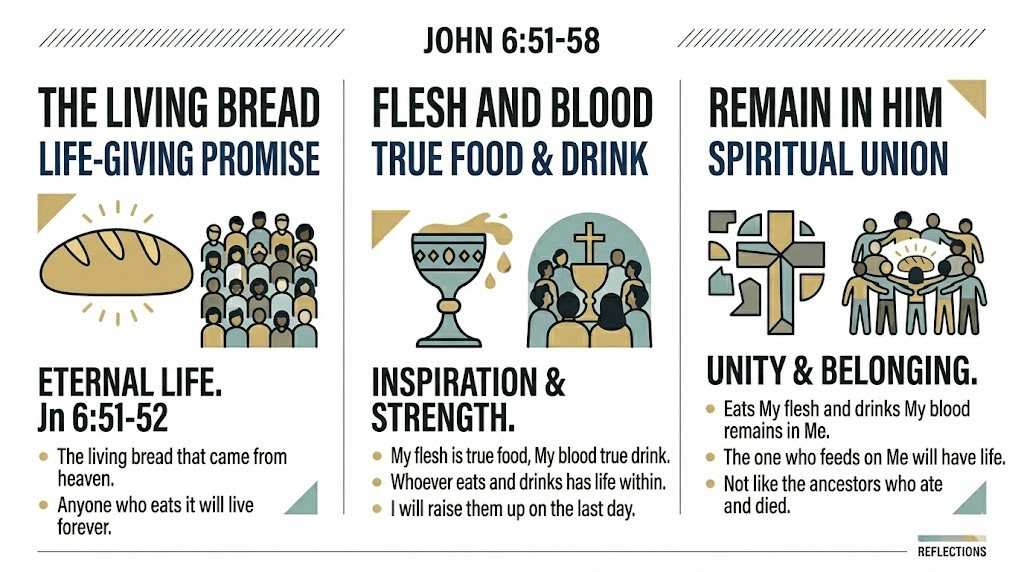
Parishes have permission to copy/paste this graphic in bulletin.
“I am the living bread that came down from heaven; whoever eats this bread will live forever… For my flesh is true food, and my blood is true drink. Whoever eats my flesh and drinks my blood remains in me and I in him.”
Jesus’ discourse in John 6 is radical and demanding. It calls for total belief in His Real Presence and a life completely sustained by Him.
- Belief in the Real Presence: Do I truly believe that Jesus is substantially present in the Eucharist—Body, Blood, Soul, and Divinity—or do I treat it as a mere symbol?
- Worthiness of Reception: Have I presumed upon God’s mercy by receiving the Eucharist while conscious of grave (mortal) sin, without first seeking reconciliation in the Sacrament of Penance?
- Apathy Toward the Mass: Do I skip Mass on Sundays or Holy Days out of laziness or because I value other activities more? When I am at Mass, am I actively present, or am I distracted and eager for it to end?
- “Remaining” in Him: To consume Christ means to let Him consume us. Does my life look different after I receive Communion? Do I allow Jesus to remain in me throughout the week, guiding my decisions, my speech, and my private thoughts?
- Fear of the Radical: When Christ’s teachings challenge my lifestyle, my politics, or my personal morals, do I find them “too hard to accept” and walk away, like many of the disciples did in John 6?
Non-profits have permission to copy and paste infographics into their publications.
Body and Blood of Christ (A)
The Bearer of the Living Bread
Gospel: John 6:51–58
Theme: I am the Living Bread… My flesh is true food.
McCulloch
(Diocese of Broken Bay)
On this great Solemnity, the Church stops to gaze in wonder at the very “source and summit” of our faith: the Most Holy Eucharist. The waiting of Advent, the sorrow of Lent, and the joy of Easter all lead to this. The “Word made flesh” (Christmas) has now become the “Flesh made food” (Corpus Christi).
Jesus’s words in John 6 are not a metaphor; they are a promise of profound intimacy: “My flesh is true food, and my blood is true drink.” This is the “Living Bread” that nourishes the world.
For the deacon, this feast is the key to his entire vocation. He is a man of the Altar and a man of the Street. He serves the “true food” in the liturgy, and he carries that same food to those on the margins. His ministry is the living bridge between Communion and Mission, proving that the Eucharist is not a static object of adoration, but a dynamic, self-giving love made flesh.
AT MASS
The Minister of the True Food
The deacon’s liturgical role is a profound witness to the Real Presence.
• Behold the Lamb of God: When the deacon assists at the altar, he is the herald of the Presence. His voice joins the priest’s in that pivotal moment: Behold the Lamb of God. He is the John the Baptist of the liturgy, pointing not to himself, but to the true food that takes away the sins of the world.
• The Minister of the Cup: The deacon’s most ancient and defining liturgical role is his care for the Chalice. He is the ordinary minister of the Precious Blood. When he elevates the cup containing the Blood of Christ, he is the servant of the true drink promised in the Gospel, the covenant made visible.
• The Homily of Reverence: The deacon’s actions, including his reverent handling of the sacred vessels, and his genuflection before the tabernacle, are a non-verbal homily on the Real Presence. By his service he shows the assembly that this is indeed the Body and Blood of the Lord.
IN THE PARISH
The Animator of the Body
The source and summit (St. John Paul II) must have a flow. The deacon’s diakonia is the channel that connects the parish’s worship to its work.
• From Source to Service: We receive the Body of Christ to become the Body of Christ. The deacon is the animator of charity, the one who constantly challenges the parish: “We have been fed; now, who must we feed?” His ministry ensures that the summit of the altar becomes the source for the food pantry, the social justice ministry, and the parish’s care for the poor.
• Minister of Adoration: The deacon is often a leader in the parish’s Eucharistic life, leading Benediction or presiding at Eucharistic adoration. He leads the community in staying with the Lord he serves, fostering the quiet, contemplative love that must precede active service.
AT THE MARGINS
The Bearer of the Bread
This is the deacon’s ministry made most tangible. The Altar is not a table that ends at the sanctuary steps. The deacon extends the Altar to the ends of the parish.
• The Altar Extended: The deacon’s most profound Eucharistic work is bringing the Living Bread to those who cannot come: the sick, the homebound, and the imprisoned. The pyx he carries is the altar, brought to the stable of a hospital room or the locked room of a shut-in’s home.
• Behold at the Bedside: In that intimate setting, the deacon’s ministry becomes whole. He reads the Word, he speaks a word of comfort, and then he holds up the Host and says, “Behold the Lamb of God.” This is the deacon’s vocation in a single gesture- making God’s mercy visible and tangible for the one who needs it most.
• The Mission of the Eucharist: This act proves that the Eucharist is not a reward for the healthy, but food for the journey, especially for the suffering. The deacon’s service makes love flesh all over again, turning the meal of the altar into the mission of the world.
Body and Blood of Christ (A)
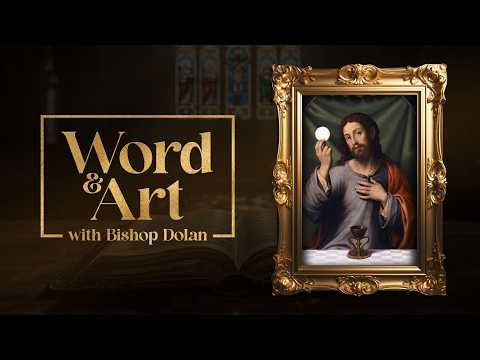
The Bread of Life: Christ’s Enduring Presence in the Eucharist
by Bishop John P. Dolan
Diocese of Phoenix
The Invitation of John 6
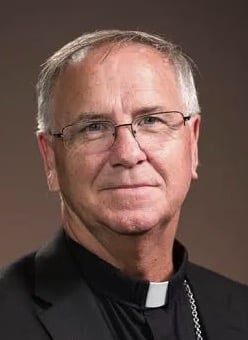
For this Solemnity of the Most Holy Body and Blood of Christ, we turn to what is called the Bread of Life discourse in the Gospel of John, where Jesus speaks words that are as startling as they are life-giving:
“I am the living bread that came down from heaven. Whoever eats this bread will live forever.”
The Tabernacle Door of Valencia Cathedral

This remarkable work by Vicente Juanes Macip, painted between 1578 and 1620 for Valencia Cathedral, was once the door of a tabernacle, the very place where the Eucharist is reserved. It is now found in the Museum of Fine Arts in Budapest. Here, Christ himself is holding the host, offering it directly to us.
Notice how intimate this is. Christ does not simply point to the bread. He is the one who gives himself as bread. Below him rests a chalice modeled after the one preserved in the cathedral, long associated with the Holy Grail. Whether or not it is the historical cup of the Last Supper, its presence here draws our attention to the mystery of continuity. The same Jesus who took bread and wine at the Last Supper now gives himself to us in every Eucharist.
Thomas Merton and the Mystery of Presence
In John 6, Jesus does not soften his words. He intensifies them: “My flesh is true food, and my blood is true drink.” This is not a metaphor. It is an invitation. And here, the insight of the famous American Trappist monk and theologian, Thomas Merton, helps us go deeper.
Merton reminds us that at the Last Supper, when Jesus spoke the words over the bread, nothing changed about his visible, physical presence at the table. He remained there, fully present to his disciples, and yet at the same moment, he became truly present in a new way, in the bread that he gave them.
A Sacramental Reality Received in Faith
In other words, Christ is fully present in heaven, in his glorified body, and yet he is also fully present in the Eucharist. We receive, not symbolically, not partially, but truly. The difference is not whether he is present, but rather how. In heaven, his presence is natural, visible, and spatial. In the Eucharist, his presence is sacramental, hidden, mysterious, but no less real.
Merton says this presence is unique, unlike anything else in the natural world. It is not something we can compare to ordinary experience. It is a presence that must be received in faith. And so, as we gaze upon this image, Christ holding the host, we realize something very profound. The same Lord who reigns in heaven, the same Lord who sat at the table with his disciples, now places himself into our hands. Not because we understand it fully, but because he loves us completely. Whoever eats this bread will live forever.
Body and Blood of Christ (A)
The Feeding of the 5,000
The Chosen (Season 3, Episode 8)
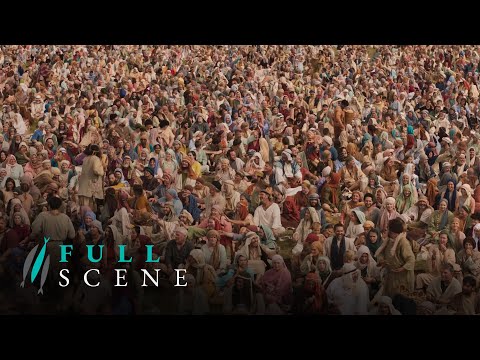
The Chosen builds up to the Feeding of the 5,000 across Season 3, dynamically setting the stage for the Bread of Life discourse. The series masterfully handles the tension between physical hunger and spiritual starvation. When Jesus multiplies the loaves, it directly mirrors the miraculous provision of Manna in Deuteronomy. As the series moves forward into the Capernaum synagogue scenes, the dialogue explicitly wrestles with John 6, where the crowd wants a king who provides free physical bread, but Jesus pivots to demand they consume the "Living Bread."
The Elevation of Christ's Body
The Passion of the Christ (2004)

THE PASSION OF CHRIST( 2:57) - In this deeply emotional scene from Mel Gibson’s The Passion of the Christ, as Jesus hangs on the cross, the camera shifts to the reactions of those who love Him — Mary, John, and Mary Magdalene — standing near, broken but faithful. The suffering of Jesus is mirrored in His mother’s silent agony, as she watches her son fulfill His divine mission. As the crowd mocks and soldiers gamble, a profound moment of spiritual reflection unfolds — Jesus looks toward John, and John recalls the words Jesus spoke during the Last Supper, the institution of the Eucharist. In that gaze, Jesus silently entrusts to John the memory of that sacred meal and the mission to carry His love forward.
As Jesus is stripped of His garments on Golgotha and nailed to the cross, the film utilizes a stark, slow-motion flashback to the Upper Room. The camera cuts back and forth between the Roman soldiers lifting the cross into place and Jesus lifting the unleavened bread at the Last Supper, declaring to His disciples, "This is my body." The scene concludes with the pouring of the dark wine into the chalice, juxtaposed directly with the first drops of Christ’s blood spilling onto the dust of Calvary.
Theological Connection: John 6:51-58
This sequence visually encapsulates the raw realism of the Bread of Life Discourse. When Jesus states in John 6:51, "The bread that I will give is my flesh for the life of the world," it is not a mere metaphor. The film forces the viewer to connect the physical, brutal sacrifice of the cross with the liturgical element of the Eucharist. The flesh eaten by the faithful is the exact flesh offered in sacrifice on the cross.
Cast Away (2000)

Cast Away (2000) is a survival drama starring Tom Hanks as Chuck Noland, a time-obsessed FedEx systems analyst. After his cargo plane crashes in the Pacific Ocean, he is stranded on an uninhabited island for four years. He must learn to survive, maintain his sanity—befriending a painted volleyball named “Wilson”—and eventually build a raft to return home.

The Humbling of the Clock: Chuck Noland (Tom Hanks), a hyper-efficient FedEx executive obsessed with time, finds himself stripped of all modern infrastructure on a deserted, rocky island. The scene shows him desperately trying to crack open a coconut for a few drops of water, cutting his hands, weeping in frustration, and eventually sorting through washed-up FedEx packages. Instead of high-tech tools, he finds a pair of ice skates, a dress, and a volleyball—mundane items he must completely re-conceptualize just to survive.
Theological Connection: This narrative arc perfectly mirrors the psychological and physical reality of the Sinai wilderness (Deuteronomy 8:2-3, 14b-16a). God led Israel into a “vast and terrifying wilderness” to humble them, test them, and let them hunger so they would realize they could not sustain themselves by their own cleverness or previous Egyptian security. Chuck is completely stripped of his “bread”—his technology, scheduling, and control—forcing him into a fundamental posture of dependency where survival becomes a daily, unearned gift.
The Martian (2015)

The Martian (2015) is a sci-fi survival film following astronaut Mark Watney. Presumed dead and left behind on Mars during a fierce dust storm, Watney survives and uses his botany and scientific ingenuity to grow food and generate water. Ultimately, NASA and his former crew execute a daring rescue to bring him home

The First Harvest of Acid Soil: Astronaut Mark Watney (Matt Damon) is stranded alone on Mars with a finite amount of rations. Recognizing that he will starve before rescue arrives, he turns the sterile habitat into a greenhouse. The camera intimately follows his painstaking labor: mixing sterile Martian soil with human waste and manufactured water to grow potatoes. When the first green sprouts break through the dark soil, Watney stares at them in absolute quietude, recognizing that his existence has been extended by a fragile, miraculous intervention of life from a dead landscape.
Theological Connection: This sequence mirrors the theological structure of Manna brought forth in a wasteland where life is naturally impossible. Deuteronomy highlights a God “who fed you in the wilderness with manna that your ancestors had not known.” Watney cannot rely on the normal agricultural ecosystems of Earth; he is completely dependent on an unprecedented, highly managed extraction of food in a desert of absolute death. It isolates the psychological weight of receiving sustenance in a place where naturally, there should only be starvation. (Deuteronomy 8:14b-16a & John 6:58)
Alive (1993)

Alive (1993) is a survival drama based on the true story of the 1972 Uruguayan Air Force Flight 571 crash. When a plane carrying a rugby team to Chile crashes in the Andes mountains, the stranded passengers endure 70 days of freezing weather, avalanches, and starvation before a final trek to rescue.

The Covenant on the Glacier: Nando Parrado (Ethan Hawke) sits with the remaining teammates in the wrecked fuselage. Realizing that their deceased friends are the only source of protein available, they hold a harrowing discussion. One survivor explicitly states the framework: his body belongs to the others, and if he dies, they must eat him to survive. They touch hands, establishing a profound, desperate pact of mutual survival before consuming the flesh of the dead.
Theological Connection: This represents the most stark, secular instantiation of eucharistic theology imaginable. When Jesus says, “Whoever eats my flesh and drinks my blood has eternal life,” (John 6:54-56) He establishes a reality where His actual death provides the physical and spiritual continuity of His followers. In Alive, the consumption of the flesh is explicitly understood not as desecration, but as an act of profound communion and necessity. The life of the deceased physically enters the survivors, sustaining them through the wilderness and binding them into an unbreakable, corporate unit.
Body and Blood of Christ (A)
The Story of Sarah & Juan
Extra Gum (2015)

Thematic Focus: 1 Corinthians 10:16-17 (The One Body / Participation)
The commercial tracks a young couple, Sarah and Juan, through the high school and college seasons of their relationship. At every key turning point—both joyful and stressful—they share a simple stick of Extra gum. Crucially, Juan secretly draws a sketch of their shared moment on the wrapper each time. At the climax of the ad, Sarah walks into an art gallery to find all those wrappers framed in chronological order, mapping out their entire history together before Juan proposes.
Empty Chair
Guinness (2014)

Theme: 1 Corinthians 10:16-17 & John 6:56 (Abiding in Communion)
Set in a local neighborhood pub, a bartender repeatedly pours a single pint of Guinness stout and places it at an empty table under a spotlight. Night after night, the locals leave that table completely untouched. The physical presence of the dark pint stands in stark contrast to the physical absence of the person it belongs to. At the very end of the ad, the door opens, and a soldier returns home from deployment. He walks to the table, picks up the pint, and raises a glass with his friends who have been waiting for him.
Guiding Mom Back to Reality
Chevrolet Holiday Commercial (2023)

Thematic Focus: Deuteronomy 8:2-3, 14b-16a (The Wilderness of Forgetting & Divine Remembrance)
This extended holiday commercial follows an elderly grandmother suffering from advanced Alzheimer’s disease. She sits at the breakfast table, physically present but completely locked inside the “vast and terrifying wilderness” of her own fading mind, unable to recognize her own family.
Her granddaughter decides to guide her back to reality. She walks her past the busy family chaos, puts her into a classic 1972 Chevrolet Suburban, and takes her on a quiet drive through their old hometown. By visiting the childhood home, driving past old landmarks, and playing a specific piece of music, the fog momentarily clears. The grandmother turns, looks at her granddaughter with complete clarity, tracks her eyes, and says, “Thank you.”
Body and Blood of Christ (A)

VIEWING GUIDE

From Headlines to Heaven: Transforming the World’s Sorrows into Morning Supplication
AT A GLANCE
- The Liturgy as an Anchor: The Divine Office (Liturgy of the Hours) is the universal prayer of the Church, serving as a vital daily anchor not just for the ordained and religious, but increasingly for the lay faithful.
- Intercessory Prayer: The trials, traumas, and sorrows present in the world are not meant to drive us to despair, but rather to provoke active, intercessory prayer.
- Integrating Faith and the World: Inspired by the wisdom of G.K. Chesterton, the Christian life requires us to confront the brokenness of the world—such as the tragedies reported in the daily news—and consciously elevate those realities to the Lord through supplication.
QUESTIONS FOR REFLECTION
- What current habits or routines serve as the “anchor” for my day, and is God at the center of them?
- When I consume the daily news and encounter stories of tragedy or difficulty, is my immediate response one of anxiety, indifference, or prayerful intercession?
- How might I begin to incorporate the formal prayer of the Church, such as the Liturgy of the Hours, into my own morning routine?
- In what ways can the struggles of my local community and the wider world fuel my relationship with God rather than distance me from Him?
ACTIONABLE TAKEAWAY
- Pair the News with Intercession: Tomorrow morning, intentionally combine your intake of the news with your prayer time. Let the headlines guide your intercessions. If you read about a community in crisis, a local tragedy, or a global conflict, pause immediately to offer a specific prayer for the individuals involved.
- Establish a Morning Anchor: Commit to a definitive morning prayer routine. If you are new to the Divine Office, explore a simplified version of Morning Prayer (Lauds) through a Catholic app or booklet, or simply dedicate the first few minutes of your morning to offering the day’s upcoming challenges to the Lord.
- Transform Worry into Supplication: Use G.K. Chesterton’s habit as a daily trigger. Whenever you feel overwhelmed by the negativity of the daily news cycle, use that exact moment of frustration or sorrow as a prompt to make a specific supplication to God, transforming passive anxiety into active spiritual support.
TWTW used AI to assist him in writing this essay.
Body and Blood of Christ (A)

Download PDF (High Resolution)
Non-profits have permission to use in their ministry.
From Desert to Living Bread
To understand the gravity of the call you are exploring, you must look closely at the trajectory of Sunday’s readings: the discipline of the wilderness (Deuteronomy 8), the horizontal unity of the mystical body (1 Corinthians 10), and the radical self-donation of the Living Bread (John 6). Together, these texts map out the hidden mechanics of a priest’s life.
If you look at the scriptures for this Sunday, you will find the exact blueprint for the heart of a priest. It is a blueprint drawn from the raw mercy of Exodus, the communal harmony of 2 Corinthians, and the staggering, self-emptying love of John’s Gospel.
The Crucible of the Desert
Moses reminds Israel that the wilderness was not an administrative mistake; it was a divine crucible. God led the people into a vast, punishing desert to let them hunger, stripping away the predictable security of Egypt. If you are discerning properly, you will experience your own desert.
Our contemporary world offers an immediate, digital buffet of noise, validation, and comfort. Discernment breaks that illusion of self-sufficiency. God allows you to encounter your own weakness, your loneliness, and your limitations. Do not fear these dry seasons. The desert is where you discover that you cannot survive on your own cleverness or charm. It is the place where you learn that human beings do not live by physical bread alone, but by the steady, unearned word of God.
In Persona Christi: A Radical Demand
This wilderness training is meant to form you into a man who can handle the single most dramatic reality on Earth: the Eucharist. In the Gospel of John, Jesus uses raw, non-negotiable language: “The bread that I will give is my flesh for the life of the world.” The crowd was scandalized because they wanted a political Messiah who provided free, easy bread; instead, Jesus offered them His own crucified flesh.
As a priest, you are called to step into that exact identity. You are not a mere community organizer or a spiritual therapist. Through the Sacrament of Holy Orders, you are configured to Christ in persona Christi capitis (in the person of Christ the Head). At the altar, you will speak the words, “This is my body.” For a priest, these words must be a total, existential reality. You are offering your own sleep, your own privacy, your own blood, and your own life to be broken and consumed by the people of God.
Koinonia: Reclaiming Unity
This total sacrifice is precisely what builds the Church. In his letter to the Corinthians, St. Paul highlights the horizontal mystery of communion: “Because there is one bread, we who are many are one body.” Our contemporary culture is deeply fragmented, lonely, and hyper-individualistic. People sit isolated behind screens, starving for authentic belonging.
The priesthood is the divine antidote to this isolation. The Eucharist you are called to consecrate is the very source of human unity. When you lift the paten, you are gathering the corporate reality of a broken community—the rich, the poor, the doubt-ridden, and the devout—and fusing them into a single spiritual body.
Conclusion
The wilderness is long, and the standard of the cross is demanding, but the One who calls you is entirely faithful. Trust the process of the desert, gaze upon the Living Bread, and let Him shape you into a priest who can feed a starving world.
TWTW used AI to help write/edit this essay.
Body and Blood of Christ (A)
Eucharistic Adoration
The modern world is loud, fast, and relentlessly demanding. For someone carrying the heavy burdens of guilt, unconfessed sin, or the crushing weight of daily stress, life can quickly feel like an unmanageable desert. In the midst of this internal chaos, Eucharistic Adoration offers a profound remedy—a quiet sanctuary of radical presence. By stepping out of the noise and sitting before the Blessed Sacrament, a troubled soul is invited into a space of healing, identity restoration, and deep peace.
The spiritual dynamics of this encounter are beautifully illuminated by the readings for the Solemnity of the Most Holy Body and Blood of Christ.
Navigating the Modern Wilderness
The journey begins in the wilderness. In the Book of Deuteronomy, Moses reminds the people of Israel how God led them through a “vast and terrifying wilderness” for forty years, letting them feel hunger only to feed them with manna—a food unknown to their ancestors—to teach them that “one does not live by bread alone, but by every word that comes from the mouth of the Lord” ($Deut\ 8:2-3$).
For a contemporary person, the “vast and terrifying wilderness” is rarely a physical desert; it is the landscape of a high-stress lifestyle or the isolation of personal failure. Consider a professional drowning in corporate burnout, or a parent paralyzed by the guilt of a broken relationship. The natural instinct in these deserts is to look for quick fixes. Scrolling mindlessly on a phone, overworking, or turning to numbing habits: These are modern attempts to “live by bread alone.”
Stripping Away Distractions
Eucharistic Adoration flips this script. Stepping into a quiet chapel forces a pause. In the presence of the Lord, the silence can initially feel uncomfortable because it strips away our distractions, exposing our hunger and our wounds. Yet, just as God used the desert to humble and test Israel to see what was in their hearts, Adoration of the Blessed Sacrament creates the space for us to be honest about our weaknesses. Standing before Christ, the heavy armor of self-sufficiency drops away. In Adoration, we come to realize that life’s stresses are invitations to rely on a provider greater than ourselves.
Breaking the Isolation of Guilt
Furthermore, for those burdened by guilt and sin, the shadow of isolation can feel insurmountable. Sin convinces us that we are permanently damaged and disconnected from God and community. Here, the words of St. Paul offer a lifeline: “Because the loaf of bread is one, we, though many, are one body, for we all partake of the one loaf” ($1\ Cor\ 10:17$).
When a person sits in Adoration, they are looking at the ultimate source of that unity. Guilt thrives in secrecy and isolation, but Christ in the Eucharist is the visible manifestation of a love that has already paid the price for sin. A young person wrestling with addictive behaviors or shame might feel too broken to approach others, but in the quiet of Adoration, they look at the “cup of blessing” and the broken bread (1 Cor10:16). One is reminded that we all belong to a larger Body that is sustained by mercy. Adoration becomes a safe harbor where guilt is dissolved by the gaze of Christ, transforming paralyzing shame into a desire for reconciliation and communion.
Learning to Remain
Finally, the deep anxiety of coping with daily life finds its ultimate answer in the words of Jesus from the Gospel of John: “I am the living bread that came down from heaven; whoever eats this bread will live forever… Whoever eats my flesh and drinks my blood remains in me and I in him” (Jn 6:5, 56).
The word “remains” (menein in Greek) speaks to an enduring, permanent dwelling. Stress often stems from the illusion that we are entirely on our own, floating from one crisis to the next. In Adoration, we gaze upon the raw reality of Christ’s commitment to remain with us. It is a visual guarantee that we do not face the boardroom, the hospital room, or the lonely home alone. If the Creator of the universe humbles Himself to remain present under the appearance of a simple piece of bread, He is entirely capable of dwelling within our messy, complicated lives.
A Reorientation to Reality
Ultimately, Eucharistic Adoration is not an escape from reality, but a reorientation to it. It takes the troubled, conflicted, and stressed individual out of the frantic rhythm of a world that measures worth by productivity, and places them in a space measured only by love. It reminds us that our wilderness companions are mercy and grace, that our guilt has been answered by a broken body, and that we are intimately united to a God who refuses to leave us hungry.
TWTW used AI to assist him in writing this essay.
Body and Blood of Christ (A)

A Consistent Ethic of Life From Womb to Tomb
To hold a truly consistent pro-life ethic is to recognize that human life is not a commodity to be measured by its utility, efficiency, or independence. Instead, it is a sacred gift, sustained at every moment by the Creator. The Solemnity of Corpus Christi offers a profound scriptural framework for this “womb to tomb” conviction. Through the lenses of Deuteronomy, First Corinthians, and the Gospel of John, the Church is reminded that life is inherently vulnerable, deeply communal, and fundamentally dependent on supernatural sustenance. When applied to contemporary life, these texts demand a defense of the human person that begins at conception, spans the trials of the marginalized, and extends to a natural death.
The Wilderness of the Womb: Radical Dependency
The journey begins with an acknowledgment of basic human dependency. In Deuteronomy 8:2-3, 14b-16a, Moses commands the Israelites to remember their forty years in the wilderness—a “vast and terrible desert” marked by thirst, hunger, and hidden dangers. God intentionally allowed His people to experience hunger before feeding them with manna, a food entirely unknown to them. This divine pedagogy was meant to teach a foundational truth: “man does not live by bread alone, but by every word that comes forth from the mouth of the Lord.”
In our modern wilderness, this radical dependency is most vividly embodied by the unborn child in the womb. Entirely hidden from view, the developing fetus relies completely on another for shelter, breath, and nourishment. Much like the Israelites who could not conjure their own manna, the unborn child cannot survive a single moment without a sanctuary.
A consistent pro-life response must mimic the divine care of the desert: it must protect the vulnerable from the “fiery serpents” of abortion, while simultaneously providing robust social, medical, and emotional manna to pregnant mothers facing unexpected or harrowing circumstances. To cherish life means building a society where no mother feels that the wilderness of parenthood is too desolate to navigate.
The One Body: Interdependence on the Margins
Yet, life does not cease to be vulnerable once it leaves the safety of the womb. St. Paul expands this theology of interdependence into a corporate reality in 1 Corinthians 10:16-17. He writes, “Because the loaf of bread is one, we, though many, are one body, for we all partake of the one loaf.” This Eucharistic horizontal unity breaks down the radical individualism that plagues contemporary culture. In a society that often values people only for their economic output, Paul’s vision of the “one body” reclaims the absolute dignity of those on the margins.
This scriptural truth directly challenges how we treat our neighbors struggling with poverty, homelessness, or addiction. When a community ignores the plight of an unhoused veteran on the street corner or fails to provide adequate mental health resources for an isolated teenager, the corporate body is fractured. Because we partake of the same loaf, the suffering of the vulnerable is an injury to the whole. A consistent pro-life ethic recognizes that defending life means ensuring every member of the human family has access to the basic necessities that honor their intrinsic value as a child of God.
From the Desert to Eternity: Dignity at the Tomb
Finally, this trajectory reaches its fulfillment at the end of earthly life, illuminated by Christ’s discourse in John 6:51-58. Jesus declares, “I am the living bread that came down from heaven… whoever eats this bread will live forever; and the bread that I shall give is my flesh, for the life of the world.” Here, Christ reveals that human life is oriented toward eternity. This supernatural horizon completely changes how we view the final chapters of human existence.
In the contemporary world, the push for assisted suicide and euthanasia often stems from a fear of being a burden or experiencing suffering in a waterless place. When elderly patients in nursing homes or those suffering from terminal illness are viewed as drains on resources, secular society suggests that their lives have lost meaning.
However, John’s Gospel proclaims that a person’s worth is never tied to their physical vitality. By sharing in the flesh and blood of Christ, the suffering soul abides in Him. True compassion at the end of life does not mean offering a lethal prescription; it means providing authentic palliative care, accompanied by presence, dignity, and love, until the Lord calls them from the tomb to eternity.
Conclusion: An Unbroken Canvas
Ultimately, the readings for Sunday challenge us to reject a fragmented view of human dignity. From the hidden child in the womb, through the trials of the worldly desert, to the final breath of an elderly patient, human life is a singular, unbroken canvas of divine love. By anchoring our spirituality in the sacrificial, unifying reality of the Eucharist, we are compelled to stand as guardians of life at every stage, ensuring that the world sees every person as a necessary, irreplaceable part of the one body.
TWTW used AI to assist him in writing this essay.
FORMED is a premier on-demand digital streaming platform dedicated to Catholic media. It is frequently described as a “Catholic Netflix.” Created by the Augustine Institute—in collaboration with Ignatius Press and over 100 other Catholic content providers—FORMED provides a vast library of faith-based media designed to help individuals, families, and parishes learn and grow in their faith.
RECENTLY ADDED


Many Catholic parishes purchase an annual subscription to FORMED for their congregation. If your local church has a subscription, you can usually sign up for a free account by entering your parish’s name or zip code on the site.

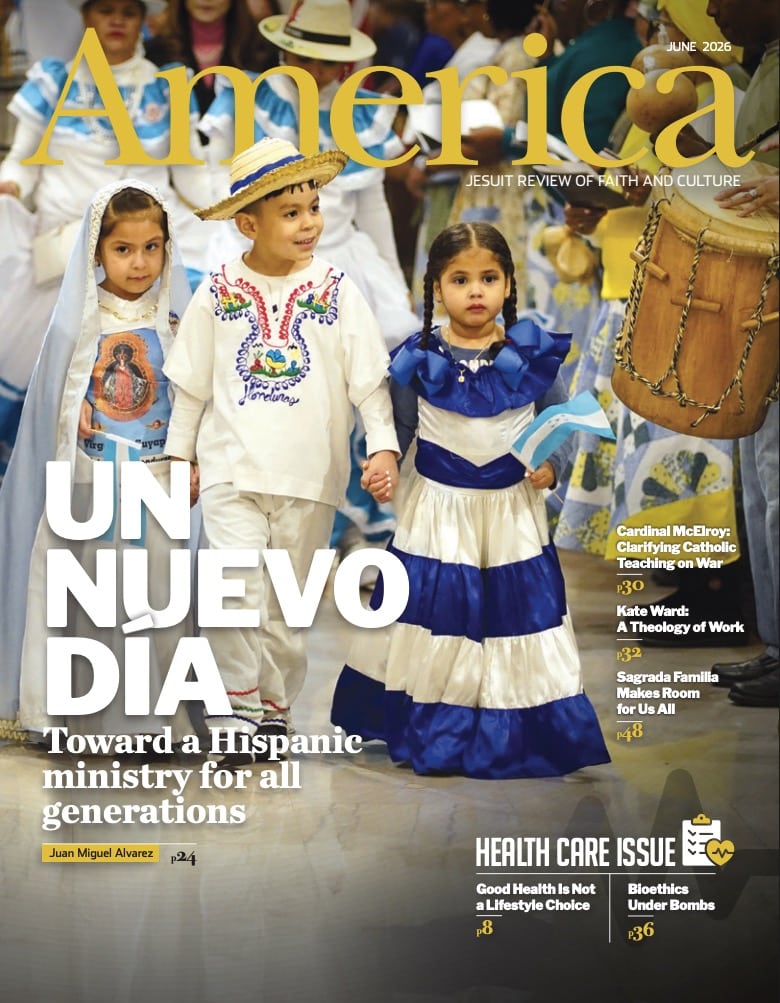
MAY 2026
PDF (68 pages)
America Magazine: Published by the Jesuits, this leading national review is highly regarded for its thoughtful, nuanced commentary on religion, politics, and contemporary culture.
Commonweal: An independent, lay-edited journal of opinion that provides rigorous intellectual perspectives on faith, society, the arts, and public policy.
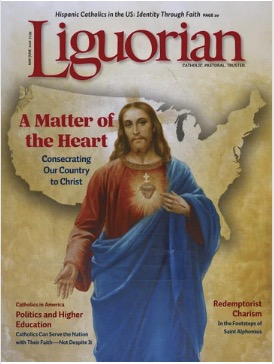
MAY-JUNE 2026
PDF (48 pages)
Liguorian is an award-winning Catholic magazine published since 1913 by the Redemptorists to provide spiritual guidance, pastoral messages, and inspiring stories, helping readers navigate modern life through faith. It acts as a trusted resource for Catholic spirituality, offering insights on faith, social justice, and daily Christian living.
U.S. Catholic: This publication focuses on everyday faith, social justice, and practical insights for living out Catholic teachings in modern, daily life.
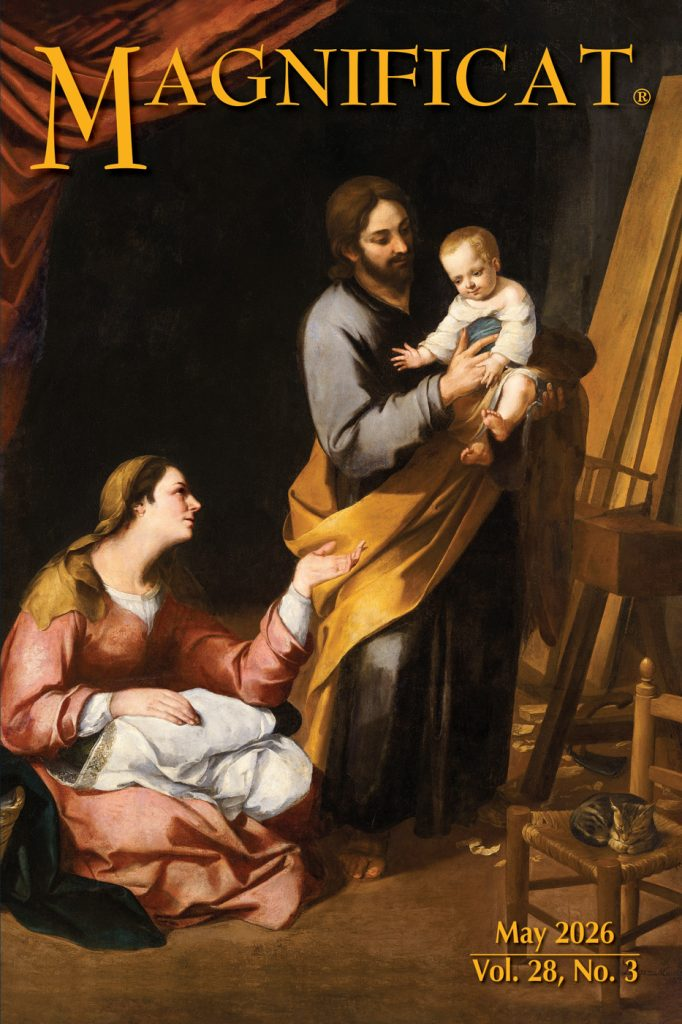
MAY 2026
Magnificat: A beautifully designed monthly publication intended for daily use. It includes the texts of the daily Mass, morning and evening prayers, and spiritual reflections. Exploring its Spanish edition, Magnificat en Español, can also be an excellent way to weave language practice into a daily spiritual routine.
Catholic.com
Body and Blood of Christ (A)
Scroll to view all 50 states
Alabama
- One Voice (Diocese of Birmingham)
- The Catholic Week (Archdiocese of Mobile)
Alaska
- The North Star Catholic (Archdiocese of Anchorage-Juneau)
- The Alaskan Shepherd (Diocese of Fairbanks)
- Missionary Disciples (Diocese of Fairbanks)
Arizona
- Voice of the Southwest (Diocese of Gallup)
- The Catholic Sun (Diocese of Phoenix)
- New Outlook (Diocese of Tucson)
Arkansas
- Arkansas Catholic (Diocese of Little Rock)
California
- Angelus Magazine | DIGITAL (Archdiocese of Los Angeles)
- The Catholic Voice | DIGITAL (Diocese of Oakland)
- The Catholic Herald | DIGITAL (Diocese of Sacramento)
- Orange County Catholic (Diocese of Orange)
- Catholic Herald (Diocese of Sacramento)
- Inland Catholic Byte (Diocese of San Bernardino)
- The Southern Cross | DIGITAL (Diocese of San Diego)
- Catholic San Francisco (Archdiocese of San Francisco)
- San Francisco Católico (Archdiocese of San Francisco)
- The Valley Catholic | DIGITAL (Diocese of San Jose)
Colorado
- The Colorado Catholic Herald (Diocese of Colorado Springs)
- Denver Catholic (Archdiocese of Denver)
Connecticut
- Fairfield County Catholic (Diocese of Bridgeport)
- The Catholic Transcript | DIGITAL (Archdiocese of Hartford)
- Four County Catholic | DIGITAL (Diocese of Norwich)
Delaware
- The Dialog (Diocese of Wilmington)
Florida
- Florida Catholic | E-EDITIONS (Archdiocese of Miami; Dioceses of Orlando, Palm Beach, Pensacola–Tallahassee, St. Augustine, Saint Petersburg, Venice)
Georgia
- The Georgia Bulletin (Archdiocese of Atlanta)
- Southern Cross (Diocese of Savannah)
Hawaii
- Hawaii Catholic Herald (Diocese of Honolulu)
Idaho
- Idaho Catholic Register (Diocese of Boise)
Illinois
- The Messenger (Diocese of Belleville)
- Chicago Catholic (Archdiocese of Chicago)
- Catolico (Archdiocese of Chicago)
- Christ is Our Hope (Diocese of Joliet)
- The Catholic Post (Diocese of Peoria)
- The Observer (Diocese of Rockford)
- Catholic Times (Diocese of Springfield)
Indiana
- The Message (Diocese of Evansville)
- Today’s Catholic News (Diocese of Fort Wayne–South Bend)
- Northwest Indiana Catholic (Diocese of Gary)
- The Criterion (Archdiocese of Indianapolis)
- The Catholic Moment | DIGITAL (Diocese of Lafayette)
Iowa
- The Catholic Messenger (Diocese of Davenport)
- The Catholic Mirror | DIGITAL (Diocese of Des Moines)
- The Witness (Archdiocese of Dubuque)
- The Lumen (Diocese of Sioux City)
Kansas
- Southwest Kansas Register (Diocese of Dodge City)
- The Leaven (Archdiocese of Kansas City)
- The Register | DIGITAL (Diocese of Salina)
- Catholic Advance (Diocese of Wichita)
- Avance Católico (Diocese of Wichita)
Kentucky
- Messenger (Diocese of Covington)
- Cross Roads | DIGITAL (Diocese of Lexington)
- The Record | DIGITAL (Archdiocese of Louisville)
- Western Kentucky Catholic (Diocese of Owensboro)
Louisiana
- Church Today (Diocese of Alexandria)
- The Catholic Commentator (Diocese of Baton Rouge)
- Bayou Catholic (Diocese of Houma–Thibodaux)
- Clarion Herald (Archdiocese of New Orleans)
- The Catholic Connection | DIGITAL (Diocese of Shreveport)
Maryland / Washington, DC
- The Catholic Review (Archdiocese of Baltimore)
- Catholic Standard (Archdiocese of Washington)
- El Pregonero (Archdiocese of Washington)
Massachusetts
- The Pilot (Archdiocese of Boston)
- The Anchor (Diocese of Fall River)
- SOPHIA | DIGITAL (Diocese of Springfield)
- The Catholic Free Press | DIGITAL (Diocese of Worcester)
Michigan
- Detroit Catholic (Archdiocese of Detroit)
- FAITH along Michigan’s 45th Parallel | DIGITAL (Diocese of Gaylord)
- Faith Grand Rapids (Diocese of Grand Rapids)
- The Good News (Diocese of Kalamazoo)
- FAITH (Diocese of Lansing)
- The U.P. Catholic (Diocese of Marquette)
- Great Lakes Bay | DIGITAL (Diocese of Saginaw)
Minnesota
- Our Northland Diocese (Diocese of Crookston)
- The Northern Cross (Diocese of Duluth)
- The Prairie Catholic (Diocese of New Ulm)
- Central Minnesota Catholic | DIGITAL (Diocese of Saint Cloud)
- The Catholic Spirit (Archdiocese of Saint Paul and Minneapolis)
- The Courier | DIGITAL (Diocese of Winona-Rochester)
Mississippi
- Gulf Pine Catholic | DIGITAL (Diocese of Biloxi)
- Mississippi Catholic | DIGITAL (Diocese of Jackson)
Missouri
- Catholic Missourian | DIGITAL (Diocese of Jefferson City)
- The Catholic Key | DIGITAL (Diocese of Kansas City–Saint Joseph)
- The Mirror (Diocese of Springfield–Cape Girardeau)
- St. Louis Review (Archdiocese of St. Louis)
- Catholic St. Louis | DIGITAL (Archdiocese of St. Louis)
Montana
- The Harvest (Diocese of Great Falls–Billings)
Nebraska
- West Nebraska Catholic | DIGITAL (Diocese of Grand Island)
- Southern Nebraska Register (Diocese of Lincoln)
- The Catholic Voice (Archdiocese of Omaha)
Nevada
- Desert Clarion (Diocese of Las Vegas)
- High Desert Catholic | DIGITAL (Diocese of Reno)
New Hampshire
New Jersey
- Catholic Star Herald (Diocese of Camden)
- The Catholic Spirit | DIGITAL (Diocese of Metuchen)
- The Catholic Advocate (Archdiocese of Newark)
- The Beacon | DIGITAL (Diocese of Paterson)
- The Monitor (Diocese of Trenton)
New Mexico
- Voice of the Southwest (Diocese of Gallup)
- Agua Viva (Diocese of Las Cruces)
- People of God (Archdiocese of Santa Fe)
New York
- The Evangelist (Diocese of Albany)
- The Tablet (Diocese of Brooklyn)
- The Catholic Union / The Catholic Union and Times (Diocese of Buffalo)
- Western New York Catholic (Diocese of Buffalo)
- The Good Newsroom (Archdiocese of New York)
- North Country Catholic (Diocese of Ogdensburg)
- Catholic Courier (Diocese of Rochester)
- El Mensajero Católico (Diocese of Rochester)
- The Long Island Catholic (Diocese of Rockville Centre)
- The Catholic Sun (Diocese of Syracuse)
North Carolina
- Catholic News Herald (Diocese of Charlotte)
- NC Catholics | DIGITAL (Diocese of Raleigh)
North Dakota
- Dakota Catholic Action | DIGITAL (Diocese of Bismarck)
- New Earth Magazine | DIGITAL (Diocese of Fargo)
Ohio
- The Catholic Telegraph (Archdiocese of Cincinnati)
- Northeast Ohio Catholic (Diocese of Cleveland)
- Catholic Times | DIGITAL (Diocese of Columbus)
- Steubenville Register (Diocese of Steubenville)
- The Catholic Echo (Diocese of Youngstown)
Oklahoma
- Sooner Catholic | DIGITAL (Archdiocese of Oklahoma City)
- Eastern Oklahoma Catholic | DIGITAL (Diocese of Tulsa)
Oregon
- Catholic Sentinel / El Centinela (Diocese of Baker / Archdiocese of Portland)
- The Diocesan Chronicle (Diocese of Baker / Archdiocese of Portland)
- Harvest | DIGITAL (Diocese of Baker / Archdiocese of Portland)
Pennsylvania
- The A.D. Times | DIGITAL (Diocese of Allentown)
- Proclaim TV! | DIGITAL (Diocese of Altoona–Johnstown)
- The Catholic Accent | DIGITAL (Diocese of Greensburg)
- The Catholic Witness | DIGITAL (Diocese of Harrisburg)
- Catholic Philly (Archdiocese of Philadelphia)
- Pittsburgh Catholic | DIGITAL (Diocese of Pittsburgh)
- The Catholic Light (Diocese of Scranton)
Rhode Island
- Rhode Island Catholic (Diocese of Providence)
- El Católico de Rhode Island (Diocese of Providence)
South Carolina
- The Catholic Miscellany | DIGITAL (Diocese of Charleston)
South Dakota
- West River Catholic | DIGITAL (Diocese of Rapid City)
- The Bishop’s Bulletin | DIGITAL (Diocese of Sioux Falls)
Tennessee
- East Tennessee Catholic (Diocese of Knoxville)
- The West Tennessee Catholic (Diocese of Memphis)
- Faith West Tennessee (Diocese of Memphis)
- Catholic Awakenings | DIGITAL (Diocese of Nashville)
Texas
- The West Texas Catholic | DIGITAL (Diocese of Amarillo)
- Catholic Spirit (Diocese of Austin)
- East Texas Catholic | DIGITAL (Diocese of Beaumont)
- South Texas Catholic | DIGITAL (Diocese of Corpus Christi)
- The Texas Catholic (Diocese of Dallas)
- Revista Católica (Diocese of Dallas)
- The Rio Grande Catholic | DIGITAL (Diocese of El Paso)
- North Texas Catholic | DIGITAL (Diocese of Fort Worth)
- Texas Catholic Herald | DIGITAL (Archdiocese of Galveston–Houston)
- West Texas Angelus | DIGITAL (Diocese of San Angelo)
- Today’s Catholic Newspaper | DIGITAL (Archdiocese of San Antonio)
- Catholic East Texas | DIGITAL (Diocese of Tyler)
- The Catholic Lighthouse | DIGITAL (Diocese of Victoria)
Utah
- Intermountain Catholic (Diocese of Salt Lake City)
Vermont
- Vermont Catholic (Diocese of Burlington)
Virginia
- Arlington Catholic Herald (Diocese of Arlington)
- The Catholic Virginian (Diocese of Richmond)
Washington
- Northwest Catholic | DIGITAL (Archdiocese of Seattle)
- Inland Catholic | DIGITAL (Diocese of Spokane)
West Virginia
- The Catholic Spirit (Diocese of Wheeling–Charleston)
Wisconsin
- The Compass | DIGITAL (Diocese of Green Bay)
- Catholic Life | DIGITAL (Diocese of La Crosse)
- Madison Catholic Herald (Diocese of Madison)
- The Catholic Herald (Archdiocese of Milwaukee)
- The Superior Catholic Herald (Diocese of Superior)
Wyoming
- Wyoming Catholic Register (Diocese of Cheyenne)