
Bible Study
Bible Study

Jeff Cavins
Fr. Francis Martin
Hector Molina
Kieran O’Mahony
Brant Pitre
Video Commentators

SOURCE: The Mass Readings Explained

SOURCE: Hearers of the Word


SOURCE: A Word Proclaimed

SOURCE: A Walk in the Word


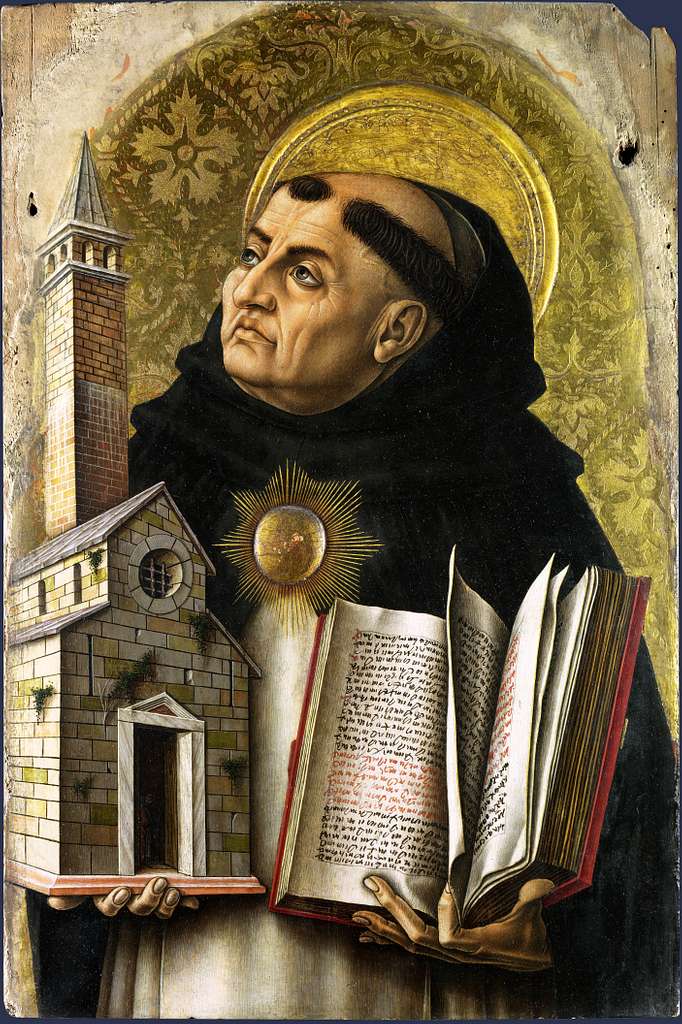
St. Thomas Aquinas
Catena Aurea
Opus compiled from sermons and commentaries on the Gospels written by the early Church Fathers. Aquinas arranging their thoughts in such a way that they form a continuous commentary on each Gospel.
SOURCE: e-Catholic 2000
Summary titles and commentary generated by AI
Catena Aurea w/ Contemporary Applications
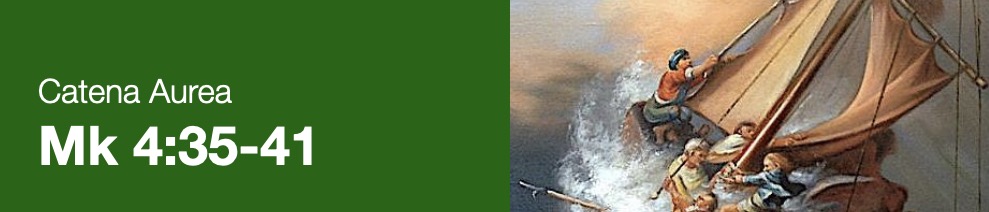
Jesus and his disciples leave the scene of His teachings and encounter the stormy sea
PSEUDO-JEROME. After His teaching, they come from that place to the sea, and are tossed by the waves. Wherefore it is said, And the same day, when the even was come, &c.
The text emphasizes the phrase, “And the same day, when the evening was come,” to underscore the immediacy of the events that unfold. This rapid transition from the comfort of land to the tempestuous waters serves as a metaphor for life’s unexpected challenges that can disrupt moments of peace.
By drawing our attention to the evening setting, Pseudo-Jerome accentuates the heightened vulnerability and fear the disciples experience amidst the tumultuous weather. This relatable circumstance speaks to contemporary audiences, who often find themselves navigating their own metaphorical storms in the form of personal struggles and unforeseen hardships.
In this interpretation, Pseudo-Jerome invites us to consider how we react when faced with adversity and uncertainty. Like the disciples who awaken a sleeping Jesus, we, too, must remember to call upon our faith in times of distress and recognize that we are never alone in our battles. Ultimately, this passage reminds us that even in life’s darkest moments, we can find solace and strength in the power of faith and community.
Three symbolic places of refuge: the ship, the mountain, and the desert
REMIGIUS. For the Lord is said to have had three places of refuge, namely, the ship, the mountain, and the desert. As often as He was pressed upon by the multitude, he used to fly to one of these. When therefore the Lord saw many crowds about Him, as man, He wished to avoid their importunity, and ordered His disciples to go over to the other side. There follows: And sending away the multitudes, they took him, etc.
These retreats serve as sanctuaries where Jesus sought solace when the demands of the crowds became overwhelming.
In this passage, Jesus and his disciples embark on a journey across the sea, leaving behind the clamoring multitudes. This action not only emphasizes Jesus’ human desire for respite but also underscores the necessity of personal space and rejuvenation.
For contemporary audiences, Remigius’ interpretation reminds us of the importance of self-care and establishing healthy boundaries. In a world that often glorifies busyness and constant connectivity, we must remember to carve out time for introspection and renewal. Just as Jesus sought refuge from the overwhelming masses, we too should prioritize moments of peace and solitude in our daily lives.
This passage also sheds light on Jesus’ willingness to share vulnerable moments with his disciples, a valuable lesson in trust and camaraderie. As we navigate life’s challenges, it’s crucial to surround ourselves with supportive individuals who understand and accept our need for personal space and emotional respite.
Jesus’ decision to take only his disciples on the journey across the sea, while other ships traveled separately
CHRYSOSTOM. (Hom. in Matt. 28) The Lord took the disciples indeed, that they might be spectators of the miracle which was coming, but He took them alone, that no others might see that they were of such little faith. Wherefore, to shew that others went across separately, it is said, And there were also with him other ships. Lest again the disciples might be proud of being alone taken, He permits them to be in danger; and besides this, in order that they might learn to bear temptations manfully. Wherefore it goes on, And there arose a great storm of wind; and that He might impress upon them a greater sense of the miracle which was to be done, He gives time for their fear, by sleeping. Wherefore there follows, And he was himself in the hinder part of the ship, &c. For if He had been awake, they would either not have feared, nor have asked Him to save them when the storm arose, or they would not have thought that He could do any such things.
This choice underscores the intimacy of their relationship and the importance of bearing witness to the forthcoming miracle.
In today’s world, Chrysostom’s interpretation reminds us of the value in cultivating close-knit communities and the power of shared experiences. By inviting only his disciples to accompany him, Jesus fosters a sense of unity and belonging, which serves as a model for modern friendships and support networks.
Moreover, the storm’s sudden onset demonstrates that even those close to Jesus are not immune to life’s tribulations. This passage teaches us to embrace challenges as opportunities for growth and understanding, rather than succumbing to fear or doubt. In contemporary life, we can draw strength from these verses by approaching setbacks and obstacles with resilience and faith in our own abilities.
Chrysostom further elaborates on the impact of Jesus’ sleeping during the storm. This act accentuates the magnitude of the impending miracle and instills a deeper sense of awe in his disciples. For contemporary audiences, this moment emphasizes the power of patience and the value in allowing events to unfold naturally, rather than impulsively seeking immediate resolution.
Jesus’ decision to allow his disciples to face fear and danger during the storm
THEOPHYLACT. Therefore He allowed them to fall into the fear of danger, that they might experience His power in themselves, who saw others benefitted by Him. But He was sleeping upon the pillow of the ship, that is, on a wooden one.
This experience serves to deepen their understanding of His power and to witness firsthand the extent of His divine capabilities.
In the context of contemporary life, Theophylact’s interpretation underscores the value of adversity and its potential for growth. By permitting his disciples to confront their fears, Jesus equips them with the resilience and wisdom that comes from overcoming challenges. Today, we can apply this lesson by embracing difficult situations as opportunities for personal development and strengthening our faith in our own abilities.
Furthermore, Theophylact highlights the symbolism of Jesus’ sleeping posture during the storm. His rest upon a wooden pillow within the ship serves as a powerful image of tranquility amidst chaos. This scene encourages contemporary audiences to cultivate inner peace and maintain composure, even when confronted with external turmoil and uncertainty.
Jesus’ humility, which serves as a guiding principle for modern life
CHRYSOSTOM. (Hom. in Matt. 28) Shewing His humility, and thus teaching us many lessons of wisdom. But not yet did the disciples who remained about Him know His glory; they thought indeed that if He arose He could command the winds, but could by no means do so reposing or asleep. And therefore there follows, And they awake him, and say unto him, Master, carest thou not that we perish?
By remaining asleep amidst the storm, Jesus demonstrates a level of restraint and modesty that resonates with contemporary audiences, encouraging us to adopt a similar mindset in our daily interactions.
Chrysostom further emphasizes the limited understanding of Jesus’ disciples, who were unaware of the full extent of his divine power. This observation highlights the importance of continuous learning and remaining open to new insights, as our initial perceptions may only scratch the surface of a deeper truth.
When the disciples question Jesus’ apparent indifference to their peril, they reveal their doubt in his ability to protect them while asleep. In today’s world, this moment serves as a reminder to trust in the abilities of those around us and to acknowledge that our preconceived notions may hinder our capacity to fully appreciate the talents and potential of others.
The sequence of events as Jesus calms the stormy sea
THEOPHYLACT. But He arising, rebukes first the wind, which was raising the tempest of the sea, and causing the waves to swell, and this is expressed in what follows, And he arose, and rebuked the wind; then He commands the sea; wherefore it goes on, And he said to the sea, Peace, be still.
By addressing the wind before commanding the sea to be still, Jesus demonstrates a methodical approach to resolving the chaos that surrounds him and his disciples.
In contemporary life, Theophylact’s interpretation encourages us to adopt a similar mindset when facing tumultuous situations. By identifying and addressing the root causes of our challenges, we can systematically work towards restoring peace and order in our lives.
This passage reminds us that even in moments of apparent disorder, we can find solace in the knowledge that divine guidance and wisdom offer a beacon of hope. Through faith and determination, we can navigate the stormy seas of life and emerge with a newfound sense of resilience and understanding.
Likening the chaos of the sea to the turmoil that disrupts human societies
GLOSS. (non occ.) For from the troubling of the sea there arises a certain sound, which appears to be its voice threatening danger, and therefore, by a sort of metaphor, He fitly commands tranquillity by a word signifying silence: just as in the restraining of the winds, which trouble the sea with their violence, He uses a rebuke. For men who are in power are accustomed to curb those, who rudely disturb the peace of mankind, by threatening to punish them; by this, therefore, we are given to understand, that, as a king can repress violent men by threats, and by his edicts sooth the murmurs of his people, so Christ, the King of all creatures, by His threats restrained the violence of the winds, and compelled the sea to be silent. And immediately the effect followed, for it continues, And the wind ceased, which He had threatened, and there arose a great calm, that is, in the sea, to which He had commanded silence.
The passage draws parallels between the actions of Jesus and those of a just and powerful ruler.
In the context of contemporary life, this interpretation underscores the importance of leadership in maintaining peace and stability. Just as Christ’s words brought tranquility to the tumultuous sea, effective leaders can guide their communities through challenging times by addressing the root causes of unrest and offering guidance and reassurance.
Moreover, the metaphor highlights the power of words in shaping our reality. By illustrating the impact of Christ’s commands on the natural world, the passage reminds us that our words and intentions hold the potential to influence and transform our surroundings. In today’s world, this message encourages us to be mindful of our speech and strive to use our voices as instruments of harmony and understanding.
By questioning their fear and highlighting their doubts, Jesus emphasizes the importance of trust and belief in his divine abilities
THEOPHYLACT. He rebuked His disciples, for not having faith; for it goes on, And he said unto them, Why are ye so fearful? How is it that ye have not faith? For if they had had faith, they would have believed that even when sleeping, He could preserve them safe. There follows, And they feared with a great fear, and said one to another, &c. For they were in doubt about Him, for since He stilled the sea, not with a rod like Moses, nor with prayers as Elisha at the Jordan, nor with the ark as Joshua, the son of Nun, on this account they thought Him truly God, but since He was asleep, they thought Him a man.
In contemporary life, this interpretation encourages us to cultivate faith in the face of adversity and uncertainty. By acknowledging our doubts and fears, we can strengthen our resolve and develop a deeper understanding of our own capabilities and those of the divine forces at work in our lives.
Furthermore, Theophylact’s analysis underscores the dual nature of Jesus as both man and God. By comparing his actions to those of other biblical figures, the passage invites us to reflect on the unique role of Jesus as a bridge between the human and the divine. In today’s world, this message reminds us to embrace the complexities and contradictions inherent in our own lives and to strive for a more profound understanding of our spiritual selves.
Parallels between the ship and the Church, as well as the calming of the storm and the triumph of faith over adversity
PSEUDO-JEROME. Mystically, however, the hinder part of the ship is the beginning of the Church, in which the Lord sleeps in the body only, for He never sleepeth who keepeth Israel; for the ship with its skins of dead animals keeps in the living, and keeps out the waves, and is bound together by wood, that is, by the cross and the death of the Lord the Church is saved. The pillow is the body of the Lord, on which His Divinity, which is as His head, has come down. But the wind and the sea are devils and persecutors, to whom He says Peace, when He restrains the edicts of impious kings, as He will. The great calm is the peace of the Church after oppression, or a contemplative after an active life.
In a contemporary context, this perspective emphasizes the importance of community and faith in navigating life’s challenges. The ship, representing the Church, symbolizes a sanctuary that shields its occupants from external threats while fostering unity and strength. This image serves as a reminder of the power of communal support and the role of faith-based institutions in providing solace and guidance.
Furthermore, Pseudo-Jerome’s analysis highlights the interconnectedness of the divine and the human, as exemplified by Jesus’ sleeping body and his divine nature. This concept encourages us to acknowledge and nurture the spiritual aspects of our lives, recognizing that moments of stillness and contemplation can serve as powerful catalysts for personal growth and transformation.
In today’s world, this interpretation invites us to seek refuge in our faith and communities during times of turmoil, and to cultivate inner peace by balancing action with introspection and spiritual practice.
Comparing the ship to the cross of Christ and the storm to the turmoil surrounding his crucifixion
BEDE. (ubi sup.) Or else the ship into which He embarked, is taken to mean the tree of His passion, by which the faithful attain to the security of the safe shore. The other ships which are said to have been with the Lord, signify those, who are imbued with faith in the cross of Christ, and are not beaten about by the whirlwind of tribulation; or who, after the storms of temptation, are enjoying the serenity of peace. And whilst His disciples are sailing on, Christ is asleep, because the time of our Lord’s Passion came on His faithful ones, when they were meditating on the rest of His future reign. Wherefore it is related, that it took place late, that not only the sleep of our Lord, but the hour itself of departing light, might signify the setting of the true Sun. Again, when He ascended the cross, of which the stern of the ship was a type, His blaspheming persecutors rose like the waves against Him, driven on by the storms of the devils, by which, however, His own patience is not disturbed, but His foolish disciples are struck with amazement. The disciples awake the Lord, because they sought, with most earnest wishes, the resurrection of Him whom they had seen die. Rising up, He threatened the wind, because when He had triumphed in His resurrection, He prostrated the pride of the devil. He ordered the sea to be still, that is, in rising again, He cast down the rage of the Jews. The disciples are blamed, because after His resurrection, He chid them for their unbelief. And we also when being marked with the sign of the Lord’s cross, we determine to quit the world, embark in the ship with Christ; we attempt to cross the sea; but, He goes to sleep, as we are sailing amidst the roaring of the waters, when amidst the strivings of our virtues, or amidst the attacks of evil spirits, of wicked men, or of our own thoughts, the flame of our love grows cold. Amongst storms of this sort, let us diligently strive to awake Him; He will soon restrain the tempest, pour down peace upon us, give us the harbour of salvation.
Through this lens, the calming of the sea represents the triumph of faith over adversity and the attainment of peace in the aftermath of hardship.
For contemporary audiences, Bede’s analysis serves as a powerful metaphor for the role of faith in overcoming life’s challenges. The ship’s journey, fraught with danger and uncertainty, mirrors our own spiritual journeys, marked by moments of doubt, fear, and temptation.
In the face of such trials, Bede urges us to draw strength from our faith and remain steadfast in our devotion to God. By invoking Christ’s calming presence, we can navigate the tumultuous waters of life with resilience and determination, ultimately reaching the “harbour of salvation.”
Moreover, Bede’s interpretation highlights the importance of self-reflection and perseverance in maintaining our spiritual course. By acknowledging our vulnerabilities and striving to rekindle our love for God, we can overcome even the fiercest storms and find solace in the promise of divine guidance and protection.
In today’s world, this passage reminds us of the transformative power of faith and the value of introspection in cultivating a deeper understanding of ourselves and our spiritual journeys.

Wikipedia

RIchard Niell Donovan

Gospel Exegesis
EXCERPT: There are a number of parallels between this story and that of Jonah (Marcus, 337-340 and Edwards, 149-151). The first readers of this Gospel—at least the Jewish ones—would be intimately familiar with the Old Testament, and would not fail to note the similarities, which include:
- A journey by boat toward Gentile territory for the purpose of redeeming Gentile lives
- A great storm at sea that threatens to sink the boat and drown the occupants
- Great fear
- The principal characters (Jonah and Jesus) asleep during the storm
- A rebuke of the principal characters
- The principle characters take an action that results in the stilling of the storm
- Wonderment on the part of the sailors
- Similar language between Mark’s story and the Septuagint (Greek) version of Jonah—i.e, a variant of the Greek word, apollymi for “perishing” and “drowning.”
However, while Jesus is like Jonah, he is greater than Jonah. Note these dissimilarities between these two stories:
- Jonah sailed for Tarshish to avoid his God-given call to save the Ninevite Gentiles. Jesus is being obedient to his call.
- Jonah did not quiet the storm but only accepted responsibility for his disobedience—God quieted the storm. Jesus personally quiets the storm, demonstrating that he is greater than Jonah and equal to God, who alone has power over seas, storms, chaos, and evil.
RICHARD NIELL DONOVAN was a Disciples of Christ clergyman who published SermonWriter, for a paid subscription, from 1997-2020. After he died, his family has generously provided his resources without subscription.