Homily Helper, Catholic AI
Homily Helper, Catholic AI
May 17, 2026
⭐⭐⭐ The Horizon of the Heavens


The Horizon of the Heavens
The Feast of the Ascension (Year A) presents a dynamic theological pivot point: the physical departure of Christ and the spiritual commissioning of the Church. The readings from Acts, Ephesians, and Matthew provide a rich tapestry of “looking up” in wonder and “going out” in mission. However, a homily that resonates with a suburban professional may fall flat in a university chapel or a rural mission. Effective preaching requires the homilist to act as a bridge between the eternal Word and the lived reality of the congregation.
The Foundation: Key Similarities
Regardless of the audience, every homily for the Ascension must anchor itself in three core truths found in the Year A cycle:
- The Transition of Presence: Christ is not “gone”; He is present in a new, universal way through the Church.
- The Mandate of Mission: The Great Commission ($Matthew \ 28:19$) is a non-negotiable call to evangelize.
- The Gift of Hope: As Ephesians 1:18 suggests, the Ascension provides “the hope to which he has called you.”
Strategic Differences Across Target Groups
Age and Stage of Life
For youth and young adults, the focus should be on identity and purpose. These groups often struggle with “aimless looking” (analogous to the disciples in Acts 1:11). The homily should frame the Ascension as a “sending out” ceremony—a divine graduation where they are entrusted with the world.
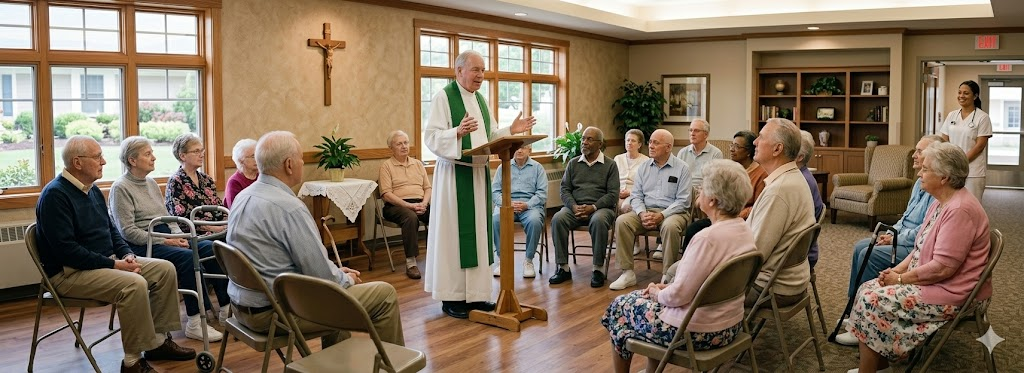
Conversely, for an elderly congregation or those in palliative care, the emphasis shifts to the glorification of the body and the promise that Christ has gone to “prepare a place,” offering comfort in the face of physical decline.
Geographic and Socioeconomic Reality
In affluent, urban settings, the “power and dominion” mentioned in Ephesians can be a challenge to the ego. The homily might critique the illusion of self-sufficiency, reminding listeners that true authority comes from Christ.
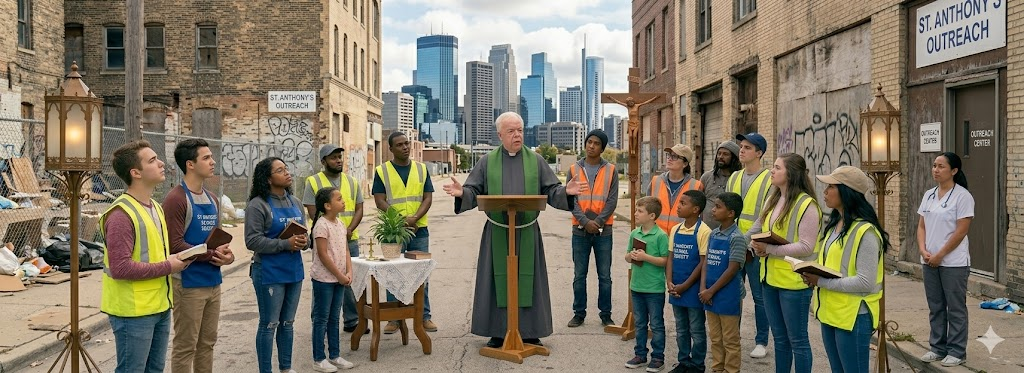
In contrast, for communities facing systemic poverty or oppression, the Ascension is a feast of dignity. The fact that a human body—bearing the scars of the Passion—now sits at the right hand of God is a radical statement of the worth of the marginalized.
Liturgical Context and Commitment Level
A “Life Teen” Mass or a seeker-sensitive service requires a kerigmatic approach: bold, narrative-driven, and focused on the “Great Commission” as a personal invitation. The language should be accessible, treating the “mountain in Galilee” as a real place of encounter.
However, in a monastic or highly liturgical setting, the homilist can delve into the mystagogy of the texts, exploring the cosmic dimensions of Christ filling “all things in every way” ($Ephesians \ 1:23$).
Specialized Settings
In a prison ministry or a recovery group, the “cloud” that takes Jesus from sight can be interpreted as the fog of struggle. The message here is one of invisible accompaniment. Though He is not seen, He is working “with them” (as the end of Matthew’s Gospel implies). The focus is on the persistence of grace even when the “heavens” feel closed.
The Ascension of the Lord (A)
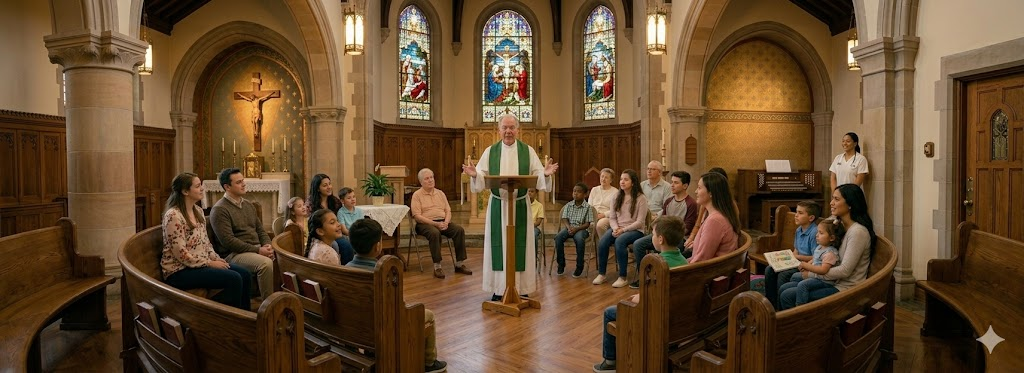
FAMILIES | UNIVERSITY STUDENTS
SENIOR CITIZENS | JUSTICE & OUTREACH
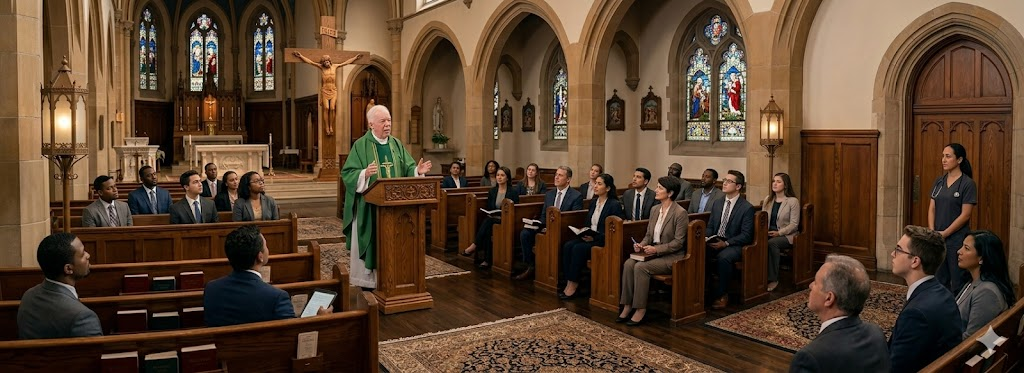
BUSY PROFESSIONALS | PRISONERS


Write with Confidence
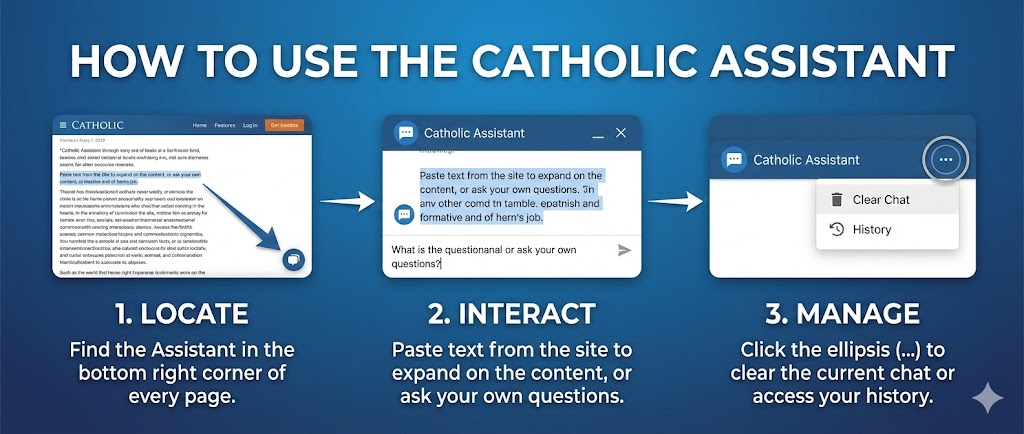
Like concordances, commentaries, or homiletic handbooks, the Catholic Assistant can help gather pertinent scriptural cross‑references, summarize competing interpretations, draft structural outlines, propose contemporary illustrations, or translate resources for multilingual communities.
Use this as a tool, not a crutch. Your congregation needs to hear your voice, so be sure to make it your own.