The Deacon, Deacon’s Digest, FREE resource bulletin
The Deacon, Deacon’s Digest, FREE resource bulletin
March 8, 2026
March 8, 2026
3rd Sunday of Lent (A)


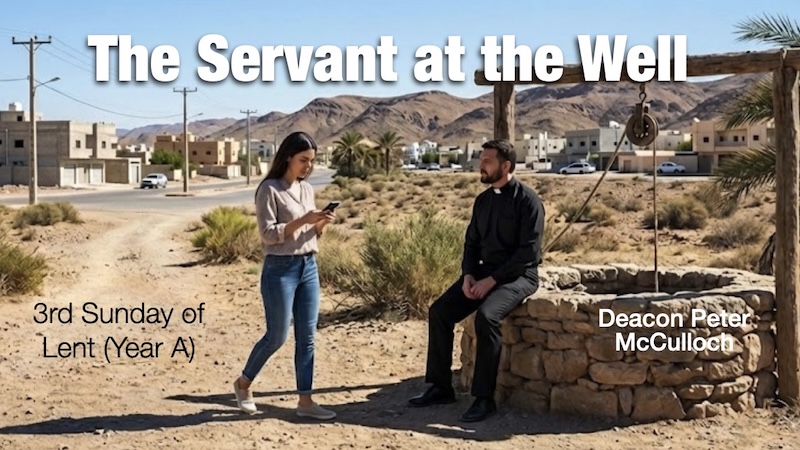
Gospel: John 4:5–42
Deacon Peter
McCulloch
(Diocese of Broken Bay)
In one of the most profound encounters in the Gospels, Jesus, tired and thirsty, sits by a well. He does not wait for a disciple to serve him; He waits for a woman. He meets the Samaritan woman – an outcast, weary from a life of social and spiritual burdens, and in her noonday fatigue, He sees her thirst. He sees past her sin to her restless heart, and He offers her living water.
As St. Augustine said, “Our hearts are restless until they rest in You.” This is the thirst that Jesus came to quench. The deacon, as a servant of the thirsty, is ordained to continue this ministry: to meet people at the well of their deepest needs and to offer them the cup of Christ’s compassion.

The Proclamation of Living Water (At the Altar)
This long Gospel dialogue is a catechesis in itself, and the deacon’s role in proclaiming it is a ministry of encounter.
- Proclaiming the Dialogue: When the deacon proclaims this Gospel, he gives voice to both the thirst of the woman (“Sir, give me this…”) and the offer of Christ. He brings this intimate, one-on-one encounter into the heart of the assembly, inviting every restless heart to enter the conversation.
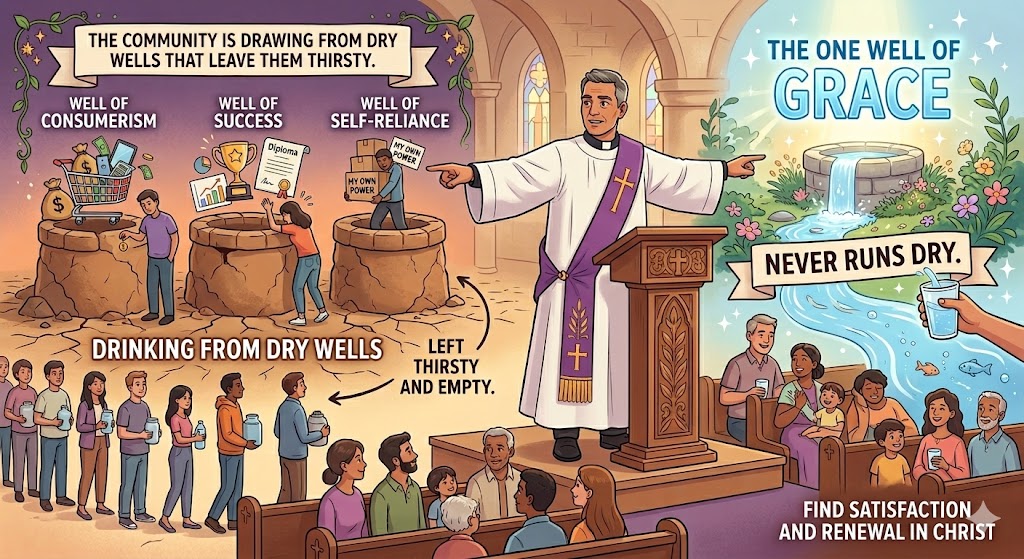
- The Homily of the Well: The deacon’s preaching is meant to identify the wells where the community is drawing: the wells of consumerism, success, or self-reliance that leave them thirsty. He then points to the one well of grace that never runs dry.
- Minister of the Chalice: The deacon’s ministry at the altar culminates in this theme. As the ordinary minister of the Chalice, he literally holds the living water – the Blood of Christ – and offers it to the assembly, saying, “The Blood of Christ.” It is the most direct fulfillment of the woman’s plea.
The Ministry of Sitting With (In the Parish)

This Gospel is a model for pastoral accompaniment, which is a core function of the deacon in the parish.
- The Well of RCIA: This Gospel is a cornerstone of the RCIA process. The deacon is often a primary guide for catechumens, who, like the Samaritan woman, come from diverse backgrounds and are searching for truth. He sits by the well with them for months, patiently answering their questions and leading them toward the living water of the Baptismal font.
- Meeting at Noon: The deacon is the minister who is most present at the noonday of parish life – the moments of exhaustion, exposure, and need. In marriage prep for a struggling couple, in counselling a family in crisis, or in simply listening in the parish hall, the deacon, like Jesus, does not condemn, but encounters. He offers a presence that restores dignity.
The Cup of Cold Water (At the Margins)

Jesus asked the woman for a drink, and in doing so, opened the door for her to ask him for living water. The deacon’s ministry of diakonia often begins by meeting a physical thirst, which opens the door to healing a spiritual one.
- Serving the Thirst for Hope: The deacon’s work at the margins is a ministry to the thirstiest – those who thirst for hope in the hospital, for forgiveness in court, for meaning at work, or for simple dignity in the soup kitchen.
- The Servant Who Draws: The deacon is not the source, but the servant who draws water. He is the one who goes to the well – the parish’s resources, the community’s generosity, the Church’s sacramental grace – and draws on behalf of those who are too weak, too poor, or too ashamed to come themselves.
- A Cup in Christ’s Name: Every act of kindness, every bag of food from the pantry, every visit to the homebound, every sip of the Precious Blood brought to the sick – each of these is a cup of living water, offered in Christ’s name, a tangible sign that the well of God’s grace never runs dry.