Papal Homilies
March 8, 2026
March 29, 2026
Palm Sunday (A)



Theme of the Readings
The whole liturgy is shrouded in a veil of suffering. However, it gives us the impression that the message is not there but in the mysterious and sublime action of God through the most atrocious suffering and distress. In the third song of the servant of Yahweh we hear: “The Lord Yahweh comes to my help, so that I am untouched by the insults” (first reading). In the Christological hymn of the Letter of St. Paul to the Philippians, he tells us: “But God raised him high and gave him the name which is above all other names.” And in the narrative of the passion, Jesus prays to his Father: “If it is possible, let this cup pass me by. Nevertheless, let it be as you, not I, would have it.” And the Evangelist writes that at Jesus’ death: “the veil of the Temple was torn in two from top to bottom, the earth quaked; the rocks were split,” all signs of the manifestation of God at the end of time according to the Jewish mentality. It is important to stress that suffering is not a contradiction, an error of calculation during the act of creation, but that God is the Lord of suffering and it is this that gives it meaning.
SOURCE: YEAR A DICASTERY NOTES (2004-05)
Doctrinal Message
Even God himself, made man in Jesus of Nazareth, was not spared pain and suffering. This means that pain and suffering are a constitutive part of man’s historicity, his finite reality, imperfect, frail and perishable. They are something inevitable, which every man has to face and accept in his human condition and his faith. It also means that they have an extraordinary value that man must discover: a moral value in the make-up of the human personality. Anyone who knows how to suffer becomes more of a person and of redemptive value in God’s plan. Human suffering contributes to the redemption brought about by Jesus Christ.
The figure of Yahweh’s servant, the subject of the first reading, surprises and shocks us for various reasons. He is innocent man. Although having done no harm to anyone, he suffers outrages, blows and insults. He is a religious man who perceives God’s hand in the midst of all that is happening to him and feels Yahweh’s mighty strength and presence. He is a disciple of God who, getting the better of his suffering, has comforting words for the persecuted and needy.
Isn’t it true that we spontaneously see the best realization of this figure in Jesus of Nazareth, especially during the terrible, portentous moments of his Passion? This is how the first Christians saw and thought of him, and they left an image of him for us in the liturgical hymn that Paul takes up in his Letter to the Philippians. “His state was divine … but [he] emptied himself to assume the condition of a slave … he was humbler yet, even to accepting death, death on a cross” (second reading). And isn’t the whole narrative of the passion the suffering of wounded, killed innocence that overcomes the guilt and sin of the “murderers”? Isn’t it the sublime expression of long-suffering love of a Father whose mysterious, incomprehensible designs are being fulfilled, “so that man may live”? Isn’t it the supreme act of self-emptying and humiliation, to which the Father responds with the exaltation and glory of the mission accomplished? For the human person, suffering does not cease to have a harsh, gloomy and terrible face, but behind this mask of pain is found the beautiful, serene and joyful face of fruitful meaning, mysteriously mellowed and productive.
SOURCE: YEAR A DICASTERY NOTES (2004-05)
Pastoral Suggestions
What is my attitude towards suffering, disasters, civil, moral or religious disorder? What is the attitude of the Christians among whom I live and work? How do they see and face the death of a loved one, of an innocent person? How do they suffer their own misfortunes, e.g., a serious illness, a road or work accident, loneliness and neglect, the limitations of old age? The priest must know as well as possible the “sufferings, trials, anxieties, and troubles” of his own faithful, of those to whom his message is addressed. Am I the good shepherd who knows each and every one of my sheep, and am I close to them, above all in times of trial?
Faith in God’s presence and action in these moments and situations of difficulty and anguish is something very necessary and urgent. In the chaos that suffering can create, in the inner crisis of rebellion it can provoke, in the lack of control it can unleash, faith is the key that prepares and accompanies the Christian, instills serenity in him, opens the door to hope for him and peacefully refers him to the Lord of life and history. This faith in God’s living presence in suffering and in trial must be the subject of preaching (homilies, catecheses); but during actual moments of trial and anguish, it should be made visible in action. At these times the priest is the man of faith who, with his own faith, instills it in others.
SOURCE: YEAR A DICASTERY NOTES (2004-05)
Infographics (visual aids) on this page were designed using Nano Banana Pro with Gemini 3.0. They draw inspiration from the 2004-05 Dicastery for the Clergy Notes (YEAR A | B | C cf. text above), but are not officially associated with or endorsed by the Holy See. They may be copied for personal use or for use in any non-profit ministry (e.g. parish bulletin inserts, classroom or group presentation, posters on community bulletin boards, etc.)
My God, My God, Why Have
You Forsaken Me?
2 April 2023 – Saint Peter’s Square
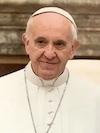
“My God, my God, why have you forsaken me?” (Mt 27:46). This is the cry that today’s liturgy has us repeat in the responsorial psalm (cf. Ps 22:2), the only cry that Jesus makes from the cross in the Gospel we have heard. Those words bring us to the very heart of Christ’s passion, the culmination of the sufferings he endured for our salvation. “Why have you forsaken me?”.
The sufferings of Jesus were many, and whenever we listen to the account of the Passion, they pierce our hearts. There were sufferings of the body: let us think of the slaps and beatings, the flogging and the crowning with thorns, and in the end, the cruelty of the crucifixion. There were also sufferings of the soul: the betrayal of Judas, the denials of Peter, the condemnation of the religious and civil authorities, the mockery of the guards, the jeering at the foot of the cross, the rejection of the crowd, utter failure and the flight of the disciples. Yet, amid all these sorrows, Jesus remained certain of one thing: the closeness of the Father. Now, however, the unthinkable has taken place. Before dying, he cries out: “My God, my God, why have you forsaken me?” The forsakenness of Jesus.
This is the most searing of all sufferings, the suffering of the spirit. At his most tragic hour, Jesus experiences abandonment by God. Prior to that moment, he had never called the Father by his generic name, “God”. To convey the impact of this, the Gospel also reports his words in Aramaic. These are the only words of Jesus from the cross that have come down to us in the original language. The real event is the extreme abasement, being forsaken by the Father, forsaken by God. We find it hard even to grasp what great suffering he embraced out of love for us. He sees the gates of heaven close, he finds himself at the bitter edge, the shipwreck of life, the collapse of certainty. And he cries out: “Why?” A “why” that embraces every other “why” ever spoken. “Why, God?”.
“My God, my God, why have you forsaken me?” In the Bible, the word “forsake” is powerful. We hear it at moments of extreme pain: love that fails, or is rejected or betrayed; children who are rejected and aborted; situations of repudiation, the lot of widows and orphans; broken marriages, forms of social exclusion, injustice and oppression; the solitude of sickness. In a word, in the drastic severing of the bonds that unite us to others. There, this word is spoken: “abandonment”. Christ brought all of this to the cross; upon his shoulders, he bore the sins of the world. And at the supreme moment, Jesus, the only-begotten, beloved Son of the Father, experienced a situation utterly alien to his very being: abandonment, the distance of God.
Why did it have to come to this? He did it for us. There is no other answer. For us. Brothers and sisters, today this is not merely a show. Every one of us, hearing of Jesus’ abandonment, can say: for me. This abandonment is the price he paid for me. He became one with each of us in order to be completely and definitively one with us to the very end. He experienced abandonment in order not to leave us prey to despair, in order to stay at our side forever. He did this for me, for you, because whenever you or I or anyone else seems pinned to the wall, lost in a blind alley, plunged into the abyss of abandonment, sucked into a whirlwind of so many “whys” without an answer, there can still be a hope: Jesus himself, for you, for me. It is not the end, because Jesus was there and even now, he is at your side. He endured the distance of abandonment in order to take up into his love every possible distance that we can feel. So that each of us might say: in my failings, and each of us has failed many times, in my desolation, whenever I feel betrayed or betrayed others, whenever I feel cast aside or have cast aside others, whenever I feel forsaken or have abandoned others, let us think of Jesus, who was abandoned, betrayed and cast aside. There, we find him. When I feel lost and confused, when I feel that I can’t go on, he is beside me. Amid all my unanswered questions “why…?”, he is there.
That is how the Lord saves us, from within our questioning “why?” From within that questioning, he opens the horizon of hope that does not disappoint. On the cross, even as he felt utter abandonment – this is the ultimate end – Jesus refused to yield to despair; instead, he prayed and trusted. He cried out his “why?” in the words of the Psalm (22:2), and commended himself into the hands of the Father, despite how distant he felt him to be (cf. Lk 23:46) or rather, whom he did not feel, for instead he felt himself abandoned. In the hour of his abandonment, Jesus continued to trust. At the hour of abandonment, he continued to love his disciples who had fled, leaving him alone. In his abandonment he forgave those who crucified him (v. 34). Here we see the abyss of our many evils immersed in a greater love, with the result that our isolation becomes fellowship.
Brothers and sisters, a love like this, embracing us totally and to the very end, the love of Jesus, can turn our stony hearts into hearts of flesh. His is a love of mercy, tenderness and compassion. This is God’s style: closeness, compassion and tenderness. God is like this. Christ, in his abandonment, stirs us to seek him and to love him and those who are themselves abandoned. For in them we see not only people in need, but Jesus himself, abandoned: Jesus, who saved us by descending to the depths of our human condition. He is with each of them, abandoned even to death… I think of the German so-called “street person”, who died under the colonnade, alone and abandoned. He is Jesus for each of us. So many need our closeness, so many are abandoned. I too need Jesus to caress me and draw close to me, and for this reason I go to find him in the abandoned, in the lonely. He wants us to care for our brothers and sisters who resemble him most, those experiencing extreme suffering and solitude. Today, dear brothers and sisters, their numbers are legion. Entire peoples are exploited and abandoned; the poor live on our streets and we look the other way; there are migrants who are no longer faces but numbers; there are prisoners who are disowned; people written off as problems. Countless other abandoned persons are in our midst, invisible, hidden, discarded with white gloves: unborn children, the elderly who live alone: they could perhaps be your father or mother, your grandfather or grandmother, left alone in retirement homes, the sick whom no one visits, the disabled who are ignored, and the young burdened by great interior emptiness, with no one prepared to listen to their cry of pain. And they find no path other than suicide. The abandoned of our day. The “Christs” of our day.
Jesus, in his abandonment, asks us to open our eyes and hearts to all who find themselves abandoned. For us, as disciples of the “forsaken” Lord, no man, woman or child can be regarded as an outcast, no one left to himself or herself. Let us remember that the rejected and the excluded are living icons of Christ: they remind us of his reckless love, his forsakenness that delivers us from every form of loneliness and isolation. Brothers and sisters, today let us implore this grace: to love Jesus in his abandonment and to love Jesus in the abandoned all around us. Let us ask for the grace to see and acknowledge the Lord who continues to cry out in them. May we not allow his voice to go unheard amid the deafening silence of indifference. God has not left us alone; let us care, then, for those who feel alone and abandoned. Then, and only then, will we be of one mind and heart with the one who, for our sake, “emptied himself” (Phil 2:7). He emptied himself completely for us.
Palm Sunday
23rd World Youth Day
16 March 2008 | St Peter’s Square

Year after year the Gospel passage for Palm Sunday recounts Jesus’ entry into Jerusalem. Together with his disciples and an increasing multitude of pilgrims he went up from the plain of Galilee to the Holy City. The Evangelists have handed down to us three proclamations of Jesus concerning his Passion, like steps on his ascent, thereby mentioning at the same time the inner ascent that he was making on this pilgrimage. Jesus was going toward the temple – toward the place where God, as Deuter-onomy says, had chosen to “make his name dwell” (cf. 12: 11; 14: 23). God who created heaven and earth gave himself a name, made himself invocable; indeed, he made himself almost tangible to human beings. No place can contain him, yet for this very reason he gave himself a place and a name so that he, the true God, might be personally venerated as God in our midst. We know from the account of the 12-year-old Jesus that he loved the temple as his Father’s house, as his paternal home. He now visits this temple once again but his journey extends beyond it: the final destination of his climb is the Cross. It is the ascent described in theLetter to the Hebrews as the ascent towards the tent not pitched by human hands but by the Lord, which leads to God’s presence. The final climb to the sight of God passes through the Cross. It is the ascent toward “love to the end” (cf. Jn 13: 1), which is God’s true mountain, the definitive place of contact between God and man.
During his entry into Jerusalem, the people paid homage to Jesus as the Son of David with the words of the pilgrims of Psalm 118[117]: “Hosanna to the Son of David! Blessed is he who comes in the name of the Lord! Hosanna in the highest!” (Mt 21: 9). He then arrived at the temple. There, however, in the place that should have been taken up by the encounter between God and man, he found livestock merchants and money-changers who occupied this place of prayer with their commerce. Certainly, the animals on sale were destined to be burned as sacrifices in the temple, and since in the temple it was impossible to use coins that bore the likeness of the Roman emperors, who were in opposition to the true God, they had to be exchanged for coins that did not show the idolatrous image. All this, however, could have taken place elsewhere: the place where this was now occurring should have been, in accordance with its destined purpose, the atrium of pagans. Indeed, the God of Israel was precisely the one God of all peoples. And although pagans did not enter, so to speak, into the Revelation, they could however, in the atrium of faith, join in the prayer to the one God. The God of Israel, the God of all people, had always been awaiting their prayers too, their seeking, their invocations. Instead, commerce was prevailing – dealings legalized by the competent authority which, in its turn, profited from the merchants’ earnings. The merchants acted correctly, complying with the law in force, but the law itself was corrupt. “Covetousness… is idolatry”, the Letter to the Colossians says (3: 5). This was the idolatry Jesus came up against in the face of which he cites Isaiah: “My house shall be called a house of prayer” (Mt 21: 13; cf. Is 56: 7), and Jeremiah: “But you make it a den of robbers” (Mt 21: 13; cf. Jer 7: 11). Against the wrongly interpreted order, Jesus with his prophetic gesture defends the true order which is found in the Law and the Prophets.
Today, all this must give us, as Christians, food for thought. Is our faith sufficiently pure and open so that starting from it “pagans”, the people today who are seeking and who have their questions, can intuit the light of the one God, associate themselves in the atriums of faith with our prayers and, with their questions, perhaps also become worshippers? Does the awareness that greed is idolatry enter our heart too and the praxis of our life? Do we not perhaps in various ways let idols enter even the world of our faith? Are we disposed to let ourselves be ceaselessly purified by the Lord, letting him expel from us and the Church all that is contrary to him?
In the temple’s purification, however, it was a matter of more than fighting abuses. A new time in history was foretold. What Jesus had announced to the Samaritan woman concerning her question about true worship is now beginning: “The hour is coming, and now is, when true worshippers will worship the Father in spirit and truth, for such the Father seeks to worship him” (Jn 4: 23). The time when animals were sacrificed to God was over. Animal sacrifices were only a substitute, a nostalgic gesture for the true way to worship God. The Letter to the Hebrews on the life and work of Jesus uses a sentence from Psalm 40[39]: “Sacrifices and offerings you have not desired, but a body have you prepared for me” (Heb 10: 5). Christ’s body, Christ himself, enters to take the place of bloody sacrifices and food offerings. Only “love to the end”, only love for human beings given totally to God is true worship, true sacrifice. Worshipping in spirit and truth means adoring in communion with the One who is Truth; adoring in communion with his Body, in which the Holy Spirit reunites us.
The Evangelists tell us that in Jesus’ trial false witnesses were produced who asserted that Jesus had said: “I am able to destroy the temple of God, and to rebuild it in three days” (Mt 26: 61). In front of Christ hanging on the Cross some people, taunting him, referred to these same words: “You who would destroy the temple and build it in three days, save yourself!” (Mt 27: 40). The correct version of these words as Jesus spoke them has been passed on to us by John in his account of the purification of the temple. In response to the request for a sign by which Jesus could justify himself for such an action, the Lord replied: “Destroy this temple, and in three days I will raise it up” (Jn 2: 18ff.). John adds that, thinking back to this event of the Resurrection, the disciples realized that Jesus had been referring to the Temple of his Body (cf. 2: 21ff.). It is not Jesus who destroys the temple; it is left to destruction by the attitude of those who transformed it from being a place for the encounter of all peoples with God into a “den of robbers”, a haven for their dealings. But as always, beginning with Adam’s fall, human failure becomes the opportunity for us to be even more committed to love of God. The time of the temple built of stone, the time of animal sacrifices, is now passed: the fact that the Lord now expels the merchants does not only prevent an abuse but points to God’s new way of acting. The new Temple is formed: Jesus Christ himself, in whom God’s love descends upon human beings. He, by his life, is the new and living Temple. He who passed through the Cross and was raised is the living space of spirit and life in which the correct form of worship is made. Thus, the purification of the temple, as the culmination of Jesus’ solemn entry into Jerusalem, is at the same time the sign of the impending ruin of the edifice and the promise of the new Temple; a promise of the kingdom of reconciliation and love which, in communion with Christ, is established beyond any boundary.
St Matthew, whose Gospel we are hearing this year, mentions at the end of the account of Palm Sunday, after the purification of the temple, two further, small events that once again have a prophetic character and once again make clear to us Jesus’ true will. Immediately after Jesus’ words on the house of prayer for all the people, the Evangelist continues: “And the blind and the lame came to him in the temple, and he healed them”. In addition, Matthew tells us that children cried out in the temple the acclamation of the pilgrims at the city gates: “Hosanna to the Son of David” (Mt 21: 14ff.). Jesus counters the animal trade and fiscal affairs with his healing goodness. This is the temple’s true purification. He does not come as a destroyer; he does not come with the revolutionary’s sword. He comes with the gift of healing. He dedicates himself to those who, because of their ailments, were driven to the end of their life and to the margins of society.
Jesus shows God as the One who loves and his power as the power of love. Thus, he tells us what will always be part of the correct worship of God: healing, serving and the goodness that cures.
And then there are children who pay homage to Jesus as the Son of David and acclaim him the Hosanna. Jesus had said to his disciples that to enter the Kingdom of God it was essential to become once again like children. He himself, who embraces the whole world, made himself little in order to come to our aid, to draw us to God. In order to recognize God, we must give up the pride that dazzles us, that wants to drive us away from God as though God were our rival. To encounter God it is necessary to be able to see with the heart. We must learn to see with a child’s heart, with a youthful heart not hampered by prejudices or blinded by interests. Thus, it is in the lowly who have such free and open hearts and recognize Jesus, that the Church sees her own image, the image of believers of all ages.
Dear friends, let us join at this moment the procession of the young people of that time – a procession that winds through the whole of history. Together with young people across the world let us go forth to meet Jesus. Let us allow ourselves to be guided toward God by him, to learn from God himself the right way to be human beings. Let us thank God with him because with Jesus, Son of David, he has given us a space of peace and reconciliation that embraces the world with the Holy Eucharist. Let us pray to him that we too may become, with him and starting from him, messengers of his peace, adorers in spirit and truth, so that his Kingdom may increase in us and around us. Amen.
He Humbled Himself and Became
Obedient to Death
28 March, 1999
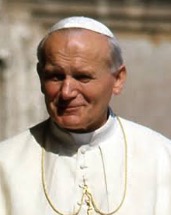
1. “He humbled himself and became obedient unto death, even death on a cross” (Phil 2:8).
The celebration of Holy Week begins with the “Hosanna!” of Palm Sunday and culminates in the “Crucify him!” of Good Friday. But this is not a contradiction; rather it is the heart of the mystery the liturgy wants to proclaim: Jesus willingly gave himself up to his passion; he did not find himself crushed by superior forces (cf. Jn 10:18). It was he himself who, in discerning the Father’s will, understood that his hour had come and he accepted it with the free obedience of the Son and with infinite love for mankind.
Jesus brought our sins to the Cross and our sins brought Jesus to the Cross: he was crushed for our iniquities (cf. Is 53:5). The prophet said in reply to David, who was seeking the one responsible for the deed Nathan had recounted to him: “You are the man!” (2 Sm 12:7). The Word of God gives us the same answer as we wonder what caused Jesus’ death: “You are the man!“. Indeed, Jesus’ trial and passion are repeated in the world today and renewed by every person who abandons himself to sin and can only prolong the cry: “Not this man, but Barabbas! Crucify him!“.
2. Looking at Jesus in his passion, we see humanity’s sufferings as well as our personal histories reflected as in a mirror. Although there was no sin in Christ, he took upon himself what man could not endure: injustice, evil, sin, hatred, suffering and finally death. In Christ, the humiliated and suffering Son of Man, God loves everyone, forgives everyone and confers the ultimate meaning on human life.
We are here this morning to receive this message from the Father who loves us. We can ask ourselves: what does he want of us? He wants us to look at Jesus and be willing to follow him in his passion in order to share in his Resurrection. At this moment we recall Jesus’ words to his disciples: “The cup that I drink, you will drink; and with the baptism with which I am baptized, you will be baptized” (Mk 10:39). “If any man would come after me, let him … take up his cross and follow me. For whoever would save his life will lose it, and whoever loses his life for my sake will find it” (Mt 16:24-25).
The “hosanna” and the “crucify him” thus become the way to measure how one conceives of life, faith and Christian witness: we must not be discouraged by defeat nor exalted by victory because, as with Christ, the only victory is fidelity to the mission received from the Father. “Therefore God has highly exalted him and bestowed on him the name which is above every name” (Phil 2:9).
3. The first part of today’s celebration let us relive Jesus’ triumphal entry into Jerusalem. On that fateful day, who realized that Jesus of Nazareth, the Teacher who spoke with authority (cf. Lk 4:32), was the Messiah, the son of David, the awaited and promised Saviour? It was the people, and among them the most enthusiastic and active were the young, who thus in a way became the Messiah’s “heralds”. They understood that it was the hour of God, the longed-for and blessed hour awaited by Israel for centuries, and, waving palm and olive branches, they proclaimed Jesus’ triumph.
In continuity with the spirit of that event we have now been celebrating World Youth Day for 14 years, when young people, together with their Pastors, joyfully profess and proclaim their faith in Christ, question themselves about their deepest aspirations, experience ecclesial communion and confirm and renew their commitment to the urgent task of the new evangelization.
They seek the Lord in the heart of the paschal mystery. The mystery of the glorious Cross becomes for them the great gift and sign of a mature faith. With his Cross, the universal symbol of Love, Christ leads the world’s young people in the great “assembly” of the kingdom of God, who transforms hearts and societies.
How can we not give thanks to the Lord for the World Youth Days, which began in 1985 precisely in St Peter’s Square and which, following the “Holy Year Cross”, have traveled the world like a long pilgrimage towards the new millennium? How can we not praise God, who reveals the secrets of his kingdom to the young (cf. Mt 11:25), for all the good fruits and Christian witness which this successful initiative has produced?
Today’s World Youth Day is the last in this century and in this millennium before the great gathering of the Jubilee: it thus has special significance. May the contribution of all make it a powerful experience of faith and ecclesial communion.
4. The young people of Jerusalem shouted: “Hosanna to the Son of David!“. Young people, my friends, do you too want to acknowledge Jesus as the Messiah, the Saviour, the Teacher, the Leader, the Friend of your life, as your peers did on that day so long ago? Remember: he alone knows deeply what is in every human being (cf. Jn 2:25); he alone teaches us to be open to the mystery and to call God our Father, “Abba“; he alone makes us capable of selfless love for our fellow human beings, accepted and recognized as “brothers” and “sisters”.
Dear young people, go joyfully to meet Christ, who gladdens your youth. See him and meet him by clinging to his word and his mysterious presence in the Church and the sacraments. Live with him in fidelity to his Gospel: demanding, it is true, but at the same time the only source of hope and true happiness. Love him in the face of your brother who needs justice, help, friendship and love.
On the eve of the third millennium, this is your hour. May the contemporary world open new paths before you and call you to be bearers of faith and joy, as expressed by the palm and olive branches you are holding today, symbols of a new springtime of grace, beauty, goodness and peace. The Lord Jesus is with you and is accompanying you!
5. Every year during Holy Week, the Church enters into the paschal mystery with trepidation, as she commemorates the Lord’s Death and Resurrection.
It is precisely through the paschal mystery which gave her birth that she can proclaim to the world, in the words and deeds of her children: “Jesus Christ is Lord, to the glory of God the Father” (Phil 2:11).
Yes! Jesus Christ is Lord! He is the Lord of time and history, the Redeemer and the Saviour of man. Blessed be he who comes in the name of the Lord! Hosanna!
Amen.